Room guide · terrace garden cad blocks
Free terrace garden CAD blocks for AutoCAD
By Saumyajit Maity · Published 30 Mar 2026 · Updated 3 Jun 2026
A terrace garden turns an otherwise dead roof or upper-floor slab into a planted, usable space — part garden, part outdoor room. Unlike a balcony it is wide enough to zone: a planting band, a seating cluster, a circulation loop and often a paved finish across the whole slab. These free terrace garden CAD blocks give you the raised beds, potted plants, seating and paving you need to lay one out properly in AutoCAD, all drawn to true scale in DWG.
The design challenge on a terrace is different from ground-level gardens. There is no soil to dig into, so planting happens in raised beds and containers whose footprint you must draw and weight you must respect. Drainage runs across the structural slab toward defined outlets. And the layout has to read as a designed space from the door, not a scatter of pots.
Everything here is free for personal and commercial use, no signup and no watermark, and inserts into AutoCAD 2004 or later. Start by drawing the slab and its fall, then build the garden up in beds and containers on top of it — the way a real terrace garden is actually constructed.
What a terrace garden is, and who builds one
A terrace garden is a planted outdoor space on a flat roof or upper-floor terrace, built up in containers and raised beds rather than dug into the ground. Homeowners use them for greenery and growing; apartment and hotel projects use them as amenity decks; offices use them as break-out roofs. The common thread is that the planting sits on a waterproofed structural slab, so weight, depth and drainage govern every decision.
That constraint shapes the plan. Heavy, deep beds go over beams and walls where the structure can carry the load; lighter containers sit anywhere; and the planted mass is balanced against open paved area so the slab is not overloaded. Your CAD plan is where that balance gets tested before the structural engineer signs it off.
Zoning the terrace
Treat the terrace as three overlaid layers: a planting band, a use zone and a circulation route. The planting band usually runs along the parapet edges, both because that is where containers are least in the way and because it softens the boundary. The use zone — seating, a dining set, a lounger — sits in the sheltered, sunnier part. The circulation route is the clear path that ties the door to every zone.
Keep a continuous walking loop at least 900 mm wide so the terrace is maintainable; beds you cannot reach do not get watered. Group containers into deliberate clusters rather than a fringe of single pots, and leave open paved area as deliberate negative space — a terrace that is solid green from edge to edge has nowhere to stand.
Raised beds, planters and greenery blocks
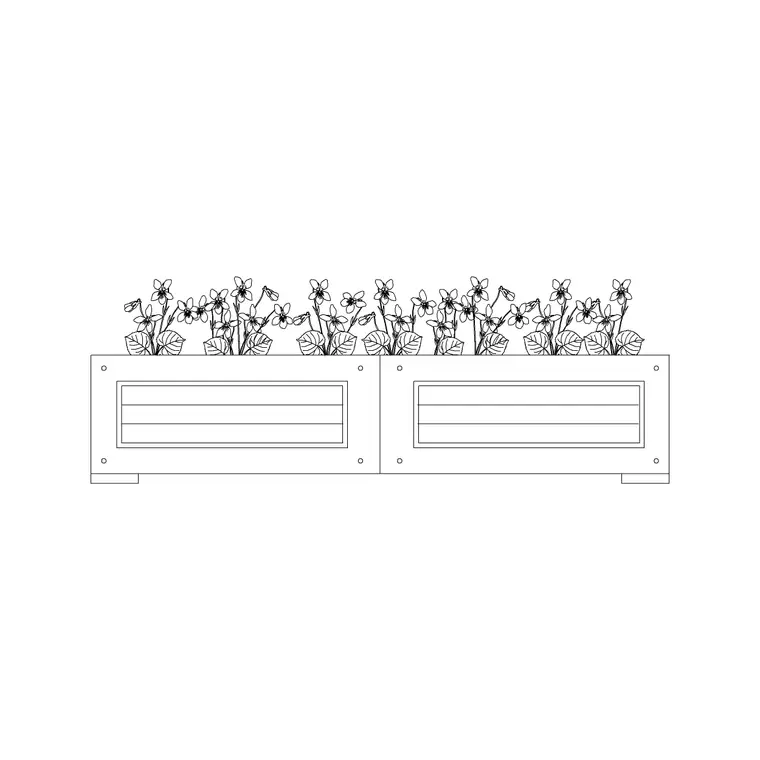
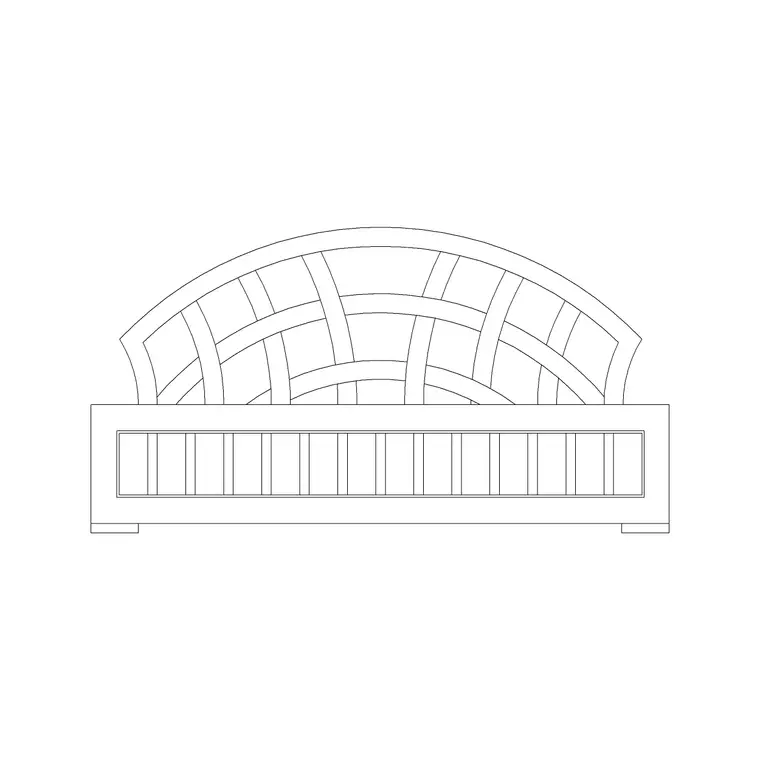
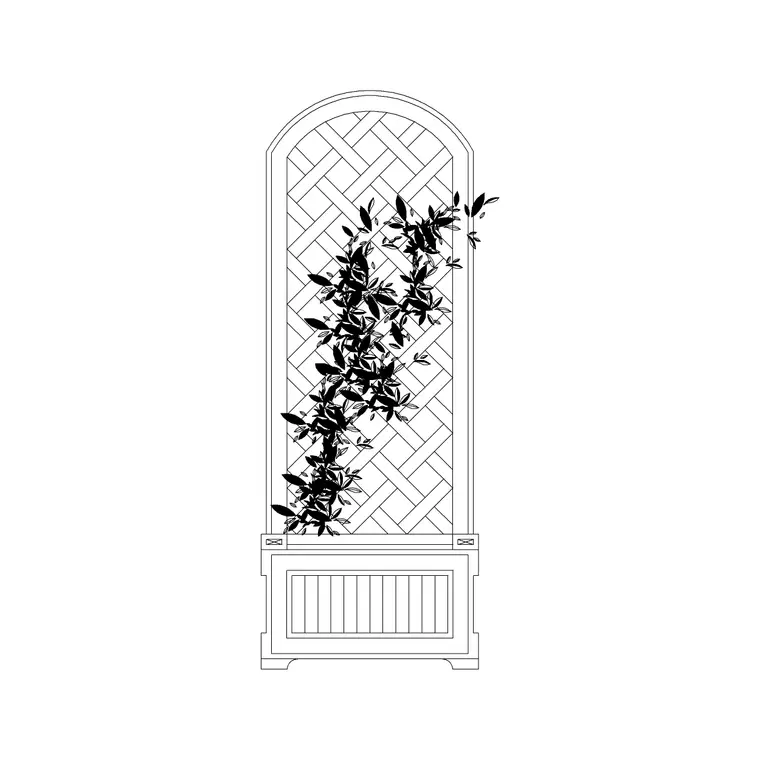
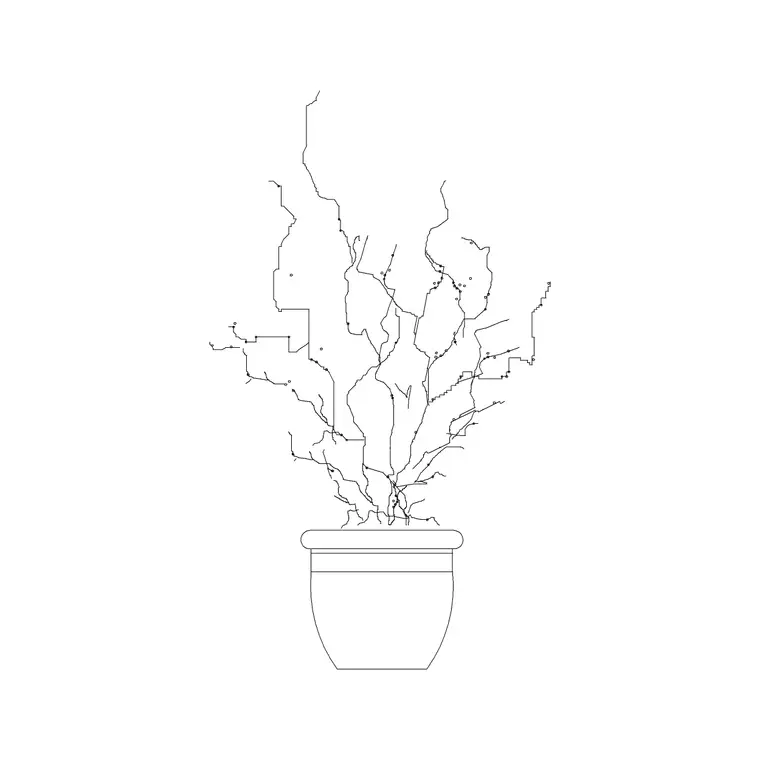
Build the planting from a small kit of repeated blocks. Use the rectangular and standard flower-bed blocks for built raised beds along the parapet, the round iron-fenced flower bed as a freestanding feature, and a mix of medium potted plants and a low pot block for moveable containers. A pine plan block reads as a larger specimen tree where the structure can carry a deep planter.
In plan a raised bed is a simple rectangle with an inner planting symbol; a potted plant is a circle with a canopy hatch. Draw beds at their built footprint, not the plant canopy, so the structural and drainage clearances are honest. Cluster pots in odd numbers and varied sizes for a designed look that survives the jump from plan to built terrace.
Seating, paving and the drainage fall
A terrace garden earns its name only if someone can sit in it. Drop a three-seat outdoor sofa or a swing seat into the use zone, and a round table where dining is wanted, oriented to the best view or the afternoon sun. Keep furniture off the parapet edge so the planting band can run behind it.
For the floor, lay a paver pattern across the slab and run it toward the drainage outlets so the fall reads in plan. Falls of roughly 1:80 to 1:100 are common on terraces — keep the exact figure for your section and let the paving direction carry the intent in plan. Beds and containers must sit on the slab without blocking that flow, so keep a drainage channel clear behind the parapet-edge planters.
Building the terrace plan from blocks
Sequence the drawing so the structure leads. First, draw the slab outline, the parapet and the door, then mark the drainage outlets and fall arrows. Second, place the raised-bed blocks along the parapet where structure allows, leaving the drainage channel clear. Third, set the use zone — sofa, table, loungers — in the open centre. Fourth, scatter container blocks to soften corners and frame the seating. Fifth, lay the paving and confirm the circulation loop stays at least 900 mm everywhere.
Keep planting, furniture, paving and drainage on separate layers, and insert beds and pots as named blocks so a size change ripples through. A short schedule of bed sizes and a fall arrow turn the plan into something a contractor and a structural engineer can both read.
Mistakes that sink a terrace garden
- Treating it like a ground garden: there is no soil to dig, so every plant needs a drawn container with a real footprint. - Ignoring load: massing deep beds mid-span instead of over beams is a structural problem you can see in plan and fix early. - Blocking drainage: parapet-edge planters sitting tight to the wall dam the fall and pond water. Keep the channel clear. - A solid green carpet: no open paved area means nowhere to stand or place furniture. Design the void deliberately. - Single scattered pots: a fringe of lone containers looks accidental. Cluster them so the terrace reads as designed.
Free download
Browse the full library — DWG & DXF, no signup.
Questions
Frequently asked
How is a terrace garden different from a balcony?+
A terrace garden sits on a wide flat roof or upper-floor slab and is large enough to zone into planting, seating and circulation, with raised beds across it. A balcony is a narrow projecting strip that usually holds only one or two functions.
Why use raised beds instead of planting in the ground?+
A terrace sits on a structural slab, so there is no ground to dig into. Planting happens in raised beds and containers whose footprint and weight you draw and place over load-bearing structure, keeping drainage clear behind them.
How wide should the circulation path be?+
Keep a continuous walking loop of at least 900 mm so every bed and container can be reached and maintained. Beds you cannot get to do not get watered, and a terrace garden lives or dies on maintenance access.
How do I show drainage on a terrace plan?+
Mark the outlets, draw fall arrows, and run the paving pattern toward the outlets so the slope reads in plan. Keep parapet-edge planters off the wall so the drainage channel behind them stays clear. Detail the exact fall in section.
Are the terrace garden blocks free to use commercially?+
Yes. Every block downloads as DWG free for personal and commercial work, with no signup or watermark, and opens in AutoCAD 2004 or later and most DWG-compatible CAD software.
Related downloads
Blocks for this guide
Related categories
Related guides
Room guide
Free Balcony CAD Blocks — DWG Download
Free balcony CAD blocks in DWG — railings, compact seating, planters and pavers drawn to scale for AutoCAD apartment plans. No signup, commercial use OK.
Room guide
Rooftop Deck CAD Blocks — Free DWG
Free rooftop deck CAD blocks in DWG — lounge seating, railings, planters and decking pavers for roof terrace plans in AutoCAD. No signup, commercial OK.
Room guide
Free Courtyard CAD Blocks — DWG Download
Free courtyard CAD blocks in DWG — central planting, paving patterns, seating and trees for internal courtyard plans in AutoCAD. No signup, commercial OK.