Room guide · rooftop deck cad blocks
Free rooftop deck CAD blocks for AutoCAD
By Saumyajit Maity · Published 16 May 2022 · Updated 28 Mar 2026
A rooftop deck is the entertaining cousin of the terrace garden: less about growing, more about lounging, dining and the view. It is a finished outdoor floor laid over a flat roof, edged by guarding and furnished as an open-air room. These free rooftop deck CAD blocks bring together the lounge seating, railings, planters and decking patterns you need to lay one out at scale in AutoCAD, all in DWG and ready to insert.
The rooftop deck has its own design grammar. The guarding along every open edge is non-negotiable and code-driven. The view dictates which way the furniture faces. Wind exposure on a roof pushes you toward heavier, grounded pieces and sheltering planters. And because the deck sits on a roof, the decking, drainage and parapet all have to be drawn honestly over the structural slab.
Everything is free for personal and commercial use, no signup, no watermark, and opens in AutoCAD 2004 or later. The fastest way in is to draw the roof edge and guarding first — they frame everything — then furnish the protected interior toward the best outlook.
What a rooftop deck is for
A rooftop deck is an open-air social space on a flat roof, used for lounging, dining, sundowners and gatherings. Residential projects use it as a private retreat or shared amenity; restaurants and bars use it as premium seating; offices use it as an events roof. It differs from a terrace garden in emphasis — furniture and sightlines lead, planting supports.
The defining facts of a roof drive the plan: it is exposed to wind and sun, surrounded by an edge that must be guarded, and built over a slab with a drainage fall. Those three turn an empty roof into a deck that has a sheltered core, a protected perimeter walk and a clear relationship to the skyline beyond.
Guarding the edge
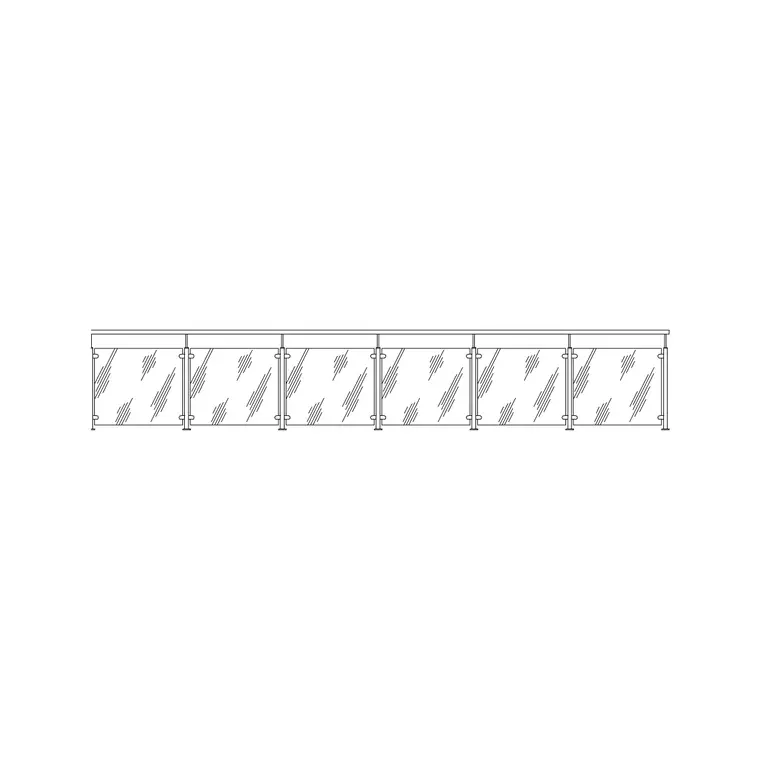
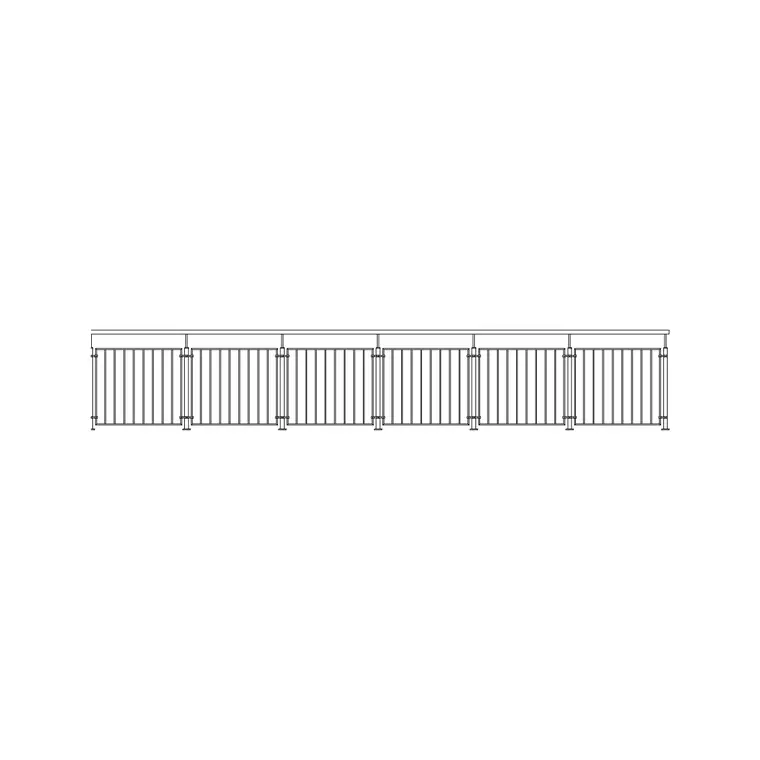
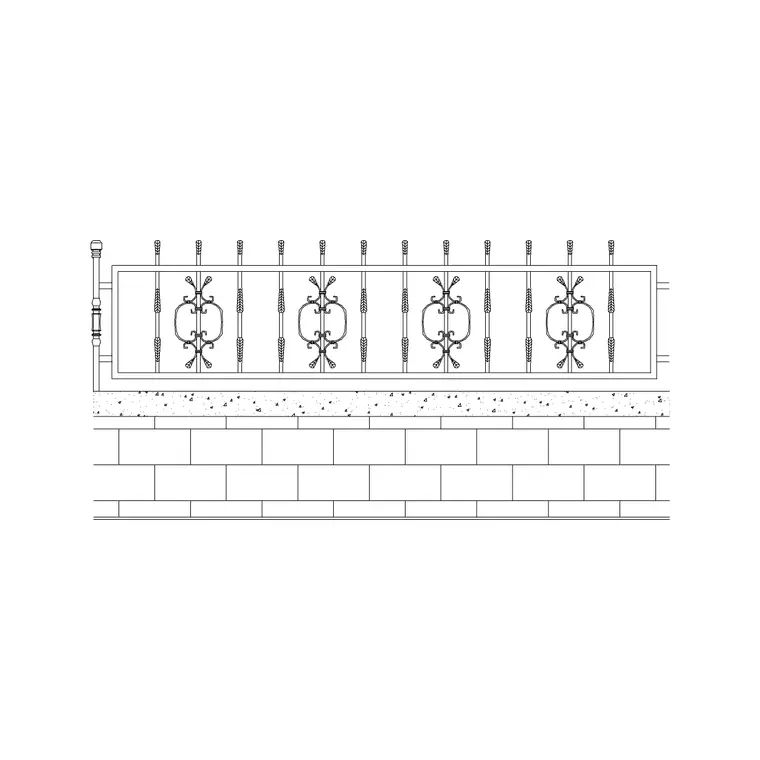
On a rooftop the guarding is the first thing to draw and the thing most likely to be wrong. Run a railing along every open edge — metal for an industrial look, glass to keep the view, or a parapet-and-railing combination. The blocks include metal and glass railing plus a metal-fence-with-wall option that reads as a solid parapet topped with guarding.
Guard height is code-controlled and on a roof it is taken seriously; keep it generous and let your local regulation set the figure. In plan the railing is a thin line at the true roof edge; do not inset it, because the deck's usable area depends on where guarding actually sits. Where the view is the whole point, glass guarding pays its way by keeping the sightline open from a seated position.
Furnishing for lounging and the view
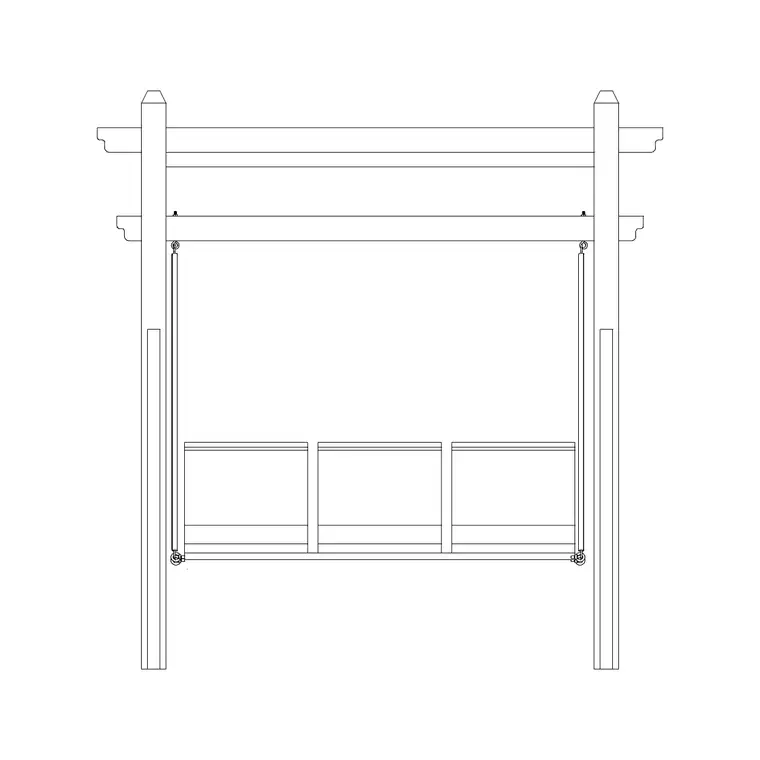
Furnish a rooftop deck as zones facing outward. A lounge cluster of three-seat sofas and swing seats anchors the social zone; a dining set with a round table serves meals; loungers line the sunniest edge. Orient seating to the best outlook so the railing frames a view rather than a barrier.
Wind matters more than at ground level. Favour grounded, heavier pieces over light folding furniture, and use planters as low windbreaks around the lounge cluster. Keep a clear perimeter walk of at least 700–900 mm between the furniture and the guarding so people can move to the edge safely without squeezing past a sofa back.
Decking, planters and drainage
The floor finish defines the deck. Lay a decking or paver pattern across the slab and run the boards or joints toward the drainage outlets so the fall reads in plan. A typical roof fall is gentle — carry the exact figure to your section and let the decking direction signal it in plan.
Planters do double duty on a roof: they soften the hard edge, screen for privacy and act as windbreaks. Use raised flower beds along the guarding and clustered pots around the lounge. Keep them off the drainage channel behind the parapet, and concentrate the heavier planters over structure rather than mid-span, exactly as on a terrace garden.
Laying out the deck plan
Draw in layers of priority. First, the roof outline, parapet and door, with drainage outlets and fall arrows. Second, the guarding around every open edge at the true line. Third, the perimeter walk marked at 700–900 mm clear. Fourth, the furniture zones — lounge, dining, loungers — each facing its best view. Fifth, planters as windbreaks and screens, then the decking pattern.
Keep guarding, furniture, planting, decking and drainage on separate layers, and insert the railing and furniture as named blocks. Dimension the guard height on an edge elevation and the perimeter-walk width in plan; those are the two figures a reviewer checks for safety and usability.
Rooftop deck mistakes to avoid
- Insetting the railing: it quietly steals usable deck and misstates the guarded edge. Draw guarding at the true roof line. - Light furniture on an exposed roof: folding chairs blow over. Specify grounded pieces and use planters as windbreaks. - No perimeter walk: furniture pushed to the edge leaves no safe route to the view. Keep 700–900 mm clear inside the guarding. - Facing furniture inward: a rooftop with seating turned away from the view wastes the one thing a roof offers. Orient outward. - Forgetting the fall: a flat decking plan with no drainage direction ponds water. Run the boards toward the outlets.
Free download
Browse the full library — DWG & DXF, no signup.
Questions
Frequently asked
How is a rooftop deck different from a terrace garden?+
A rooftop deck leads with furniture, lounging and the view, using planting as support and windbreak. A terrace garden leads with planting in raised beds. Both sit on a roof slab, so both need guarding and a shown drainage fall.
What guarding should I draw on a roof deck?+
Run a railing along every open edge — metal, glass or a parapet-with-railing combination — at the true roof line, never inset. Keep the height generous and code-compliant; glass guarding keeps the view open from a seated position.
How much clear space do I leave at the edge?+
Keep a perimeter walk of at least 700–900 mm clear between the furniture and the guarding so people can reach the edge and the view safely without squeezing past furniture. Push lounge clusters into the protected core.
How do I handle wind on a rooftop deck?+
Favour grounded, heavier furniture over light folding pieces, and use raised planters as low windbreaks around the lounge cluster. Place heavier planters over structure rather than mid-span to keep the slab loading sensible.
Are the rooftop deck blocks free for commercial use?+
Yes. Every block downloads as DWG free for personal and commercial work, no signup or watermark, and opens in AutoCAD 2004 or later and most DWG-compatible CAD applications.
Related downloads
Blocks for this guide
Related categories
Related guides
Room guide
Free Balcony CAD Blocks — DWG Download
Free balcony CAD blocks in DWG — railings, compact seating, planters and pavers drawn to scale for AutoCAD apartment plans. No signup, commercial use OK.
Room guide
Terrace Garden CAD Blocks — Free DWG
Free terrace garden CAD blocks in DWG — raised planters, potted greenery, seating and paving to design a green roof terrace in AutoCAD. No signup.
Room guide
Free Courtyard CAD Blocks — DWG Download
Free courtyard CAD blocks in DWG — central planting, paving patterns, seating and trees for internal courtyard plans in AutoCAD. No signup, commercial OK.