Room guide · balcony cad blocks
Free balcony CAD blocks for AutoCAD
By Sumana Kumar · Published 16 Nov 2023 · Updated 6 Jun 2026
A balcony is the smallest piece of outdoor space most homes own, which makes it the hardest to draw well. With a typical projecting balcony only 1.2 to 1.8 metres deep, every centimetre is spoken for — the railing line, the door swing, the drainage fall and whatever furniture you hope to fit all compete for the same narrow strip. These free balcony CAD blocks give you those parts already drawn to true millimetre scale in DWG, so you can test what actually fits before you commit a layout to a client or a builder.
The blocks here are chosen for tight spaces: slim metal and glass railing runs, compact two-seat furniture, small potted plants and a handful of paver patterns for the floor finish. Everything is free for personal and commercial work, with no signup and no watermark, and inserts cleanly into AutoCAD 2004 or later.
Because a balcony reads almost entirely as a plan and a railing elevation, the value of scaled blocks is immediate. Drop a railing along the slab edge, place a bistro table against the wall, and you can see at a glance whether a person can still pull the chair out and open the door — the three checks that decide whether a small balcony works at all.
What a balcony layout has to solve
A balcony is a cantilevered or recessed outdoor platform attached to an upper-floor room, used for fresh air, a morning coffee, drying, plants or a smoking spot. Unlike a terrace it is rarely wide enough to be a room in its own right, so the design problem is almost always subtraction: which one or two functions can this strip actually hold?
The fixed constraints are the railing or parapet along the open edge, the door or French window into the building, and the structural depth of the slab. Everything else — seating, planters, a small table — has to live in the leftover band between the door swing and the railing. Drawing those fixed elements first, then dropping scaled furniture into the gap, is the fastest way to find an honest answer.
Railings: the defining block
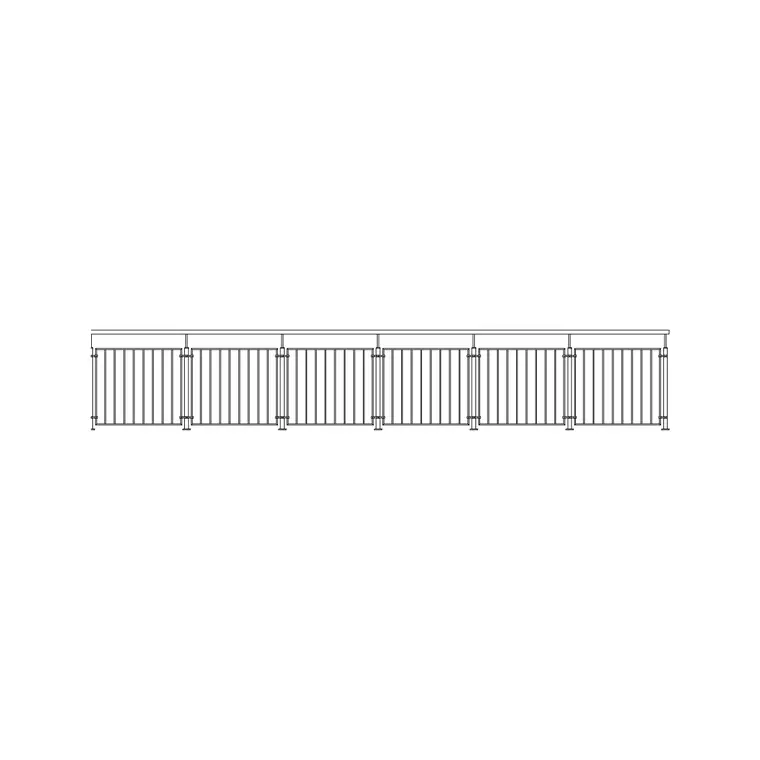
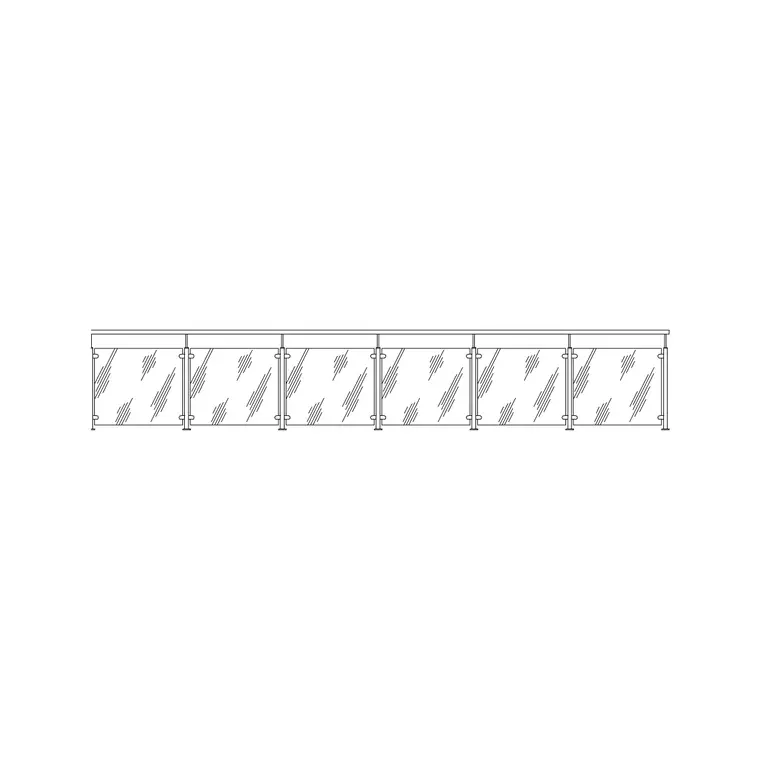
On a balcony the railing is not a detail, it is the room's main elevation. The blocks include metal railing, glass railing and a decorative iron variant so you can match the building's language — metal balusters for a contemporary apartment, glass for an unobstructed view, iron for a heritage or ornamental facade.
In plan a railing reads as a thin double line along the slab edge; in elevation it carries the baluster spacing and the top-rail height. Draw it at the true slab edge, not inset, so the usable floor area behind it is honest. Guard height is set by code in most regions — keep it tall enough that no horizontal member acts as a climbable ledge, and let your local building regulation drive the exact figure rather than guessing.
Furniture that fits a narrow strip
Balcony furniture is bistro-scale by necessity. A small round table around 600–800 mm in diameter with two chairs is the workhorse; the included two-seat outdoor sofa suits a wider recessed balcony, and the round dining table block covers the cafe set. Push seating against the building wall so the railing edge stays clear for the view and for circulation.
Keep a clear path of at least 600–700 mm from the door to the open edge so the balcony is usable, not just decorative. If a chair has to be pulled out to be sat in, draw it pulled out — the back-of-chair position is the real footprint, and it is where small balconies fail.
Planters, plants and floor finish
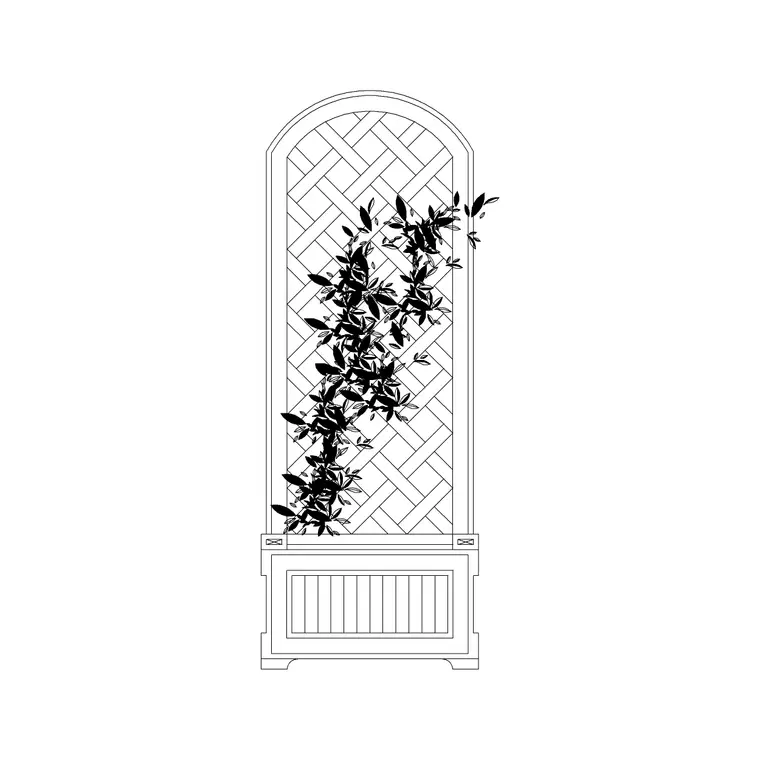
Greenery is what makes a balcony feel like outdoor space rather than a ledge. Use small potted plants and a low pot block along the railing or in the corners, and a flower basket hung off the rail where the floor is full. Keep pots off the main walking line and concentrate them at the ends where furniture cannot go.
For the floor, a paver or deck-tile pattern over the structural slab both finishes the surface and signals the drainage fall in your drawing. Lay the paving block pattern running toward the outlet so the fall reads correctly, and leave the slab-to-door threshold detail to your section.
Assembling the balcony plan in AutoCAD
Work in this order. First draw the slab outline and the wall with the door opening, including the door swing arc into the room. Second, run the railing block along the open edge at the true slab line. Third, mark the usable band between the door swing and the railing — this is your real working area. Fourth, drop furniture into that band against the wall, then planters at the corners.
Keep railings, furniture, planting and paving on separate layers so a reviewer can isolate the guarding or the furniture instantly. Insert each block as a named block rather than exploding it, so a railing height change updates everywhere at once. Add a dimension from door to railing and the railing height to the elevation — those two numbers are what anyone checks first.
Common balcony drawing mistakes
- Drawing furniture at indoor scale: a full three-seat sofa will technically fit on paper and block the door in reality. Stay bistro-scale. - Forgetting the door swing: an out-swinging door can wipe out the entire usable strip. Always draw the arc. - Insetting the railing: placing the guard inside the slab edge silently steals depth you do not have. - Ignoring drainage: a flat balcony plan with no fall looks fine and ponds water on site. Show the slope direction in the paving. - Over-planting the walkway: pots along the door side turn a 1.4 m balcony into a 0.9 m one. Keep the path clear.
Free download
Browse the full library — DWG & DXF, no signup.
Questions
Frequently asked
How deep is a typical balcony in CAD plans?+
Projecting apartment balconies are commonly 1.2 to 1.8 m deep and 2 to 4 m wide, though recessed and Juliet balconies vary widely. Draw to the real slab dimension rather than a default — depth is what decides whether furniture fits.
Which railing block should I use?+
Match the building: metal railing for contemporary apartments, glass railing where the view matters, and the decorative iron option for heritage or ornamental facades. All read as a thin line in plan and carry baluster spacing in elevation.
What furniture fits on a small balcony?+
A 600–800 mm round table with two chairs, or a single two-seat outdoor sofa on a wider recessed balcony. Push it against the building wall and keep at least 600 mm clear from the door to the open edge.
Are these balcony blocks free for commercial projects?+
Yes. Every balcony block downloads as DWG free for personal and commercial use, with no signup and no watermark, and opens in AutoCAD 2004 or later as well as most DWG-compatible CAD tools.
How do I show drainage on a balcony plan?+
Run the paving or deck-tile pattern toward the drainage outlet so the fall direction reads in plan, and detail the actual slope and threshold in your section. A balcony with no shown fall is the most common site problem.
Related downloads
Blocks for this guide

Related categories
Related guides
Room guide
Terrace Garden CAD Blocks — Free DWG
Free terrace garden CAD blocks in DWG — raised planters, potted greenery, seating and paving to design a green roof terrace in AutoCAD. No signup.
Room guide
Rooftop Deck CAD Blocks — Free DWG
Free rooftop deck CAD blocks in DWG — lounge seating, railings, planters and decking pavers for roof terrace plans in AutoCAD. No signup, commercial OK.
Room guide
Free Courtyard CAD Blocks — DWG Download
Free courtyard CAD blocks in DWG — central planting, paving patterns, seating and trees for internal courtyard plans in AutoCAD. No signup, commercial OK.