Block landing · salon chair cad block dwg
Free salon chair CAD block in DWG
By Saumyajit Maity · Published 13 Apr 2026 · Updated 8 May 2026
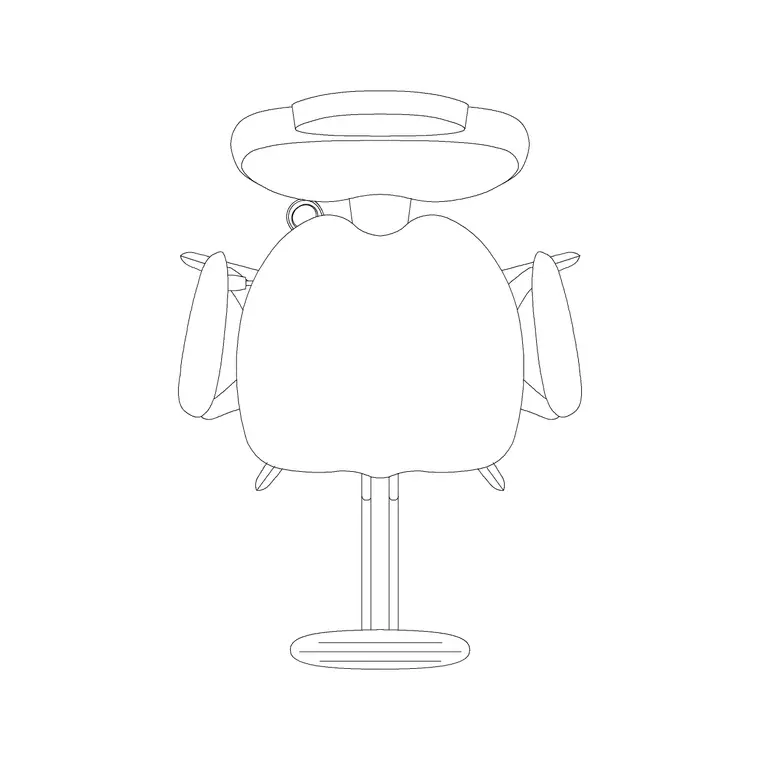
A salon chair is the centrepiece of any hair-salon layout: a height-adjustable styling chair on a hydraulic base, set in front of a mirror station with clearance for the stylist to work all the way around. This free salon chair CAD block ships in DWG with both a plan footprint and a front elevation, drawn to true millimetre dimensions for AutoCAD 2004 or later, with no signup, no watermark and full commercial clearance. It is the block you array down a salon to set out the styling stations and check the working clearances between them.
What makes a salon chair different from an ordinary chair block is the working envelope around it. The stylist circles the seated client, so the plan footprint and the gap to the next chair govern whether the salon actually functions. Drawing the chair to scale lets you set realistic station spacing and confirm that two stylists can work back-to-back without colliding.
What the salon chair block is
This is a styling chair drawn as a seat with armrests on a round hydraulic pedestal base, with a footrest at the front. The plan shows the chair footprint and the base disc that governs clearance; the elevation shows the seat, the reclined back angle and the pump base. Together they let you set out a styling station and confirm both the floor area and the chair height.
It inserts as a single block reference, so you copy and array it down a salon row and mirror it across an aisle. Edit the block once and every station updates, which keeps a multi-chair salon consistent.
Views and what's included
The download pairs a plan view — the one you array to lay out styling stations — with a front elevation that shows the chair height and reclined back. Use the plan for the layout and clearance checks, and drop the elevation into an interior elevation of the styling wall to show the mirror-and-chair relationship.
The geometry is layered so the seat, base and footrest separate cleanly, letting you tone the base disc back while you dimension the working clearance around each station.
Typical salon chair dimensions
Treat these as working ranges. A salon chair seat height adjusts over roughly 500–650 mm on its hydraulic base. The overall chair footprint in plan is commonly 600–700 mm wide including arms, on a base disc around 550–650 mm in diameter. Seat depth is typically 450–520 mm, and the back, when reclined, extends the overall length toward 1000 mm for a wash position.
For station spacing, allow at least 1800 mm centre to centre between styling chairs so the stylist has room to move around the client, and keep a clear aisle of around 1000–1200 mm behind the chairs. These clearances are what turn a row of chairs into a workable salon.
How to insert and scale it
The block is drawn full size in millimetres. Insert at scale 1 in a millimetre drawing, 0.001 in a metre drawing, or set INSUNITS to millimetres on an imperial template so AutoCAD rescales on insertion. Pick the insertion point at the base centre so you can snap the chair to a station centreline in front of each mirror.
To lay out a salon, place one chair, then ARRAY it along the styling wall at your station spacing, and mirror the row to the opposite wall. Keep the chairs on a furniture layer so you can freeze them for the construction plan and thaw them for the furnished FF&E drawing.
Where salon chair blocks are used
Salon chair blocks drive the layouts for hair salons, barbershops, beauty parlours, blow-dry bars and training academies, and they appear in retail and hospitality schemes that include a grooming area. They pair with the wash-basin, styling-station and mirror-unit blocks, and with the reception and waiting-seat blocks in the furniture category.
Because they are free and licence-clear, they suit student salon projects, fit-out concept plans and franchise rollout drawings where a repeatable, correctly-spaced station is exactly what the brief needs.
Planning a workable salon floor
A salon layout lives or dies on the gaps between chairs, so the scaled block is most valuable when you use it to test clearances rather than just to fill the plan. Set the styling chairs against the mirror wall, then check that the stylist's working envelope — roughly the arc they sweep around the seated client — does not collide with the next station or block the aisle. Two stylists working back-to-back across a central spine need the combined envelopes to clear, which is why the 1800 mm centre-to-centre figure matters.
Keep the styling chairs, wash basins, reception and waiting seating each on their own layer, and you can hand over a clean services plan, a furniture plan and an FF&E schedule from one drawing. When a station is resolved, WBLOCK the chair-plus-mirror-unit as a repeatable module and array it down the wall so every station is identical by construction.
Free download
Browse the full library — DWG & DXF, no signup.
Questions
Frequently asked
How far apart should salon chairs be spaced?+
Allow at least 1800 mm centre to centre between styling chairs so the stylist can move around the seated client, plus a clear aisle of about 1000–1200 mm behind. The scaled block lets you confirm these clearances on the plan.
Does the salon chair block include a plan view?+
Yes. It pairs a plan footprint — the view you array to set out styling stations — with a front elevation for the styling-wall drawing. The views are listed on the download page.
Is the salon chair CAD block free for commercial work?+
Yes — free in DWG, no signup, no watermark, no attribution, and cleared for commercial salon fit-out projects.
What AutoCAD versions open the file?+
Any release from AutoCAD 2004 onward, including AutoCAD LT, plus BricsCAD, DraftSight and free DWG viewers.
Related downloads
Blocks for this guide
Related categories
Related guides
Block landing
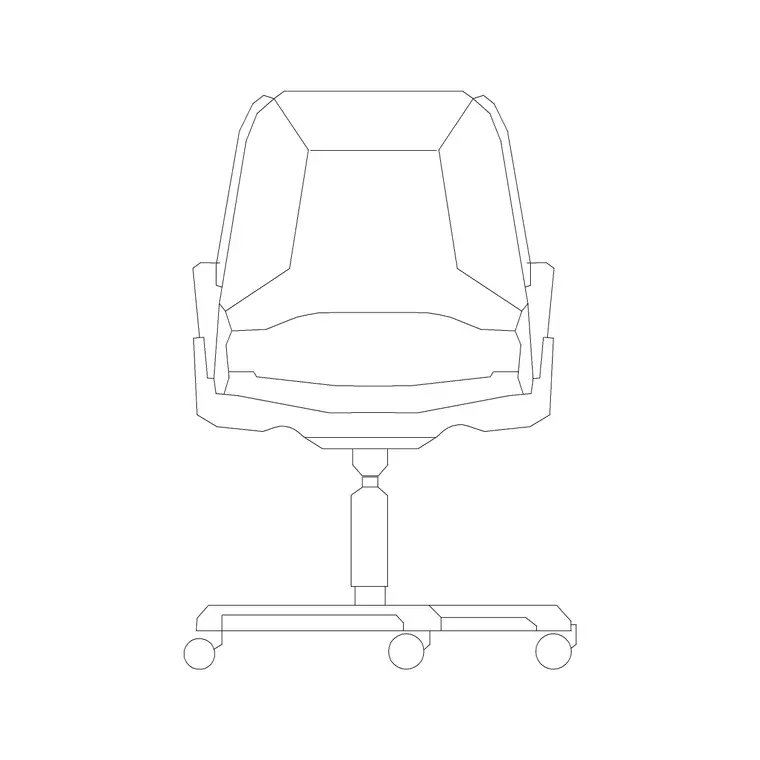
Free Office Chair CAD Blocks — DWG Download
Download free office chair CAD blocks in DWG and DXF — task chairs, swivel chairs and executive seats drawn in plan and elevation, AutoCAD 2004+, no signup.
Block landing
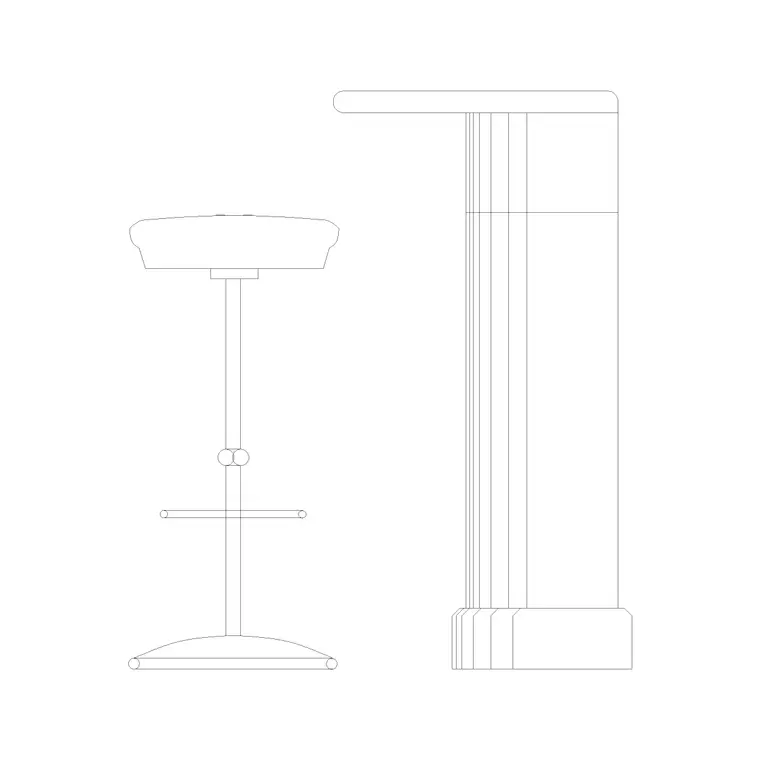
Free Bar Table CAD Blocks — DWG Download
Download free bar table CAD blocks in DWG and DXF — round, square and rectangular high bar tables in plan and elevation for AutoCAD. No signup, commercial-use OK.
Block landing
Free Restaurant Table CAD Blocks — DWG Download
Download free restaurant table CAD blocks in DWG and DXF — 2, 4 and 6 cover tables with chairs drawn in plan and elevation for AutoCAD. No signup, commercial-use OK.