Block landing · round basin cad block dwg
Round basin CAD blocks in DWG and DXF
By Sumana Kumar · Published 31 May 2026 · Updated 23 Jun 2026
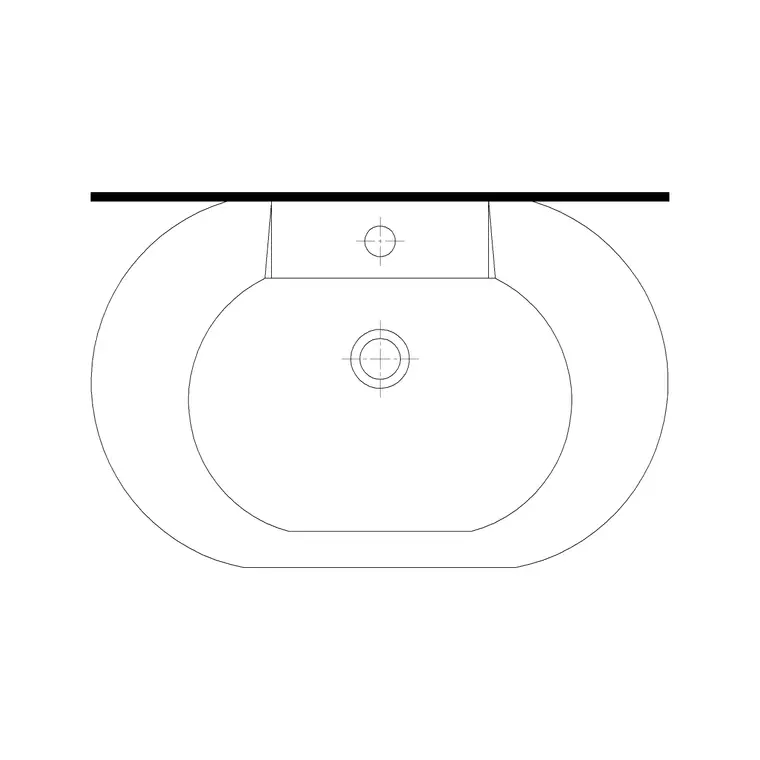
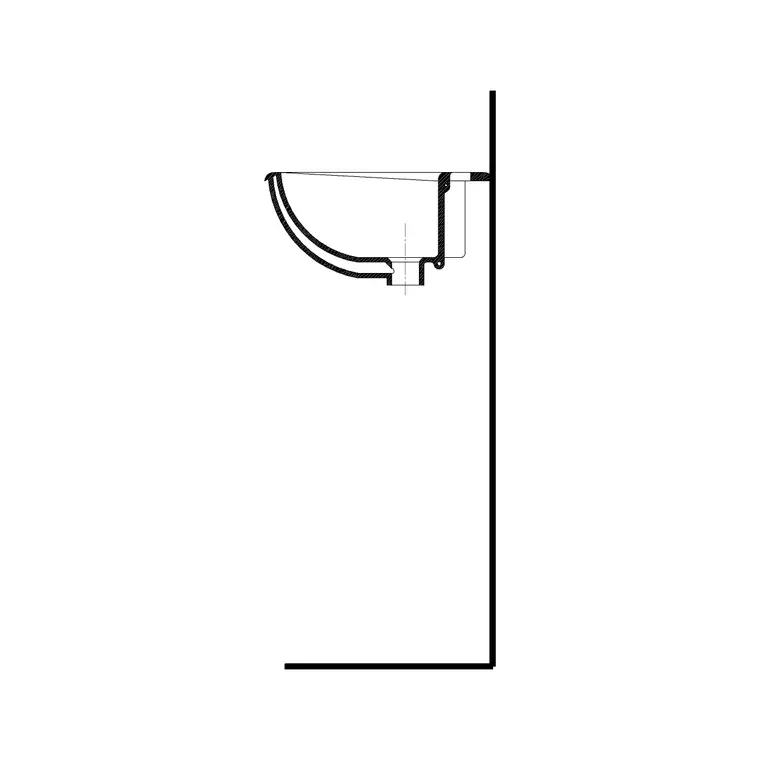
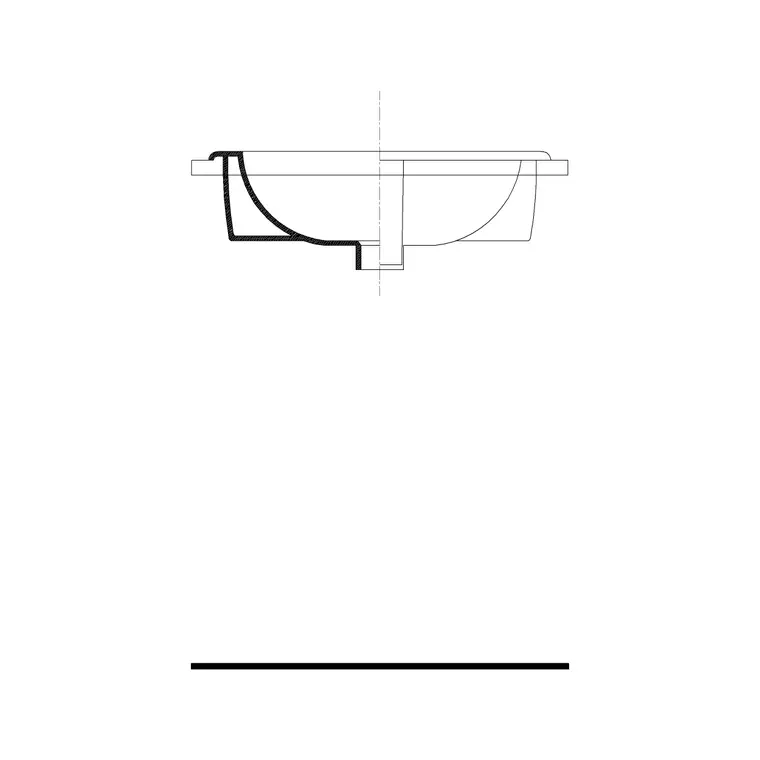
A round basin is the simplest bowl to specify and one of the most popular, and a complete round-basin block gives you more than a single circle: the plan you set out on the vanity, the side elevation that shows the bowl depth, and the front elevation that lines the basin up with the tiling and the tap. This page collects free round basin CAD blocks in DWG — the round wash basin drawn at true millimetre dimensions across those views, ready to insert into AutoCAD 2004 or later. Everything is free for personal and commercial work, with no signup, no watermark and no attribution required.
Round basins suit almost any bathroom, from a compact cloakroom bowl to a generous feature vessel, which is why they are among the most-placed sanitaryware blocks. Having the plan and matching elevations to hand means you can build the layout and the wall from a single download, rather than redrawing the basin each time the drawing changes view.
The three views a round basin block gives you
A well-drawn round basin block ships the views a bathroom set actually needs. The plan is the circle you place on the vanity, with the tap and waste shown so the basin sets out correctly against the wall. The side elevation reveals the bowl depth and, for a vessel, how far it stands above the counter — the profile you drop into a section through the bathroom.
The front elevation is the view a tiling drawing wants: the bowl seen head-on, lined up with the tap, the mirror above and the tile coursing behind. Having all three in one file means you draw the basin once and reuse it across the layout, the elevation sheet and the section, keeping every view consistent because they come from the same block.
Round vessel or inset round bowl
Round basins come both ways. An inset round bowl drops into the worktop, sitting flush or just below, with a deck-mounted tap behind — the practical choice for family bathrooms. A round vessel stands proud on the counter as a feature, which raises the rim and means the supporting worktop is set lower to keep washing comfortable.
The difference shows mostly in the elevations: an inset bowl's rim sits at the counter line, while a vessel adds its full height on top. The front and side elevation blocks here capture that standing height where it applies, so your wall and section read correctly whichever arrangement the design uses. Check the download page to see which views a particular file includes.
Typical sizing to design around
Reach for these ranges when placing a round basin. Bowl diameter: commonly 300–420 mm, with compact cloakroom bowls nearer 280–320 mm. Bowl depth: roughly 120–160 mm. For a round vessel, height above the counter is often 100–150 mm. Finished rim height: aim for a usable rim around 800–900 mm above the floor, setting the counter lower for a vessel to compensate.
These are planning envelopes, not fixed figures — round basins vary widely by maker, so confirm against the specified product before dimensioning. Placing a correctly sized circle first lets you test the tap clearance and the gap to side walls, then refine to the chosen basin and its tap on the front elevation.
How to insert and align the views
These blocks are drawn full size in millimetres. Insert at scale 1 in a millimetre drawing, 0.001 in a metre template, or set INSUNITS to millimetres so AutoCAD rescales on insertion. Place the plan on the vanity worktop, centred or offset as the design intends; for the front and side elevations, snap the block to your finished-floor and counter lines so heights carry correctly.
Keep the basin on a dedicated sanitaryware layer across all three views so you can isolate it for a setting-out drawing or freeze it for a structural plan. Because each view is a single block reference, you can copy the basin for a twin-bowl vanity and array the pair, with edits to the block definition flowing to every instance across plan, elevation and section.
Where round basins are used
Round basin blocks belong in nearly every bathroom drawing: cloakrooms, en-suites, family bathrooms, hotel rooms, restaurant and bar washrooms and feature powder rooms. The round bowl is the default choice when no specific shape is mandated, which makes it one of the most reusable fixtures in a sanitaryware library.
Pair them with the vanity, tap, mirror and WC blocks in the bathroom category to build a complete bathroom in a few minutes, and use the front elevation to coordinate the basin with the tiling and accessories. Because the files are free and licence-clear, they suit student schemes, concept boards and coordinated fit-out drawings alike, carrying the same basin from first sketch to final construction set.
Keeping plan and elevation coordinated
Because a round basin block gives you several views, the discipline that keeps a bathroom drawing tidy is making sure those views agree. Put the basin on a dedicated sanitaryware layer in the plan, the section and the elevation sheet so you can isolate it across all three, and check that when you move the basin in plan you update its position on the matching elevation rather than leaving the two out of step.
If you tag the basin as a block with a simple type attribute, you can extract a sanitaryware schedule directly from the plan instead of counting bowls by hand, which feeds straight into a specification or procurement sheet. And once a basin station is resolved — bowl, tap and mirror together — you can write it out as a single reusable block (WBLOCK) and array it down a row of identical hotel bathrooms, so a standardised wash point is placed in seconds rather than redrawn for each room.
Free download
Browse the full library — DWG & DXF, no signup.
Questions
Frequently asked
What views do the round basin blocks include?+
Many ship the plan, the side elevation and the front elevation in one DWG, so you can set out the vanity, draw the section and coordinate the tiling from a single file. Each download page lists the views available for that block.
What's the difference between a round basin and a circular basin block?+
They describe the same round bowl shape; the blocks are interchangeable. Whichever term you search, look for a file that includes the plan and the elevations your drawing needs, plus the inset or vessel arrangement you are specifying.
What diameter should I draw a round basin at?+
Round basins are commonly 300–420 mm in diameter, with compact cloakroom bowls nearer 280–320 mm. Treat these as ranges and confirm against the specified product before dimensioning a construction drawing.
Are the round basin blocks free for commercial use?+
Yes. Every round basin block here downloads free in DWG with no signup, no watermark and no attribution requirement, and is cleared for commercial project use.
Related downloads
Blocks for this guide
Related categories
Related guides
Block landing
Free Bathroom Fixtures CAD Blocks — DWG Download
Download free bathroom fixtures CAD blocks in DWG and DXF — toilets, wash basins, bathtubs, showers and vanities drawn in plan and elevation. No signup, commercial OK.
Block landing
Free Sanitary Fixtures CAD Blocks — DWG Download
Download free sanitary fixtures CAD blocks in DWG and DXF — WCs, wash basins, urinals and sinks in plan and section for AutoCAD sanitary plans.
Block landing
Free Toilet / WC CAD Blocks — DWG Download
Download free toilet / WC CAD blocks in DWG and DXF — close-coupled, back-to-wall and commode pans in plan and elevation for AutoCAD. No signup, commercial OK.