Block landing · range hood cad block
Range hood and chimney CAD blocks for AutoCAD
By Saumyajit Maity · Published 12 Mar 2024 · Updated 7 Mar 2026
A range hood — also called a cooker hood, extractor or kitchen chimney — is the appliance that makes a cooking wall work, and on the drawing it is mostly an elevation and section job rather than a plan one. This page collects free range hood and chimney CAD blocks in DWG and DXF, drawn to true millimetre sizes for AutoCAD 2004 or later, free for personal and commercial use with no signup and no watermark.
The hood is unusual among kitchen appliances because its critical dimensions are vertical: the clearance above the hob, the chimney rise to the ceiling, and the canopy depth that has to cover the cooking zone. Drawn to scale, the block lets you set that clearance correctly, size the chimney run to the ceiling height, and centre the whole assembly on the hob below.
What a range hood block needs to show
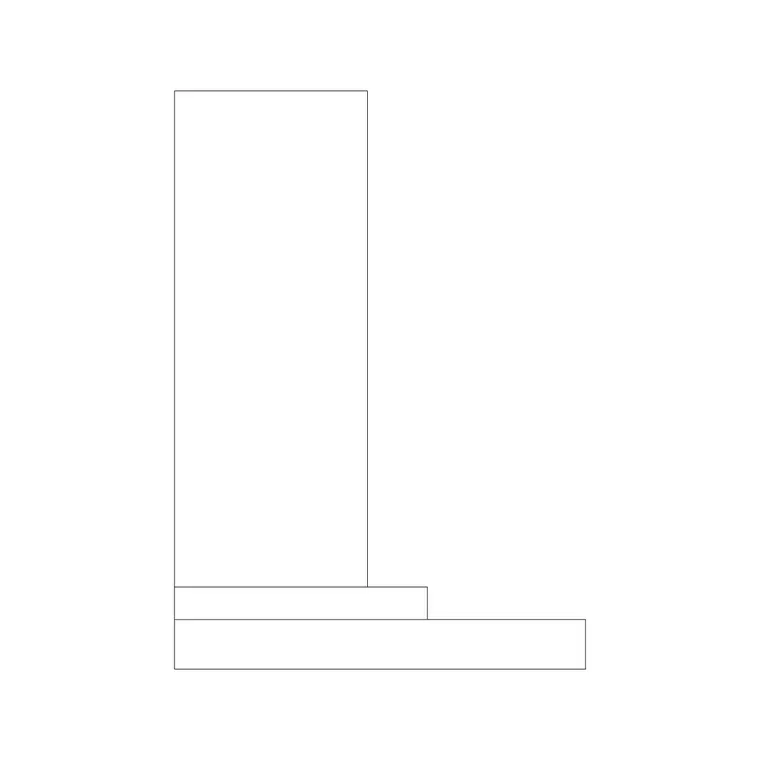
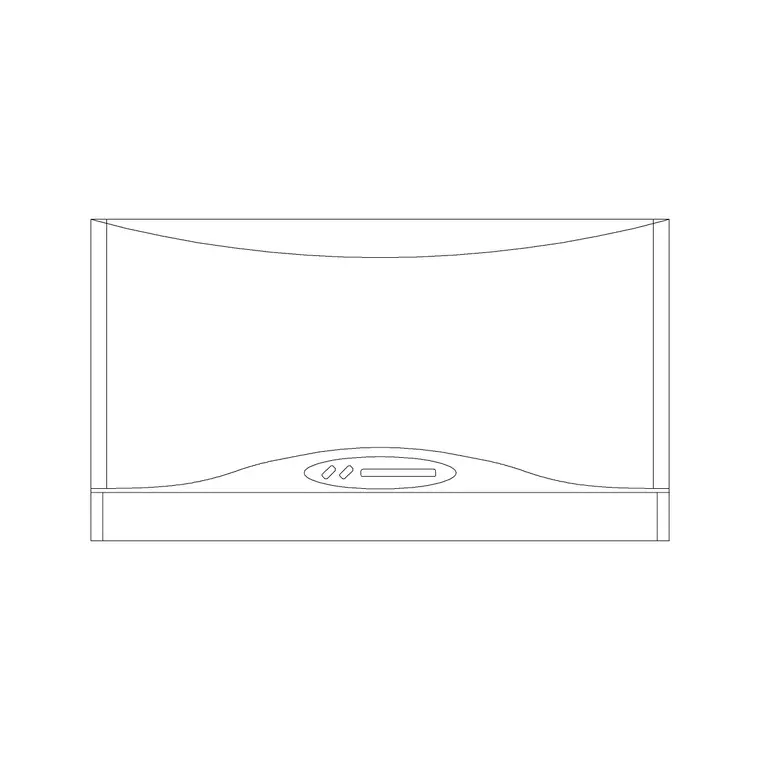
A hood block earns its keep in elevation and section more than in plan. In elevation it draws the canopy, the chimney riser up to the ceiling and the control or light strip on the underside. In section it shows the canopy depth over the hob and the clearance gap, which is the dimension building control and the manufacturer both care about. In plan the hood is often just a dashed rectangle over the hob showing the extract footprint and the duct position.
Because hoods come in distinct forms — chimney, canopy, integrated and downdraft — the block draws the actual canopy profile so the elevation reads as the right type. The canopy, chimney and controls sit on separate layers so you can show the hood solid or as a dashed overhead outline as the drawing needs.
Section and elevation do the real work
For most kitchen drawings the hood is set out in elevation and confirmed in section. The elevation block fixes the chimney height against the ceiling and the canopy against the splashback, so it has to sit at the right level above the hob. The section block proves the clearance over the burners and the canopy depth that has to overhang the cooking zone to catch the steam and grease.
In plan you usually show the hood as a dashed overhead — a convention that tells the reader the appliance is above the worktop, not on it — together with the duct route to the external wall or roof. Many downloads carry the elevation, section and plan footprint in one DWG so the assembly stays coordinated across the set.
Typical range hood dimensions
Design around these and confirm against the model. A hood is sized to the hob below: a 600 mm hob takes a 600 mm hood, a 900 mm hob a 900 mm hood, and so on, so the canopy fully covers the cooking zone. Canopy depth front-to-back is commonly 450 to 550 mm. The clearance above the cooktop is the figure that matters most — typically 650 to 750 mm for a gas hob and a little less, often 550 to 650 mm, for induction; always confirm against the appliance.
The chimney riser is sized to the gap between the canopy top and the ceiling, so it grows or shrinks with the room height. Telescopic chimney sections cover a range of ceiling heights, which the elevation block can represent at the correct rise.
Inserting and setting the hood level
The blocks are full size in millimetres. Insert at scale 1 in a millimetre drawing, 0.001 in a metre template, or set INSUNITS to millimetres so AutoCAD rescales on insertion. The key step with a hood is vertical placement: in elevation and section, set the canopy at the correct clearance above the hob grate, then stretch or pick the chimney section so it meets the ceiling.
In plan, centre the dashed hood footprint on the hob and draw the duct route from the hood to the external wall or roof terminal. Keep the hood on its own layer so you can toggle the overhead between solid and dashed, and freeze it for a cabinet-only plan. A change of hob width edits the hood block to match.
Where range hood blocks are used
Hood blocks appear in every kitchen elevation and section, in residential and hospitality kitchens, and in the ductwork and ventilation drawings that services engineers coordinate. Interior designers use them to compose the cooking wall and pick the hood style; architects use them to set the chimney against the ceiling and route the duct; services engineers use the footprint to size the extract and run the ductwork.
Pair the hood with the hob, range cooker and chimney-breast blocks in the kitchen category so the extract is sized to the cooktop and centred on it, and the duct route is clear from the first elevation.
Coordinating the hood with the duct and ceiling
The hood is the kitchen appliance most likely to clash with the building above it, which is exactly why the scaled block matters. A chimney hood rises to the ceiling, and its duct has to find a route to an external wall or roof terminal — and that route frequently runs straight into joists, a soffit or a structural beam. Drawing the hood and its duct to scale in section lets you catch that clash on the drawing rather than discovering it when the ductwork will not fit.
The other coordination is the clearance and the centreline. Set the canopy at the right height above the hob grate so the extract works and there is safe headroom over the burners, and centre the whole assembly — canopy, chimney and any feature lighting — on the hob below. Because the hood block, the hob block and the duct route all point to the same centreline, a change to the hob position or width moves the hood and the duct with it, keeping the cooking wall and the ventilation coordinated as the design develops.
Free download
Browse the full library — DWG & DXF, no signup.
Questions
Frequently asked
How wide should the range hood be relative to the hob?+
Match the hood width to the hob so the canopy fully covers the cooking zone — a 600 mm hob takes a 600 mm hood, a 900 mm hob a 900 mm hood. Some designers go one size wider over an island to catch more steam. Confirm against the chosen model.
What clearance should I set between the hood and the hob?+
Typically 650 to 750 mm above a gas hob and a little less, often 550 to 650 mm, above induction — but always confirm against the appliance, as it is a safety figure. The elevation and section blocks let you set that clearance directly on the drawing.
How do I show a range hood in plan view?+
Show it as a dashed rectangle over the hob to signal that the appliance is above the worktop, centred on the cooking zone, with the duct route drawn to the external wall or roof terminal. The real detail lives in the elevation and section.
Are these range hood and chimney blocks free to download?+
Yes. They download free in DWG and, where available, DXF, with no signup, no watermark and no attribution requirement, and they are cleared for commercial project use.
Related downloads
Blocks for this guide
Popular blocks to download
Related categories
Related guides
Block landing
Free Bathroom Fixtures CAD Blocks — DWG Download
Download free bathroom fixtures CAD blocks in DWG and DXF — toilets, wash basins, bathtubs, showers and vanities drawn in plan and elevation. No signup, commercial OK.
Block landing
Free Gas Stove / Cooktop CAD Blocks — DWG
Free gas stove and cooktop CAD blocks in DWG and DXF — drawn in plan and elevation at true kitchen-module sizes for AutoCAD 2004+. No signup, commercial-use OK.
Block landing
Single Burner Hob CAD Block — Free DWG
Free single burner hob CAD blocks in DWG and DXF for compact kitchens and studios — plan and elevation, true sizing for AutoCAD 2004+. No signup, commercial OK.