Block landing · range cooker cad block
Range cooker CAD blocks in plan and elevation
By Sumana Kumar · Published 21 Aug 2022 · Updated 6 May 2026
A range cooker is the statement appliance of a kitchen — a wide, freestanding unit that combines a multi-burner cooktop with one or two ovens beneath, and usually becomes the visual anchor of the whole room. It needs more space, more clearance and more coordination than a built-in hob, so getting its footprint right early matters. This page collects free range cooker CAD blocks in DWG and DXF, drawn to true millimetre sizes for AutoCAD 2004 or later, free for personal and commercial work with no signup and no watermark.
Unlike a built-in hob that hides in the worktop, a range cooker is a freestanding object the room is composed around. Drawn to scale, the block lets you set the cooker in the run, leave the clearances it demands, and centre the hood and any mantel or canopy above it.
What makes a range cooker block different
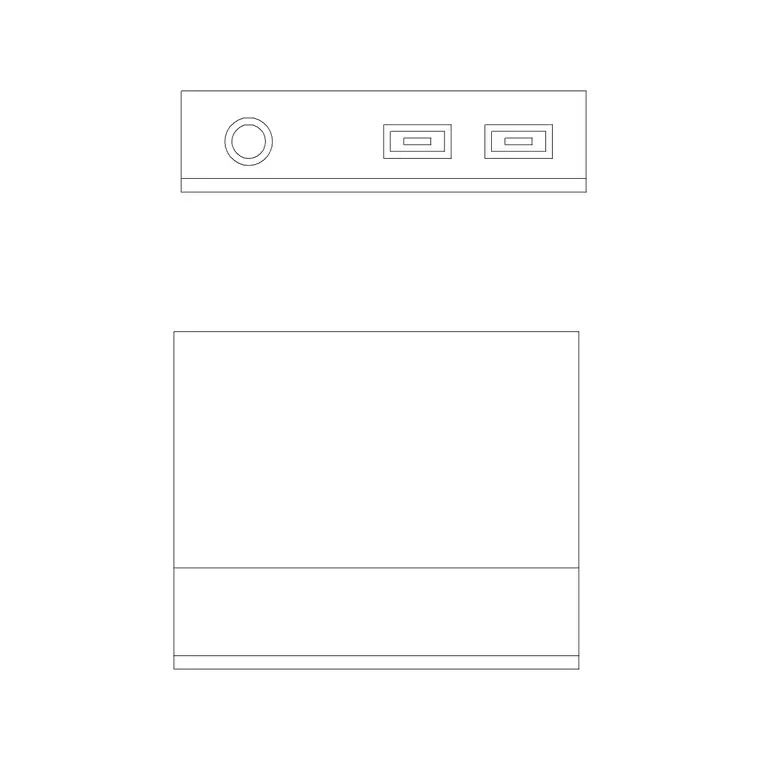
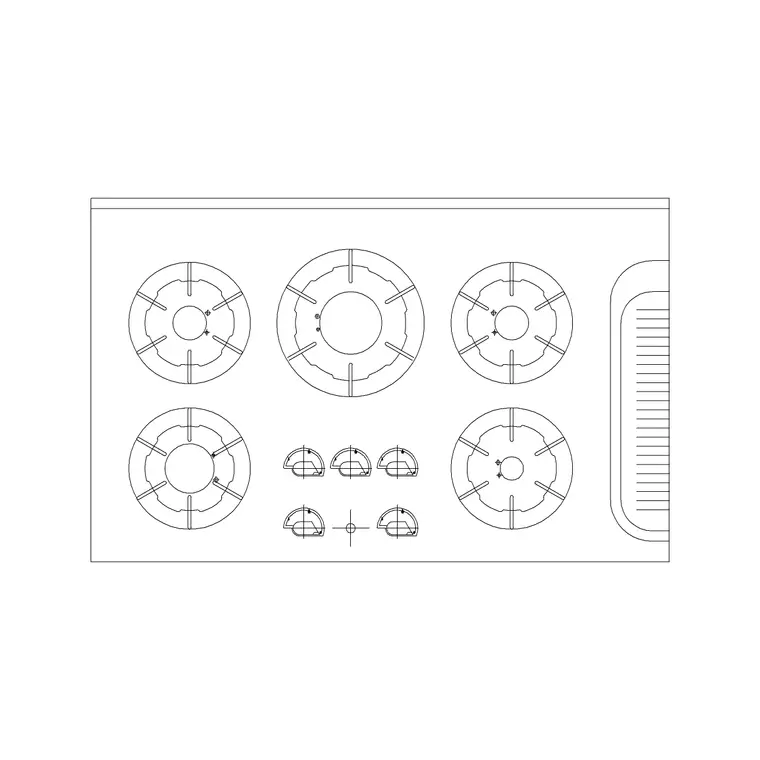
A range cooker block is a full appliance, not a worktop cut-out. The plan view shows the complete body footprint — the multi-burner cooktop above and the oven cavity below as a single freestanding unit — with the control fascia along the front. Because the cooker slots into a gap in the cabinetry rather than sitting on a base unit, the block's outer dimensions are what govern the size of that gap.
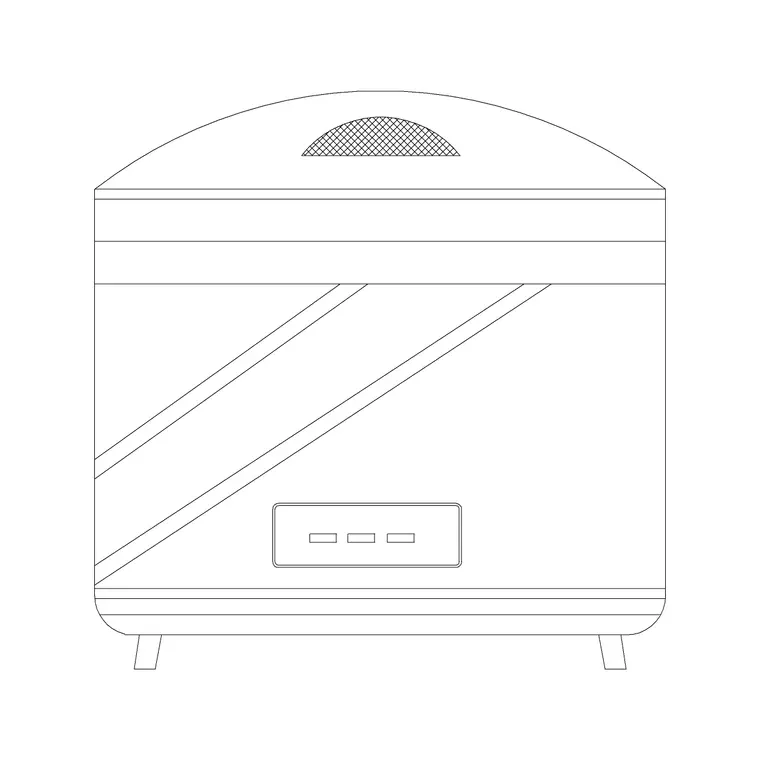
The elevation does real work for a range cooker, drawing the cooktop, the oven doors, the control panel and the splashback or backguard. Range cookers are often set under a feature canopy or mantel, so the elevation block carries the body height that the canopy is designed around. The burners, oven doors and controls sit on separate layers for clean presentation.
Plan view to fix the gap, elevation to design the canopy
For the kitchen layout you work in plan: the range cooker set into its gap in the cabinet run, with the worktops returning to it on each side. The plan block fixes the cooking position and tells the joiner exactly how wide to leave the cooker gap, with the small expansion clearance a freestanding appliance needs.
For the elevation you draw the cooker face-on under its hood or mantel. This is where a range earns its keep visually, so the elevation block carries the proportions the canopy, the splashback and any decorative surround are set out against. Many downloads ship both views in one DWG so the plan and the feature elevation stay coordinated.
Typical range cooker sizes
Range cookers come in distinct module widths — design around these and confirm against the model. Common widths are 900 mm, 1000 mm and 1100 mm, with larger professional and double-oven ranges reaching 1200 mm and beyond. Depth usually matches or slightly exceeds the 600 mm worktop line so the cooker front sits flush or just proud, and body height aligns with the 900 mm worktop run.
Leave a small expansion gap each side of the cooker — the manufacturer specifies the figure, but the cabinetry gap is cut a little wider than the appliance so it slides in and out. Keep the hood clearance above the cooktop in the usual 650 to 750 mm band for gas, and protect worktop landing space on at least one side.
Inserting and positioning the range
The blocks are full size in millimetres. Insert at scale 1 in a millimetre drawing, 0.001 in a metre template, or set INSUNITS to millimetres so AutoCAD rescales on insertion. Run INSERT, snap to a logical point — the front centre of the cooktop works well as the handle — and rotate so the controls face into the room.
Because the cooker is freestanding, the key dimension to set is the clear gap in the cabinetry, so dimension from finished face to finished face of the adjacent units. Keep the appliance on its own layer, mirror it for a handed layout if needed, and freeze it for a clean cabinet plan. A later change of cooker width edits the block once and reshapes the gap.
Where range cookers are specified
Range cookers suit larger family kitchens, country and farmhouse kitchens, period-property refurbishments, and premium new-build and developer show homes. They are a favourite of kitchen designers because they double as a focal point, and architects use them where the kitchen is the social heart of an open-plan living space.
Pair the range cooker with the chimney hood, larder and tall-unit blocks in the kitchen category to compose the cooking wall the room is built around, with worktops returning cleanly to each side of the cooker gap.
Designing the room around a freestanding range
A range cooker changes how you draw a kitchen, because it is an object the layout defers to rather than a fitting the layout hides. The plan usually starts by placing the range against the main wall, centring it on the room or on a chimney breast, and then composing the cabinets, the canopy and the worktops symmetrically around it. Drawn from a scaled block, that symmetry is something you can set out precisely rather than eyeball.
The other coordination the block earns is the gap and the services. A freestanding range needs a cabinetry gap cut slightly wider than the appliance, a gas or high-current electrical supply behind it, and a hood or canopy sized to its full cooktop width — wider than a standard 600 mm hood. Snapping a centreline through the cooker lets you set the canopy, the splashback and the supply on one line, and dimension the gap so the joiner leaves exactly the right opening. Because the range is the room's centrepiece, that coordination is worth getting exactly right, and a scaled block is how you do it on the drawing rather than on site.
Free download
Browse the full library — DWG & DXF, no signup.
Questions
Frequently asked
What widths do range cooker blocks come in?+
Common range cooker widths are 900 mm, 1000 mm and 1100 mm, with professional and double-oven models reaching 1200 mm or more. Depth roughly matches the 600 mm worktop line and height aligns with the 900 mm run. Confirm against the chosen model.
How big should the cabinetry gap be for a range cooker?+
Cut the gap slightly wider than the appliance so it slides in and out — the manufacturer specifies the clearance, but the joiner works to a gap dimensioned from finished face to finished face of the adjacent units. The plan block gives you the appliance width to set that gap from.
Does a range cooker need a wider hood than a standard hob?+
Usually yes. Because a range carries a wider cooktop, the hood or canopy is sized to its full width rather than the standard 600 mm. Centre the hood on the cooker and size it to the cooktop, using the elevation block to set the canopy proportions.
Are these range cooker CAD blocks free to use commercially?+
Yes. They download free in DWG and, where available, DXF, with no signup, no watermark and no attribution requirement, and they are cleared for commercial project use.
Related downloads
Blocks for this guide
Related categories
Related guides
Block landing
Free Bathroom Fixtures CAD Blocks — DWG Download
Download free bathroom fixtures CAD blocks in DWG and DXF — toilets, wash basins, bathtubs, showers and vanities drawn in plan and elevation. No signup, commercial OK.
Block landing
Free Gas Stove / Cooktop CAD Blocks — DWG
Free gas stove and cooktop CAD blocks in DWG and DXF — drawn in plan and elevation at true kitchen-module sizes for AutoCAD 2004+. No signup, commercial-use OK.
Block landing
Single Burner Hob CAD Block — Free DWG
Free single burner hob CAD blocks in DWG and DXF for compact kitchens and studios — plan and elevation, true sizing for AutoCAD 2004+. No signup, commercial OK.