Explainer · orthographic projection explained
Orthographic projection explained simply
By Saumyajit Maity · Published 12 Apr 2024 · Updated 6 Jan 2026
Orthographic projection is the quiet system underneath almost every technical drawing you have ever seen. It is the method that lets a flat sheet of paper describe a three-dimensional object precisely, by showing it from several straight-on directions — front, top, side — with no perspective distortion. Master the idea and plans, elevations, sections and engineering drawings all suddenly make sense, because they are all orthographic views.
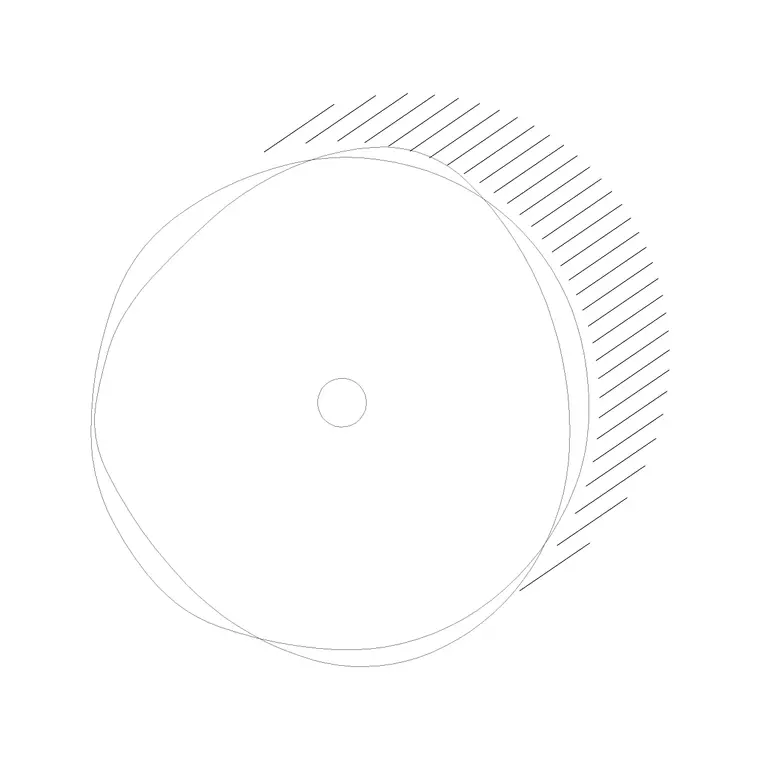
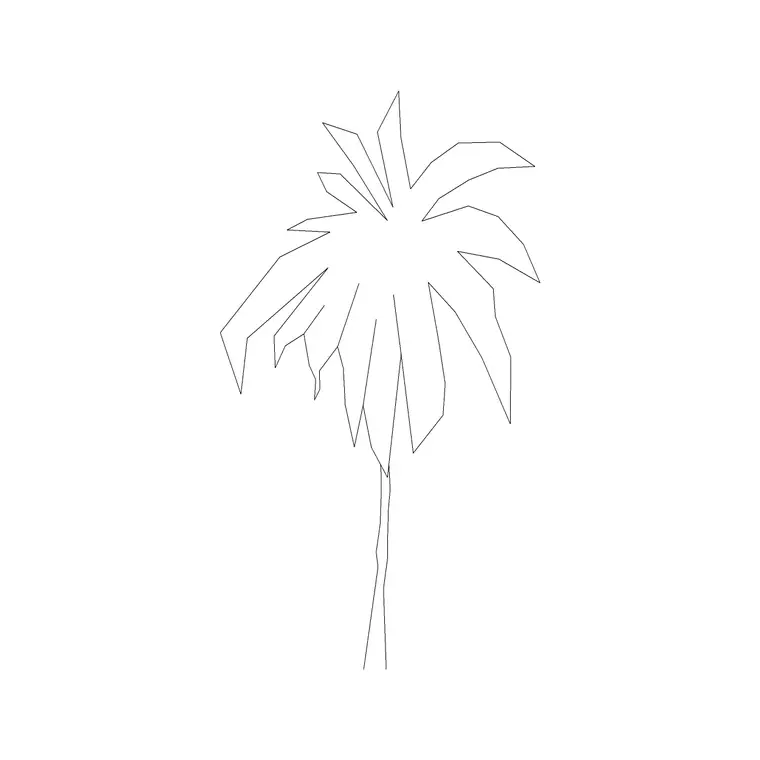
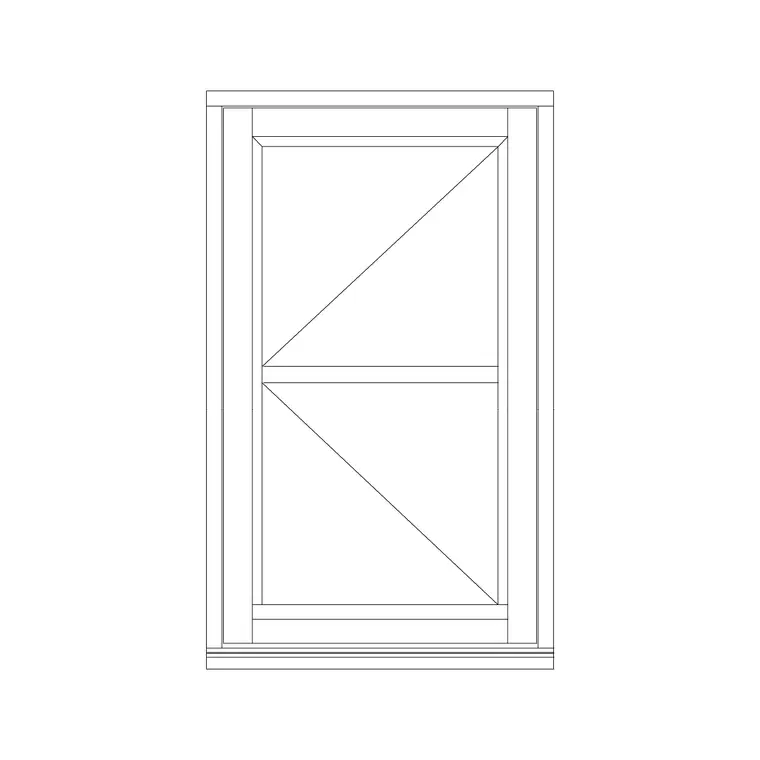
This guide explains orthographic projection in plain language: what it is, the standard set of views, the first-angle versus third-angle conventions that trip people up, why the views have no perspective, and how it relates to the CAD blocks you download. Those blocks — a plan canopy, an elevation tree, a front-view window — are orthographic views, which is exactly why they line up so cleanly when you assemble them into a drawing.
What orthographic projection is
Orthographic projection is a way of representing a 3D object using 2D views, where the lines of sight are all parallel and perpendicular to the plane you are projecting onto. 'Ortho' means right-angled: every view looks at the object dead-on, at ninety degrees to a face, so nothing is foreshortened by perspective.
The result is that each view is a true-scale, measurable picture of one face of the object. Because there is no vanishing point, a 100 mm edge is drawn 100 mm long (at scale) wherever it sits. That fidelity is the entire reason orthographic projection became the standard for technical drawing: it produces drawings you can build or machine from, not just look at.
The standard set of views
A full orthographic drawing of an object can use up to six views, one for each face: front, top, bottom, left side, right side and rear. In practice you rarely need all six — most objects are fully described by three: the front view, the top view (plan) and one side view. Hidden edges that the view cannot see directly are shown as dashed lines so the geometry is complete.
The views are not scattered randomly on the sheet; they are arranged in a fixed layout so they 'unfold' logically from the object. Widths line up between the front and top views, heights line up between the front and side views. This alignment is what lets you read across the views and reconstruct the 3D shape in your head from the flat drawing.
Plans, elevations and sections are orthographic
Here is the connection that makes orthographic projection so worth understanding: architectural drawings are orthographic projection applied to buildings. A floor plan is the top view (with a horizontal cut). An elevation is a front or side view of the building. A section is a view onto a vertical cut. They use the same parallel-projection, no-perspective logic as an engineering drawing of a machine part.
That is why the views coordinate. A window's width is the same in plan and in elevation; a floor height is the same in section and in elevation. The discipline that aligns the front, top and side views of a bracket is the same discipline that aligns the plan, elevation and section of a house. Learn it once and it serves you across every kind of technical drawing.
First angle vs third angle projection
The one part of orthographic projection that genuinely confuses people is the difference between first-angle and third-angle projection — two conventions for where the views are placed relative to each other. They produce the same individual views but arrange them on opposite sides.
In third-angle projection (standard in the US and much of CAD), the top view sits above the front view and the right-side view sits to the right — each view is placed on the side of the object you are looking from. In first-angle projection (common in Europe and ISO standards), the arrangement is flipped: the top view sits below the front, the right-side view to the left. Drawings carry a small truncated-cone symbol to declare which convention is in use, so you read the layout correctly. Misreading the angle is a classic cause of mirrored or misplaced features.
Why no perspective?
It is worth being clear about why technical drawing throws away the perspective our eyes naturally see. Perspective makes distant things smaller and converges parallel lines toward vanishing points — wonderful for a realistic picture, useless for measurement. You cannot scale a true length off a perspective view because the foreshortening varies with distance.
Orthographic projection removes that variation entirely. Every edge parallel to the projection plane is drawn at its true length, so the drawing is a measured document. This is the same reason architectural elevations are flat rather than rendered: the moment you need to build something accurately, you need an undistorted, measurable view. Perspective and isometric drawings are for communicating how something looks; orthographic views are for communicating exactly how big it is.
Orthographic vs isometric — a quick contrast
People often pair orthographic projection with isometric, so it helps to draw the line between them. Orthographic projection shows separate flat views (front, top, side) of an object, each true to scale but each showing only one face. Isometric projection shows a single pictorial view in which three faces are visible at once, drawn along three axes at 120 degrees, giving a 3D-looking image without true perspective.
The trade-off is clarity versus completeness. Orthographic views are unambiguous and measurable but take several drawings to grasp the whole shape. An isometric view shows the whole shape in one image but distorts true lengths along its axes. Technical drawing sets often use both: orthographic views to dimension and build from, plus an isometric or 3D view to help the reader picture the object. The 2D CAD blocks on this site are orthographic — plan, elevation and section views you assemble into measurable drawings.
Free download
Browse the full library — DWG & DXF, no signup.
Questions
Frequently asked
What is orthographic projection in simple terms?+
It is a way of drawing a 3D object using several flat, straight-on views — front, top, side — with no perspective. Because the lines of sight are parallel and perpendicular to each face, every view is true to scale, so you can measure real dimensions directly off the drawing.
What is the difference between first-angle and third-angle projection?+
They arrange the same views on opposite sides. In third-angle (US, common in CAD) the top view sits above the front and the right view to the right. In first-angle (European/ISO) the layout flips — top below, right view to the left. A small cone symbol on the drawing tells you which is used.
Are floor plans and elevations orthographic projections?+
Yes. A plan is the top view (with a horizontal cut), an elevation is a front or side view, and a section is a view onto a vertical cut. They use the same parallel, no-perspective logic as engineering orthographic drawings, which is why they coordinate dimensionally.
How is orthographic projection different from isometric?+
Orthographic uses several separate flat views, each true to scale but showing one face. Isometric shows three faces in a single pictorial view along axes at 120 degrees — easier to picture but with distorted lengths. Sets often use both: orthographic to measure, isometric to visualise.
Related downloads
Blocks for this guide
Related categories
Related guides
Explainer
Plan vs Elevation vs Section Explained
Plan vs elevation vs section explained simply — what each architectural view shows, how they differ, when to use each, and how they read together in a drawing set.
Explainer
2D vs 3D CAD Blocks Explained in 2026
2D vs 3D CAD blocks explained — what each is, file size and performance differences, when to use flat blocks vs solid models, and which to download for your drawing.
Explainer
What Is a Floor Plan? A Clear Explanation
What is a floor plan? A clear explanation of what it shows, the cut height, the symbols it uses, how to read one, and how it differs from other drawings.