Room guide · operation theatre cad blocks
Free operation theatre CAD blocks for AutoCAD
By Sumana Kumar · Published 22 Jan 2026 · Updated 21 Apr 2026
An operation theatre is the most clearance-driven room in a hospital. Everything is arranged around the OT table at the centre — the surgical team standing around the patient, the pendants delivering services from above, the trolleys, the anaesthetic position and the sterile field — and the room must hold all of it while keeping a clean, controlled flow of people and instruments. These free operation theatre CAD blocks give you the OT table, ceiling pendants, trolleys and scale figures drawn to true scale in DWG and DXF for AutoCAD 2004 or later, free for personal and commercial use with no signup and no watermark.
What makes an OT plan unusual is that the working space around the table, not the equipment footprint, sets the room size — the surgical team needs to stand and move all the way around the patient, pendants must reach the table from the ceiling, and a clear sterile field must be maintained around the operating site. Because the OT table and pendant blocks are drawn at real dimensions, you can place the table centrally, draw the team space and pendant reach around it, and size the theatre to the standards it has to meet.
Use the set for general and specialist operating theatres, day-surgery and minor-procedure rooms, and the OT suites inside hospital plans. Centre the table, draw the working envelope, then place pendants, trolleys and the anaesthetic and scrub positions around it.
A room planned from the table outward
The OT table sits centrally and everything references it. Around it stands the surgical team; above it hang the service pendants and lights; to one side is the anaesthetic position; trolleys and the instrument table come and go. The room is sized so the team can move all the way around the patient and the sterile field stays protected.
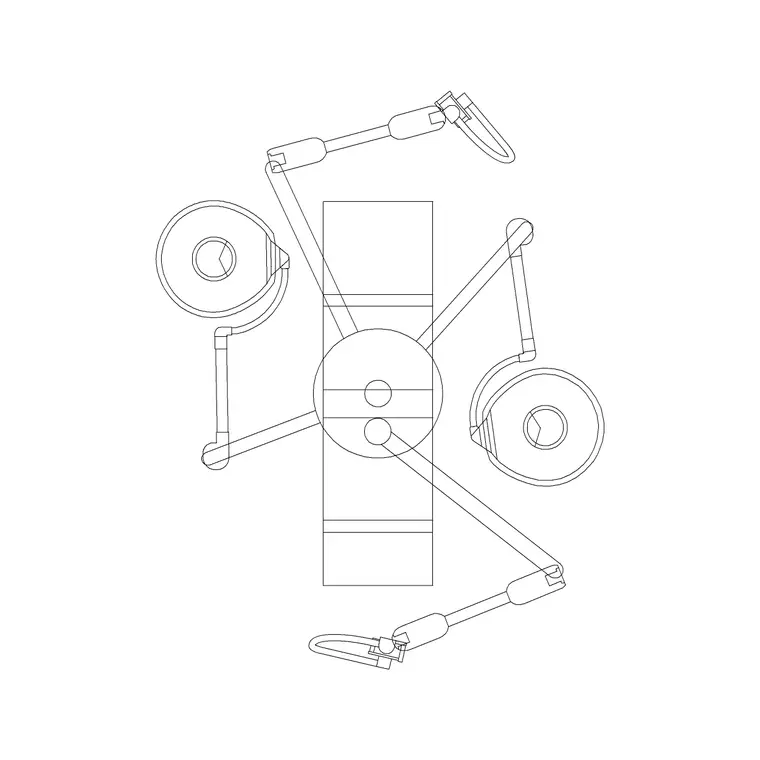
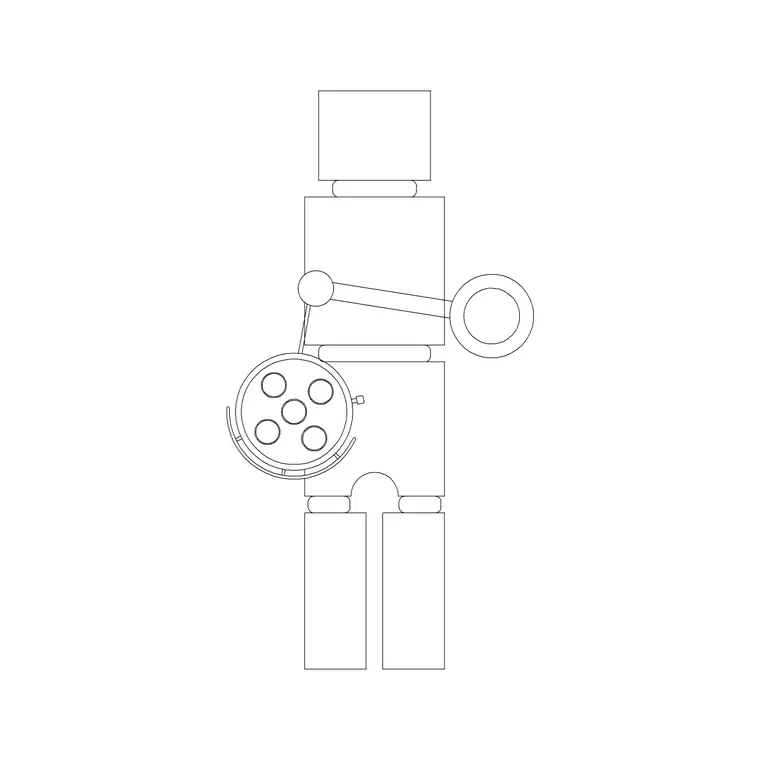
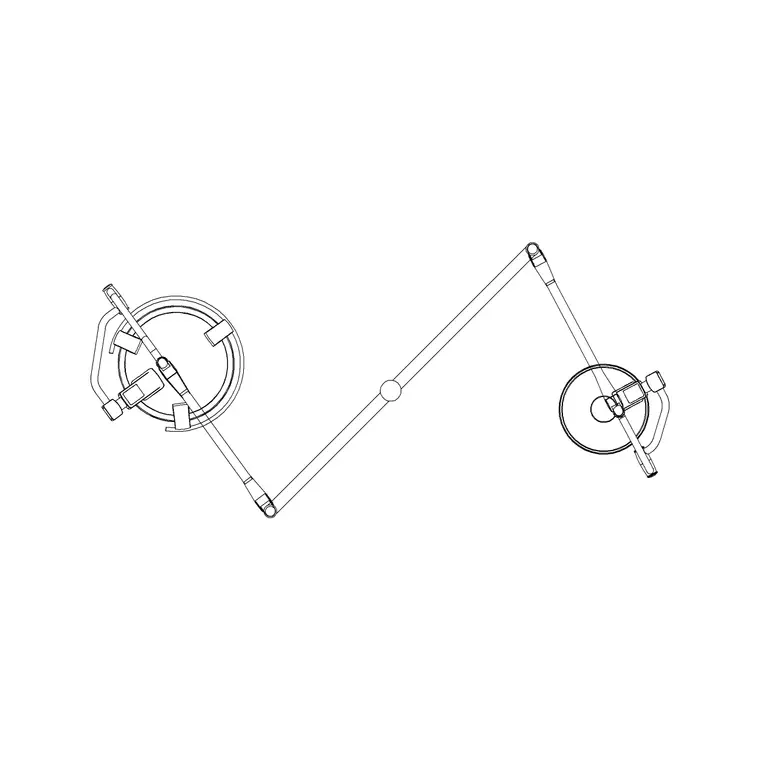
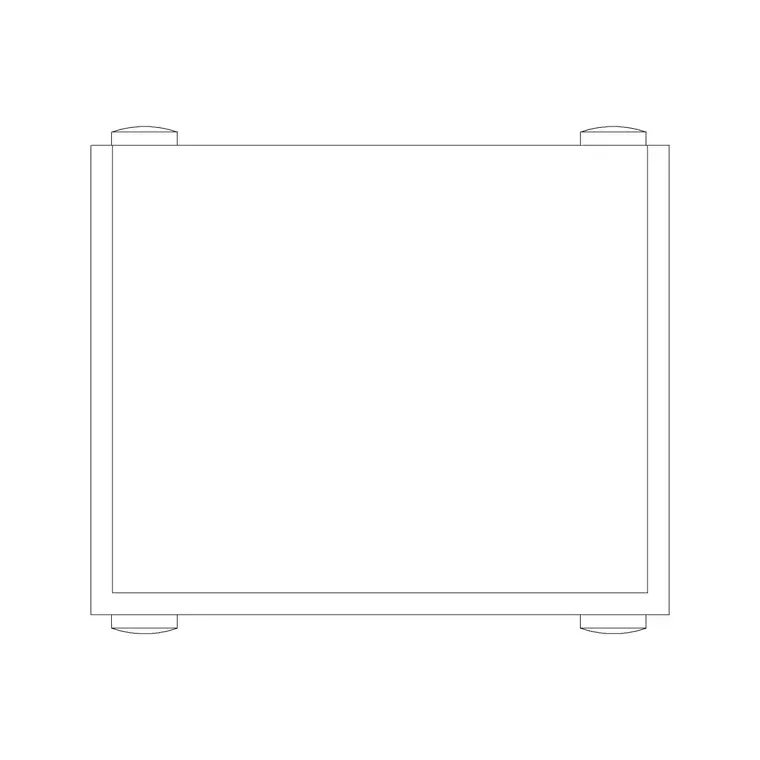
The core blocks are the OT table — ideally the table-with-pendant block so the ceiling service position is shown — standalone surgical pendants for services and lighting, trolleys for instruments and supplies, and scale figures to populate the team around the table and confirm they all fit with working room.
Theatre dimensions and the working envelope
Hold these as ranges, since exact standards vary by region and theatre type. A general operating theatre is a large room — commonly around 6 m or more per side, often 36 m² or above for the clear operating area alone — precisely because the team must encircle the table. The OT table footprint is modest, but the clear space around it for the surgical team, the sterile field and equipment is what drives the area.
Plan clear team space all the way around the table, an anaesthetic zone at the head end with its own equipment space, room for trolleys and the scrub team's approach, and circulation that keeps clean and dirty routes apart. Pendants must reach the table within their travel from their ceiling mount. Draw these zones around the scaled table and pendant blocks and the theatre sizes itself to function, not to a guess.
Building the theatre plan in AutoCAD
Place the OT table at the room's centre and orient the head end toward the anaesthetic position and the services wall. Use the table-with-pendant block, or add the pendant blocks above the table, to fix where the ceiling services and lights come down — this is essential for the M&E and ceiling coordination.
Draw the team space ring around the table, add the anaesthetic zone at the head, place instrument and supply trolleys clear of the sterile field, and set the scrub approach. Use scale figures to stand a surgeon, assistants and anaesthetist around the table and confirm they coexist. Keep the table, pendants, trolleys, sterile field, team space and circulation on separate layers so the theatre plan, the ceiling-services drawing and the equipment schedule all come from one DWG.
Pendants, the ceiling and clean flow
What separates an OT from any other room is the ceiling: service pendants and surgical lights are suspended over the table, and their positions must be coordinated with the table and the team space below. Showing the pendants on the plan — over the table, within their reach — lets the ceiling and M&E packages work from real positions, which is the most important thing these blocks do.
Beyond the ceiling, an OT is governed by flow: clean supplies and the scrubbed team enter one way, used items and the patient leave by controlled routes, and the sterile field around the operating site stays inviolate. Use the plan to keep trolleys and circulation out of that field and to show clean and dirty routes clearly so the room reads correctly for a healthcare reviewer.
Per-item notes for theatre blocks
OT table with pendant — centre it, orient the head end to the anaesthetic and services position, and let the pendant block fix where ceiling services arrive over the patient.
Pendant — place over and around the table within its reach; it ties the ceiling services and lighting to the operating site.
Trolley — for instruments and supplies; keep it clear of the sterile field and on the appropriate clean or dirty route.
Human figures (plan) — stand a surgeon, assistants and an anaesthetist around the table to prove the team space genuinely encircles the patient.
Why plan view is non-negotiable here
An operating theatre is coordinated almost entirely in plan and reflected-ceiling plan: the team space, sterile field, pendant positions, trolley routes and clean/dirty flow are all read from above. The blocks here are drawn for that work and insert at true size, so the table, pendants and trolleys you place are the same items the equipment schedule and the ceiling coordination reference.
Because OT suites often repeat similar theatres, a fully-resolved theatre — table, pendants, team space and routes — copies cleanly across the suite. Resolve one to standard, then repeat it, so every theatre meets the same clearance and flow requirements from a single reusable layout.
Free download
Browse the full library — DWG & DXF, no signup.
Questions
Frequently asked
Why is an operating theatre so large?+
Because the surgical team must stand and move all the way around the patient on the OT table, with space for the anaesthetic position, trolleys and a protected sterile field. The clear working envelope, not the table footprint, sets the area.
What CAD blocks do I need for an operation theatre?+
An OT table — ideally with the pendant shown — standalone surgical pendants, instrument and supply trolleys, and scale figures for the surgical team. All download free in DWG and DXF.
Why show the pendants on the OT plan?+
Because the ceiling service pendants and lights hang over the table and must be coordinated with the team space below. Placing them on the plan lets the ceiling and M&E packages work from real positions.
Are the operation theatre blocks free for commercial use?+
Yes. Every block downloads free in DWG and DXF with no signup, no watermark and no attribution requirement, and is cleared for commercial project use.
Related downloads
Blocks for this guide
Related categories
Related guides
Room guide
Clinic CAD Blocks — DWG Layout & Download
Free clinic CAD blocks in DWG and DXF — examination couch, doctor table, wash basin and scale figures for laying out a small clinic plan. No signup.
Room guide
Dental Clinic CAD Blocks — DWG Download
Free dental clinic CAD blocks in DWG and DXF — dental chair, doctor table, wash basin and scale figures for planning a dental operatory. No signup.
Room guide
Hospital Ward CAD Blocks — DWG Download
Free hospital ward CAD blocks in DWG and DXF — patient beds, bed-head units, bedside seating and scale figures for inpatient ward bays. No signup.