Room guide · open kitchen cad blocks
Open kitchen CAD blocks for open-plan living layouts
By Sumana Kumar · Published 29 Mar 2024 · Updated 1 Apr 2026
An open kitchen has no fourth wall. It shares its space with the living and dining areas, so the design problem is not just fitting appliances along walls — it is deciding how the kitchen presents itself to a room people sit in. The island or peninsula becomes the social and visual centre, the worktop is on show, and circulation has to serve both the cook and people passing through to the sofa. Designing one in AutoCAD means thinking about the whole zone, not a sealed room.
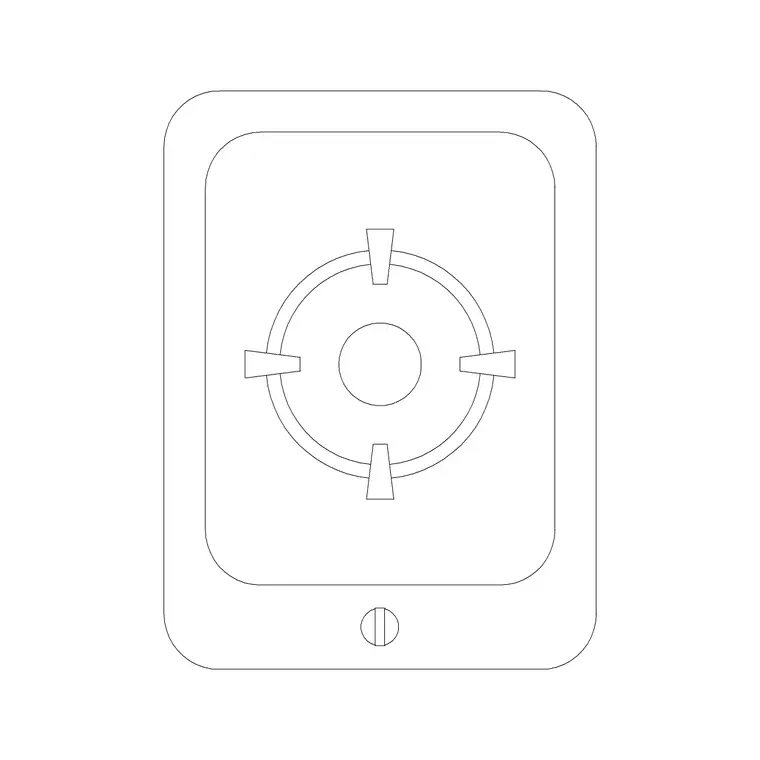
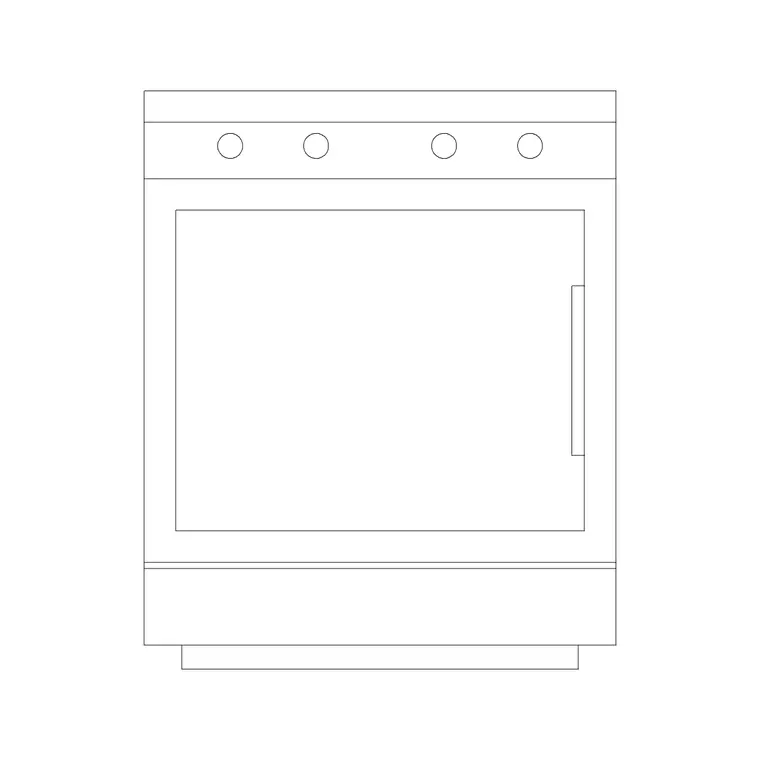
The blocks here cover the open-plan kit — an island or peninsula run, appliances drawn in plan and elevation, bar stools, pendant lighting — all scaled in DWG and DXF and free for personal and commercial use. Because they are correctly sized, you can test how the island sits in the open floor, whether people can pass behind a seated diner, and how the kitchen reads from the living side before you commit.
The defining move in an open kitchen is the island or peninsula: it anchors the cooking zone, screens the working mess from the seating area and gives a casual eating spot. Get its size and its surrounding clearances right and the open plan works; get them wrong and the room is a bottleneck.
What 'open' changes about the design
In a closed kitchen the walls hide everything and define circulation. Open the kitchen and three things change. First, the worktop and the back of the hob are visible from the living area, so the layout has a public face — clutter zones want to be turned away from the seating. Second, circulation is shared: the route to the sofa or the garden often passes through the kitchen zone. Third, sound, smell and sightlines all carry, so the hood and the layout matter more.
The upside is sociability — the cook faces the room rather than a wall, often from behind an island. The design job is to keep the working triangle tight and private while opening the rest of the zone to the living space. Scaled blocks let you place the island so the cook works facing in, with the messy sink or hob screened by the island mass.
The island and peninsula as the centre
An island is a freestanding run in the middle of the floor; a peninsula is the same idea attached to a wall or a cabinet run at one end. Either can carry the hob, the sink or just a prep surface and a casual eating bar. As the centre of an open kitchen it does three jobs: extra worktop, a social barrier between cook and guests, and a perch for stools.
Size it generously but clear it on all working sides. An island typically runs 900–1200 mm deep when it carries an overhang for stools, and wants about 1000 mm of clear floor on every side so doors, drawers and dishwashers can open while people pass. Where the island holds the hob, the hood hangs above it as a feature, drawn in elevation. Place the island block first in an open plan — everything else, including the dining table beyond, positions relative to it.
Blocks for the open zone
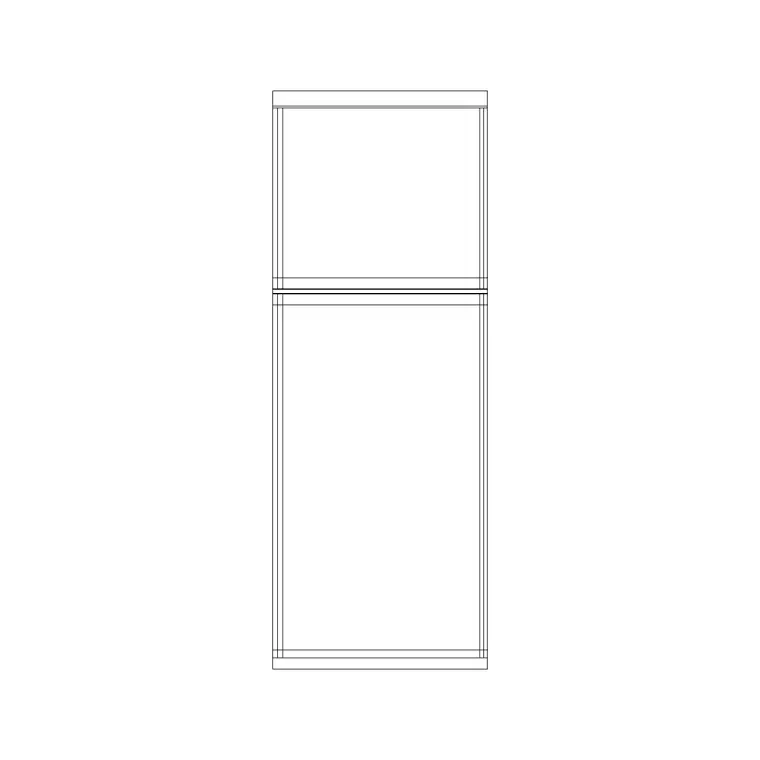
The appliance kit is the same as any kitchen — cooker or built-in hob and oven, fridge, sink, hood — but here the views matter more because the kitchen is seen, not hidden. Use blocks that carry both plan and elevation so you can draw how the run looks from the living side. The hood becomes a feature object hanging over the island, so its elevation block earns its place.
Then comes the social furniture the open plan adds. Bar stools tuck under the island overhang — round-back or wooden stools drawn in elevation and plan. Pendant lights or a chandelier hang over the island and over the dining table beyond, drawn on a lighting layer as the visual anchors of the zone. Beyond the island, a dining table block sets the eating zone, completing the kitchen-diner.
- Working run: cooker, fridge, sink, hood in plan and elevation - Island/peninsula: deep run with stool overhang - Seating: bar stools at the island, dining chairs beyond - Lighting: pendants or a chandelier over island and table
Circulation across the whole zone
Because the kitchen shares the floor, you draw circulation for the room, not just the run. Keep about 1000 mm clear on every working side of the island, and widen any side that is also a through-route to the garden or the sofa to nearer 1200 mm. Behind a row of bar stools that are in use, allow roughly 900–1000 mm so someone can pass behind a seated diner without squeezing.
Between the kitchen run and the island, the same galley logic applies: at least 1000 mm so two people can work, more if it doubles as the main path through the home. The dining zone beyond needs its own pull-out and walk-around space behind the chairs. Drop all the scaled blocks — run, island, stools, table — and the conflicts between cooking, seating and passing through show up as overlaps you can resolve on the plan.
Assembling the open-plan drawing
Set the island first, centred in its share of the floor with its long axis usually parallel to the main run. Lay the working run along the wall behind it and place the appliances to form a triangle between the wall run and the island. Tuck the stool blocks under the island overhang and set the dining table block beyond, leaving its walk-around space.
Layer generously: appliances, base units, wall units, island, worktop, lighting and the dining furniture each on their own layer. That lets you plot a working kitchen plan, a furniture plan that includes the diner, and an elevation looking at the island from the living side. Hang the pendant or chandelier blocks on the lighting layer over the island and the table to anchor the zone, and hatch the through-routes so they survive the rest of the furniture layout.
Open kitchen mistakes to avoid
The first mistake is an island crammed into a floor too small for it, leaving under a metre on one side so a dishwasher door blocks the only walkway. If the clearances do not hold on all four sides, the island is too big — shrink it before the kitchen becomes a maze. The second is facing the messy zone — the sink full of dishes or the hob — straight at the seating, so guests look at the washing-up.
The third is forgetting the stools in the circulation count: a row of seated diners at the island narrows the passage behind them, and if there is no 900 mm allowance the route is blocked whenever someone sits down. The fourth is lighting the island as an afterthought; in an open plan the pendants are the visual centrepiece, so place them deliberately over the island and the table on a dedicated layer.
Free download
Browse the full library — DWG & DXF, no signup.
Questions
Frequently asked
How much clearance does a kitchen island need?+
Keep about 1000 mm of clear floor on every working side of the island so doors, drawers and the dishwasher can open while people pass. Widen any side that doubles as a through-route to the garden or living area to nearer 1200 mm.
How deep should an island be if it has bar stools?+
An island carrying a seating overhang typically runs around 900–1200 mm deep, with the overhang giving knee room for stools. Behind seated diners, allow roughly 900–1000 mm so someone can pass without squeezing.
Should the hob or sink go on the island in an open kitchen?+
Either can, but turn the messy zone away from the seating so guests do not face dishes in the sink. If the hob sits on the island, draw the hood as a feature in elevation hanging above it, since it is now on show.
What lighting blocks suit an open-plan kitchen?+
Pendants or a chandelier over the island and a second set over the dining table act as the visual anchors of the open zone. Place them on a dedicated lighting layer so the layout reads as one connected space.
Can I draw the kitchen and the dining area in one plan?+
Yes. Keep the kitchen run, island, worktop, lighting and dining furniture on separate layers and one model plots a working kitchen plan, a full furniture plan including the diner, and an elevation of the island from the living side.
Related downloads
Blocks for this guide
Related categories
Related guides
Room guide
Pantry CAD Blocks — Storage & Larder DWG Layout
Free pantry CAD blocks in DWG — tall units, shelving and a fridge scaled to design a walk-in or reach-in larder with the right depths and aisle clearance.
Room guide
Free Laundry Room CAD Blocks — DWG Download
Free laundry room CAD blocks in DWG and DXF — washers, dryers, sinks and cabinets drawn to scale for a working laundry layout. No signup, no watermark.
Room guide
Free Utility Room CAD Blocks — DWG Download
Free utility room CAD blocks in DWG and DXF — appliances, sinks, cabinets and storage drawn to scale for a utility room layout. No signup, no watermark.