Room guide · utility room cad blocks
Free utility room CAD blocks for AutoCAD
By Saumyajit Maity · Published 17 Jul 2023 · Updated 25 Apr 2026
A utility room is the workhorse behind the kitchen — a back-of-house space that absorbs the messy, noisy, service-heavy parts of running a home so the kitchen can stay clean and social. It typically combines laundry, extra storage, a deep sink, the boiler or services cupboard, and a route to the garden or bins. Because it carries so many overlapping jobs, the utility room is really an exercise in fitting several functions into a small footprint without any one of them blocking another.
This page collects free utility room CAD blocks in DWG and DXF — washers, dryers, dishwashers, sinks, cabinets and storage — drawn to true millimetre scale and ready to insert into AutoCAD 2004 or later. Every block is free for personal and commercial use with no signup, no watermark and no attribution required, whether the utility is a generous room of its own or a narrow galley off the kitchen.
Because a utility room hides the services and the appliances, a scaled plan is where you reconcile them all: the appliance footprints and door swings, the sink and its plumbing wall, the boiler clearances, and a clear path through to the door it usually guards.
What separates a utility room from a laundry
A laundry room is focused on washing and drying clothes. A utility room is broader: it usually includes the laundry but also takes on overflow kitchen storage, a deep practical sink for the jobs you would not do at the kitchen sink, recycling and bin storage, cleaning equipment, sometimes a second fridge or freezer, and very often the boiler or services. It is the room that lets the kitchen stay tidy.
It also frequently doubles as a circulation route — to the back door, the garden, the garage or the bins — which means the layout has to keep a clear walkway open even when an appliance door or the sink is in use. Designing a utility room is largely about layering these functions along the walls while protecting that through-route, which is exactly the kind of conflict a scaled plan resolves.
Appliances and services to fit
Start with the fixed, service-hungry items, because they dictate the plumbing and power walls.
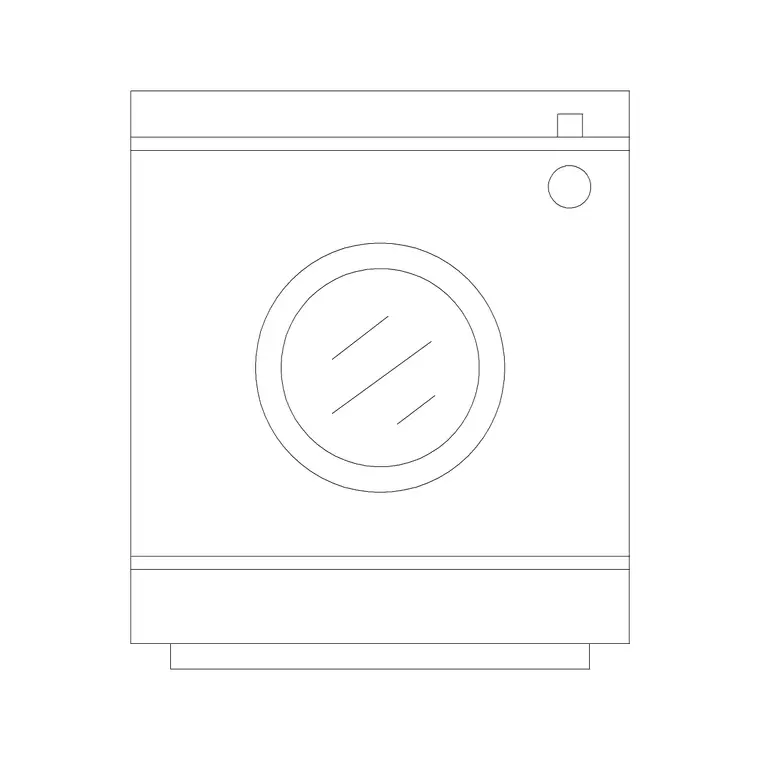
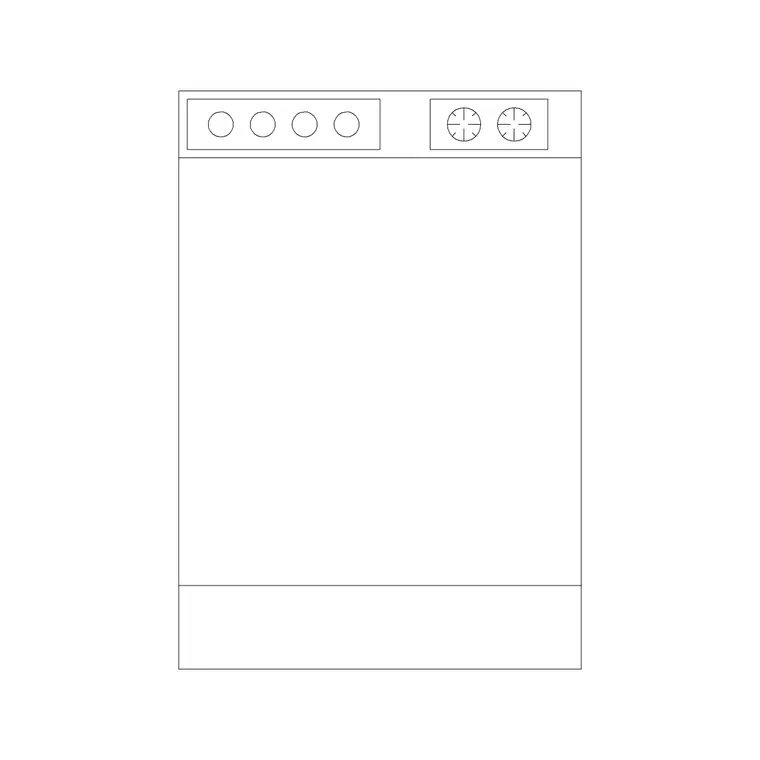
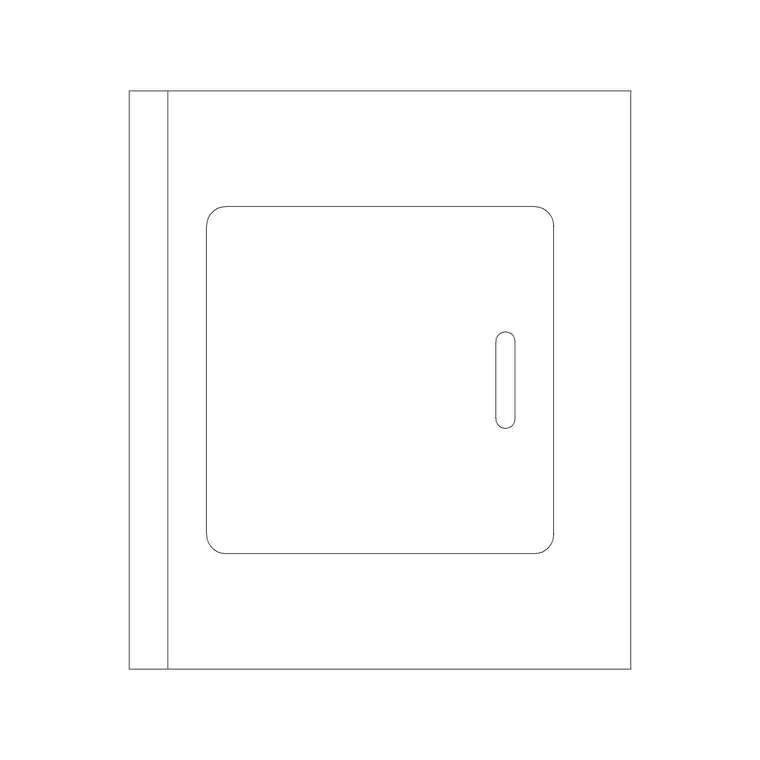
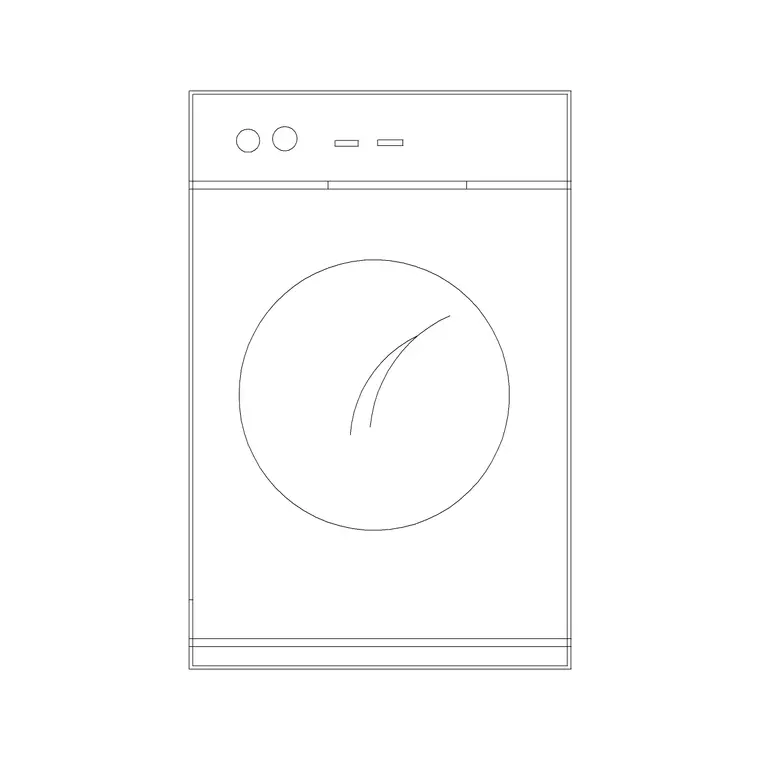
- Washing machine and dryer: as in a laundry, place them in workflow order and swing their doors on the plan. - Dishwasher: a utility is a sensible home for a second or the only dishwasher in an open-plan kitchen; it shares the 600 mm under-counter logic. - A deep utility sink: for filling buckets, soaking, washing boots or flowers — the jobs that would clutter the kitchen. - Boiler or services cupboard: mark its position and its required access and ventilation clearances even if it is a simple box on the plan. - A second fridge or freezer: common in utilities; draw its footprint and door swing.
These appliance and sink blocks are free below, and clustering the water-and-power-hungry ones onto one wall keeps the services tidy.
Storage and the worktop run
Beyond the appliances, a utility room is storage. A continuous worktop over the appliances gives a landing surface, and cabinets above and below swallow the household clutter the kitchen should not have to.
- A worktop run: over the washer, dryer and sink, giving a single working surface. - Tall and base cabinets: for cleaning supplies, bulk groceries, recycling and tools. - A wardrobe-depth cupboard: useful for brooms, the vacuum, ironing board and bulky items that stand tall. - Bin and recycling storage: a marked zone, ideally near the external door so bins go straight out. - Lighting: a bright, even ceiling wash, because utility tasks are practical and unglamorous and need to be seen clearly.
Lining the walls with this storage while keeping the floor centre clear is the recipe for a utility room that actually keeps the rest of the house tidy.
Dimensions, clearances and the through-route
Treat these as ranges. Under-counter appliances are around 600 mm wide and deep under a 900 mm worktop; a tall cupboard or fridge-freezer follows the appliance footprint up to full height. Leave 1000 mm or more in front of any front-loading appliance door, and a comfortable clear width at the sink.
The defining clearance in a utility room is the through-route: if the room is also the path to the back door or garage, keep a clear walking strip of at least 900 mm that stays clear even with an appliance door, the sink or the boiler cupboard open. Boilers need their own access and ventilation clearances — leave a clear zone in front of and around the unit for servicing. When you draw the plan, the test is simple: can someone walk from the kitchen door to the external door with a basket of washing while another person is loading the machine? If not, the layout is too tight.
Assembling the utility-room plan
Work in millimetres, insert at scale 1, and use separate layers for appliances, joinery, plumbing, the boiler/services and electrical, so a single drawing can serve as both a layout and a services coordination plan. Begin by marking the doors — the room door and any external or garage door — and draw the through-route between them as a protected strip.
Place the service-hungry appliances and sink along one wall, swinging every door clear of the through-route. Set the boiler cupboard with its access and ventilation clearance. Run the worktop over the appliances and line the remaining walls with cabinets and the tall cupboard, keeping the bin zone near the external door. Add the ceiling lighting and mark the services and a generous run of sockets along the worktop. Re-walk the through-route on the plan with every appliance door open as the final check.
Common utility-room mistakes
The first mistake is letting the appliances and storage strangle the through-route, so the room that is meant to ease daily life becomes a bottleneck you sidle through. Protect the walking strip first.
The second is forgetting the boiler's service and ventilation clearances, then building cabinets right up to it so it cannot be accessed or maintained. Reserve that zone on the plan.
The third is trying to do too much in too little space — a utility that takes on laundry, a second fridge, all the recycling, the boiler and a coat store in three square metres ends up doing none of them well. Be honest about the footprint and prioritise. The fourth is poor lighting; utility tasks are practical, and a dim back room makes them miserable, so draw a bright, even wash from the start.
Free download
Browse the full library — DWG & DXF, no signup.
Questions
Frequently asked
What is the difference between a utility room and a laundry room?+
A laundry room is focused on washing and drying. A utility room is broader — it usually includes the laundry plus overflow storage, a deep practical sink, recycling, sometimes a second fridge, and often the boiler or services, while frequently doubling as the route to the back door.
How much clearance does a utility room through-route need?+
If the room is also a walkway to the back door or garage, keep a clear strip of at least 900 mm that stays clear even with appliance doors, the sink or the boiler cupboard in use. Test it on the plan with every door open.
Do I need to allow clearance around the boiler?+
Yes. Boilers require their own access and ventilation clearances for servicing. Mark a clear zone in front of and around the unit on the plan and keep cabinets out of it, so the boiler stays accessible after the room is fitted.
Are these utility room CAD blocks free to download?+
Yes. All appliance, sink, cabinet and storage blocks are free in DWG and DXF for personal and commercial use, with no signup, no watermark and no attribution required.
Related downloads
Blocks for this guide
Related categories
Related guides
Room guide
Open Kitchen CAD Blocks — Open-Plan DWG Layout
Free open kitchen CAD blocks in DWG — island, peninsula, appliances and pendant lighting scaled to design an open-plan kitchen that flows into living areas.
Room guide
Pantry CAD Blocks — Storage & Larder DWG Layout
Free pantry CAD blocks in DWG — tall units, shelving and a fridge scaled to design a walk-in or reach-in larder with the right depths and aisle clearance.
Room guide
Free Laundry Room CAD Blocks — DWG Download
Free laundry room CAD blocks in DWG and DXF — washers, dryers, sinks and cabinets drawn to scale for a working laundry layout. No signup, no watermark.