Room guide · laundry room cad blocks
Free laundry room CAD blocks for AutoCAD
By Saumyajit Maity · Published 7 Sep 2022 · Updated 21 Jun 2026
A laundry room is a small, hard-working utility space organised around appliances and a workflow: dirty clothes in, sorted, washed, dried, folded, and out. It is one of the few domestic rooms where the layout follows a process, so the appliances and counters should sit in the order you use them. Get that sequence right and a tiny laundry feels efficient; get it wrong and you are carrying wet washing back and forth across the room.
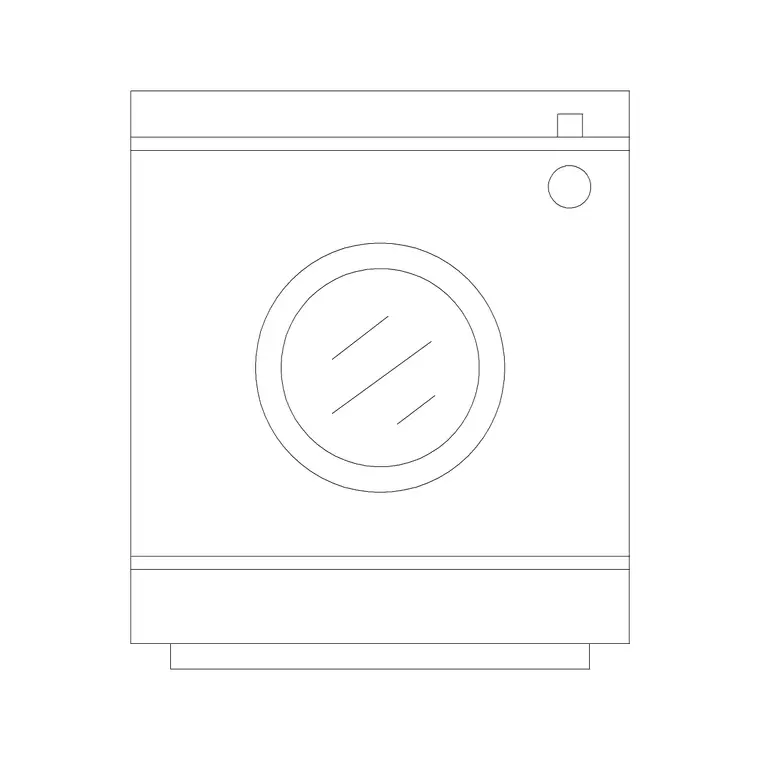
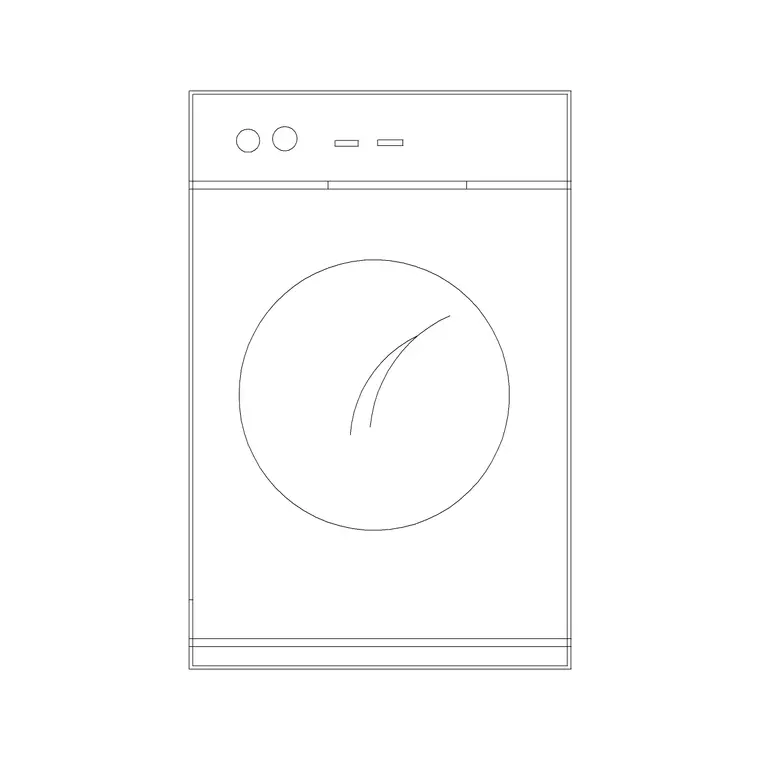
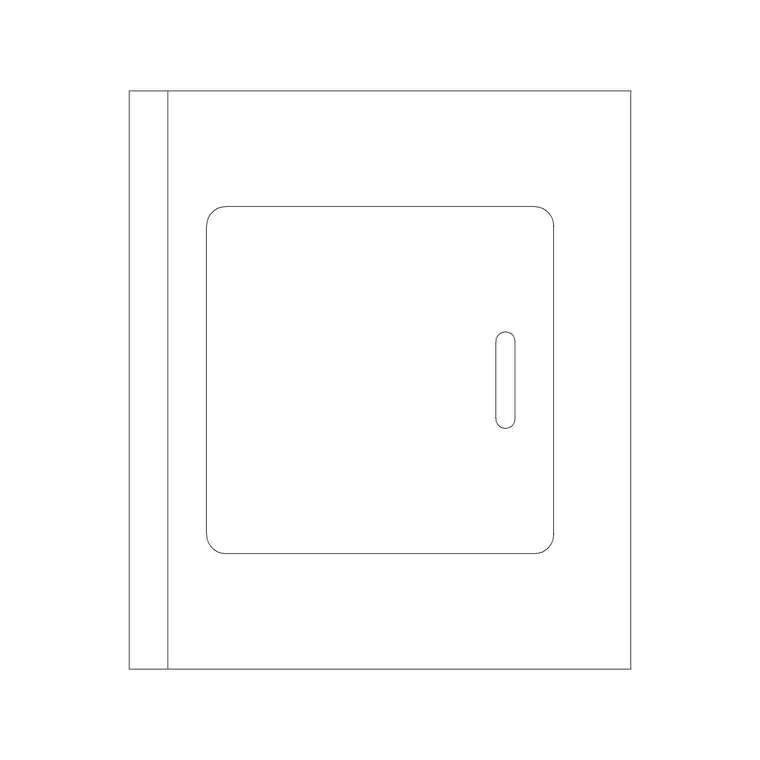
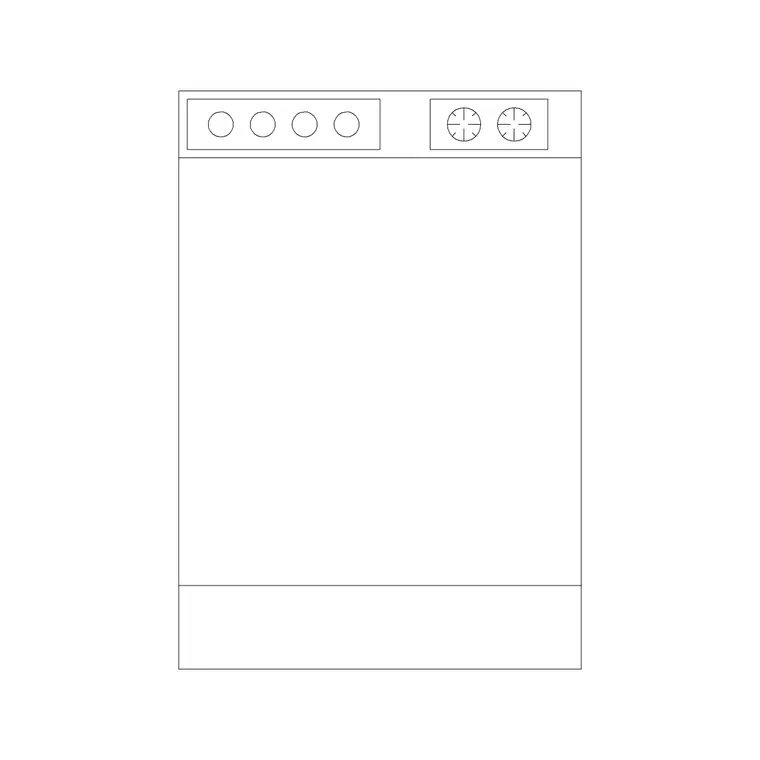
This page collects free laundry room CAD blocks in DWG and DXF — front-loading and top-loading washing machines, dryers, stacked washer-dryer units, sinks and cabinets — drawn to true millimetre scale and ready to insert into AutoCAD 2004 or later. Every block is free for personal and commercial use with no signup, no watermark and no attribution required, whether you are planning a dedicated laundry, a laundry-in-garage, or a combined utility room.
Because the appliances are fixed, bulky and need services — water, drainage, power and venting — a scaled plan is essential. You need the real appliance footprints to check door swings, the gap a front-loader's door needs, and whether a dryer can actually vent where you have placed it.
The laundry workflow drives the layout
A good laundry room is laid out along the order you do things. The classic sequence is: a place to drop and sort dirty washing, then the washing machine, then the dryer, then a counter or table to fold on, then somewhere to hang or store clean laundry. Arranged in that order along a wall or an L, the work flows in one direction and nothing has to backtrack.
This is why a laundry is one of the most process-driven rooms in a home. Two laundries with identical appliances can feel completely different depending on whether the dryer sits beside the washer, so wet clothes move 600 mm rather than across the room. When you lay the blocks out, place them in workflow order first, then adjust for the room shape — not the other way around.
Appliance blocks and their real footprints
Appliances are the fixed points of a laundry, so draw them at their true size. A front-loading washing machine and a front-loading dryer are typically around 600 mm wide and 600 mm deep, sitting under a 900 mm counter. The single most important thing the block must show is the front-loader's door swing: those doors are large and hinge to the side, so you need clear space in front to load and unload.
- Front-loading washing machine: the workhorse; check its door swing clearance. - Washer-dryer in one, or a stacked pair: saves floor space where the room is tight; draw the stacked unit's full height in elevation. - Separate dryer: place it beside the washer so wet clothes transfer in one short move, and confirm it can vent or that there is room for a condenser. - Dishwasher-style under-counter units: occasionally appear in combined utility rooms and share the same 600 mm logic.
Every one of these is a free block below, drawn so the footprints and swings are honest in your plan.
Counters, sinks and storage
Around the appliances, a laundry needs surfaces and storage to turn it from an appliance cupboard into a usable room.
- A folding counter: a length of worktop, ideally over the front-loaders, gives a landing space for clean washing. - A utility sink: invaluable for hand-washing, soaking and rinsing; place it where it can share the appliance plumbing wall. - Wall and base cabinets: store detergents, baskets and household supplies above and below the counter. - A drying or hanging zone: a rail or airer needs clear space and is worth marking even though it is not a block. - Lighting: an even ceiling wash so you can sort darks from navies and spot stains.
Keep all the wet services — washer, sink, dryer drain — on one plumbing wall where you can, because clustering them shortens pipe runs and simplifies the build.
Dimensions, clearances and services
Use these as ranges. Front-loading washers and dryers are around 595 to 600 mm wide and 550 to 650 mm deep; counter height sits at about 900 mm; a stacked washer-dryer rises to roughly 1700 to 1900 mm. Leave at least 1000 to 1100 mm of clear floor in front of front-loaders so their doors can open fully and you can crouch to load.
A utility sink wants a comfortable working width and a clear approach. If the laundry is a walkway as well as a workroom, keep a circulation strip of 900 mm or more clear of every open appliance door. Crucially, mark the services on the plan: hot and cold supply and a waste for the washer and sink, a dedicated power circuit, and either an external vent route or condenser space for the dryer. A laundry that ignores venting on paper becomes a damp room in practice.
Building the laundry plan
Work in millimetres and insert each appliance block at scale 1 so the footprints are real. Set layers for appliances, joinery (counters and cabinets), plumbing and electrical, so you can produce a services drawing as well as a furniture plan.
Place the appliances in workflow order along the plumbing wall: sort zone, washer, dryer, fold counter. Swing every appliance door on the plan and confirm the clear floor in front. Run the counter over the front-loaders and set the sink into the wet wall. Add base and wall cabinets either side, keeping wall units clear of head height over the counter. Mark every service point — supply, waste, dedicated sockets and the dryer vent — and check the door into the room does not collide with an open appliance. Finally, confirm a clear folding surface exists; a laundry with nowhere to fold pushes that job onto the bed in the next room.
Common laundry-room mistakes
The biggest mistake is ignoring front-loader door swings. People draw the appliance footprint, fit it neatly, then find the door cannot open because a cabinet or the room's own door is in the way. Always swing the appliance doors on the plan.
The second is splitting the wet services across opposite walls, which forces long, costly pipe runs and more potential leak points; cluster the washer, sink and drains on one wall.
The third is forgetting the dryer needs to get rid of moisture — no vent route and no condenser space means a humid room and damp walls. The fourth is leaving no folding surface, so clean washing has nowhere to land. A laundry is a small room, but each of these is a daily annoyance if it is missed on the plan, which is exactly why the scaled blocks are worth using.
Free download
Browse the full library — DWG & DXF, no signup.
Questions
Frequently asked
What size is a washing machine CAD block?+
A standard front-loading washing machine is around 595 to 600 mm wide and 550 to 650 mm deep, sitting under a 900 mm counter. The free washer, dryer and stacked washer-dryer blocks here are drawn to these real footprints so your laundry plan stays honest.
How much clearance does a front-loader need in front?+
Leave at least 1000 to 1100 mm of clear floor in front of front-loading washers and dryers so the doors can open fully and you can crouch to load and unload. Always swing the appliance doors on the plan to catch clashes with cabinets or the room door.
What is the best order to arrange laundry appliances?+
Follow the workflow: sort, then washer, then dryer beside it, then a folding counter, then storage. Placing the dryer next to the washer means wet clothes move only a short distance, which is what makes a small laundry feel efficient.
Are these laundry room CAD blocks free for commercial use?+
Yes. All washer, dryer, sink and cabinet blocks are free in DWG and DXF for personal and commercial work, with no signup, no watermark and no attribution required.
Related downloads
Blocks for this guide
Related categories
Related guides
Room guide
Open Kitchen CAD Blocks — Open-Plan DWG Layout
Free open kitchen CAD blocks in DWG — island, peninsula, appliances and pendant lighting scaled to design an open-plan kitchen that flows into living areas.
Room guide
Pantry CAD Blocks — Storage & Larder DWG Layout
Free pantry CAD blocks in DWG — tall units, shelving and a fridge scaled to design a walk-in or reach-in larder with the right depths and aisle clearance.
Room guide
Free Utility Room CAD Blocks — DWG Download
Free utility room CAD blocks in DWG and DXF — appliances, sinks, cabinets and storage drawn to scale for a utility room layout. No signup, no watermark.