Block landing · metal railing cad block
Free metal railing CAD block in DWG and DXF
By Saumyajit Maity · Published 28 Nov 2024 · Updated 11 Mar 2026
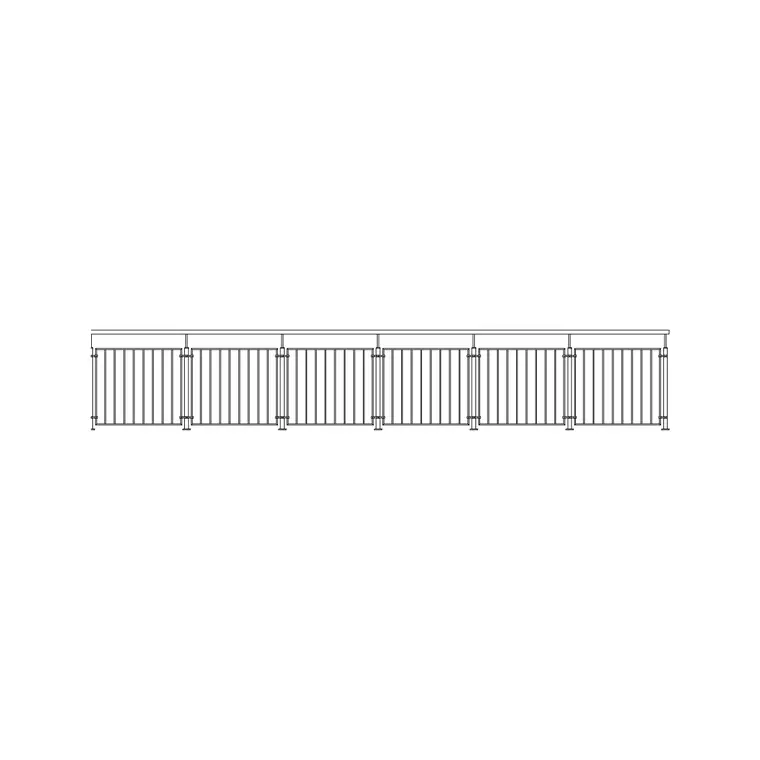
A metal railing is the everyday balustrade — steel posts, a top handrail and an infill of vertical bars or panels, used to guard a stair, a balcony, a ramp or a terrace edge. This page offers a free metal railing CAD block in DWG and DXF, drawn in elevation with its posts, handrail and bar infill so you can guard an edge in a drawing without redrawing every baluster. It is free for personal and commercial use, with no signup, no watermark and no credit required.
A metal railing is worth keeping as a block because the bar infill is the most repetitive geometry on the whole balustrade — a regular run of verticals that has to keep its pitch to look right and to meet a guarding gap rule. Drop the block into an elevation for a balcony or stair, repeat the bay along the run, and the pitch stays honest. Set the railing out in plan as a line to fix the edge.
Because it is licence-clear, the same metal railing carries from a concept study to a planning elevation and into a fabrication drawing.
What the metal railing block contains
The block is drawn as one bay: a post at each end, the handrail along the top, a bottom rail where used, and the vertical bars between. Posts, rails and bars sit on separate layers so you can isolate the posts for setting-out or simplify the railing to a handrail line on a small-scale plan.
Bar pitch on a guarding railing is usually close — commonly in the 100–130 mm range to meet a typical sphere-gap rule — so a single bay between posts of around 1.0–1.8 m carries a believable count of bars. Guarding height usually sits around 900–1100 mm. Because the bay is a block, the bar pitch stays even down the whole run, and one edit updates every placement.
Plan line vs elevation detail
In plan, a metal railing is a thin line along the edge it guards, with post markers at centres — that line is what you snap the balcony slab, the stair flight or the terrace paving against. The bars barely register in plan; it is the railing line and the post centres that matter.
The elevation is where the railing shows its detail — the bar rhythm, the handrail, the bottom rail and how the run meets a newel or a wall. Set the edge out in plan first to fix the railing line and the post centres, then raise the elevation from those centres so the plan and the elevation never drift apart.
Typical metal railing dimensions
Use these as planning ranges. Guarding and handrail height commonly sits around 900–1100 mm; bar pitch around 100–130 mm where a gap rule applies; post centres around 1.0–1.8 m depending on the bar weight and the loading. A bottom rail, where used, sits a little above floor level to close the gap at the base.
These are sketching ranges, not a spec — the steel sections, the loading and the applicable guarding rules set the real figures. The block lets you test the bar rhythm and the proportion at a realistic size before the balustrade is detailed and engineered.
Inserting and repeating the railing
The block is drawn full size in millimetres: insert at scale 1 in a millimetre drawing, 0.001 in a metre drawing, or set INSUNITS to millimetres for automatic rescaling. Snap the insertion point to a post centre along the railing line and step the bay along the run.
For a straight balcony or terrace, place one bay and use a measured COPY or rectangular ARRAY at the post spacing so the bars line up. On a stair, place the bays on the rake so the handrail and bars follow the flight while the posts stay vertical, and draw the transition to the level landing as a special bay by hand.
Where metal railing is used
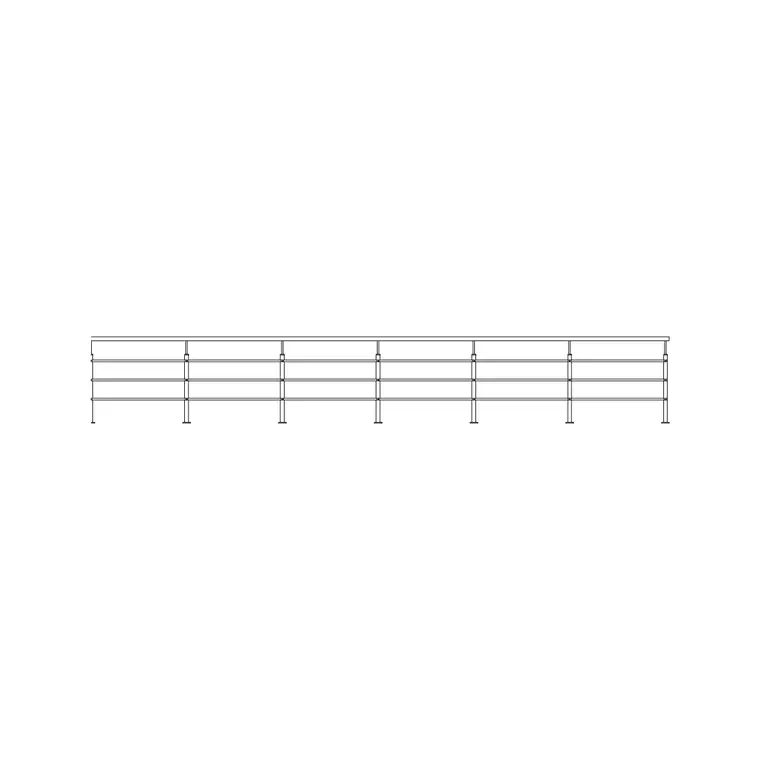
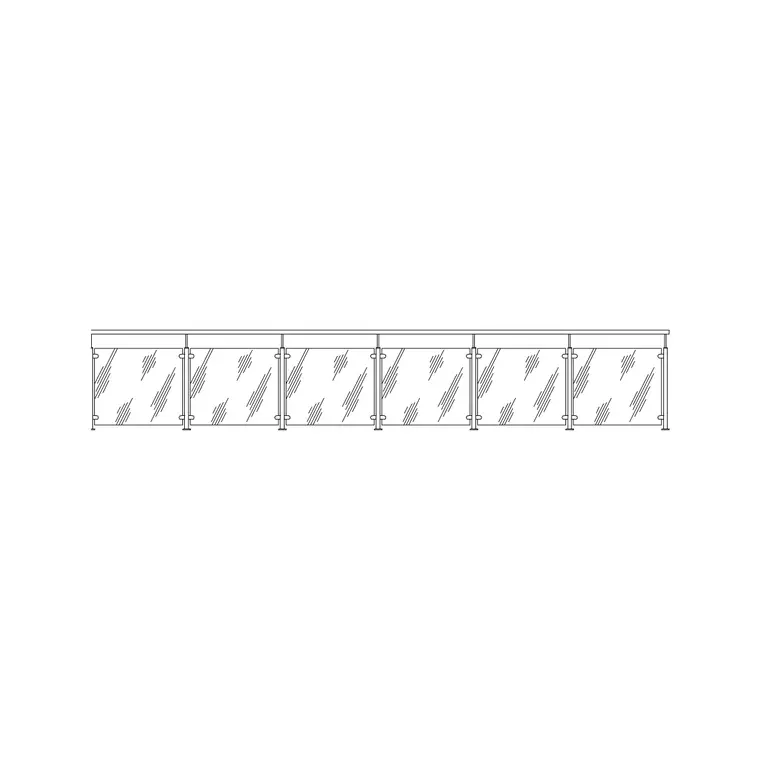
Metal railing guards internal and external stairs, balconies and Juliet balconies, terraces and roof edges, ramps and steps, mezzanines and walkways, light-wells and basement courts, and the edge of raised decks and platforms. Pair it with the stainless-steel and glass railing blocks in the outdoor set when a project mixes systems, and with the stair, balcony and ramp blocks to complete the assembly.
The file is licence-clear, so it carries from a concept edge to a planning elevation and into a fabrication drawing for the metalworker without a redraw. It suits residential, commercial and student work alike.
Layering and counting the railing
Put the metal railing on its own balustrade layer rather than layer 0 so a structural plan can fade it and a finishes drawing can emphasise it from one set of geometry. Keep the posts, handrail and bars on distinct layers so a fabrication drawing shows the posts and handrail for setting-out while a presentation elevation shows the full bar infill. Tag each bay as a block and an attribute extraction returns a quick count of posts and bays straight from the drawing — a fast balustrade take-off rather than a manual tally along the edge.
Free download
Browse the full library — DWG & DXF, no signup.
Questions
Frequently asked
Is the metal railing CAD block free for commercial use?+
Yes. It downloads free in DWG and, where available, DXF, with no signup, no watermark and no attribution clause, cleared for commercial project work.
Can I change the bar pitch?+
Yes. The bars sit on their own layer, so editing the bay definition once — adjusting the pitch — updates every bay you have placed along the run.
What bar spacing is it drawn at?+
Commonly around 100–130 mm to suit a typical sphere-gap guarding rule. Treat that as a planning range — the actual pitch is set by the safety rules for your project.
What scale should I insert it at?+
Full size in millimetres. Insert at scale 1 in a millimetre drawing, 0.001 in a metre drawing, or set INSUNITS to millimetres for automatic rescaling on insertion.
Which CAD programs open the file?+
It targets AutoCAD 2004 and later and opens in current AutoCAD, AutoCAD LT, BricsCAD, DraftSight and free online DWG viewers.
Related downloads
Blocks for this guide
Related categories
Related guides
Block landing
Free Bar Table CAD Blocks — DWG Download
Download free bar table CAD blocks in DWG and DXF — round, square and rectangular high bar tables in plan and elevation for AutoCAD. No signup, commercial-use OK.
Block landing
Free Restaurant Table CAD Blocks — DWG Download
Download free restaurant table CAD blocks in DWG and DXF — 2, 4 and 6 cover tables with chairs drawn in plan and elevation for AutoCAD. No signup, commercial-use OK.
Block landing
Free Restaurant Chair CAD Blocks — DWG Download
Download free restaurant chair CAD blocks in DWG and DXF — dining, cafe and side chairs plus baby high chairs in plan and elevation. No signup, commercial-use OK.