Room guide · kitchenette cad blocks
Kitchenette CAD blocks for compact single-run kitchens
By Saumyajit Maity · Published 12 Jun 2023 · Updated 12 Jun 2026
A kitchenette is a kitchen reduced to its essentials: a short run of worktop, a small sink, a compact cooking source and just enough storage to function. You find them in studio flats, office break areas, hotel rooms, granny annexes and serviced apartments — anywhere a full kitchen will not fit but people still need to make a coffee, heat a meal and wash up. Designing one is an exercise in fitting real function into a metre or two of wall.
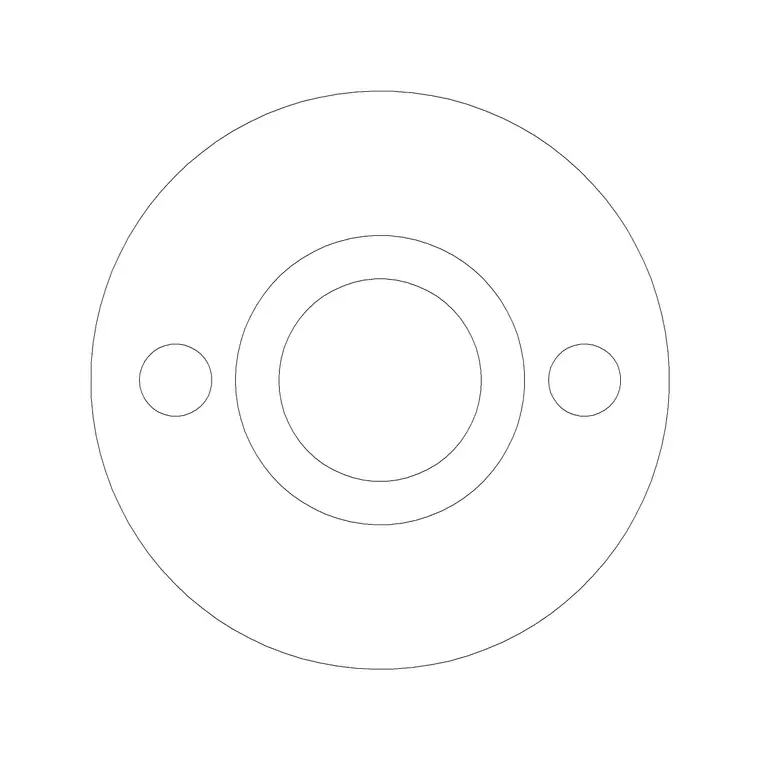
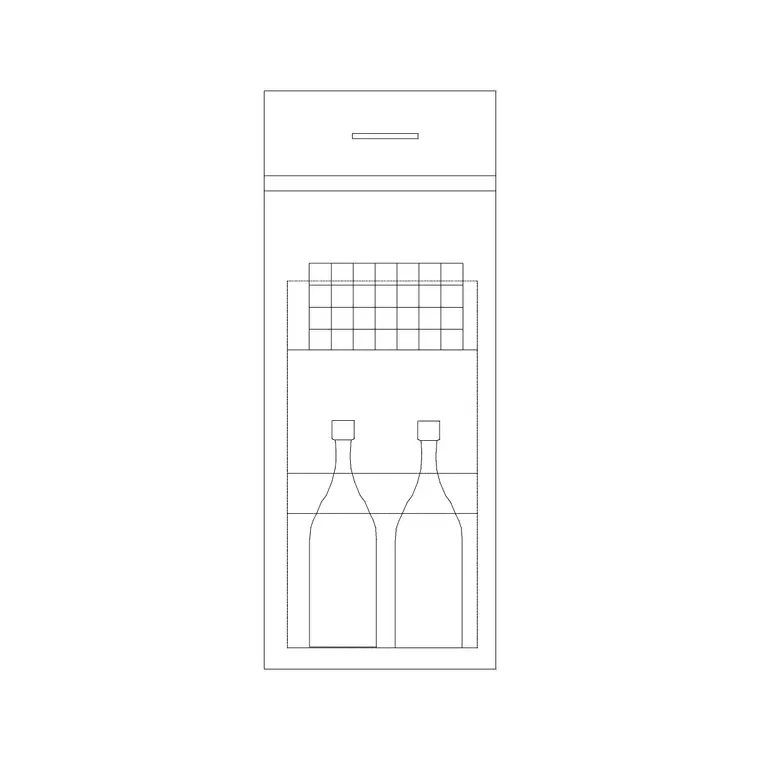
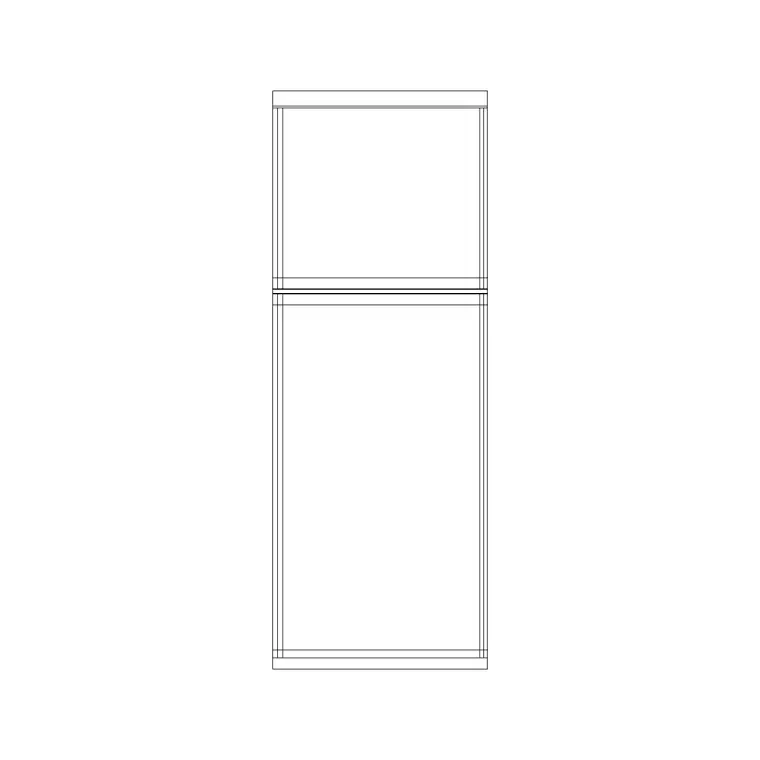
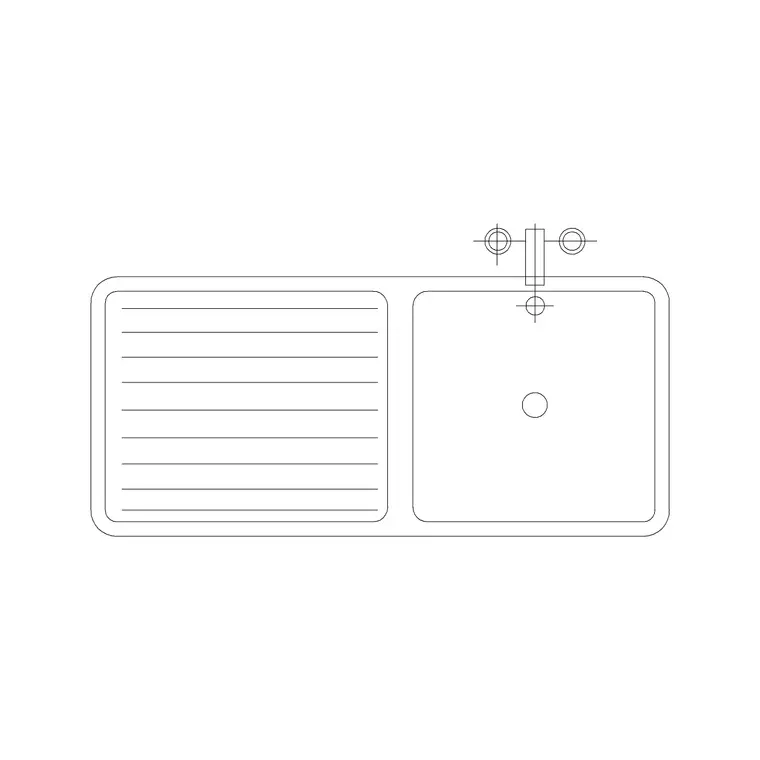
The blocks here are the compact versions of the standard kitchen kit — a single sink, a two-burner or one-burner hob, an under-counter fridge, short base and wall cabinet runs — drawn to true dimensions in DWG and DXF, free for personal and commercial use. Because they are scaled, you can prove that a working kitchen really does fit the alcove or the wall you have been given before you commit the joinery.
The whole game with a kitchenette is sequence on a single run: wash, prep, cook, store, lined up along one wall so the user moves left to right without turning around. Place the compact blocks in that order and a tiny footprint still works like a real kitchen.
Where a kitchenette goes and who uses it
A kitchenette serves a context where space is the binding constraint. In a studio flat it is the whole kitchen, tucked along one wall or into an alcove. In an office it is the break area where people make drinks and warm lunch. In a hotel suite or serviced apartment it lets guests self-cater lightly. In a basement annexe or a holiday let it is a second, minimal kitchen.
The user is rarely cooking a full meal — they are boiling a kettle, heating something, rinsing a mug. That changes the brief: storage and worktop matter less than having the wash zone, a heat source and a fridge all within arm's reach on one short run. The blocks are sized for exactly that compact use rather than a family kitchen.
The single-run layout
Almost every kitchenette is a single-wall layout: everything lined up along one run so the user works left to right. A sensible order is fridge, then a short worktop landing, then the sink, then a prep gap, then the hob — wash and heat kept apart by a stretch of worktop so a hot pan and a wet hand are not fighting over the same 200 mm.
Where the wall is too short for all five elements, the under-counter fridge tucks below the worktop to free up run length above, and a two-burner hob replaces a full cooker. If there is a return wall, an L-shaped kitchenette borrows it for the fridge or the storage, keeping the main run for wash and cook. Drop the scaled blocks along the wall and the run length tells you immediately what fits and what has to shrink.
Compact blocks that make it work
The kit shrinks but the functions stay. A single-bowl sink — often 500–600 mm rather than a full double — carries the wash zone, with a compact faucet at the back. A one- or two-burner hob replaces the full cooker; a small built-in oven or a microwave shelf covers baking and reheating. An under-counter fridge slides beneath the worktop on the 600 mm module.
Storage is a short base run with a couple of wall cabinets above, and the worktop between sink and hob doubles as the only prep surface, so keep it clear in the plan. Small-appliance blocks — a toaster, a kettle, a juicer — placed on that worktop show the client how little free surface a busy kitchenette really leaves, which is itself a useful design check.
- Wash: single 500–600 mm sink, compact faucet - Heat: one- or two-burner hob, microwave or compact oven - Cold: under-counter fridge on the 600 mm module - Store: short base run, one or two wall cabinets - Surface: a single prep run between sink and hob
Tight dimensions and clearances
The figures stay standard even though the room shrinks: worktop depth around 600 mm, worktop height around 850–950 mm, the appliance module still 600 mm. What changes is run length — a workable kitchenette can sit on roughly 1500–2400 mm of wall, with anything below that becoming a tea point rather than a kitchen.
The clearance that matters most is the standing space in front. Leave at least 1000 mm of clear floor in front of the run so the user can open the under-counter fridge and the oven door and still stand at the worktop. In a studio, that clear strip is borrowed from the living space, so draw it and protect it on the plan rather than letting a sofa creep into it. Scaled blocks plus a drawn door swing make that conflict obvious.
Drawing the kitchenette in AutoCAD
Draw the alcove or wall run and the worktop baseline. Place the sink first where the waste can reach a stack, then set the hob a worktop-width away, and tuck the under-counter fridge below the run at one end. Array a couple of base units to fill, add one or two wall cabinets above, and draw the worktop polyline over the lot.
Keep appliances, base units, wall units and worktop on separate layers as you would for a full kitchen, even though the run is short — it still lets you plot a plan and a clean elevation of the one wall, which is usually all a kitchenette drawing needs. Add a single downlight or pendant block above the run on a lighting layer. Then draw the 1000 mm clear floor strip as a hatched zone so nobody furnishes over it.
Common kitchenette mistakes
The biggest mistake is putting the sink and hob immediately adjacent with no prep run between them, so there is nowhere dry to land food or a hot pan. Even on a tiny run, keep a worktop gap between wash and heat. The second is forgetting the door swing of the under-counter fridge and the oven into that borrowed 1000 mm strip, which a nearby sofa or table then blocks.
The third is over-filling the run so there is no clear worktop left at all — a kitchenette with zero free surface is a wall of appliances, not a working kitchen. Place the small-appliance blocks to test this, and if the toaster and kettle leave no room to put down a plate, something has to come off the run.
Free download
Browse the full library — DWG & DXF, no signup.
Questions
Frequently asked
How short a wall can a kitchenette work on?+
A workable kitchenette fits on roughly 1500–2400 mm of wall with a single sink, a one- or two-burner hob and an under-counter fridge. Below about 1500 mm it becomes a tea point rather than a functioning kitchen.
What goes in a kitchenette instead of full appliances?+
Compact versions: a single 500–600 mm sink rather than a double, a one- or two-burner hob instead of a full cooker, an under-counter fridge on the 600 mm module, and a microwave or small oven for reheating. The blocks are drawn at these compact sizes.
How much standing space do I leave in front of a kitchenette?+
Leave at least 1000 mm of clear floor in front of the run so the user can open the fridge and oven doors and still stand at the worktop. In a studio this strip is borrowed from the living area, so draw and protect it on the plan.
What order should the elements go in on a single-wall kitchenette?+
Work left to right: fridge, a short worktop landing, the sink, a prep gap, then the hob. Keeping a worktop run between the wash zone and the heat source gives somewhere dry to land food and hot pans.
Are these kitchenette blocks free to use commercially?+
Yes. They download in DWG and DXF and are free for personal and commercial work with no signup or watermark, suitable for office break-area fit-outs, serviced apartments, studio flats and hotel rooms alike.
Related downloads
Blocks for this guide
Related categories
Related guides
Room guide
Kitchen CAD Blocks — Design the Room in DWG
Design a full kitchen in AutoCAD with free DWG blocks — appliances, sink, cabinets and lighting scaled for the work triangle, clearances and a clean plan.
Room guide
Modular Kitchen CAD Blocks — DWG Module Grid
Free modular kitchen CAD blocks in DWG — base, wall and tall units on the standard module grid, plus appliances sized to drop straight into the carcass run.
Room guide
Scullery CAD Blocks — Back Kitchen DWG Layout
Free scullery CAD blocks in DWG — twin sinks, dishwasher, prep counter and tall storage scaled to design a working back kitchen that keeps the main run clean.