How-to guide · how to insert a vanity unit block in autocad
How to insert a vanity unit block in AutoCAD
By Saumyajit Maity · Published 4 Apr 2026 · Updated 20 Jun 2026
A vanity unit is part fixture and part joinery: it carries one or two basins, provides storage below and a counter surface around them, and it has to fit its wall the way a kitchen cabinet fits a run. That dual nature is what makes it worth its own guide — you place it like a piece of furniture but you have to coordinate basins, taps and wastes like a fixture. This guide covers inserting a vanity unit block in AutoCAD, fitting it to the wall, and centring the basins on it.
The worked example is a double-basin vanity, common in shared family bathrooms and hotel suites, but the steps apply equally to a single-basin vanity, a wall-hung floating vanity and a compact cloakroom vanity. Because a vanity often spans a whole wall, fitting it cleanly and centring its basins is the difference between a tidy drawing and a vague one.
Step 1 — Choose single or double, and the size
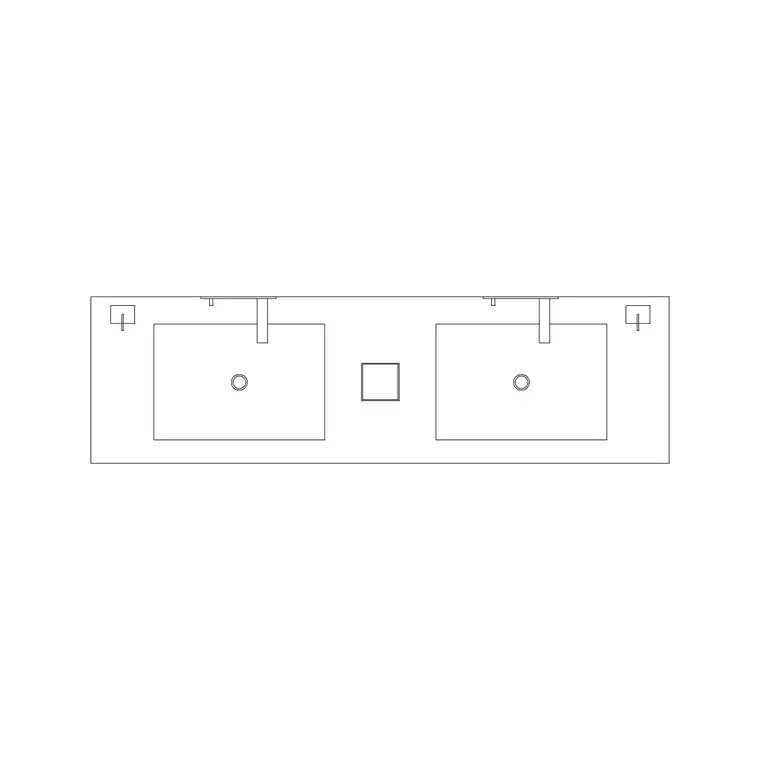
Download a vanity unit block in DWG. Decide first whether you need a single-basin or double-basin vanity, because the width differs dramatically: a single vanity runs 600–900 mm wide, while a double-basin vanity needs 1200 mm or more so the two bowls have space between them and to the ends. Pick the plan view for layout work and the elevation for joinery and tiling.
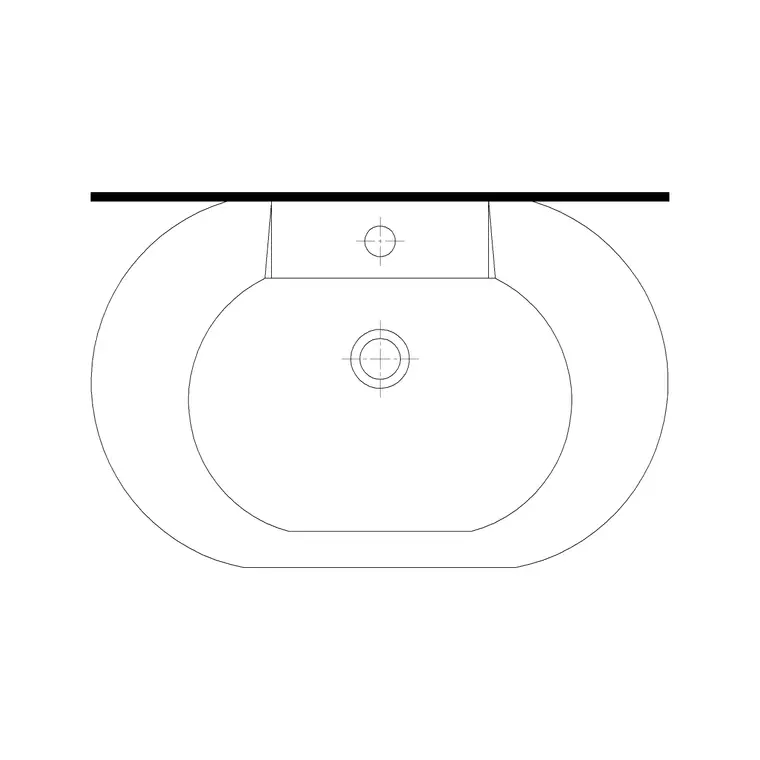
A vanity is typically 450–550 mm deep — shallower than a kitchen base unit — and the counter sits around 800–850 mm high to put the basin rims at a comfortable level. Note whether the basins are countertop bowls sitting on the surface or inset basins dropped into it, since that changes how you coordinate the bowl block. Save the DWG; the blocks here are full size in millimetres.
Step 2 — Set units and insert
Confirm insertion units — type UNITS, set 'Insertion scale' to Millimeters — so a 1200 mm vanity arrives at 1200 mm. With INSUNITS correct, AutoCAD reconciles the block's units against the drawing's automatically on insertion.
Run INSERT (or I), browse to the vanity DWG, and place it against its wall with 'Specify On-screen' ticked for the insertion point. Leave the scale at 1 and the rotation at 0 if the vanity runs along the bottom wall of the plan. The vanity lands as a single block reference. If the basins are separate blocks rather than part of the vanity, insert the vanity first and add the basins onto the counter in the next step.
Step 3 — Fit the vanity to the wall
Push the vanity back against its wall with a perpendicular snap so the counter's back edge sits on the wall line, then seat its sides against the adjacent walls or returns. A vanity that spans a full wall is fitted like a kitchen run — both ends flush to the walls — and any leftover gap is closed with a filler panel or a tiled return rather than by floating the unit off the wall.
If the vanity sits on a side wall, run ROTATE first so it runs along the correct wall. For a wall-hung floating vanity, the elevation matters because the unit is fixed off the floor — note the clearance beneath it. Centre the vanity on the wall space you have allotted so the basins, mirrors and lighting above line up symmetrically.
Step 4 — Centre the basins on the counter
If the basins are part of the vanity block, they are already positioned — just check the spacing reads symmetrically. If they are separate, centre each basin on its half of the counter. For a double vanity, divide the counter into two equal zones and centre a basin in each with a midpoint snap, leaving equal space at the ends and a sensible gap in the middle for the shared counter and taps.
Set each basin back from the front edge of the counter so the tap has room behind it, the same logic as a kitchen sink. Add tap blocks behind each bowl if the basins don't include them. A double vanity reads as designed when the two basins, the two taps and the two mirrors above are all on the same centrelines, so line them up deliberately.
Step 5 — Layer it, dimension it, coordinate the wastes
Move the vanity onto a sanitary or joinery layer and keep the basins on the sanitary layer so each drawing in the bathroom set reads cleanly. Snap centrelines to the basins and dimension their positions from the finished walls for the setting-out drawing, because the installer sets the basins out to those centrelines.
Each basin has a waste that must reach the drainage, and a double vanity has two wastes, so note their positions relative to the soil stack — the cabinet below the counter usually conceals the traps and pipework, which is part of the vanity's appeal. Tag the vanity and basins with fixture references if you are scheduling. When the bathroom is finalised, WBLOCK the vanity-and-basins assembly so the whole unit moves as one reusable block.
Common mistakes with vanity units
The units mismatch leads — fix INSUNITS if the vanity is the wrong size. The mistake specific to vanities is squeezing a double-basin unit into a wall that is too short, so the two bowls crowd each other or the ends; a double vanity needs 1200 mm or more, and below that a single basin is the honest answer rather than two cramped bowls. Don't force two basins into a width that can't take them.
A second issue is forgetting that the basins, taps and mirrors all share centrelines — a vanity with the basins off-centre or the mirrors not aligned reads as careless, so set them out together. Third, ignoring the wastes: a vanity hides its pipework in the cabinet, which is a selling point, but the wastes still have to reach the drainage, so coordinate their route to the soil stack rather than assuming the cabinet solves it.
Free download
Browse the full library — DWG & DXF, no signup.
Questions
Frequently asked
How wide does a double-basin vanity need to be?+
At least 1200 mm, and more is better, so the two bowls have space between them and clearance to each end. Below 1200 mm the basins crowd each other, and a single-basin vanity is the better answer. Single vanities typically run 600–900 mm wide.
What height should a vanity counter be?+
A vanity counter usually sits around 800–850 mm high so the basin rims land at a comfortable level for a standing adult, similar to a wall-hung basin. Set that height in the elevation, lowering it deliberately for children's or accessible use.
Should I insert the vanity or the basins first?+
Insert the vanity first, then add the basins onto the counter if they are separate blocks. Centre each basin on its half of the counter with a midpoint snap, set it back from the front edge for the tap, and align the basins, taps and mirrors on shared centrelines.
How are the wastes handled in a vanity?+
The cabinet below the counter conceals the traps and pipework, which is part of a vanity's appeal. Each basin still has a waste that must reach the drainage, so note the waste positions relative to the soil stack and coordinate the route rather than assuming the cabinet resolves it.
Related downloads
Blocks for this guide
Popular blocks to download
Related categories
Related guides
How-to guide
How to Insert a Wash Basin Block in AutoCAD
How to insert a wash basin block in AutoCAD — download the basin DWG, set units, run INSERT, place it near the WC and set the rim height in elevation.
Curated pack
Free Plumbing Fixtures CAD Block Pack — DWG
Free plumbing fixtures CAD block pack in DWG and DXF — WCs, basins, sinks, valves, gullies and pipework symbols for AutoCAD layouts. No signup.
Block landing
Free Sanitary Fixtures CAD Blocks — DWG Download
Download free sanitary fixtures CAD blocks in DWG and DXF — WCs, wash basins, urinals and sinks in plan and section for AutoCAD sanitary plans.