How-to guide · how to insert a toaster block in autocad
How to insert a toaster block in AutoCAD
By Saumyajit Maity · Published 31 Mar 2022 · Updated 21 Mar 2026
A toaster is a small block, but small countertop appliances are exactly what make a kitchen drawing feel real. A bare worktop reads as a showroom; a toaster, a kettle and a coffee machine on the counter read as a kitchen someone actually cooks in. So while inserting a toaster block in AutoCAD is mechanically trivial, knowing where it belongs on the worktop — near a socket, clear of the hob, out of the splash zone — is what makes the touch worthwhile.
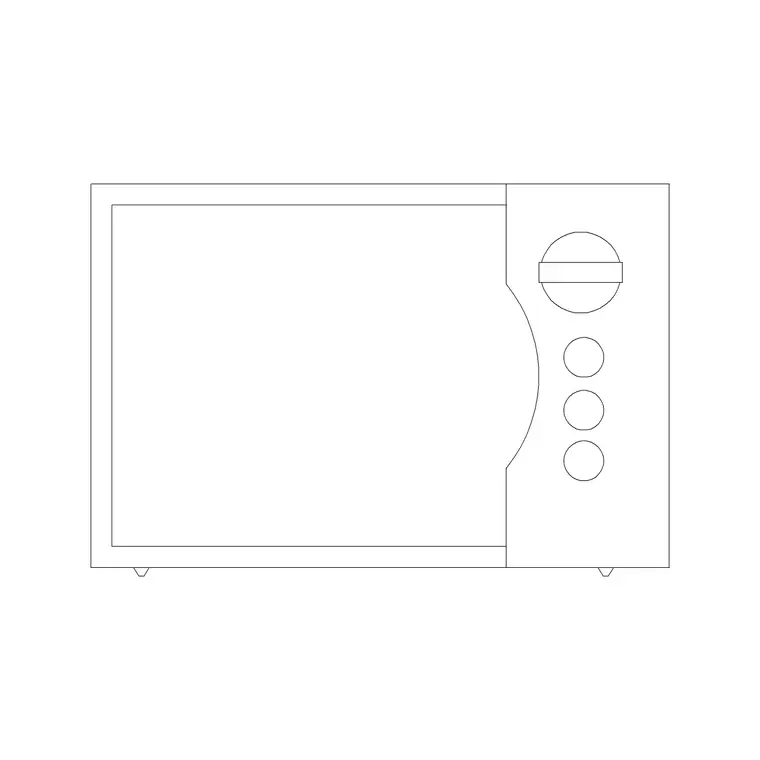
This guide walks through inserting a toaster CAD block in AutoCAD and placing it sensibly on a kitchen counter. Toasters appear in plan view for kitchen layouts and in elevation for kitchen interior elevations, where they sit on the worktop line; we will cover both because a toaster is a classic dressing item for an elevation. We will use a generic toaster block as the worked example.
The value of a worktop appliance is in the dressing, not the dimensions, so the emphasis here is on placement and realism rather than precise sizing.
Choose plan or elevation
For a kitchen furniture plan, use the plan-view toaster — the small top-down outline that sits on the worktop. For a kitchen interior elevation, use the elevation toaster that shows the appliance's front or side profile standing on the counter line. The two are not interchangeable: a plan toaster dropped into an elevation looks like a flat smear, and vice versa.
Toasters are most often used to dress an elevation, so the elevation block tends to get the most mileage. Grab whichever view your current drawing is in, and keep both in your kitchen-appliance library for next time.
Confirm units
These blocks are drawn full size in millimetres, so set insertion units to millimetres with UNITS before inserting. A toaster is small, so a units error is easy to overlook — but a toaster that lands a metre wide, or invisibly tiny, is still a units mismatch and will throw off the elevation it sits in.
After the first insert, glance at the toaster against the worktop: it should read as a believable small appliance, modest against the counter run. If it dwarfs the cabinets or disappears, fix the units before going further.
Insert and place on the worktop
Run INSERT, browse to the toaster DWG, and place it on the worktop. In plan, sit it on the counter surface near a wall socket; in elevation, snap its base to the worktop line so it stands on the counter rather than floating above or sinking below it. Snapping the base to the worktop line is the single most important move for a believable elevation appliance.
Place it where a real toaster would live — toward a corner of the run, near power, off to the side of the main prep zone. A toaster marooned in the middle of the only clear prep space looks staged; tucked into a worktop corner near a socket, it looks lived-in.
Keep it clear of the hob and the splash zone
Real toasters are not placed against the hob or right beside the sink, for safety and for splash reasons, so honour that in the drawing. Keep the toaster clear of the hob's surround and out of the immediate splash zone of the tap. This is a small realism cue that a knowledgeable reviewer will notice if you get it wrong.
If the elevation shows a socket strip along the worktop, line the toaster up near a socket — appliances follow power. These little logics cost nothing to honour and make the difference between a kitchen that reads as designed and one that reads as decorated at random.
Add the rest of the worktop appliances
A toaster rarely appears alone. Once it is placed, add the kettle, the coffee machine and any other small appliances that dress the worktop, spacing them along the counter so they read as a small-appliance zone rather than a cluttered pile. Group them near the power and away from the wet and hot zones, just as a real kitchen would.
Keep the dressing restrained. A worktop with three or four well-placed appliances reads as realistic; a worktop crammed with every gadget in the library reads as noise and distracts from the architecture you are actually presenting.
Layer and finish
Put the toaster and the other worktop appliances on a dressing or appliance layer, separate from the cabinetry and the architectural elements, so you can plot the kitchen clean or dressed on demand. Clients and reviewers often want the bare design and the styled version, and a dressing layer gives you both from one drawing.
Freeze the dressing layer for a technical plot, thaw it for a presentation render. Keeping the toaster off the cabinet and worktop layers means your appliance dressing never contaminates the dimensions and joinery that the kitchen drawing is really about.
Free download
Browse the full library — DWG & DXF, no signup.
Questions
Frequently asked
What view should a toaster block be in?+
Use a plan-view toaster for a kitchen furniture plan and an elevation toaster for a kitchen interior elevation, where it stands on the worktop line. Toasters are most often used to dress elevations, so the elevation block sees the most use. The two views are not interchangeable.
Where should I place a toaster on a kitchen drawing?+
On the worktop near a wall socket, toward a corner of the run and off to the side of the main prep zone, clear of the hob surround and the tap's splash zone. Appliances follow power, so line the toaster up with the socket strip in an elevation.
What units do I insert a toaster block at?+
Millimetres. The blocks are drawn full size in millimetres, so set your insertion units to millimetres with the UNITS command before inserting. A toaster that lands a metre wide or invisibly small is a units mismatch — fix the units and re-insert.
Should worktop appliances go on their own layer?+
Yes. Put the toaster and other small appliances on a dressing or appliance layer, separate from cabinetry and architectural elements, so you can freeze them for a clean technical plot and thaw them for a presentation drawing from the same file.
Related downloads
Blocks for this guide
Popular blocks to download
Related categories
Related guides
How-to guide
How to Draw a Kitchen Layout in AutoCAD
Draw a kitchen layout in AutoCAD — set the 600 mm module, fix sink and hob, lay cabinet runs, check the work triangle. Step-by-step with free kitchen blocks.
How-to guide
How to Insert a Kitchen Sink Block in AutoCAD
How to insert a kitchen sink block in AutoCAD — download the DWG, fix units, run INSERT, snap it to the cabinet run and centre the bowl under the window.
How-to guide
How to Insert a Stove / Cooktop Block in AutoCAD
How to insert a stove or cooktop block in AutoCAD — download the hob DWG, set units, run INSERT, centre it in the base unit and leave clearance to combustibles.