Block landing · wash basin cad block
Free wash basin CAD blocks for AutoCAD
By Sumana Kumar · Published 6 Apr 2026 · Updated 1 May 2026
The wash basin is the second fixture you place in almost any bathroom, and it is the one a user interacts with most, so its position, height and clear space matter. A clean wash basin CAD block lets you site it within easy reach of the WC and check the space a person needs to stand and use it. This page collects free wash basin CAD blocks in DWG and DXF — wall-hung, countertop, corner and cloakroom basins — drawn at true millimetre sizes and ready for AutoCAD 2004 or later, free for personal and commercial work with no signup and no watermark.
Basins come in a wide range of shapes and mountings, so the block library here spans the common types rather than a single generic outline. Whether you are fitting a tiny cloakroom hand-basin or a generous double-basin vanity run, starting from a correctly-scaled block means the reach, the splash zone and the plumbing position are right from the first placement.
Wash basin types in the library
The set covers the basin mountings you meet most. Wall-hung basins fix straight to the wall with no support below, giving a light, open look. Pedestal basins sit on a ceramic column that hides the trap. Semi-pedestal basins use a shorter wall-fixed shroud. Countertop and inset basins drop into or sit on a vanity top. Corner basins tuck a small basin into a 90-degree corner to save space in a cloakroom.
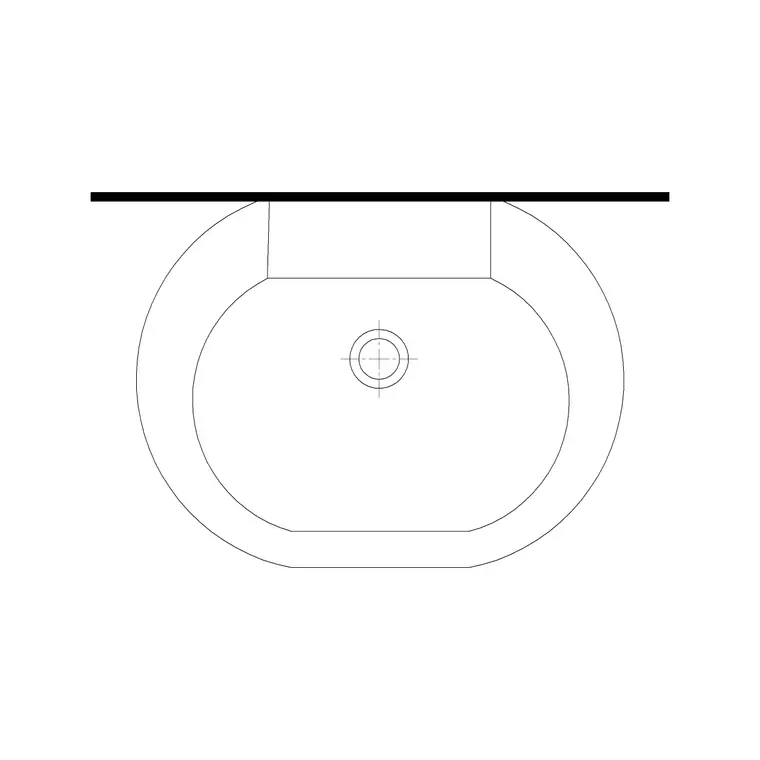
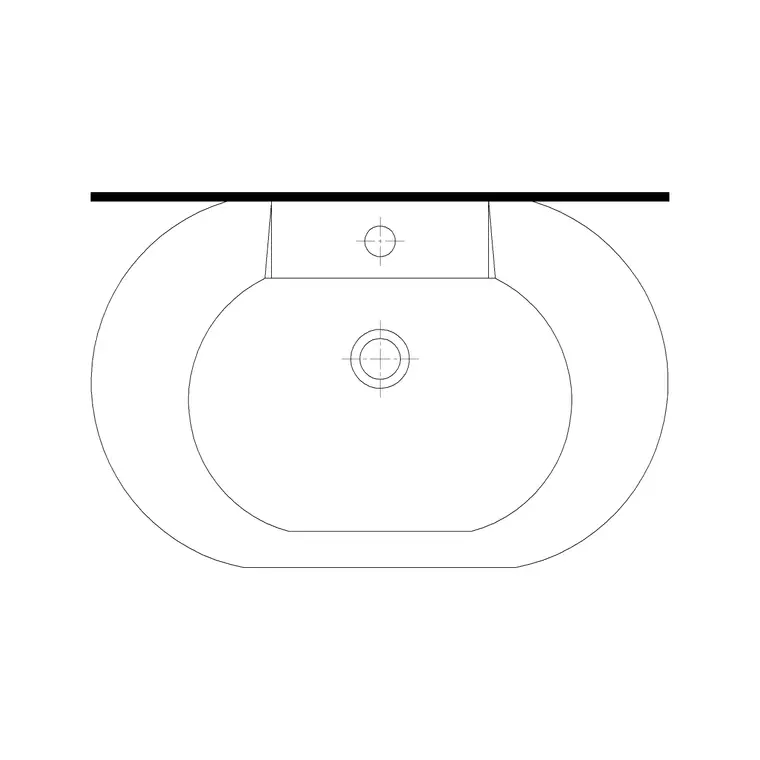
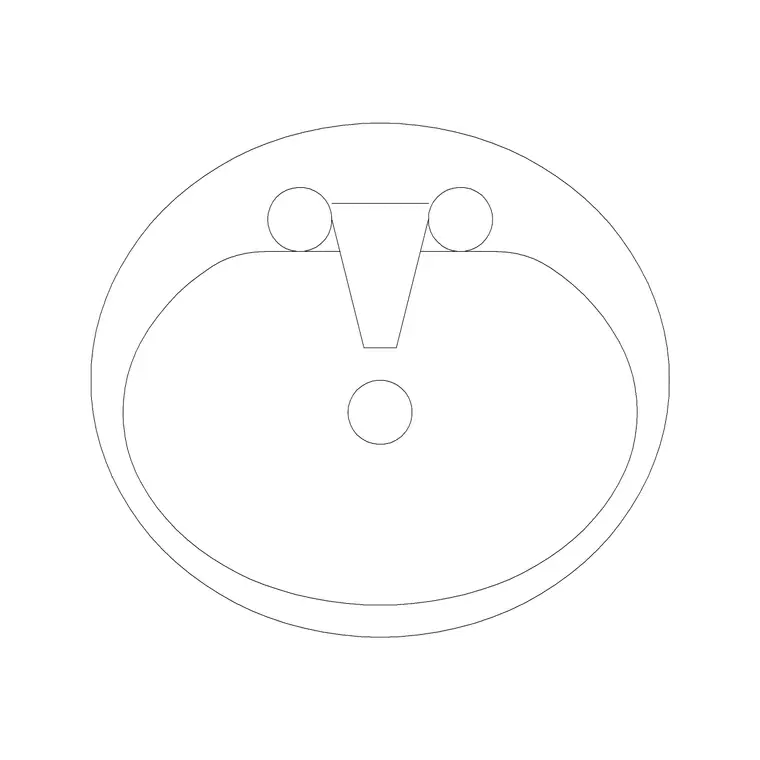
Each is drawn as a clean block reference with the bowl outline, the tap position and a centreline, so you can place it, dimension it and rotate it to the wall it serves. The shape of the bowl — round, oval, rectangular or D-shaped — is shown in plan so the splash zone and the usable rim read correctly.
Plan view for layout, elevation for height
For the bathroom layout you work in plan: the basin seen from above, fixed to the wall with its clear standing space checked in front. The plan block is what you mirror to flip a layout, or array to set out a row of basins in a public washroom.
For tiling drawings, sanitary elevations and joinery you switch to elevation, where the basin and its tap are drawn face-on at the mounting height. The rim height is the key dimension here — typically around 800–850 mm to the rim for a standard basin. Many downloads ship the plan and elevation together so one file covers both.
Typical wash basin dimensions
Design around these figures. Standard basin: 500–650 mm wide and 400–500 mm front-to-back. Cloakroom hand-basin: 350–450 mm wide. Rim height above the floor: 800–850 mm (lower for a children's or accessible basin). Clear standing space in front: at least 600–700 mm so a person can lean in to use it.
Corner basins are smaller, often around 350–400 mm on each side of the corner. For a double-basin vanity, allow roughly 600 mm of width per basin plus space between, so a comfortable double run is around 1200–1500 mm wide. Drop the scaled block in and these checks become visual.
Inserting and placing the basin block
The blocks are drawn full size in millimetres — insert at scale 1 in a millimetre drawing, or set INSUNITS to millimetres for automatic rescaling. Use INSERT, snap the insertion point to the basin centreline at the wall face, and rotate to the wall it serves. For a countertop basin, place it on the vanity-top outline so the bowl sits where the joinery cuts the hole.
Dimension the basin centreline from the side wall and the rim height on the elevation — those fix the tap and waste position for the plumber. Keep the basin on a sanitaryware layer so it freezes off a structural plan and thaws back for the furnished and tiling drawings.
Where wash basin blocks are used
Basins appear in every bathroom and many other rooms: en-suites, family bathrooms, cloakrooms, public and accessible washrooms, hospital and clinic wash points, kitchens with a separate hand-basin, and utility rooms. Architects and interior designers place them on layouts; plumbing designers use them to coordinate the hot, cold and waste connections.
Pair the basin with the WC, bidet and vanity blocks to complete the sanitary layer, and with the bathroom faucet / mixer blocks to show the tapware on elevations. For a vanity run, drop the basin onto a vanity-unit block so the bowl and the joinery are coordinated from the start.
Choosing the right basin for the space
The basin type you draw should follow the room. In a tight cloakroom, a corner or small wall-hung basin keeps the floor open and the projection minimal. In a family bathroom, a pedestal or semi-pedestal basin gives a generous bowl while hiding the pipework. In a contemporary scheme or a hotel, a countertop basin on a vanity adds storage and a clean line. Where two people share, a double-basin vanity run earns its width.
Because each type is a separate scaled block, you can audition them in the same layout — swap a pedestal for a wall-hung basin to free up floor, or a single basin for a double run where the wall length allows — without redrawing the surrounding bathroom. Tag each basin and you can extract a sanitaryware schedule for the plumber and the procurement list straight from the drawing.
Free download
Browse the full library — DWG & DXF, no signup.
Questions
Frequently asked
What basin types are included?+
Wall-hung, pedestal and semi-pedestal basins, countertop and inset basins, corner basins and small cloakroom hand-basins — drawn in plan and, in many cases, elevation, with the bowl shape, tap position and centreline shown.
What height is a wash basin drawn at?+
The rim is typically set around 800–850 mm above the floor for a standard basin, shown on the elevation view. Lower it for a children's or accessible basin. The plan view shows the footprint at full size.
Are the wash basin blocks free for commercial use?+
Yes. They download free in DWG and, where available, DXF, with no signup, no watermark and no attribution requirement, and they are cleared for commercial project use.
How much clear space does a basin need in front?+
Allow at least 600–700 mm of clear standing space in front of a basin so a person can lean in to use it comfortably, and more in an accessible washroom where a wheelchair approach is required.
Related downloads
Blocks for this guide
Related categories
Related guides
Block landing
Free Bathroom Fixtures CAD Blocks — DWG Download
Download free bathroom fixtures CAD blocks in DWG and DXF — toilets, wash basins, bathtubs, showers and vanities drawn in plan and elevation. No signup, commercial OK.
Block landing
Free Sanitary Fixtures CAD Blocks — DWG Download
Download free sanitary fixtures CAD blocks in DWG and DXF — WCs, wash basins, urinals and sinks in plan and section for AutoCAD sanitary plans.
Block landing
Free Toilet / WC CAD Blocks — DWG Download
Download free toilet / WC CAD blocks in DWG and DXF — close-coupled, back-to-wall and commode pans in plan and elevation for AutoCAD. No signup, commercial OK.