Block landing · vanity unit cad block
Free bathroom vanity unit CAD blocks for AutoCAD
By Saumyajit Maity · Published 26 Jan 2022 · Updated 27 Jan 2026
A vanity unit combines a wash basin with a storage cabinet and a worktop, turning the basin from a single fixture into a piece of bathroom joinery. It is what you draw when the client wants storage, a clean concealed-plumbing look and a generous surface around the basin. Because it is part fixture and part cabinet, the vanity sits on the line between the sanitary layer and the joinery layer, and it benefits from a block that carries both. This page collects free vanity unit CAD blocks in DWG and DXF — single and double-basin units — drawn to true size and ready for AutoCAD 2004 or later, free for personal and commercial work with no signup and no watermark.
The vanity is usually the second-largest item in a bathroom after the bath, and the one that most rewards being drawn as a coordinated block: the cabinet, the worktop, the basin cut-out and the tap all have to line up. Starting from a correctly-sized vanity block means that coordination is built in from the first placement.
What a vanity unit block includes
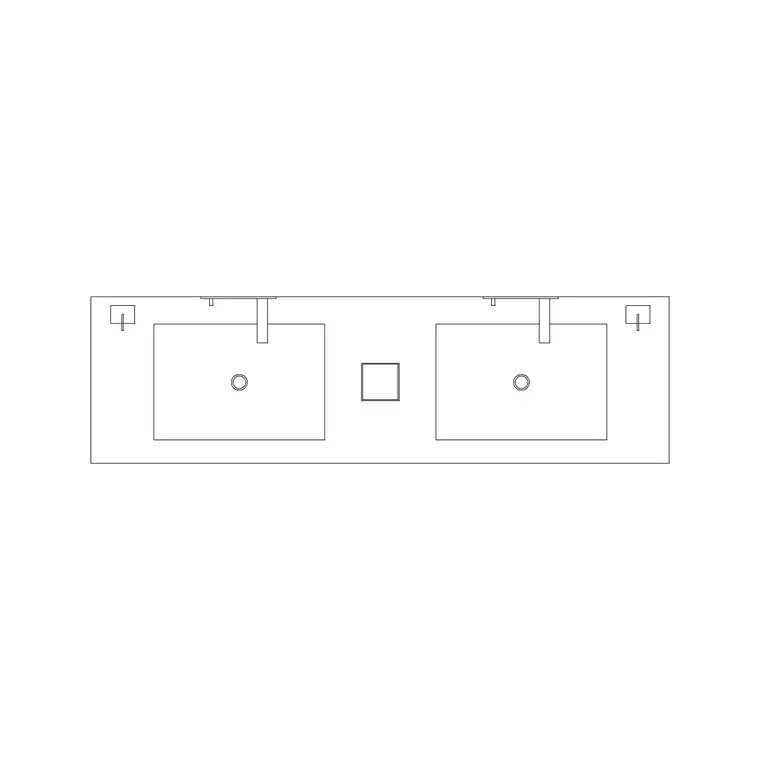
A vanity unit block shows the cabinet carcass, the worktop above it, the basin (inset, countertop or integrated) and the tap position. In plan you see the cabinet footprint, the worktop overhang and the basin outline; in elevation you see the cabinet doors or drawers, the worktop line and the basin and tap. A double-basin vanity shows two basins on one run with the taps spaced between them.
Because the unit is joinery as much as sanitaryware, the block keeps the cabinet, the worktop and the basin on sensible layers, so you can produce a furniture/joinery drawing and a sanitary setting-out drawing from the same insertion. The basin shown can often be swapped for one of the separate basin blocks if the design calls for a particular bowl.
Plan for layout, elevation for the joinery
For the bathroom layout you use the plan: the vanity seen from above, set against the wall with the worktop and basin positioned and the clear standing space checked in front. The plan is what you use to fit the vanity into the available wall length and to set the basin within reach of the WC.
For joinery, tiling and presentation you switch to the elevation, where the cabinet fronts, the worktop, the basin and the tap are drawn face-on. The worktop height — typically 800–900 mm — and the basin and tap heights all read here. Many downloads ship the plan and elevation together, so one file covers both the layout and the joinery face.
Typical vanity unit dimensions
Design around these figures. Single-basin vanity width: 600–900 mm. Double-basin vanity width: 1200–1800 mm. Cabinet depth: 450–550 mm. Worktop height: 800–900 mm to the top. Worktop overhang at the front: 20–40 mm. Basin within the top: a single bowl needs roughly 500–600 mm of width plus space for the tap.
For a double vanity, allow around 600 mm per basin plus a sensible gap, so a comfortable two-basin run is 1300–1600 mm or more. Leave at least 600–700 mm of clear standing space in front. Because the cabinet has doors or drawers, check that they clear any adjacent fixture or a towel rail when open.
Placing the vanity and coordinating the basin
The blocks are drawn full size in millimetres — insert at scale 1 in a millimetre drawing, or set INSUNITS to millimetres for automatic rescaling. Use INSERT, snap the cabinet corner to the wall, and rotate to the wall it serves. Stretch or pick the unit width to suit the wall, and confirm the basin sits where you want it on the top.
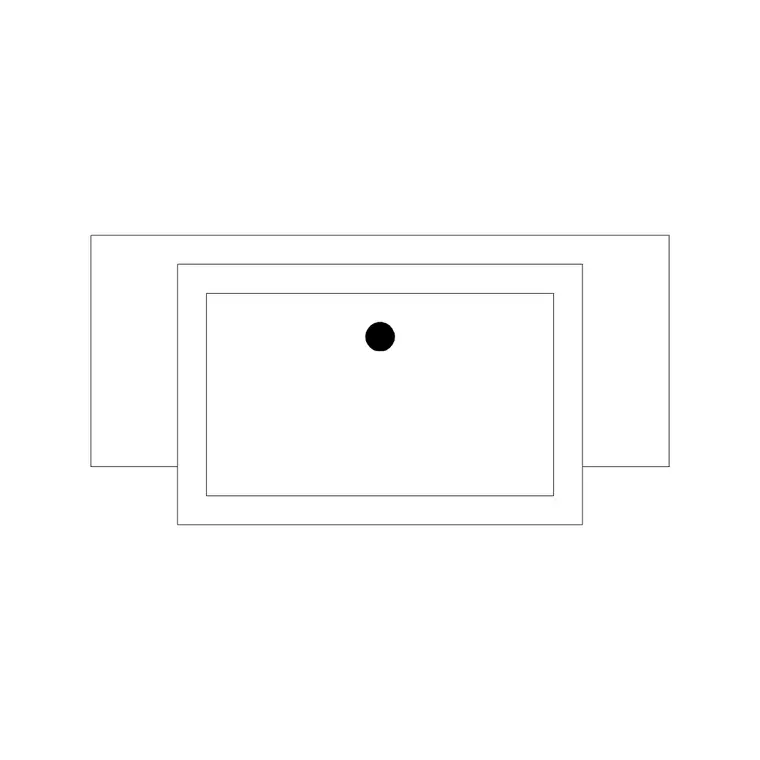
If you are swapping in a different bowl, place one of the separate basin blocks onto the worktop and use its rim line to set the cut-out. Dimension the vanity from the walls, the worktop height on the elevation, and the basin and tap positions for the plumber. Keep the cabinet on a joinery layer and the basin on a sanitaryware layer so each drawing reads cleanly.
Where vanity units are used
Vanity units are a staple of contemporary residential bathrooms, en-suites, hotels and hospitality, and any scheme where bathroom storage and a tidy, concealed-plumbing look matter. A double-basin vanity is the standard answer for a shared family or master bathroom where two people use the basin at once.
Use the vanity block when the design wants storage and worktop around the basin rather than a bare pedestal or wall-hung basin. Pair it with the WC, bath, shower and bathroom-faucet blocks to complete the bathroom, and with the separate basin and oval-basin blocks when you want to drop a particular bowl into the vanity top. Tag the unit to carry it into a joinery schedule alongside the sanitaryware.
Coordinating cabinet, worktop, basin and tap
The vanity's value as a block is that it forces four things to agree: the cabinet, the worktop, the basin and the tap. Get the basin cut-out from the same block that drives the worktop and the cabinet, and the joiner machines the top to match the layout exactly; draw them separately and you risk a basin that lands over a cabinet divider or a tap that fouls the wall. Show the basin rim, the cut-out and the tap hole on the plan so the joinery and the plumbing are set out together.
The concealed plumbing is the other coordination point, and the reason many designers prefer a vanity over a pedestal. The cabinet hides the trap and the supply tails, but only if the waste and the hot and cold connections fall within the carcass and clear the drawers or doors. Drawing the unit as a scaled block lets you position those connections inside the cabinet and check the drawer runs clear them, so the finished vanity is as tidy inside as it looks outside.
Free download
Browse the full library — DWG & DXF, no signup.
Questions
Frequently asked
What is a bathroom vanity unit?+
A vanity unit combines a wash basin with a storage cabinet and a worktop, so the basin becomes a piece of joinery with concealed plumbing and a surface around it. It comes in single and double-basin widths.
How wide is a double-basin vanity?+
Double-basin vanities run 1200–1800 mm wide, allowing around 600 mm per basin plus a gap. A single-basin vanity is typically 600–900 mm. Cabinet depth is around 450–550 mm and worktop height 800–900 mm.
Can I put a different basin into the vanity?+
Yes. Place one of the separate basin or oval-basin blocks onto the vanity worktop and use its rim line to set the cut-out. Keep the basin on a sanitaryware layer and the cabinet on a joinery layer so each drawing reads cleanly.
Are the vanity unit blocks free for commercial work?+
Yes. They download free in DWG and, where available, DXF, with no signup, no watermark and no attribution requirement, and they are cleared for commercial project use.
Related downloads
Blocks for this guide

Related categories
Related guides
Block landing
Free Bathroom Fixtures CAD Blocks — DWG Download
Download free bathroom fixtures CAD blocks in DWG and DXF — toilets, wash basins, bathtubs, showers and vanities drawn in plan and elevation. No signup, commercial OK.
Block landing
Free Sanitary Fixtures CAD Blocks — DWG Download
Download free sanitary fixtures CAD blocks in DWG and DXF — WCs, wash basins, urinals and sinks in plan and section for AutoCAD sanitary plans.
Block landing
Free Toilet / WC CAD Blocks — DWG Download
Download free toilet / WC CAD blocks in DWG and DXF — close-coupled, back-to-wall and commode pans in plan and elevation for AutoCAD. No signup, commercial OK.