Block landing · two piece toilet cad block
Free two-piece toilet CAD blocks for AutoCAD
By Sumana Kumar · Published 10 Sep 2025 · Updated 12 Mar 2026
A two-piece toilet — the close-coupled type with a separate pan and a cistern that bolts on top — is the most common WC in domestic bathrooms, so it is the block you will reach for most when laying out a house or apartment. This page collects free two-piece toilet CAD blocks in DWG and DXF, drawn to standard close-coupled sizes and ready to insert into AutoCAD 2004 or later. They are free for personal and commercial work, with no signup and no watermark.
The defining feature of a two-piece block, compared with a slim back-to-wall or wall-hung pan, is the depth: the visible cistern pushes the overall footprint back further from the wall, which matters when you are checking the activity zone in a tight bathroom. Working from a correctly-drawn two-piece block means that depth is built into your layout from the first placement.
What 'two-piece' means in the block
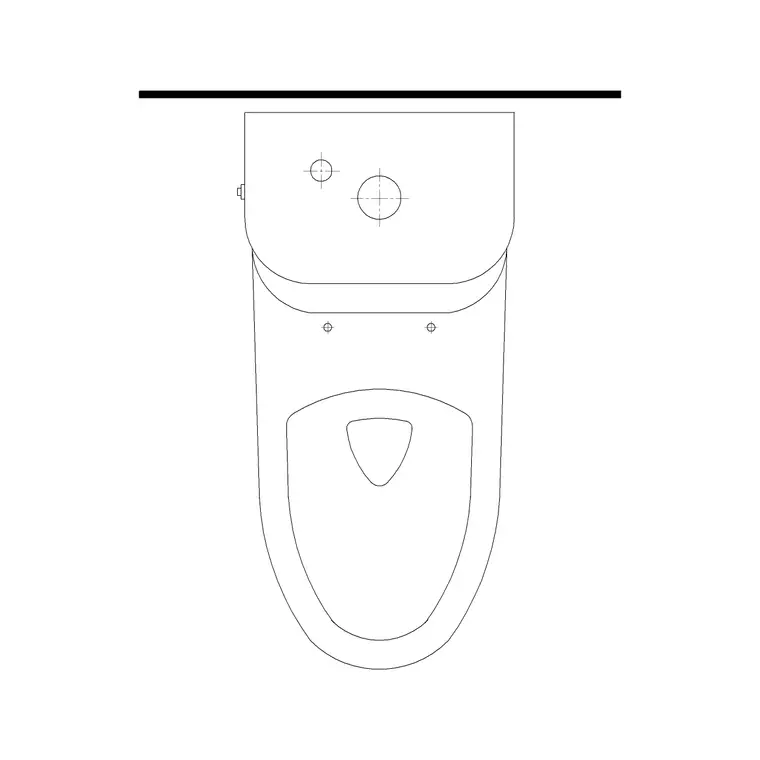
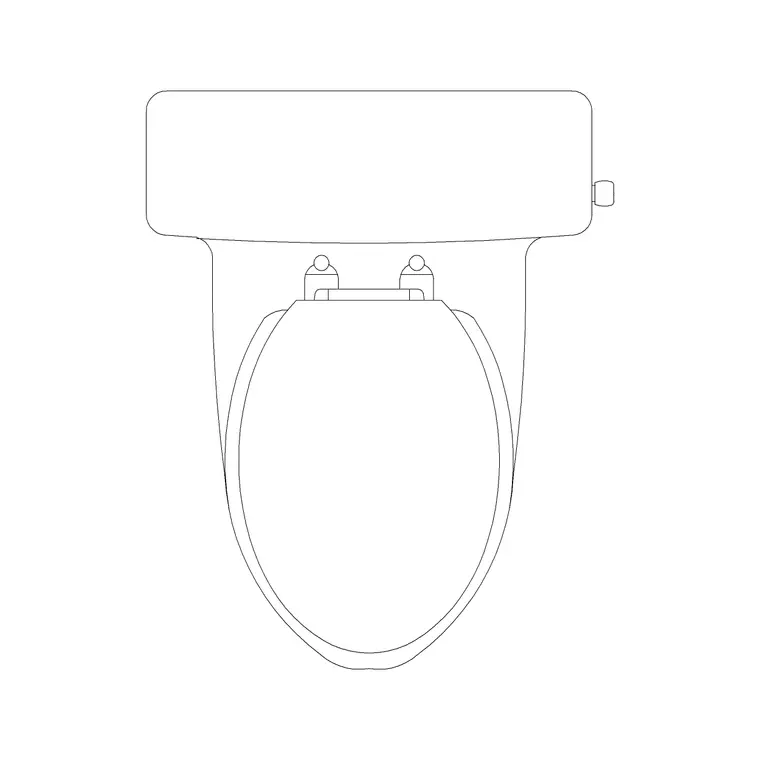
A two-piece (close-coupled) toilet is made of two ceramic parts: the floor-standing pan and the cistern that sits directly on the back of the pan, bolted together. The block shows both parts, so in plan you see the pan outline with the wider cistern behind it, and in elevation you see the full height from floor to cistern lid.
This is distinct from a one-piece (single-piece) toilet, where pan and cistern are moulded as a single unit, and from a wall-hung pan, where the cistern is concealed in the wall. The two-piece block's exposed cistern is what gives it its characteristic stepped plan and its greater depth off the wall.
Plan and elevation views included
For layout work you use the plan: the pan and the wider cistern seen from above, set against the wall that carries the soil pipe. The stepped outline reminds you that the cistern is the deepest point, which is the dimension that governs how far the fixture projects into the room.
For tiling drawings and sanitary elevations you switch to the front or side elevation, where the pan, the cistern and the flush button or lever are drawn face-on at real heights. Many downloads here ship the plan and a front elevation together, so one file gives you both the setting-out plan and the elevation.
Typical two-piece toilet dimensions
Design around these figures. Pan width: 360–400 mm. Overall depth, pan plus close-coupled cistern: 650–750 mm. Cistern width: 440–500 mm. Seat height: 400–430 mm. Cistern lid height above floor: 750–800 mm.
Because the cistern adds depth, allow the full 650–750 mm projection plus at least 600 mm of clear activity space in front when you check the layout. In a compact en-suite that combined depth is often the figure that decides whether a two-piece pan fits or whether you switch to a back-to-wall pan with a concealed cistern to claw back room.
Inserting and placing the block
These blocks are drawn full size in millimetres. Insert at scale 1 in a millimetre drawing, 0.001 in a metre drawing, or set INSUNITS to millimetres so AutoCAD rescales automatically. Use INSERT, pick the insertion point on the pan centreline at the wall face, and rotate to the wall the WC serves.
Snap a setting-out dimension from the finished wall to the pan centreline, and a second from the side wall to the same centreline — those two figures fix the pan for the installer. Keep the toilet on a sanitaryware layer so it freezes cleanly off a structural plan and thaws back for the furnished and tiling drawings.
One practical tip for close-coupled pans: because the cistern is the widest, deepest part, place the block so the cistern sits square to the wall and the pan projects straight into the room. If the WC has to sit in a corner, check that the cistern lid can still be lifted clear for maintenance — a detail the scaled block makes obvious when you draw the lid swing on the plan.
When to choose a two-piece block
Use a two-piece toilet block whenever you are drawing standard residential bathrooms, rental fit-outs and budget-conscious schemes, because close-coupled pans are the most widely-specified and the most affordable WC type. They are easy to install and service, which is why they dominate domestic work.
Switch to a wall-hung or back-to-wall block when the design calls for a cleaner wall line, easier floor cleaning, or a shallower projection in a tight space. Keeping all three WC types in your library means you can swap between them as the design develops without redrawing the rest of the bathroom.
Pairing with the rest of the bathroom
A two-piece toilet rarely sits alone. On a typical residential layout you place the close-coupled pan against the drainage wall, then bring the wash basin within easy reach, and run the bath or shower along the longest wall. Because every fixture is a scaled block, you can test the whole arrangement — the door swing, the 600 mm zone in front of the pan, the reach to the basin — the moment the blocks land.
Pair the two-piece toilet with the wash basin, pedestal basin and vanity unit blocks to complete the sanitary layer, and tag each fixture so you can extract a simple sanitaryware schedule straight from the drawing for the plumber and the procurement list.
In a multi-unit residential scheme, the two-piece WC is the block you copy across every bathroom type, so it pays to settle its layer, its name and its setting-out convention once and reuse them. Drop the same close-coupled block into the en-suite, the family bathroom and the cloakroom, mirror it where the layout flips, and the whole project reads consistently — and any later change to the pan specification updates every instance through the block definition rather than bathroom by bathroom.
Free download
Browse the full library — DWG & DXF, no signup.
Questions
Frequently asked
What is a two-piece toilet?+
A two-piece, or close-coupled, toilet has a separate floor-standing pan and a cistern that bolts directly onto the back of the pan. It is the most common WC type in domestic bathrooms, distinct from a moulded one-piece pan or a wall-hung pan with a concealed cistern.
How deep is a close-coupled toilet block?+
Allow roughly 650–750 mm overall from the wall, because the exposed cistern adds depth behind the pan. The blocks are drawn to that envelope, so the projection is built into your layout when you insert one.
Are these two-piece toilet blocks free to use?+
Yes. They download free in DWG and, where available, DXF, with no signup, no watermark and no attribution requirement, and they are cleared for commercial project use.
Can I swap a two-piece block for a wall-hung one later?+
Yes. Because each WC type is a separate scaled block, you can delete the two-piece pan and insert a wall-hung or back-to-wall block in its place if the design changes, then re-dimension to the new centreline.
Related downloads
Blocks for this guide
Related categories
Related guides
Block landing
Free Bathroom Fixtures CAD Blocks — DWG Download
Download free bathroom fixtures CAD blocks in DWG and DXF — toilets, wash basins, bathtubs, showers and vanities drawn in plan and elevation. No signup, commercial OK.
Block landing
Free Sanitary Fixtures CAD Blocks — DWG Download
Download free sanitary fixtures CAD blocks in DWG and DXF — WCs, wash basins, urinals and sinks in plan and section for AutoCAD sanitary plans.
Block landing
Free Toilet / WC CAD Blocks — DWG Download
Download free toilet / WC CAD blocks in DWG and DXF — close-coupled, back-to-wall and commode pans in plan and elevation for AutoCAD. No signup, commercial OK.