Room guide · sunroom cad blocks
Free sunroom CAD blocks for AutoCAD
By Saumyajit Maity · Published 12 Feb 2025 · Updated 8 Feb 2026
A sunroom — conservatory, garden room, solarium — is the room that dissolves the line between inside and out. Its defining feature is glass: walls and often a roof of glazing that flood the space with daylight and frame the garden beyond. That single quality reshapes how you furnish and lay it out, because the design has to make the most of the light and the view rather than block them. This page gathers the free sunroom CAD blocks in DWG and DXF that suit a glazed, plant-filled room: light and airy seating in plan, low occasional tables, generous indoor planting, and soft lighting for the evening. All free for personal and commercial work, no signup, no watermark, ready for AutoCAD 2004 onward.
The rule that governs a sunroom is the view and the light. Glazing on two, three or four sides means there is very little solid wall to push furniture against, so the seating tends to float more centrally, oriented toward the best outlook. Plants belong here in a way they do not in any other living space — a sunroom is half greenhouse, and the planting is part of the architecture, not just decoration. And because the glass can make the room hot in summer and cool at night, the layout often leaves circulation routes to doors and any blinds clear.
Use these blocks to lay out sunrooms, conservatories, garden rooms and glazed extensions. Because the furniture and planting are drawn to scale, you can balance seating against glazing, place the plants where they thrive and read, and keep the routes to the garden doors clear before the layout is final.
A room made of glass
A sunroom is unlike any other living space because so little of its perimeter is solid. Where a living room offers walls to anchor sofas and hang art, a sunroom offers glazing, doors and low cill walls, and the furniture has to work around that. The result is a more central, free-floating arrangement that turns toward the view rather than backing onto walls.
This changes the brief in three ways. First, orientation: the seating faces the best outlook — the garden, the longest glazed run — rather than a focal wall. Second, lightness: heavy, dark furniture fights the airy character, so the room wants lighter seating that does not block the low glass. Third, the plants become structural: a sunroom is a place where greenery thrives, so the planting is part of the room's identity, not an afterthought dropped in a corner.
Seating, tables and a lot of plants
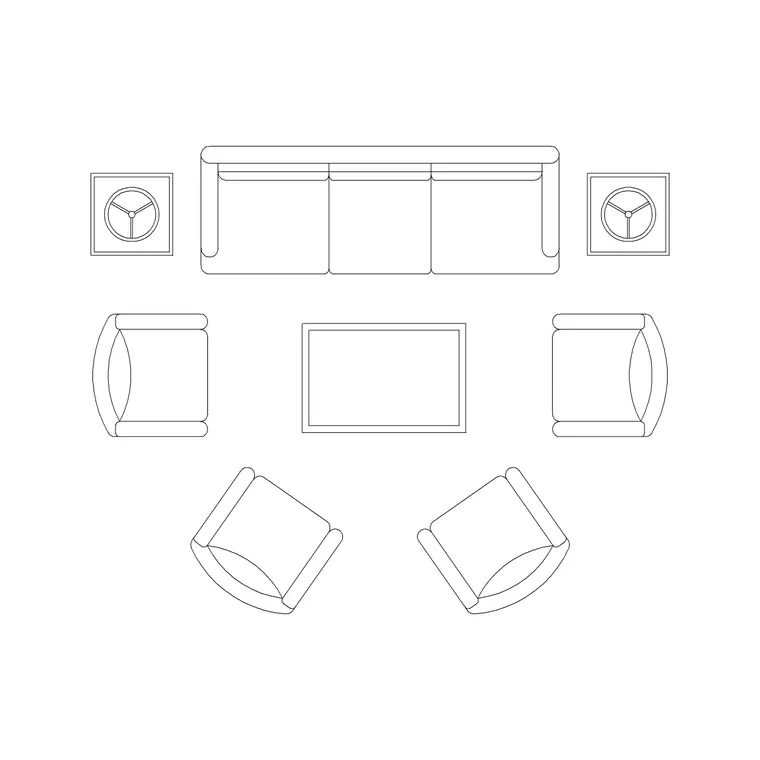
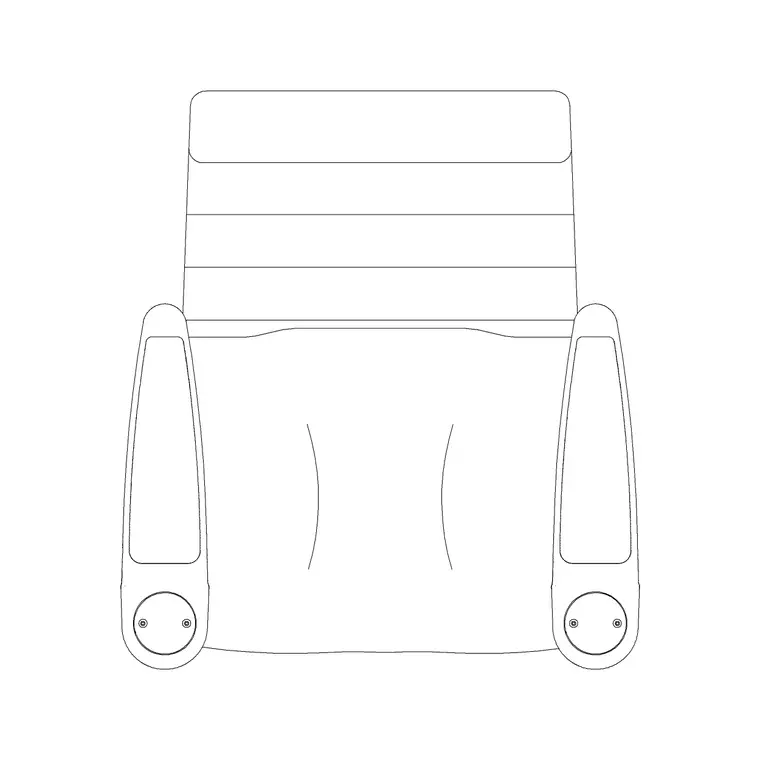
Choose lighter seating that suits a glazed room. A compact Sofa Set Plan arrangement or a pair of Audi Chair Plan armchairs turned to the view reads better than a heavy sectional that walls off the glass. Keep the seating low so it does not block the outlook from a standing position elsewhere in the house.
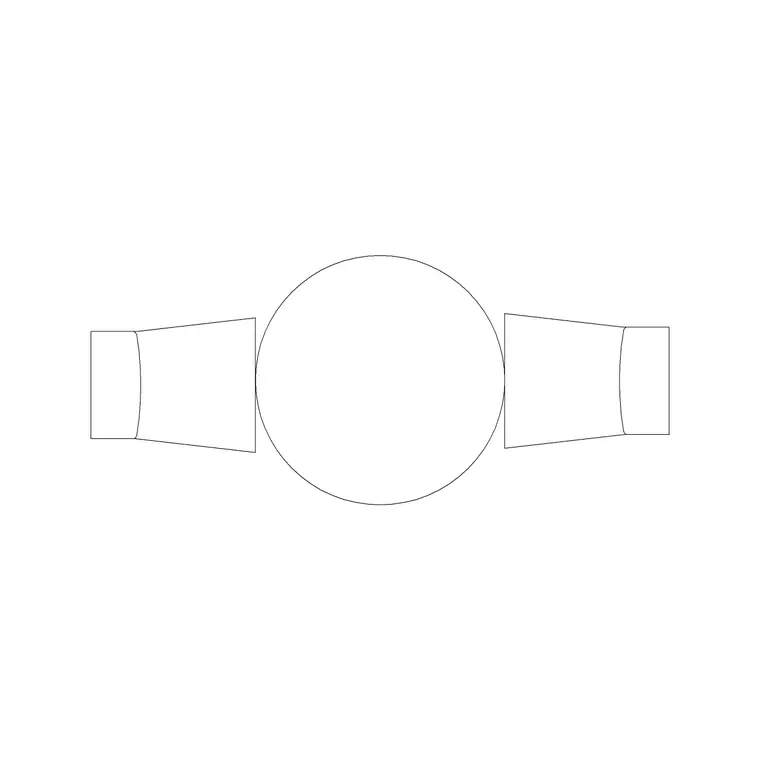
For surfaces, the 1000mm Dia Table 2P round table suits the informal, central arrangement a sunroom invites. Then lean into the planting, which is where a sunroom earns its character: the Indoor Large Plant With Ms Legs as a statement specimen, an Indoor Plant With Ms Legs and Medium Potted Plant blocks grouped along the glazing, and a Flower Basket for colour. For evening use, soft light is enough — a Ceiling Lamp or a Frisbi Pl pendant — since the room runs on daylight for most of its waking hours.
Sunroom proportions and clearances
Sunrooms range widely, from a modest 3.0 x 3.5 m lean-to conservatory to a 4.5 x 6.0 m garden room. Because the seating floats more centrally, leave generous circulation around it — at least 700–900 mm between the furniture and the glazing so people can walk the perimeter, tend the plants and reach any blinds or opening windows.
Keep a clear route to the garden doors, typically 900 mm or more, since a sunroom is usually the threshold between house and garden and that traffic must not be blocked. Plants near the glass want space too: allow room for a large specimen to spread without pressing on the glazing. The low cill walls under the glass (often 300–600 mm high) give you a shelf line for smaller potted plants in the elevation. Treat these as planning ranges and place the scaled blocks to confirm the room breathes.
Laying out toward the view
Design a sunroom from the outlook inward. Identify the best view — usually the longest or most attractive glazed run toward the garden — and orient the main seating to face it. Place the chairs or sofa centrally enough that they catch the view without backing hard against the glass, leaving the perimeter walkway clear.
Drop the round table into the centre of the seating group. Then place the planting deliberately: a statement plant where it reads against the glass, smaller pots grouped along the cill line and in the corners the seating leaves free. Keep the route from the house door to the garden door open across the plan. Put seating, planting and lighting on separate layers so the planting layer alone shows the room's green structure. Because each block is a single reference, you can rotate the whole seating group to chase a different view in seconds.
Planting as part of the architecture
In most rooms a plant is an accent; in a sunroom it is closer to a building element, and it deserves the same care on the drawing as the furniture. Group the planting so it reads as composed — a tall specimen anchoring a corner, a cluster of medium pots along the glazing, a flower basket adding colour at a focal point — rather than scattering single pots evenly around the room.
In the elevation, the planting comes into its own: tall plants drawn against the glazing, pots ranged along the low cill wall, a hanging basket if the roof structure allows. The Indoor Large Plant and Indoor Plant blocks are drawn in elevation for exactly this. Because a sunroom's appeal is largely the interplay of glass, light and greenery, getting the planting layout right is as important as the seating — and the scaled plant blocks let you compose it precisely rather than guessing.
Sunroom layout mistakes to avoid
The most common error is treating a sunroom like a living room — backing heavy furniture against the glass and walling off the very view and light the room exists for. Keep the seating lighter and pulled in from the glazing so the outlook stays open.
The second is blocking the perimeter or the garden doors, leaving no room to walk the glass, tend the plants or reach the blinds; protect that perimeter walkway and the door route. The third is under-planting — a sunroom with one token pot misses its character entirely, since the greenery is half the point. The fourth is over-lighting: installing a bright ceiling scheme as if the room had no glass, when in fact it runs on daylight and wants only soft evening fill. Because the blocks here are full size, you can place the seating clear of the glass, compose the planting against the glazing and confirm the door route, all on the same drawing before the layout is fixed.
Free download
Browse the full library — DWG & DXF, no signup.
Questions
Frequently asked
What is the difference between a sunroom and a conservatory?+
The terms overlap. A conservatory is typically a fully glazed extension including a glass roof; a sunroom or garden room may have a solid or insulated roof with glazed walls. Both are laid out the same way — toward the light and the view, with the seating pulled in from the glass and plants as a key element.
Which plant blocks suit a sunroom?+
A sunroom welcomes generous planting: the Indoor Large Plant With Ms Legs as a statement specimen, plus Indoor Plant and Medium Potted Plant blocks grouped along the glazing, and a Flower Basket for colour. They are drawn in elevation for the glazed-wall views.
Are these sunroom CAD blocks free to use commercially?+
Yes, every block downloads free in DWG and, where available, DXF, with no signup, no watermark and no attribution, cleared for commercial use.
How much clearance should I leave around sunroom furniture?+
Leave at least 700–900 mm between the seating and the glazing so people can walk the perimeter and tend the plants, and keep a clear 900 mm-plus route to the garden doors. Place the scaled blocks and measure against your room outline.
Should sunroom seating face the wall or the view?+
The view. A sunroom is laid out toward its best outlook, so orient the main seating to face the garden or the longest glazed run rather than backing it onto a wall as you would in a conventional room.
Related downloads
Blocks for this guide

Related categories
Related guides
Room guide
Free Restaurant Layout CAD Blocks — DWG Download
Free restaurant CAD blocks in DWG — dining tables, chairs, bar stools, planters and chandeliers for AutoCAD seating plans. No signup, commercial OK.
Room guide
Free Coffee Shop CAD Blocks — DWG Download
Free coffee shop CAD blocks in DWG — counter stools, small tables, planters and pendants for barista-bar floor plans. No signup, commercial OK.
Room guide
Free Bar Lounge CAD Blocks — DWG Download
Free bar lounge CAD blocks in DWG — bar stools, lounge sofas, low tables, planters and chandeliers for cocktail bar plans. No signup, commercial OK.