Block landing · squat toilet cad block
Free squat toilet CAD blocks for AutoCAD
By Saumyajit Maity · Published 15 May 2026 · Updated 22 May 2026
A squat toilet — the floor-level squatting pan common across South Asia, the Middle East and East Asia — sets out differently from a seated WC, so it gets its own block. The pan is recessed into the floor with footrests either side, which means the drainage, the floor build-up and the surrounding clear space all need to be drawn to suit. This page collects free squat toilet CAD blocks in DWG and DXF, drawn to standard squatting-pan sizes and ready for AutoCAD 2004 or later, free for personal and commercial work with no signup and no watermark.
Because squat pans are set into the floor rather than standing on it, the block matters most for what it tells you about the slab and the waste. Working from a scaled squatting-pan block lets you fix the pan position, the gradient to the trap and the foot platform early, which is exactly the information a plumber and a tiler need on site.
What a squat toilet block shows
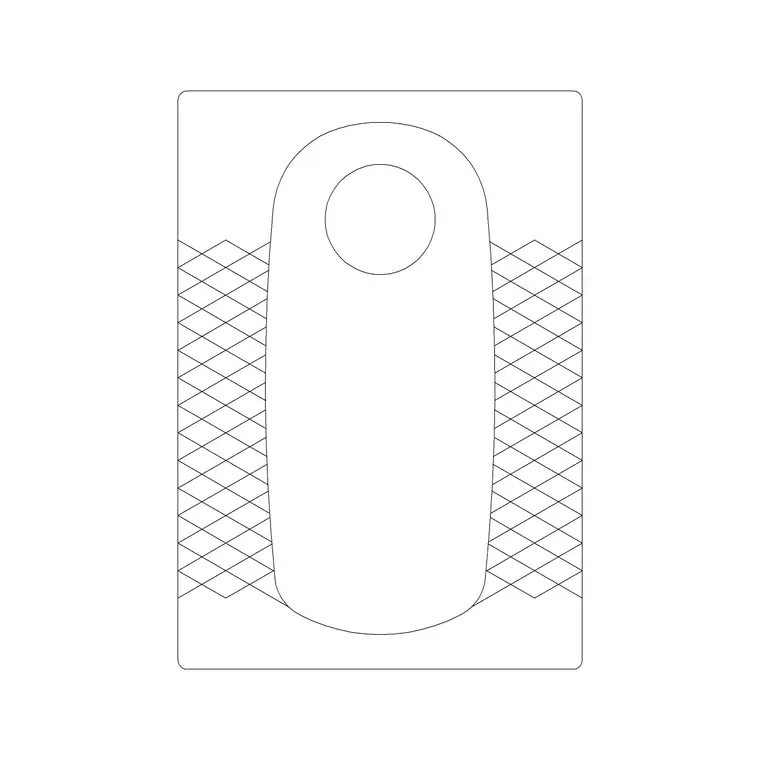
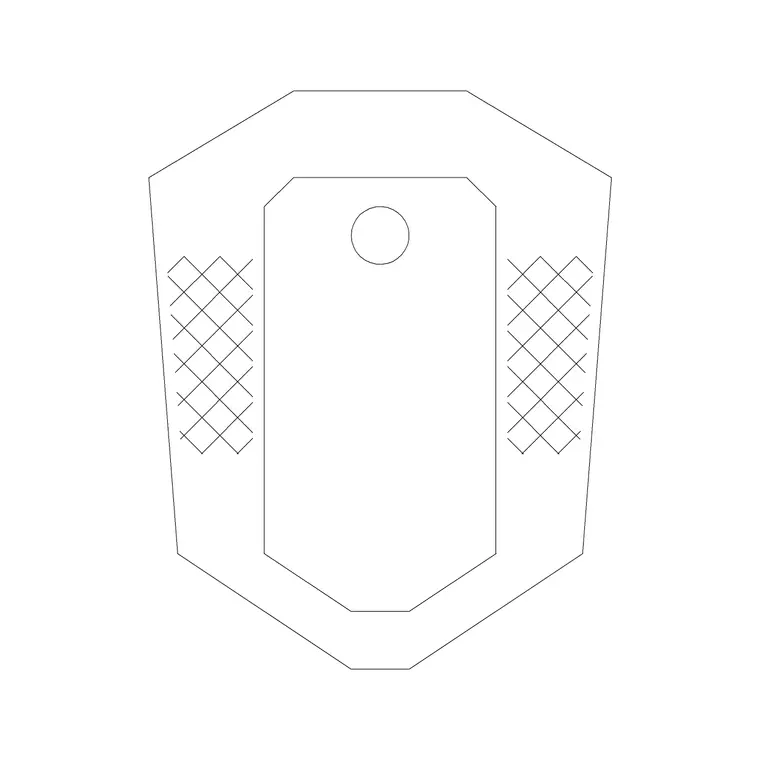
A squat toilet block shows the squatting pan in plan: the elongated bowl with the integral footrests and the rear or central trap outlet, set into the floor. Unlike a seated WC there is no cistern shape to draw in plan — flushing is usually by a wall-mounted cistern, a flush valve or a bucket, drawn separately on the wall.
The block keeps the pan outline, the footrest pads and the trap/outlet on sensible layers so you can show the setting-out and the drainage clearly. In elevation or section the block reveals that the pan sits below the finished floor level, which is the key detail for coordinating the floor build-up and the fall to the waste.
Plan and section views
For layout work you use the plan — the pan and footrests seen from above, positioned so a user faces the right way and has clear space to either side. That is the view you mirror or array when laying out a row of squat cubicles in a public or institutional toilet block.
The section view is unusually important for a squat pan because the pan is recessed. A section through the fixture shows how the pan drops below floor level, the fall to the trap and the build-up of the surrounding floor — information a seated WC does not need. Where a download includes a section, use it to coordinate the slab recess and the waste run.
Typical squat pan dimensions
Design around these figures. Pan overall length: 580–700 mm. Pan width: 400–450 mm. Footrest-to-footrest spread: roughly 300–360 mm. The pan is recessed so its rim sits flush with, or just below, the finished floor.
For the cubicle, allow a clear floor area generous enough to stand, turn and squat — commonly a cubicle around 900–1200 mm wide and 1200–1500 mm deep in institutional layouts. Because the pan is floor-set, the surrounding floor must fall gently towards a separate floor drain in many installations, so leave room on the plan for that drain and its gradient.
Inserting the squat toilet block
The blocks are drawn full size in millimetres — insert at scale 1 in a millimetre drawing, or set INSUNITS to millimetres for automatic rescaling. Use INSERT, snap the insertion point to the pan centreline at the rear wall, and rotate so the user faces away from the wall and the trap discharges towards the soil pipe.
Dimension the pan centreline from the side and rear walls for setting-out, and on the section mark the recess depth and the floor fall. Keep the pan on a sanitaryware layer and the floor drain on a drainage layer so the architectural plan, the setting-out and the drainage layout each read cleanly.
Where squat toilets are used
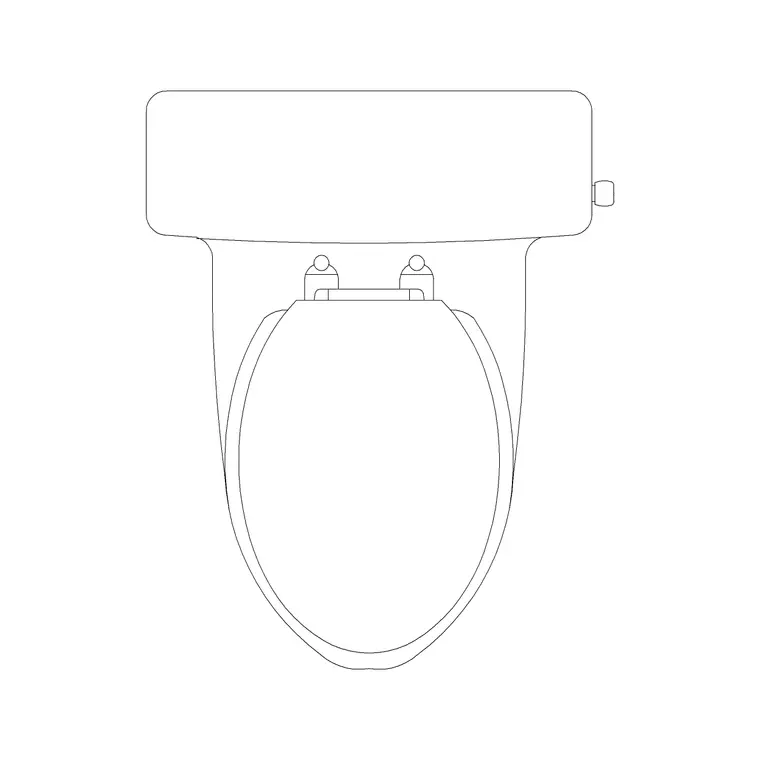
Squat toilets are specified across India, much of Asia, the Middle East and North Africa for domestic and especially public, institutional and industrial buildings — schools, hostels, factories, transport hubs and places of worship — where they are valued for hygiene and durability. Many projects in these regions provide both squat and seated WCs, so you will often place squat-pan blocks alongside close-coupled WC blocks in the same scheme.
Use the squat pan block on layouts for these building types, and pair it with the wash basin and floor-drain blocks to complete a public toilet block. The scaled block makes it straightforward to lay out a uniform row of cubicles and dimension each pan consistently.
Coordinating the recess and drainage
A squat pan asks more of the floor than a seated WC because it is recessed into the slab. That means the setting-out has to be coordinated with the structure: the slab needs a local drop or a built-up floor to bury the pan and run the waste with a proper fall. Draw the section through the pan early so the structural and drainage information agrees with the architecture.
Keeping the pan as a scaled block lets you fix the trap outlet position and dimension the waste run to the soil stack, while the section fixes the recess depth and the floor fall to any separate floor drain. Doing this coordination on the drawing — rather than leaving it to site — is what stops the common problem of a squat pan that sits proud of the finished floor or drains the wrong way.
Free download
Browse the full library — DWG & DXF, no signup.
Questions
Frequently asked
What is a squat toilet?+
A squat toilet is a floor-level squatting pan, common across Asia, the Middle East and North Africa, used in a squatting posture rather than seated. The pan is recessed into the floor with integral footrests and a rear or central trap outlet.
How is a squat pan set out compared with a seated WC?+
A squat pan is recessed into the floor, so as well as plan setting-out you need a section showing the slab recess and the fall to the trap. There is no cistern shape in plan — flushing is by a separate wall cistern, flush valve or bucket.
Are these squat toilet blocks free for commercial projects?+
Yes. They download free in DWG and, where available, DXF, with no signup, no watermark and no attribution requirement, and they are cleared for commercial project use.
What space does a squat toilet cubicle need?+
Allow a cubicle around 900–1200 mm wide and 1200–1500 mm deep in institutional layouts so a user can stand, turn and squat comfortably. The exact size depends on the building type and any local standards you are working to.
Related downloads
Blocks for this guide
Related categories
Related guides
Block landing
Free Bathroom Fixtures CAD Blocks — DWG Download
Download free bathroom fixtures CAD blocks in DWG and DXF — toilets, wash basins, bathtubs, showers and vanities drawn in plan and elevation. No signup, commercial OK.
Block landing
Free Sanitary Fixtures CAD Blocks — DWG Download
Download free sanitary fixtures CAD blocks in DWG and DXF — WCs, wash basins, urinals and sinks in plan and section for AutoCAD sanitary plans.
Block landing
Free Toilet / WC CAD Blocks — DWG Download
Download free toilet / WC CAD blocks in DWG and DXF — close-coupled, back-to-wall and commode pans in plan and elevation for AutoCAD. No signup, commercial OK.