Block landing · sliding wardrobe cad block
Free sliding-door wardrobe CAD blocks in DWG and DXF
By Saumyajit Maity · Published 7 Sep 2024 · Updated 20 Jun 2026
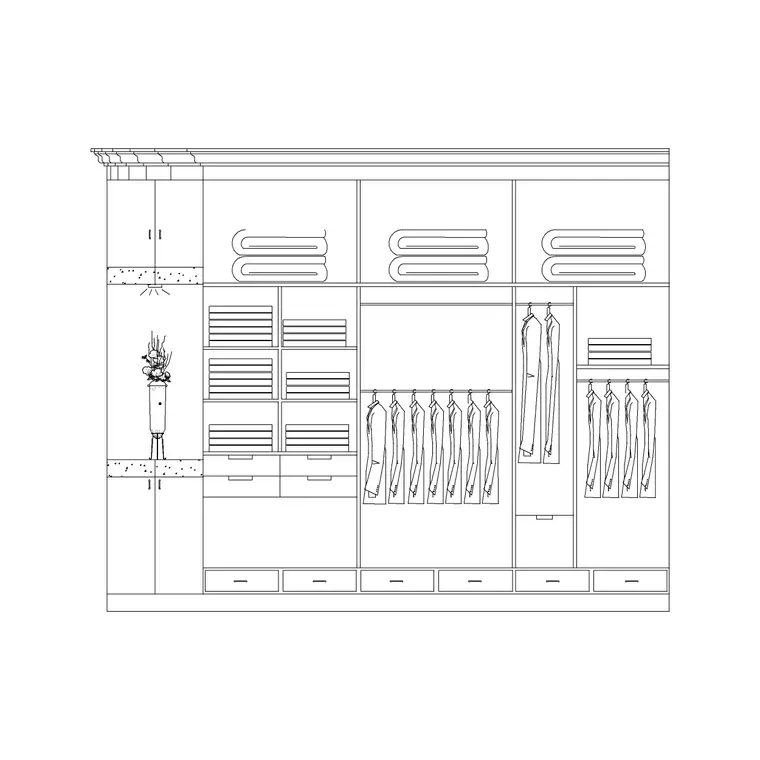
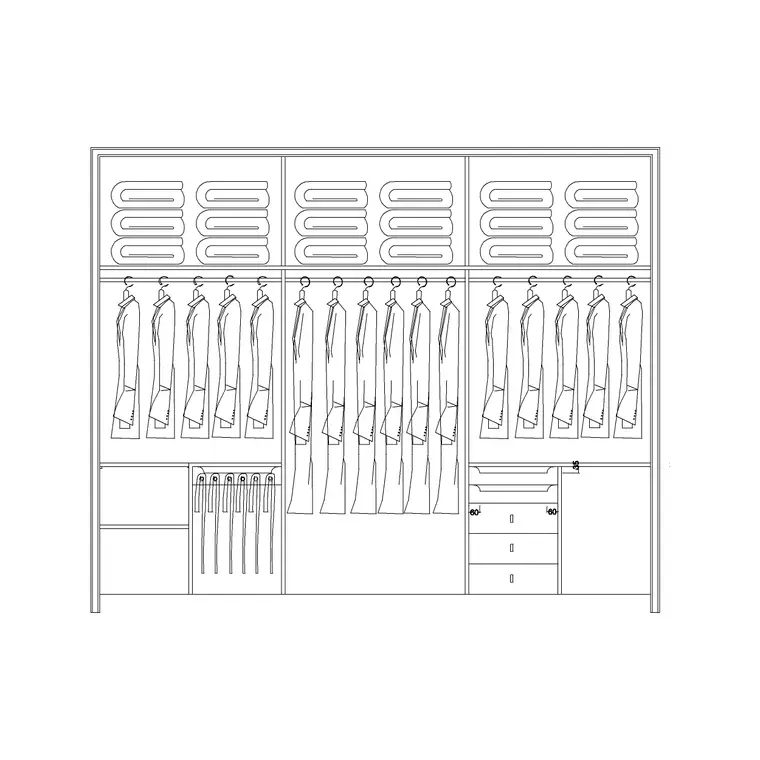
A sliding-door wardrobe solves the one problem hinged wardrobes can't: it needs almost no clear floor in front, because the doors run sideways past each other instead of swinging out. That makes it the default storage choice for tight bedrooms, for wardrobes that face a bed across a narrow gap, and for any room where a swinging door would foul the circulation. This page collects free sliding-door wardrobe CAD blocks in DWG and DXF — two and three-door sliding units — drawn at true millimetre dimensions and ready for AutoCAD 2004 or later. Every file is free for personal and commercial use, with no signup, no watermark and no attribution required.
Use these blocks where floor space in front of the wardrobe is scarce: compact bedrooms, hotel rooms, apartments and dressing areas. The block's appeal is precisely what it leaves out — there are no swing arcs to clear, so you can place the wardrobe much closer to the bed and reclaim the floor a hinged unit would demand.
Why sliding doors change the plan
On a hinged wardrobe, every door sweeps an arc into the room, and that arc has to stay clear of the bed and the walking route. A sliding-door wardrobe removes that constraint entirely: the doors travel left and right along tracks, overlapping each other, so the only space they ever need is the depth of the carcass itself. The result is that you can set a bed or a route right up to the wardrobe face.
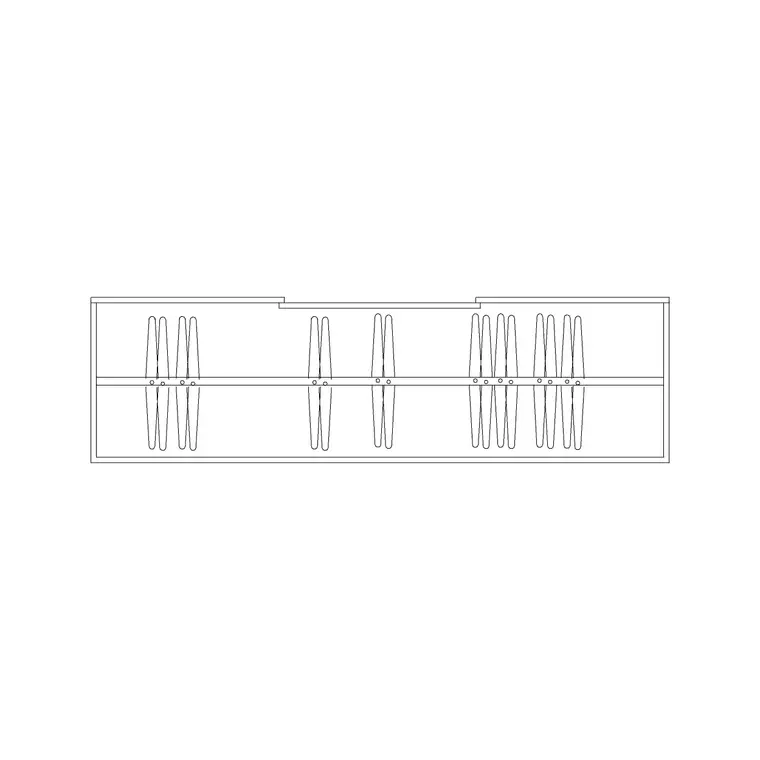
That's why the sliding block looks different from a hinged one. There are no swing arcs in plan — just the carcass and the track line with the door panels shown overlapping. The block tells you, at a glance, that this storage costs only its own depth, which is exactly the information a tight room needs.
Sliding wardrobe sizes to design around
Use these as your reference. Depth runs slightly deeper than a hinged wardrobe — about 600–700 mm — because the sliding doors and their tracks sit in front of the internal storage. Height is commonly 2000–2400 mm, often full-height to the ceiling in fitted designs. Width follows the door count: sliding doors are wide, typically 750–1000 mm each, so a two-door unit spans around 1500–2000 mm and a three-door 2250–3000 mm.
The figure that makes sliding worthwhile is the front clearance: effectively zero beyond the carcass depth, because nothing swings out. Compare that with a hinged unit's 450–600 mm per door of swept floor and you can see why sliding wins in compact rooms. Drop the scaled block in and the saved floor is immediately visible against the bed and the route.
Where sliding wardrobes win
Sliding-door wardrobes are the right call in specific, common situations. When the wardrobe faces a bed across a narrow gap, hinged doors would open onto the mattress — sliding doors don't. When the wardrobe sits in a circulation route or a tight dressing area, swing arcs would block the path — sliding doors keep it clear. And in fitted, floor-to-ceiling wardrobe walls, sliding doors give a flush, continuous face that hinged doors can't.
The trade-off, worth noting on a drawing, is access: with sliding doors you can only open one section of the wardrobe at a time, since the panels overlap. For most bedrooms that's a fair price for the reclaimed floor, and the block lets you weigh it by showing exactly how much space sliding buys back.
Inserting and placing the block
These blocks are drawn full size in millimetres. Insert at scale 1 in a millimetre drawing, 0.001 in a metre template, or set INSUNITS to millimetres so AutoCAD rescales on insertion. Run INSERT or drag the DWG in, snap the back of the carcass to the wall, and rotate to suit the run.
Because sliding doors come in wide panels, the block fills a wall in fewer modules than a hinged run — handy when you're spanning a whole bedroom wall as a fitted wardrobe. As a single block reference it copies cleanly into repeated rooms for hotel and apartment schemes. Keep it on a joinery or furniture layer; there are no swing arcs to manage, so the storage plan stays clean by default.
Where sliding wardrobe blocks are used
Sliding wardrobe blocks appear in compact bedrooms, hotel rooms, serviced apartments, student accommodation, dressing rooms and fitted-bedroom schemes. Anywhere the floor in front of the storage is precious, the sliding unit earns its place — and where designers want a flush, continuous wardrobe wall, sliding doors deliver the look.
They're specified alongside beds, side tables and dressing tables, so reach for the side table and dressing table blocks in the furniture category when you fit out the room. The same scaled sliding wardrobe carries from a concept plan to a furnished and a joinery drawing, keeping the bedroom consistent across the set.
Choosing sliding over hinged on the drawing
The decision between sliding and hinged is best made on the plan with both options drawn to scale. Insert a hinged wardrobe block, draw its swing arcs, and look at what they hit. If the arcs clear the bed and the route comfortably, a hinged unit gives you full, cheap access. If the arcs collide — with the bed, a side table, the door into the room or each other — that's the room telling you to switch to a sliding-door wardrobe, which reclaims exactly that swept floor.
Doing this on the drawing rather than by instinct is what separates a layout that builds from one that doesn't. The sliding block's lack of swing arcs is its whole selling point: drop it in place of the hinged unit and the conflict disappears, the bed can come closer, and the circulation route opens up. For the hinged comparison and the swing-arc detail, see the general wardrobe blocks; for tight rooms, these sliding units are usually the answer.
Free download
Browse the full library — DWG & DXF, no signup.
Questions
Frequently asked
How much front clearance does a sliding wardrobe need?+
Effectively none beyond the carcass depth — the doors slide sideways rather than swinging out. That's the whole advantage over a hinged wardrobe, which needs 450–600 mm of swept floor per door. The blocks show no swing arcs because there are none.
Are sliding wardrobes deeper than hinged ones?+
Slightly — about 600–700 mm versus 550–650 mm — because the sliding doors and their tracks sit in front of the internal storage. The blocks are drawn to that deeper footprint.
What's the catch with a sliding wardrobe?+
Access: because the panels overlap, you can only open one section at a time. For most bedrooms that's a fair trade for the reclaimed floor, and the block lets you weigh it by showing exactly how much space sliding doors save.
Are the sliding wardrobe blocks free for commercial use?+
Yes. Every block downloads free in DWG (and DXF where available) with no signup, no watermark and no attribution requirement, cleared for commercial project use.
Related downloads
Blocks for this guide
Related categories
Related guides
Block landing
Free Office Chair CAD Blocks — DWG Download
Download free office chair CAD blocks in DWG and DXF — task chairs, swivel chairs and executive seats drawn in plan and elevation, AutoCAD 2004+, no signup.
Block landing
Free Bar Table CAD Blocks — DWG Download
Download free bar table CAD blocks in DWG and DXF — round, square and rectangular high bar tables in plan and elevation for AutoCAD. No signup, commercial-use OK.
Block landing
Free Restaurant Table CAD Blocks — DWG Download
Download free restaurant table CAD blocks in DWG and DXF — 2, 4 and 6 cover tables with chairs drawn in plan and elevation for AutoCAD. No signup, commercial-use OK.