Block landing · single bowl sink cad block
Free single-bowl sink CAD blocks for AutoCAD
By Saumyajit Maity · Published 17 Apr 2022 · Updated 10 Jan 2026
When worktop is tight, a single-bowl sink is the right call, and a clean single-bowl sink CAD block lets you prove the fit before a single cabinet is ordered. This page collects free single-bowl sink CAD blocks in DWG and DXF — compact one-bowl units in the 500–600 mm range, drawn in plan view at true size and ready to insert into AutoCAD 2004 or later. Everything is free for personal and commercial use, with no signup and no watermark.
The single bowl is the most space-efficient sink there is: one washing-up bowl, often with a small or no drainer, sitting on a standard 600 mm base cabinet. That makes it the default for kitchenettes, utility rooms, en-suite kitchen corners, studio apartments and any run where a double would eat worktop you can't spare. Because these blocks carry the real bowl footprint, you can confirm the sink fits the cabinet and still leaves room for a tap and a drying area — the practical test every small kitchen has to pass.
What a single-bowl sink block includes
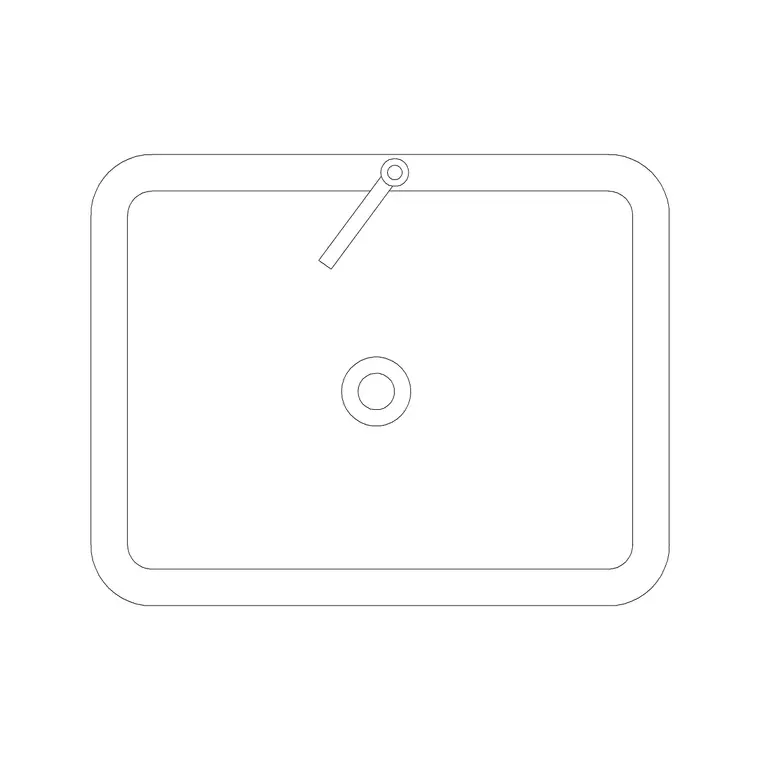
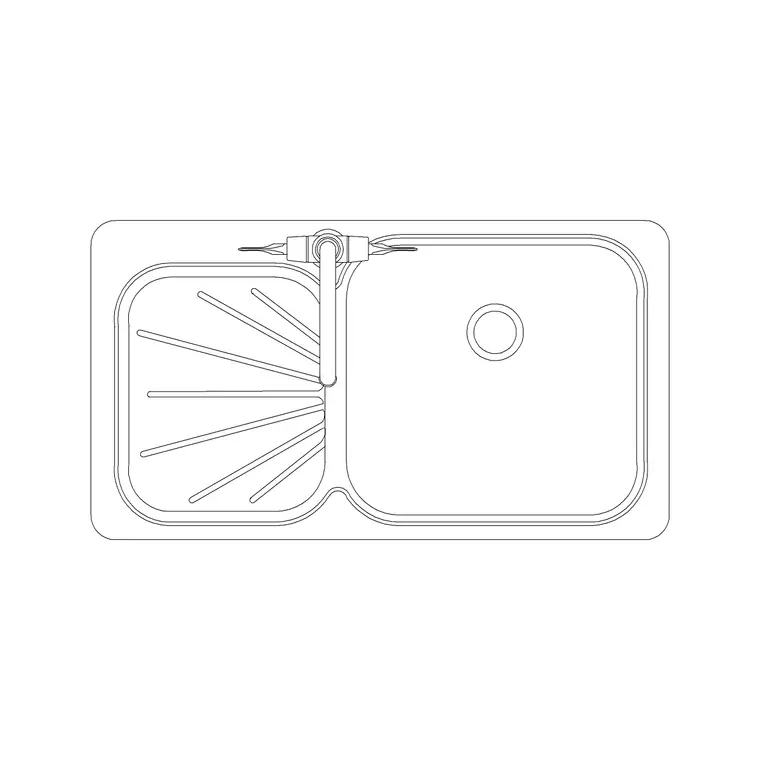
A single-bowl sink block shows one bowl set into a sink top, with the tap hole at the back edge. In plan that is exactly what you array onto a worktop run: the unit outline as it cuts into the cabinet, the single bowl inside it, and the back line where the splashback meets the top. Blocks like the 570 mm single sink are drawn so the bowl sits centred or slightly offset, matching how real one-bowl sinks are made.
The outline is the worktop cut-out footprint, so when you snap it to the cabinet line you see whether the bowl clears the cabinet carcass and door front. That single check — bowl versus cabinet — is what a single-bowl block is really for.
Typical single-bowl sink dimensions
Design around these ranges rather than guessing. Single-bowl sink top width: commonly 500–600 mm, with the popular 570 mm unit landing neatly on a 600 mm cabinet. Front-to-back depth: around 480–520 mm to suit a 600 mm worktop. Bowl size inside the top: roughly 340–450 mm wide. Bowl depth into the cabinet: usually 160–200 mm.
Because a 570 mm single sink fits within a 600 mm base unit with a margin each side, it is the safe choice where you cannot guarantee a wider cabinet. If you need a slightly more generous bowl, a sink toward the 600 mm end of the range still sits on the same 600 mm cabinet, which is why single bowls are so forgiving in a compact layout.
When to choose a single bowl over a double
Pick a single bowl when worktop is the constraint. A galley kitchen with one short run, a studio kitchenette, a utility sink, an office tea-point, or a bathroom-corner kitchen all favour the single because a double sink would push the cabinet width up and steal preparation space. A single bowl also suits anyone who relies on a dishwasher and only needs the sink for filling pots and rinsing.
Step up to a double bowl when the cook genuinely washes and rinses by hand, or wants to keep a soaking bowl separate. On the plan, the choice is visible: drop the single-bowl block and the double-bowl block onto the same cabinet run and you can see immediately how much worktop each leaves for working — a decision better made on the drawing than on site.
How to insert and place the block
These single-bowl blocks are drawn full size in millimetres. Insert at scale 1 in a millimetre drawing, 0.001 in a metre drawing, or set INSUNITS to millimetres so AutoCAD rescales on insertion. Run INSERT, or drag the DWG from a tool palette.
Pick the back edge of the sink top as your insertion handle so you can snap it flush to the back of the worktop against the wall, then position it over its base cabinet. Because a single bowl is often the only sink in the room, place it where the plumbing and the window dictate, then build the rest of the kitchen around it. Keep it on a dedicated layer so you can dimension the bowl centreline and the tap position for the installer without crowding the architectural plan.
Where single-bowl sinks are used
Single-bowl sink blocks turn up in studio and one-bed apartment kitchens, utility and boot rooms, laundry layouts, office and shop kitchenettes, garden-room kitchens and small commercial tea-points. Anywhere the brief is tight on worktop, the single bowl is the realistic specification.
Use the block alongside the double and counter sinks in the sinks-and-faucets category so you can compare options on the same drawing, and pair it with the cooker, fridge and cabinet blocks to fit out a compact kitchen completely. Where a scheme has many small identical kitchens — student housing, serviced apartments, hotel rooms with kitchenettes — define one single-bowl block and reuse it across every unit so a single edit updates them all.
Free download
Browse the full library — DWG & DXF, no signup.
Questions
Frequently asked
What size is a typical single-bowl kitchen sink?+
Single-bowl sink tops are commonly 500–600 mm wide and around 480–520 mm front to back, fitting a standard 600 mm base cabinet. The 570 mm single sink is a popular size that lands neatly on that cabinet with a margin each side.
Are the single-bowl sink blocks plan or elevation?+
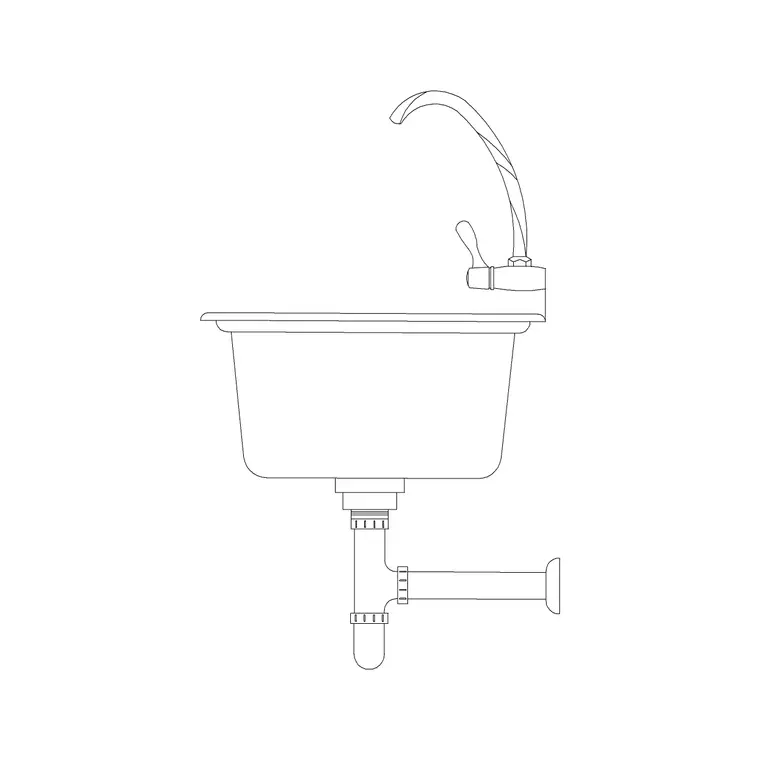
They are plan-view (top-view) blocks, which is what you need for laying out a worktop run. The plan shows the sink top outline, the single bowl and the tap position at the back edge.
When should I use a single bowl instead of a double?+
Choose a single bowl where worktop is tight — kitchenettes, utilities, studios and tea-points — or where a dishwasher does most of the work. Step up to a double when the cook washes and rinses by hand or wants a separate soaking bowl.
Are these blocks free for commercial projects?+
Yes. Every single-bowl sink block downloads free in DWG and DXF with no signup, no watermark and no attribution requirement, and they are cleared for commercial use.
Related downloads
Blocks for this guide
Related categories
Related guides
Block landing
Free Sanitary Fixtures CAD Blocks — DWG Download
Download free sanitary fixtures CAD blocks in DWG and DXF — WCs, wash basins, urinals and sinks in plan and section for AutoCAD sanitary plans.
Block landing
Free Kitchen Faucet / Mixer Tap CAD Block — DWG
Download free kitchen faucet and mixer tap CAD blocks in DWG and DXF — monobloc and pull-out mixers in plan and elevation. No signup, commercial OK.
Block landing
Free Kitchen Sink Unit CAD Block — DWG Download
Download free kitchen sink unit CAD blocks in DWG and DXF — single, double and 1.5-bowl sinks with drainers in plan and section. AutoCAD 2004+, no signup.