Curated pack · showroom cad blocks
Free showroom CAD block pack for AutoCAD
By Sumana Kumar · Published 31 Jan 2026 · Updated 13 Apr 2026
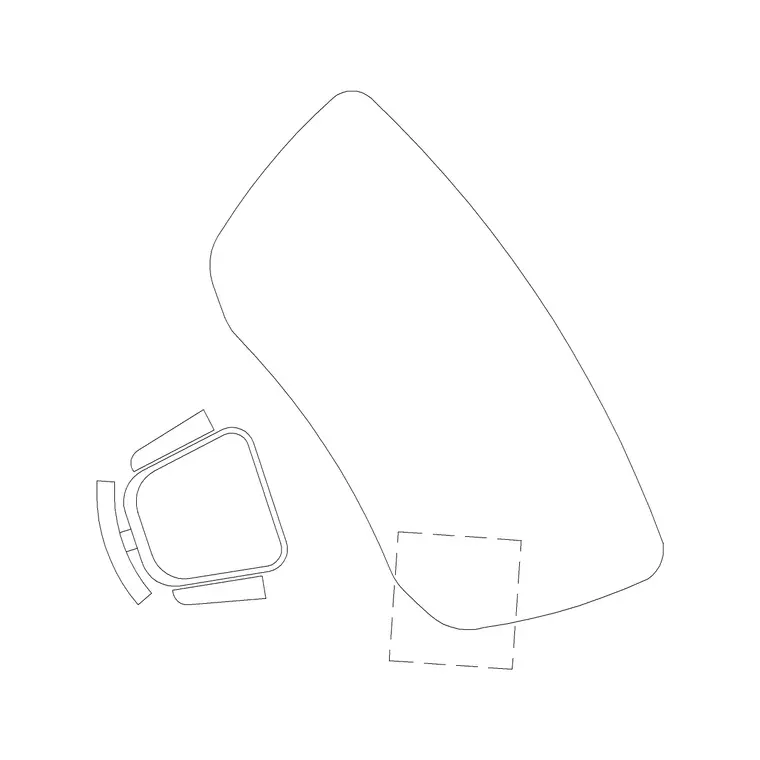
A showroom is a retail space built around sightlines: the customer should see the hero product from the door, move past supporting displays in a natural loop, and arrive at the counter without backtracking. Planning that loop in AutoCAD is far quicker when the display furniture is already scaled. This free showroom CAD block pack gathers the pieces you place most — display plinths and pedestals, gondola and wall display runs, feature tables, the sales and wrap counter, and a small seating cluster — in DWG, drawn at true millimetre dimensions for AutoCAD 2004 or later. Everything is free for personal and commercial work, with no signup and no watermark.
Use the pack to set the main aisle and the customer loop first, then place the displays so the route flows past them rather than around dead corners. Because each block carries its real footprint, you can confirm a clear circulation width and a turning space the moment the displays land on the page.
A showroom also has to keep an accessible route through the whole floor — a customer using a wheelchair should reach every display and the counter on a step-free path wide enough to turn. Starting from scaled blocks means that route is a measured band on the plan, not something you hope works once the fixtures are in.
What the showroom pack covers
The pack spans the standard display kit. Pedestals: square and round display plinths in a range of footprints for single hero items. Runs: gondola units for the centre floor and wall display bays for the perimeter, both drawn as repeatable bays. Features: low feature tables for grouped product and a media or demo unit. Service: a sales and wrap counter with the staff side shown, plus a small seating cluster for consultations.
Because displays repeat across a floor, the gondola and wall bays are built as single units you can array into runs of any length, then break the runs to open cross-aisles and sightlines through the space.
Standard showroom dimensions to design around
Use these ranges as planning references rather than fixed specs. A main customer aisle generally wants 1200–1800 mm so two people pass comfortably and a wheelchair turns, with secondary aisles around 900–1100 mm. A display plinth might range from roughly 400 mm square for a small item to 900 mm or more for a grouped feature, and a low feature table is often around 1000–1500 mm across.
A gondola run is typically around 600–900 mm deep including product overhang, and a sales counter around 600 mm deep with a staff working strip of roughly 900 mm behind it. Leave a clear turning space of around 1500 mm at the counter and at the end of major aisles. Drop the scaled blocks in and these clearances are visual.
Building the showroom layout from the blocks
Place the hero plinth on the primary sightline from the entrance first, then set the main aisle as a clear band that loops the floor and returns past the counter. Run gondolas down the centre and wall bays around the perimeter, breaking them to keep cross-sightlines open so a customer can always see deeper into the space.
Position the counter where it watches the entrance and the exit line, and tuck the consultation seating somewhere quieter. Keep plinths, runs, features, counter and seating on separate layers so a clean circulation plan and a fully dressed display plan both come from the same drawing without redrawing anything.
Per-item notes: plinths, gondolas and the counter
The display plinth is the block you copy most, so keep a few sizes to hand and snap them to the sightline rather than the grid — a hero item often sits slightly off-axis to draw the eye. Gondola runs earn their value as arrayed bays, so build one bay and array it, then end-cap the run with a feature so the aisle terminates on product, not on a blank end panel.
The sales counter is the one fixture with a staff side to protect: draw the working strip behind it as clear floor on a separate layer so the back-of-counter never gets crowded by a display. The consultation seating is small but worth placing deliberately near the hero zone so a sale can close where the customer is already engaged.
Plan view and the customer route
Showroom planning is a plan-view discipline: you arrange displays, aisles and sightlines seen from above, so every block here is drawn in plan. That is the view that proves the loop flows, the aisles clear and the accessible route reaches every display and the counter.
Draw the customer route and the accessible band as continuous clear strips on a setting-out layer and check neither pinches below your minimum width as it threads the displays. If you need a wall-bay or counter elevation for the joinery, draw it separately on its own layer; the plan blocks fix the positions that elevation must honour. Working plan-first keeps the route and sightlines honest before any fixtures are detailed.
Who uses the showroom pack
Retail designers and shopfitters use it to turn a bare unit into a costed display layout quickly. Architects use it to populate a ground-floor retail unit in a larger scheme with believable, scaled fixtures. Students use it for studio briefs and portfolio boards where licence-clear blocks matter.
Because the blocks are free and unrestricted, the same pack carries from a single-product boutique to a large furniture or appliance showroom. Pair it with the furniture and office categories to add the consultation seating, back-office desks and reception furniture that complete the unit, and you can lay out the whole showroom from one consistent library.
Free download
Browse the full library — DWG & DXF, no signup.
Questions
Frequently asked
What is in the showroom CAD block pack?+
Display plinths and pedestals, gondola and wall display runs, low feature tables, a sales and wrap counter, and a small seating cluster — all drawn in plan at true scale for AutoCAD.
How wide should the main showroom aisle be?+
Generally 1200–1800 mm for the main customer aisle so two people pass and a wheelchair turns, with secondary aisles around 900–1100 mm. The scaled blocks let you measure these directly.
Are the showroom blocks free for commercial use?+
Yes. Every block downloads free in DWG with no signup, no watermark and no attribution requirement, and they are cleared for commercial project use.
What scale are the blocks drawn at?+
Full size in millimetres. Insert at scale 1 in a millimetre drawing, or set INSUNITS to millimetres so AutoCAD rescales the block automatically on insertion.
Related downloads
Blocks for this guide
Popular blocks to download
Related categories
Related guides
Curated pack
Free Office CAD Block Pack — DWG & DXF
Free office CAD block pack in DWG and DXF — desks, workstations, conference tables and reception furniture in plan view. No signup, commercial-use OK.
Curated pack
Free Reception Area CAD Block Pack — DWG
Free reception area CAD block pack in DWG and DXF — reception desks, waiting seating and scale figures for lobby layouts. No signup, commercial-use OK.
Curated pack
Free Restaurant CAD Block Pack — DWG & DXF
Free restaurant CAD block pack in DWG and DXF — dining tables, chairs, bar stools and high chairs for cafe and restaurant layouts. No signup, commercial OK.