Block landing · shower cad block
Free shower tray and enclosure CAD blocks for AutoCAD
By Saumyajit Maity · Published 21 Mar 2026 · Updated 28 Mar 2026
A shower can be the only washing fixture in a compact bathroom or a second wet zone alongside a bath, and either way its tray, enclosure and door swing have to be set out carefully in a small space. A scaled shower CAD block lets you fix the tray size, the glass line and the way the door opens before anything is committed. This page collects free shower tray and enclosure CAD blocks in DWG and DXF — square, rectangular, quadrant and walk-in types — drawn to true size and ready for AutoCAD 2004 or later, free for personal and commercial work with no signup and no watermark.
Showers come in several tray shapes and a few enclosure arrangements, and the block library here reflects that. Whether you are squeezing an 800 mm square cubicle into an en-suite, fitting a quadrant into a corner, or drawing a generous walk-in wet area, starting from a correctly-sized block means the tray, the glass and the entry are coordinated from the first placement.
Shower types in the library
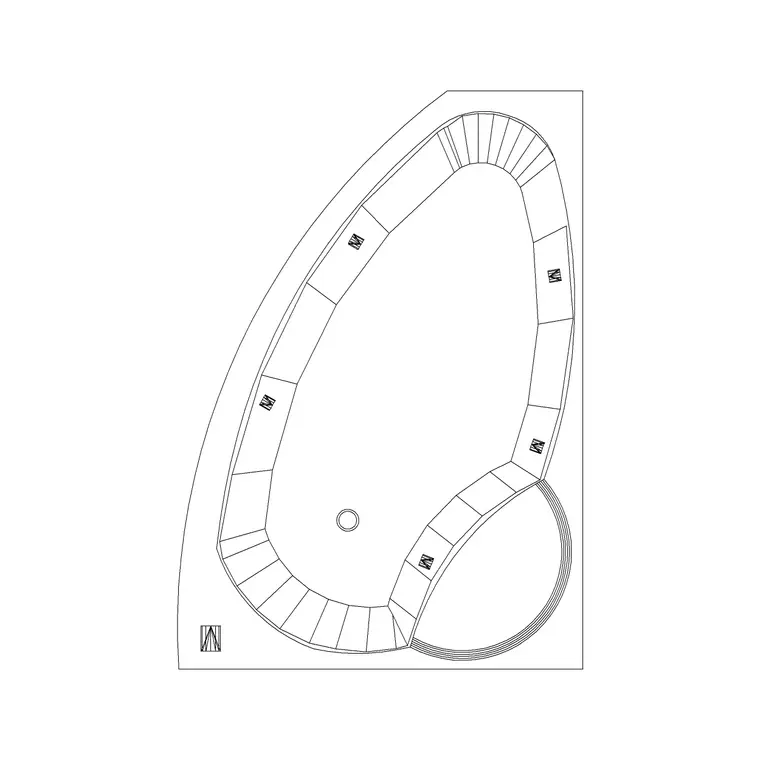
The set covers the shower arrangements you specify most. A square or rectangular tray with a framed or frameless enclosure is the standard cubicle. A quadrant shower uses a curved-front tray to tuck into a corner with a sliding curved door. A walk-in (wet-room) shower may have a low-profile tray or a tanked floor with a single glass screen and no door. Offset quadrants and pentagonal trays suit particular corners.
Each is drawn as a clean block reference with the tray outline, the enclosure/glass line, the door or entry, and the shower drain position shown. The drain is marked because it fixes where the floor falls and where the waste connects — the detail that makes a shower buildable.
Plan view for the cubicle, elevation for the screen
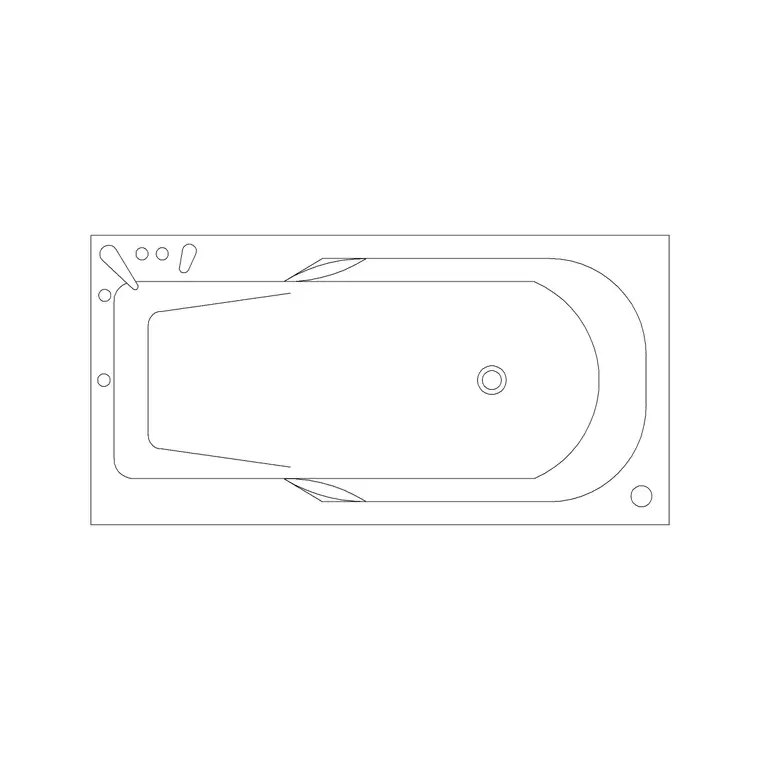
For the bathroom layout you use the plan: the tray and enclosure seen from above, set into a corner or against a wall, with the door swing or sliding action and the entry shown. The plan is what you check for the all-important door clearance and the clear space to step in and out.
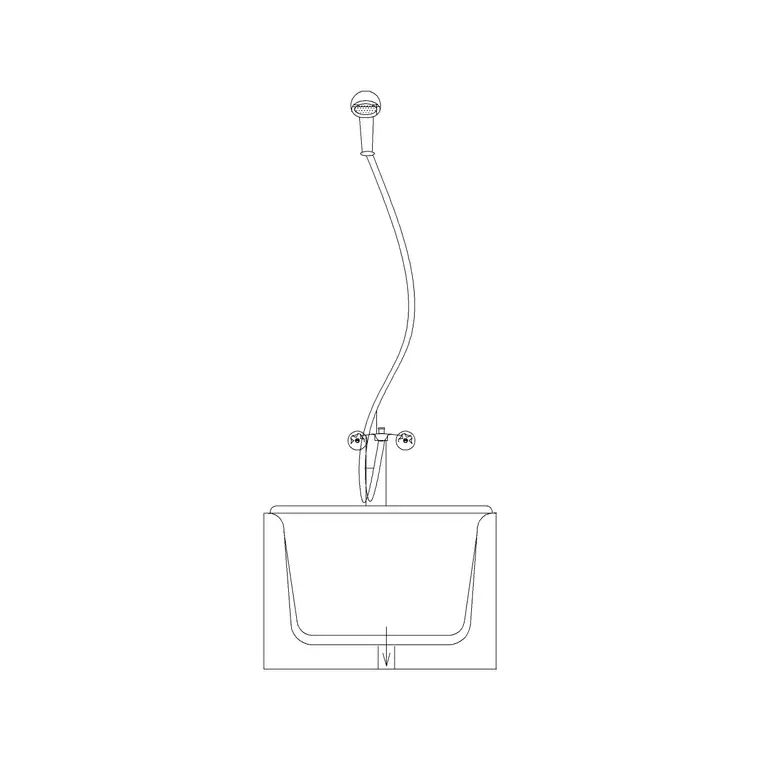
For tiling, glazing and presentation you switch to the elevation, where the glass screen, the door and the shower valve and head are drawn face-on at their heights. The valve is usually around 1000–1100 mm and the head around 2000–2100 mm. Many downloads ship the plan and an elevation together so one file covers both the cubicle layout and the screen.
Typical shower dimensions
Design around these figures. Square trays: 760 × 760, 800 × 800, 900 × 900 mm. Rectangular trays: 1000 × 800, 1200 × 800, 1400 × 900 mm. Quadrant trays: 800, 900 and 1000 mm radius corners. Walk-in screens: 800–1200 mm wide with an open entry. Tray upstand or low-profile height: 40–90 mm, or flush for a wet-room floor.
For entry, leave a clear strip in front of the door — at least 700 mm so a person can step in and towel off, and more for a generous or accessible shower. A pivot or hinged door needs swing clearance that the plan must show; a sliding or bi-fold door needs none, which is why those suit tight rooms.
Inserting and setting out the shower block
The blocks are drawn full size in millimetres — insert at scale 1 in a millimetre drawing, or set INSUNITS to millimetres for automatic rescaling. Use INSERT, snap the tray corner to the corner of the walls, and rotate so the enclosure opens into clear floor.
Draw the door swing or sliding line on the plan and check it clears the WC, basin and any towel rail. Mark the shower drain position so the floor fall and the waste can be set out, and put the valve and head on the elevation. Keep the tray and glass on a sanitaryware layer (or split glass onto a glazing layer) so the structural, sanitary and tiling drawings each read cleanly.
Where shower blocks are used
Showers appear in en-suites, family bathrooms, cloakrooms with a shower, hotel rooms, gym and sports changing rooms, accessible wet rooms and student accommodation. In a compact en-suite the shower is often the only washing fixture; in a larger bathroom it sits alongside a bath as a quick-wash option.
Use the shower block as the wet-zone anchor in any bathroom without a bath, and pair it with the WC, basin and bathroom-faucet blocks to complete the layer. For a wet room, coordinate the shower drain and the tanked floor early, and use the walk-in screen block rather than a full enclosure where the design wants an open, doorless wet area.
Coordinating the drain, the fall and the door
A shower asks more of the floor and the door than any other bathroom fixture, so the block earns its keep in coordination. The drain position governs the floor fall: a square or rectangular tray usually drains at one corner or along one edge, while a wet-room floor falls to a linear or point drain that has to be set out and tanked. Mark the drain on the plan and check the waste can reach the soil zone with a proper fall.
The door is the other coordination point, and the classic small-bathroom clash. A hinged or pivot door swings out into the room and can foul the WC, the basin or a towel rail; a sliding or bi-fold door stays within the enclosure footprint and suits tight spaces. Because the block carries the door swing, you can test it against the surrounding fixtures on the plan and choose the door type that clears them, rather than discovering the clash on site.
Free download
Browse the full library — DWG & DXF, no signup.
Questions
Frequently asked
What shower types are included?+
Square and rectangular trays with framed or frameless enclosures, quadrant trays for corners, and walk-in / wet-room screens — drawn in plan and, in many cases, elevation, with the tray, glass line, door and drain shown.
What is the smallest shower tray size?+
Common small square trays are 760 × 760 and 800 × 800 mm, which suit a compact en-suite. Quadrant trays start around 800 mm radius. Allow a clear strip of at least 700 mm in front for entry.
How do I stop the shower door clashing with other fixtures?+
Draw the door swing on the plan and check it clears the WC, basin and towel rail. Use a sliding or bi-fold door, or a walk-in screen with no door, in tight rooms where a hinged door would foul a fixture.
Are the shower blocks free for commercial work?+
Yes. They download free in DWG and, where available, DXF, with no signup, no watermark and no attribution requirement, and they are cleared for commercial project use.
Related downloads
Blocks for this guide
Related categories
Related guides
Block landing
Free Bathroom Fixtures CAD Blocks — DWG Download
Download free bathroom fixtures CAD blocks in DWG and DXF — toilets, wash basins, bathtubs, showers and vanities drawn in plan and elevation. No signup, commercial OK.
Block landing
Free Sanitary Fixtures CAD Blocks — DWG Download
Download free sanitary fixtures CAD blocks in DWG and DXF — WCs, wash basins, urinals and sinks in plan and section for AutoCAD sanitary plans.
Block landing
Free Toilet / WC CAD Blocks — DWG Download
Download free toilet / WC CAD blocks in DWG and DXF — close-coupled, back-to-wall and commode pans in plan and elevation for AutoCAD. No signup, commercial OK.