Room guide · rooftop bar cad blocks
Free rooftop bar CAD blocks for AutoCAD plans
By Saumyajit Maity · Published 12 Sep 2024 · Updated 16 May 2026
A rooftop bar trades on something no interior can offer — the open sky and the view — and the plan's whole job is to serve that view while wrestling with the constraints of building on a roof. Structure limits where heavy planters and the bar can sit; wind shapes where people will actually want to be; the parapet sets the safe edge and the sightlines; and every service run, from the bar's water to the kitchen lift, has to climb from below. The result is a layout that looks effortless and relaxed but is pinned to the building's structure and edges in a way no ground-floor bar ever is.
This page is for laying out a rooftop bar or terrace lounge in AutoCAD. The free CAD blocks below give you the outdoor-hospitality kit — bar stools for the counter, lounge sofa clusters and cocktail tables for the terrace, big planters to define zones and break the wind, and pendant or feature lighting for the after-dark scene — all DWG, drawn to scale, free for commercial use, no signup. Drop them onto the roof plan and the view-facing seating, the circulation and the sheltered zones become measurable.
The defining move is orienting everything to the view and the prevailing wind. The best seats face the skyline; the bar and the back-of-house tuck against the core or the blank side; planters and screens create sheltered pockets out of the wind. Draw the view direction and the parapet first, decide where the wind comes from, then lay the seating so the prime covers look out and the service hides behind.
Designing on a roof
A rooftop bar is shaped by forces a ground-floor bar ignores. Structure dictates where load can go — the bar, heavy planters and any pergola want to sit over beams and columns, not mid-span. Wind dictates comfort — an exposed corner that looks perfect on plan may be unusable when the breeze funnels through, so sheltered pockets behind planters and screens are where people actually sit. The parapet sets the safe edge and frames the view.
Services climb from below: the bar needs water and waste, the kitchen lift or dumbwaiter lands somewhere, power runs to the lighting. The plan's job is to put the prime seating where the view and the shelter coincide, tuck the bar and back-of-house against the core or the blank elevation, and route the unglamorous services to where they surface. Draw the view, the wind and the structure first; the seating fills the good ground that remains.
Rooftop blocks for the terrace
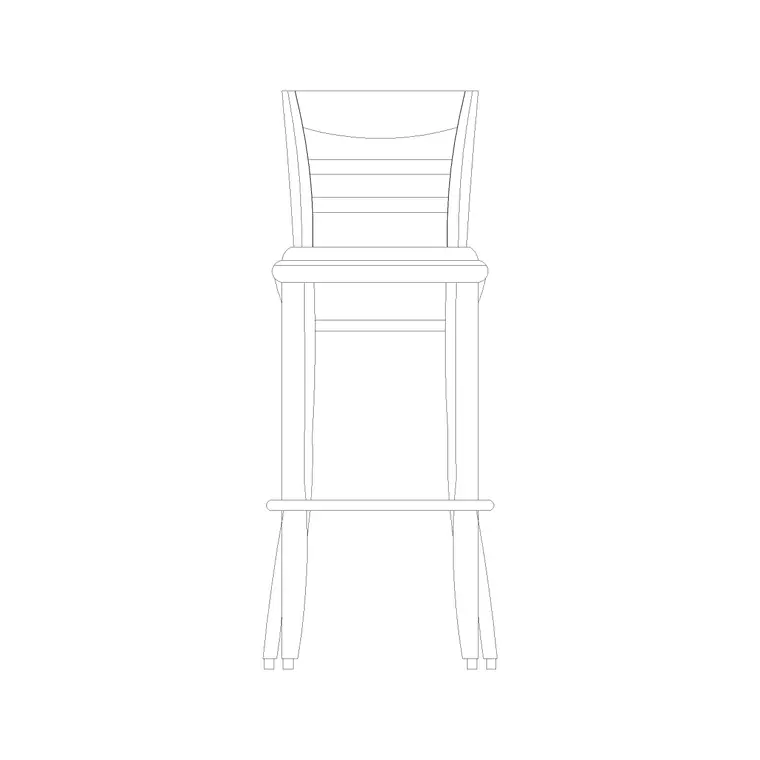
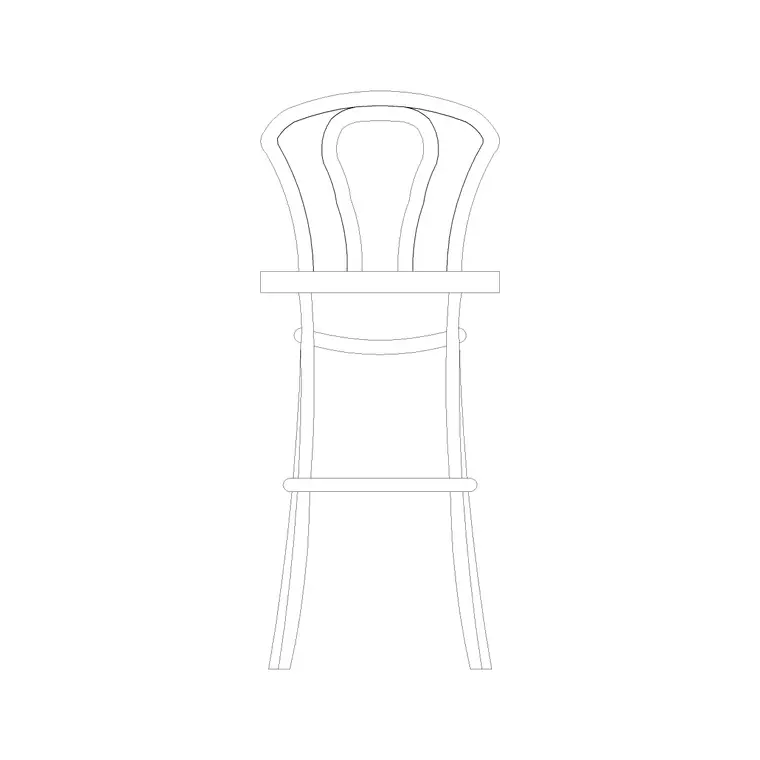
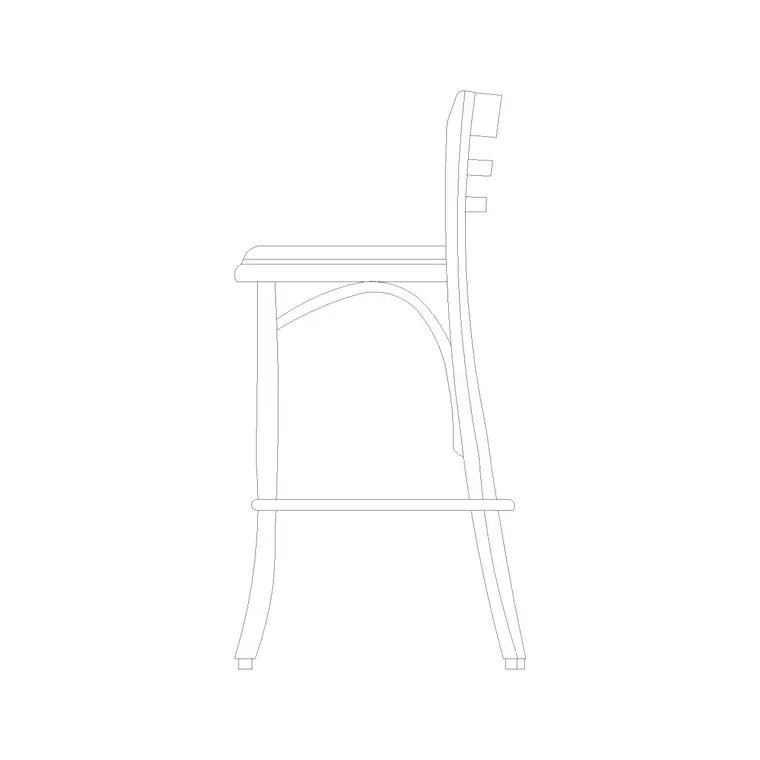
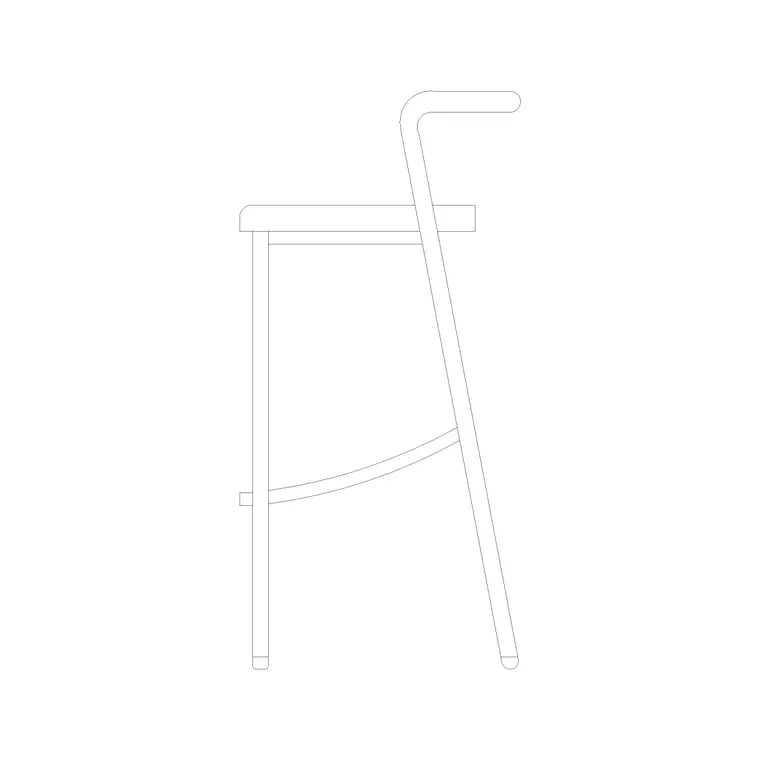
The bar counter is lined with the wooden bar stool, round-back stool and bar stool with wooden strip, with the side-elevation stool block for the counter section — vary the styles for an outdoor-casual look. For the terrace lounge, the sofa set plans 6, 7 and 8 give scaled soft-seating clusters for the view-facing edge, paired with low cocktail tables — the 800mm and 1000mm tables read as outdoor occasional tables.
Planting is structural here, not just decorative: large planters with indoor-large plants on MS legs and big potted plants define zones, screen the back-of-house and break the wind into sheltered pockets. After dark the scene is made by lighting — long suspended pendants under a pergola, Frisbi-style or feature pendants over the bar and the lounge clusters. A wine glass block dresses the cocktail-bar detail. Every block scaled, so the view-facing covers and the wind-screen planters are real measured elements.
Rooftop dimensions and clearances
Bar counters sit around 1050–1100mm with stool seats near 750–800mm and roughly 600mm of counter per stool, with a 1200–1500mm standing-and-circulation band in front as in any bar. Lounge clusters follow lounge figures: a sofa-and-cocktail-table group reads across 2.4–3.0m, with the table 300–400mm off the sofa front and 600–900mm of circulation around the cluster.
Keep main circulation routes across the terrace at 1200–1500mm, and a clear safety zone of 500–1000mm inside the parapet where required so seating does not crowd the edge. Large planters double as wind screens and edge definition — 600–1000mm across to register and to hold enough soil for the planting. Provide a step-free accessible route of 1200mm from the lift lobby across the terrace to the bar and the view. Drop the scaled blocks and the view seats, the shelter and the safe edge are all checked figures.
Laying out the roof plan in AutoCAD
Start from the survey: parapet, roof structure grid, the lift or stair core, and the points where services surface. Draw an arrow for the view direction and one for the prevailing wind. Set the bar against the core or the blank elevation over solid structure, line it with stool blocks, and build the counter elevation from the side-elevation stool block.
Now place the lounge clusters along the view-facing edge, inside the parapet safety zone, with large planters between them and the wind to make sheltered pockets. Insert a sofa set plan with a cocktail table, make it a cluster block, and array the clusters facing out. Run circulation polylines at 1200–1500mm linking the lift, the bar and the view edge. Hang the pergola pendants and feature lights in plan and elevation. Layer the bar, stools, lounge clusters, planters, lighting and circulation separately for a clean furniture, planting and lighting issue.
Day scene and night scene
A rooftop bar is really two venues. By day it is about the view, the shade and the breeze — the design problem is shelter and sun, solved with the pergola, the planters and the orientation of the seating. By night it becomes an intimate lounge under the sky, and the design problem flips to lighting and mood.
Draw both. In plan, the planters and seating serve the daytime view-and-shelter logic. In elevation and the reflected ceiling or pergola plan, the pendants and feature lights make the night scene — hung under the pergola or over the clusters at a height that reads warm and low from the seating while clearing a standing guest. Check that the same furniture layout works in both registers, because the rooftop has to earn its keep across the whole day.
Common rooftop-bar mistakes
- Putting the bar or heavy planters mid-span instead of over structure, so the engineer rejects the load. - Prime seating in an exposed wind corner that looks great on plan but empties on a breezy night. - Seating crowding the parapet with no safety zone inside the edge. - Forgetting the services climb from below, so the bar ends up far from where water and waste can surface. - Lighting designed only for the night and no shade or shelter planned for the day, so the roof bakes by afternoon.
Draw the structure, the view, the wind and the parapet first, lay the scaled seating into the sheltered view-facing ground, and the rooftop works across the whole day rather than for one perfect calm evening.
Free download
Browse the full library — DWG & DXF, no signup.
Questions
Frequently asked
What constraints make a rooftop bar different to design?+
Structure limits where the bar and heavy planters can sit — over beams and columns, not mid-span. Wind decides where people actually want to sit, so sheltered pockets behind planters matter. The parapet sets the safe edge and the view, and every service climbs from below. The seating goes where view and shelter coincide.
How do I keep rooftop seating away from the edge?+
Keep a clear safety zone of 500–1000mm inside the parapet where required and arrange the view-facing clusters within it, never crowding the edge. Use large planters as both wind screens and a soft barrier between the seating and the parapet line.
Are these rooftop bar CAD blocks free for commercial use?+
Yes. All blocks download as DWG, free for personal and commercial use, no signup and no watermark, ready for a paid rooftop or terrace-bar fit-out drawing.
How do planters work on a rooftop plan?+
They are structural to the design, not just decorative. Large planters 600–1000mm across define zones, screen the back-of-house, and break the prevailing wind into sheltered seating pockets — so place them with the wind direction in mind and over structure that can take the soil load.
How do I plan a rooftop bar for both day and night?+
Draw two registers from one layout. In plan, the planters, shade and orientation serve the daytime view-and-shelter logic; in elevation and the pergola lighting plan, the pendants and feature lights make the night-time lounge scene. Check the same furniture works warm and low by night and shaded and sheltered by day.
Related downloads
Blocks for this guide
Related categories
Related guides
Room guide
Free Restaurant Layout CAD Blocks — DWG Download
Free restaurant CAD blocks in DWG — dining tables, chairs, bar stools, planters and chandeliers for AutoCAD seating plans. No signup, commercial OK.
Room guide
Free Coffee Shop CAD Blocks — DWG Download
Free coffee shop CAD blocks in DWG — counter stools, small tables, planters and pendants for barista-bar floor plans. No signup, commercial OK.
Room guide
Free Bar Lounge CAD Blocks — DWG Download
Free bar lounge CAD blocks in DWG — bar stools, lounge sofas, low tables, planters and chandeliers for cocktail bar plans. No signup, commercial OK.