Block landing · rectangular bathtub cad block
Free rectangular bathtub CAD blocks for AutoCAD
By Sumana Kumar · Published 2 Nov 2022 · Updated 25 Mar 2026
A rectangular bathtub — the straight, built-in alcove bath — is the most-specified bath shape in domestic bathrooms because it fits neatly against walls and uses space efficiently. Its simple geometry makes it the easiest bath to lay out, and the easiest to array or mirror across multiple bathrooms in a residential scheme. This page collects free rectangular bathtub CAD blocks in DWG and DXF, drawn to the standard 1700 and 1500 mm lengths and ready for AutoCAD 2004 or later, free for personal and commercial work with no signup and no watermark.
Because the rectangular bath sits hard against the walls with only one long edge open, it is the bath that most rewards careful setting-out: the rim length has to match the alcove between the walls, the panel covers the one open side, and the tap end has to reach the services. A correctly-sized block makes all of that fall into place at the first placement.
Why the rectangular bath is the default
A rectangular (straight) bath is a simple box-shaped tub with one or both ends and one long side against walls, and a removable panel on the open side. It is the default domestic bath because it uses the room efficiently, fits standard alcoves, and is the cheapest and easiest to install and waterproof.
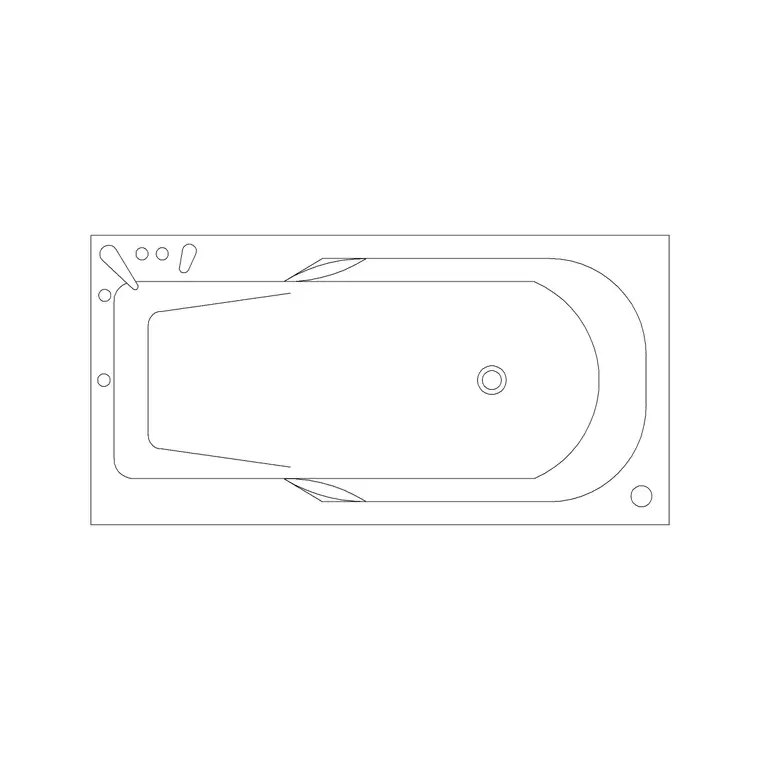
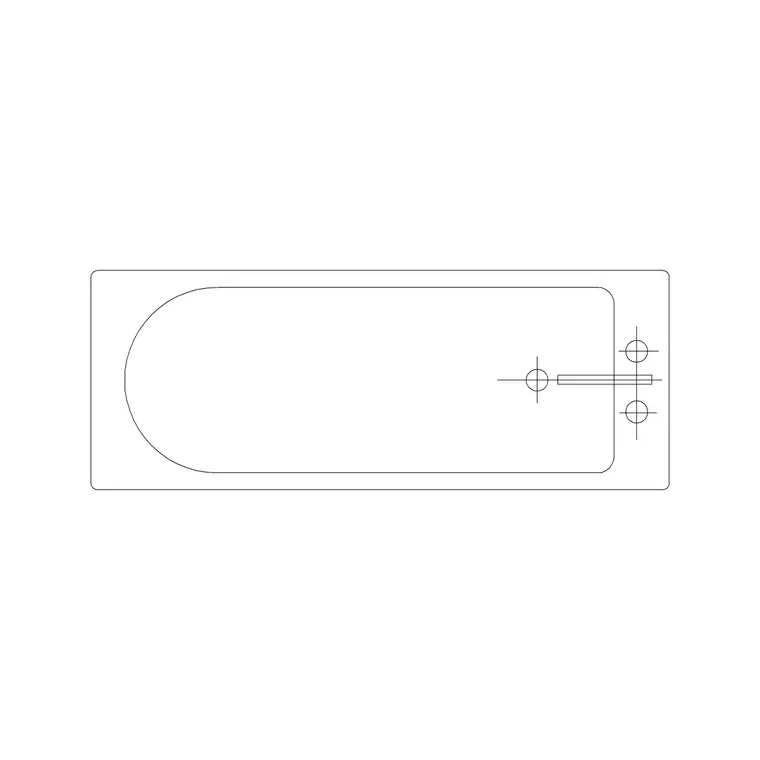
Compared with a corner bath, it occupies less floor for the same bathing length; compared with a freestanding tub, it needs no space behind and tucks the plumbing into the wall. The block shows the rectangular rim, the inner bowl and the tap end so you can drop it into an alcove and read the fit immediately.
Plan and elevation views
For the layout you use the plan: the rectangular rim seen from above, set into the alcove between walls with the access edge open. Because the shape is a simple rectangle, it is easy to mirror to flip a layout, or to copy across repeated bathrooms in a block of flats.
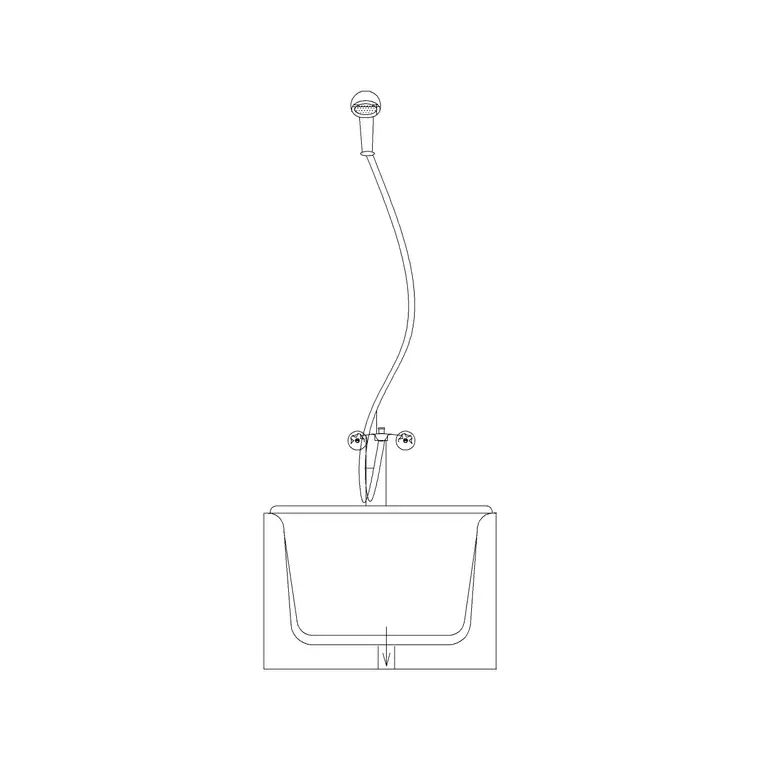
For tiling and sanitary elevations you switch to the elevation, where the bath and its front panel are drawn face-on at the rim height — around 500–560 mm. The straight panel is simple to tile and to detail. Many downloads ship the plan and elevation together so one file covers the alcove fit and the tiled face.
Standard rectangular bath dimensions
Design around these figures. Standard rectangular bath: 1700 × 700 mm. Compact: 1500 × 700 mm and 1600 × 700 mm. Small en-suite: down to 1400 × 700 mm. Wider 800 mm versions exist for a roomier bath. Rim height: 500–560 mm above the floor. Internal bathing length is a little shorter than the overall length once you allow for the sloped backrest.
The bath length needs to match the wall-to-wall alcove dimension, so set out the alcove first and pick the bath length that fits with a small tiling tolerance each end. Leave a clear access strip of at least 700 mm along the open edge.
Setting the bath into an alcove
The blocks are drawn full size in millimetres — insert at scale 1 in a millimetre drawing, or set INSUNITS to millimetres for automatic rescaling. Use INSERT, snap a rim corner to the corner of the alcove, and rotate so the bath runs along the wall with the tap end towards the services.
Push the rim hard against the back and end walls, draw the bath panel on the open long side, and check the length against the alcove — a rectangular bath wants the wall-to-wall dimension to match its rim length within the tiling tolerance. Dimension the bath from the walls, mark the tap/waste end, and keep it on a sanitaryware layer so it freezes off a structural plan and thaws back for the furnished and tiling drawings.
Where rectangular baths are used
Rectangular alcove baths dominate residential bathrooms — houses, apartments, rental units and student accommodation — and are the standard bath in hotels and hospitality where a simple, durable, easy-to-clean tub is wanted. Their regular shape makes them ideal for repeated layouts, so they are the bath you array across a multi-unit residential scheme.
Use the rectangular bath block as the standard choice, and switch to a corner or shower-bath block only where the room shape or a combined bath-shower function calls for it. Pair the rectangular bath with the WC, basin, shower and bathroom-faucet blocks to complete the sanitary layer, and copy it across repeated bathroom types to keep the whole scheme consistent.
Matching bath length to the room
The one decision a rectangular bath forces is length, and the block makes that decision concrete. Measure the clear alcove between the finished wall faces, allow a small tolerance for tiling at each end, and pick the bath length that fits — 1700 mm where the alcove allows, dropping to 1600, 1500 or 1400 mm in tighter rooms. Because the block is true-size, you can drop in each candidate length and see at a glance which fills the alcove cleanly.
It is worth remembering that the internal bathing length is shorter than the overall length, so a 1500 mm bath bathes noticeably smaller than a 1700 mm one — a trade-off to weigh in a small bathroom. Where the alcove is non-standard, you may set the bath to one end and fill the gap with a tiled upstand or a small shelf, which the scaled block lets you draw and dimension precisely rather than leaving to site.
Free download
Browse the full library — DWG & DXF, no signup.
Questions
Frequently asked
What size is a standard rectangular bath?+
The standard rectangular bath is 1700 × 700 mm. Compact versions run 1500 and 1600 × 700 mm, small en-suite baths down to 1400 mm, and wider 800 mm versions give a roomier bath. The blocks cover these standard lengths.
How do I fit a rectangular bath into an alcove?+
Set out the alcove between the finished walls first, allow a small tiling tolerance at each end, then pick the bath length that fits. Push the rim hard against the back and end walls and draw the panel on the open side.
What height is the bath rim drawn at?+
The rim sits around 500–560 mm above the floor, shown on the elevation view. The plan shows the rectangular rim and inner bowl at full size for setting the bath into the alcove.
Are the rectangular bathtub blocks free for commercial use?+
Yes. They download free in DWG and, where available, DXF, with no signup, no watermark and no attribution requirement, and they are cleared for commercial project use.
Related downloads
Blocks for this guide
Related categories
Related guides
Block landing
Free Bathroom Fixtures CAD Blocks — DWG Download
Download free bathroom fixtures CAD blocks in DWG and DXF — toilets, wash basins, bathtubs, showers and vanities drawn in plan and elevation. No signup, commercial OK.
Block landing
Free Sanitary Fixtures CAD Blocks — DWG Download
Download free sanitary fixtures CAD blocks in DWG and DXF — WCs, wash basins, urinals and sinks in plan and section for AutoCAD sanitary plans.
Block landing
Free Toilet / WC CAD Blocks — DWG Download
Download free toilet / WC CAD blocks in DWG and DXF — close-coupled, back-to-wall and commode pans in plan and elevation for AutoCAD. No signup, commercial OK.