Block landing · porch swing cad block
Free porch swing CAD blocks for AutoCAD
By Saumyajit Maity · Published 7 Nov 2023 · Updated 13 Feb 2026
A porch swing is a hanging bench suspended from a porch or veranda ceiling, and it is a small block with an outsized effect on how a covered outdoor space reads. This page collects free porch swing CAD blocks in DWG and DXF — two- and three-seat suspended bench swings, slatted and solid-back versions — drawn at true millimetre dimensions and ready to insert into AutoCAD 2004 or later. Everything is free for personal and commercial work, with no signup and no watermark.
Unlike a freestanding garden swing on its own A-frame, a porch swing hangs from the structure above, so the block is about the bench, the chains or ropes, and the fixing point in the ceiling. Use these to furnish porch, veranda, deck and balcony drawings, and to check that the bench has room to swing and clears the porch rail, the front edge and any door swing.
What a porch swing block includes
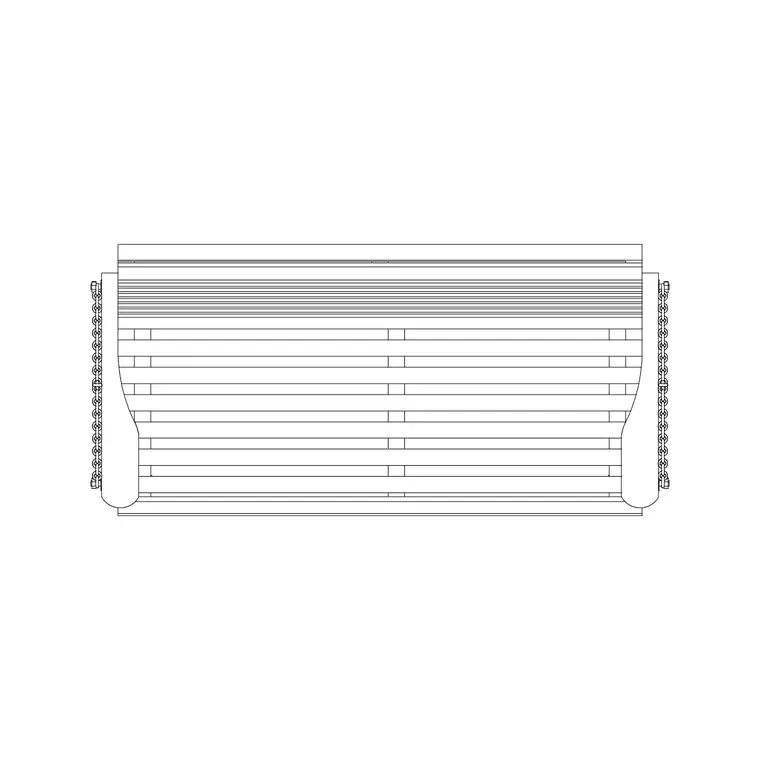
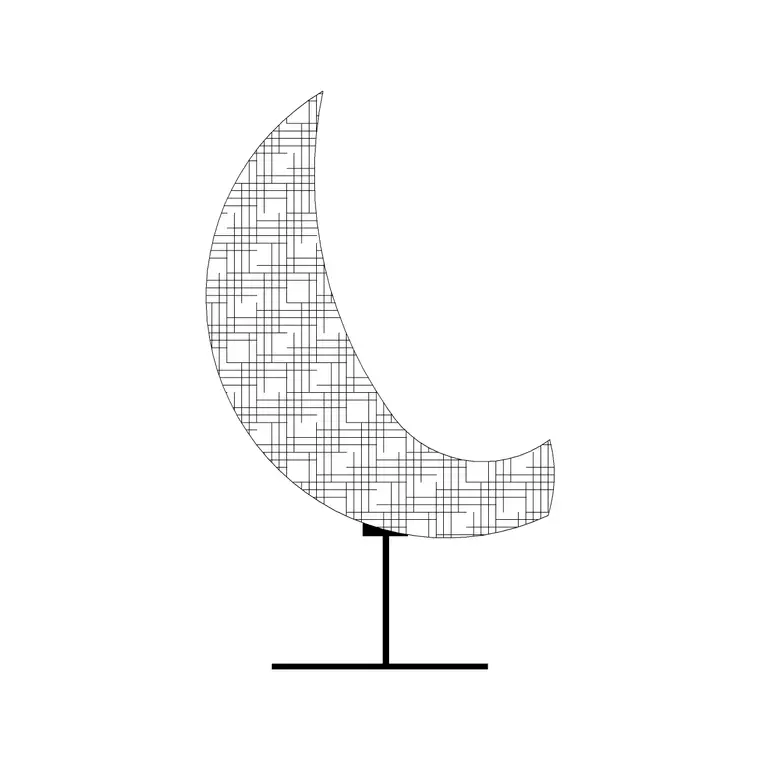
A porch swing block draws the suspended bench and its suspension. In elevation you get the seat, the back — slatted or solid — the armrests if it has them, and the chains or ropes running up to the ceiling fixing point. In plan you get the bench footprint, which is what you place against the porch ceiling joists or the fixing position above. Each part is editable geometry on sensible layers so you can recolour the timber, simplify the chains, or freeze the cushions.
The key feature that sets a porch swing apart is the ceiling fixing. The block shows where the swing hangs from, which has to land on a porch beam or a properly fixed point, so the elevation is what you use to coordinate the swing with the structure overhead. Because the bench is a single block reference, you can mirror it, centre it on a porch bay, and copy it where a long veranda takes more than one.
Elevation for the hang, plan for placement
The elevation is the working view for a porch swing. It shows the seat height above the porch floor, the back height, and the chain or rope run up to the ceiling — the geometry you need to confirm the swing hangs at a comfortable height and that the fixing reaches a solid beam. It also shows the front-to-back swing arc, the clearance you must keep between the bench and the porch rail in front and the wall behind.
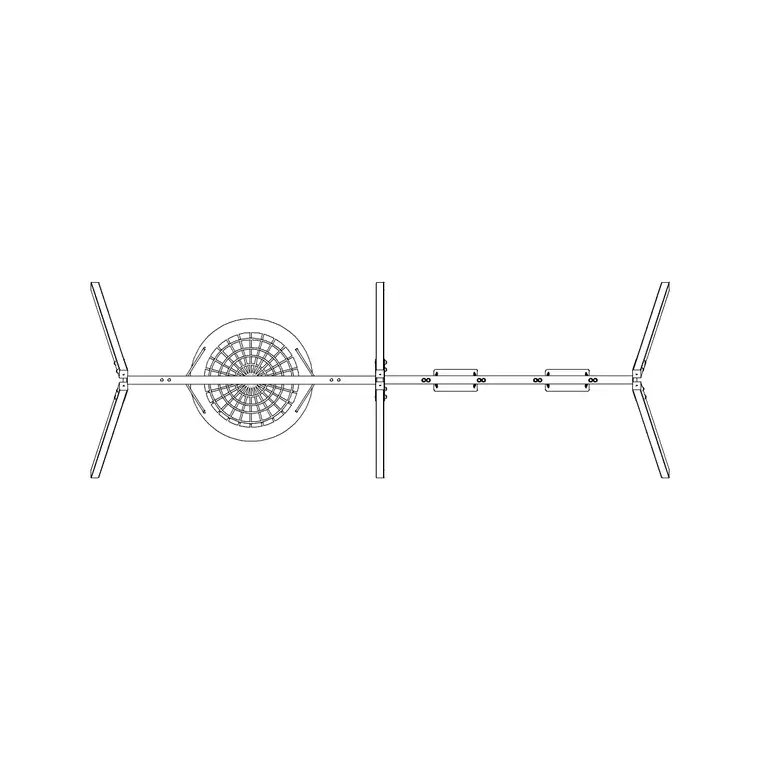
The plan view is for placement: the bench footprint set within the porch, positioned so it centres on a bay or aligns with the fixing point above. Use the plan to keep the swing clear of the front door swing, the steps and the circulation across the porch. Many blocks ship both views, so one download lets you both hang the swing correctly in elevation and place it sensibly in plan.
Typical porch swing sizes to design around
Use these ranges to size a porch swing. A two-seat porch swing bench is commonly around 1.2–1.5 m wide; a three-seat runs 1.8–2.0 m. Seat depth is typically 500–600 mm, with the seat hung so it sits at a comfortable 400–450 mm above the porch floor. The back height is usually 800–950 mm above the seat.
For swing clearance, keep the bench at least 350–400 mm clear of the porch rail in front and a similar gap from the wall behind so it can rock without striking either. These are typical figures rather than fixed specifications — the product and the porch depth drive the real numbers. The blocks are drawn full size so you can stretch the bench to a wider porch bay or adjust the seat height to match the porch floor-to-ceiling dimension.
How to insert and hang the porch swing
These porch swing blocks are drawn in millimetres. Insert at scale 1 in a millimetre drawing, 0.001 in a metre template, or set INSUNITS to millimetres so AutoCAD rescales on insertion. Run INSERT or drag the DWG onto the drawing, pick the insertion point at the centre of the bench, and rotate it to face out from the porch toward the view.
In elevation, line the chain or rope fixing up with the porch beam or ceiling joist it hangs from, and set the seat at a comfortable height above the porch floor. In plan, centre the bench on the porch bay and check the swing arc clears the rail and the wall. Keep the swing on a furniture layer so you can freeze it for a clean structural porch drawing and thaw it for the furnished elevation.
Where porch swing blocks are used
Porch swing blocks appear in residential porch and veranda designs, deck and balcony layouts, cabin and cottage drawings, and hospitality outdoor seating. Architects and designers use the elevation to coordinate the swing with the porch structure and to show the covered space furnished; landscape and outdoor-living designers use the plan to lay out a porch as a usable room; presentation drawings use the swing to give a porch the relaxed, lived-in character that sells the design.
Pair the porch swing with the outdoor seating, table and railing categories to draw a complete porch — a swing at one end, a small table and chairs, and the porch rail and balusters framing the space. Because a porch swing is the signature piece of a traditional veranda, getting its hanging height and clearance right makes the whole drawing convincing.
Coordinating the swing with the porch structure
The defining challenge with a porch swing is that it hangs from the building, so the block has to coordinate with the structure overhead. In elevation, locate the chain or rope fixing under a porch beam or a doubled joist rather than mid-span on a thin ceiling board, because the swing carries real load. Drawing the swing to scale lets you show that fixing point landing on the structure and dimension the chain length so the seat sits at the right height.
The swing arc is the second coordination check. A porch is a shallow space, so confirm the bench clears the front rail as it swings forward and the wall as it swings back — both gaps come straight off the scaled elevation. In plan, keep the bench out of the through-route across the porch and clear of the door swing, so people can pass while someone is seated. Keeping the porch swing as scaled geometry turns all of this into a quick visual check, and the same block carries from a concept porch layout through to the detailed elevation a builder works from.
Free download
Browse the full library — DWG & DXF, no signup.
Questions
Frequently asked
How is a porch swing block different from a garden swing block?+
A porch swing hangs from the porch or veranda ceiling, so the block shows the bench plus chains or ropes to a fixing point overhead. A garden swing has its own freestanding A-frame. Both are covered across the outdoor category.
Are the porch swing CAD blocks free for commercial use?+
Yes. Every porch swing block downloads free in DWG and, where available, DXF, with no signup, no watermark and no attribution requirement, and they are cleared for commercial project use.
Do the blocks show where the swing fixes to the ceiling?+
The elevation shows the chains or ropes running up to the fixing point, so you can coordinate the swing with a porch beam or joist and dimension the chain length to set the seat at a comfortable height.
What scale are the porch swing blocks drawn at?+
Full size in millimetres. Insert at scale 1 in a millimetre drawing, or set INSUNITS to millimetres so AutoCAD rescales automatically. You can stretch the bench to a wider porch bay or adjust the seat height to your porch dimensions.
Related downloads
Blocks for this guide
Related categories
Related guides
Block landing
Free Garden Fence CAD Blocks — DWG & DXF
Download free garden fence CAD blocks in DWG and DXF — timber, panel and contemporary boundary fences drawn in plan and elevation, AutoCAD 2004+, no signup.
Block landing
Free Wrought-Iron Gate CAD Blocks — DWG
Download free wrought-iron and metal gate CAD blocks in DWG and DXF — ornamental garden gates in elevation and plan with swing arcs. No signup.
Block landing
Free Main Entrance Gate CAD Blocks — DWG
Download free main entrance gate CAD blocks in DWG and DXF — driveway, sliding and double-swing gates drawn in elevation and plan with swing arcs. No signup.