Block landing · people exercising cad block
Free people exercising figure CAD blocks
By Saumyajit Maity · Published 3 Dec 2023 · Updated 13 Jun 2026
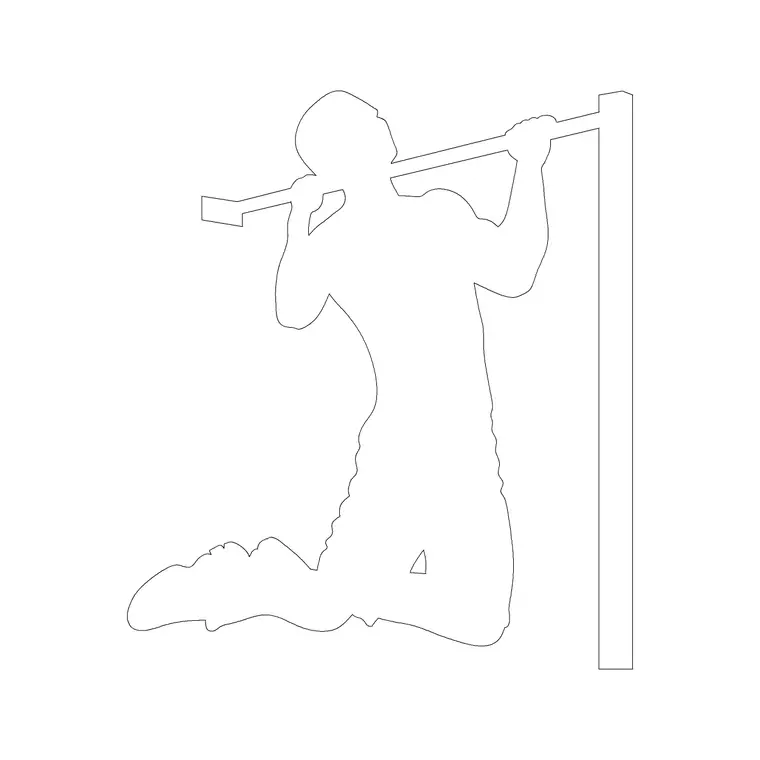
Active spaces need active people. A gym, a yoga studio or a sports hall drawn with stiff standing figures misses the point - the drawing should show people moving, stretching and using the equipment. This page collects free people exercising figure CAD blocks in DWG — figures running, stretching, lifting and working out, drawn to scale — ready to insert into AutoCAD 2004 or later. Every file is free for personal and commercial use, with no signup and no watermark.
Exercising figures bring a fitness or sports drawing to life and, just as usefully, they help you check that the space around the activity works. A figure mid-stretch shows the floor area a yoga mat really needs; a runner on a treadmill confirms the clearance behind the machine; a person lifting shows the space a free-weights area demands. Use these blocks in gyms, fitness studios, sports halls, swimming pools, outdoor gyms, parks and any space designed for movement.
What an exercising figure shows
Exercising figures are people captured in motion or in an active pose - running, stretching, lifting, doing yoga, using equipment. Unlike a calm standing scale figure, an active figure occupies a larger and more irregular envelope, with limbs extended, and that is exactly what you want to see when you are planning the space around the activity.
A varied set is valuable here: a runner in profile, a figure in a stretching or yoga pose, someone lifting weights, a person on a piece of equipment. Together they let you populate a fitness space believably and check several different activity zones at once. As with all scale figures, the proportions stay true even in an active pose, so the figure still reads at the correct human size while it animates the drawing.
Activity space to design around
Exercise needs room, and that is where the figure earns its place. A person needs clear space well beyond their standing footprint when they move: a stretching or yoga figure with arms and legs extended can occupy a zone roughly 1800-2200 mm long and 1000-1500 mm wide, which is why studios are planned around mat spacing rather than body width.
Equipment zones add their own clearances. A treadmill needs run-off space behind it, often around 1000 mm or more, for safety; a free-weights bench needs clear room on each side to load and move; a stretching or floor area needs an uninterrupted mat zone per user. Dropping an exercising figure into each zone lets you check these activity envelopes against the room, so the gym is not just full of machines but actually usable by the people on them. Confirm specific clearances against the equipment manufacturer and any relevant standard for the building type.
Planning a gym or studio layout
An exercising figure turns a gym layout from a machine plan into a usable space. Start by placing the equipment - cardio, resistance machines, free weights, a studio floor - then drop active figures onto and around each piece to confirm the user has the room they need. The figure quickly reveals whether the rows of machines are too tight, whether the stretching area is genuinely large enough, and whether circulation between zones is clear when people are actually using the space.
For a studio, lay out the mat positions with stretching or yoga figures so you can confirm the spacing between participants and the sightline to the instructor. For a free-weights area, an active lifting figure shows the working space around each bench and rack. This is the difference between a plan that fits the equipment and one that works for the people, and the figure is what makes that difference visible.
How to insert and place the block
These figures are drawn full size in millimetres. Insert at scale 1 in a millimetre drawing, 0.001 in a metre drawing, or set INSUNITS to millimetres so AutoCAD rescales the block on insertion. Use INSERT or drag the DWG from a tool palette, and place the figure on the equipment or floor zone you are checking, with the feet or supporting contact on the floor line.
Most active figures are elevation or section blocks for studio and equipment elevations, though plan-view active figures are useful for studio floor layouts. Orient each figure to face the way the activity naturally runs - the runner facing forward on the treadmill, the lifter square to the bench. Keep the people on a muted layer so they support the drawing and can be frozen for a clean equipment plan.
Where exercising figures are used
Active figures belong in every drawing of a space designed for movement. Commercial gyms and fitness studios use them to plan equipment layouts, mat spacing and circulation. Sports halls, dance and martial-arts studios use them to confirm activity zones and sightlines. Swimming-pool surrounds, outdoor gyms and park trim trails use them to show the equipment in use and check the space around it.
School and university sports facilities, hotel and residential gyms, and physiotherapy and rehab spaces all benefit too. On presentation drawings and competition boards for any fitness or sports project, active figures sell the scheme far better than empty machines, because they show the building doing the thing it was designed for. Because the blocks are free and licence-clear, you can use them throughout the project.
Mixing active and resting figures
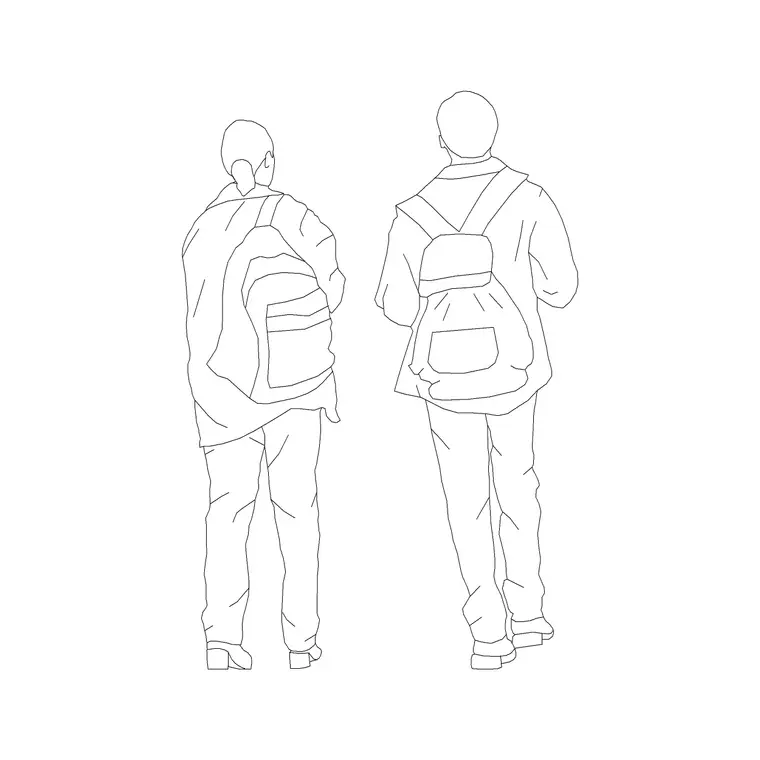
A real gym is not wall-to-wall motion - people work out, rest between sets, queue for equipment, stretch and chat. The most convincing fitness drawings reflect that mix, so combine exercising figures with standing and seated ones: active figures on the machines and mats, standing figures waiting or resting, seated figures on benches and at the reception or cafe.
This mix also makes the circulation check more honest, because people standing and resting take up space too, and a plan that only accounts for the active footprint underestimates how busy the floor feels. Keep a small set of active figures alongside your standard scale figures, vary the poses and facing directions, and you can populate a fitness space that reads as a genuine working gym rather than a showroom of unused equipment.
Free download
Browse the full library — DWG & DXF, no signup.
Questions
Frequently asked
How much space does an exercising figure need?+
More than a standing person. A stretching or yoga figure with limbs extended can occupy a zone around 1800-2200 mm long and 1000-1500 mm wide, which is why studios are planned around mat spacing. Confirm equipment clearances against the manufacturer.
What activities do the exercising figures show?+
They include people running, stretching, doing yoga, lifting weights and using equipment. A varied set lets you populate different zones of a gym or studio and check the activity space around each one.
Are the people exercising blocks free for commercial use?+
Yes. Every figure downloads free in DWG with no signup, no watermark and no attribution requirement, and they are cleared for commercial project use.
Where are exercising figures most useful?+
In gyms, fitness and dance studios, sports halls, pools, outdoor gyms and rehab spaces - anywhere the design is about movement. They help check activity zones and equipment clearances, and they bring fitness presentation drawings to life.
Related downloads
Blocks for this guide
Popular blocks to download
Related categories
Related guides
Block landing
Human Figure Plan CAD Blocks — Free DWG
Download free human figure plan-view CAD blocks in DWG — people seen from above, drawn to scale for floor plans and circulation. AutoCAD 2004+, no signup.
Block landing
Human Figure Elevation CAD Blocks — Free DWG
Free human figure elevation CAD blocks in DWG — people drawn front-on and in profile to scale your sections and streetscapes. AutoCAD 2004+, no signup.
Block landing
Standing Person Scale Figure CAD Blocks (Free)
Free standing person scale figure CAD blocks in DWG — clean, true-height figures to set the scale of plans, sections and elevations. AutoCAD 2004+, no signup.