Block landing · patio sliding door cad block
Free patio sliding door / window CAD blocks for AutoCAD
By Saumyajit Maity · Published 2 Feb 2026 · Updated 30 Apr 2026
A patio door is a large sliding glazed door — effectively a floor-to-head sliding window you can walk through — connecting a living space to a terrace, balcony or garden. One or more glazed panels slide horizontally past a fixed panel, opening a wide threshold without any swinging leaf to clear. This page collects free patio sliding door CAD blocks in DWG, in matched plan and elevation views, drawn full size in millimetres for AutoCAD 2004 or later, free for personal and commercial use with no signup or watermark.
Use the blocks wherever a room opens onto outdoor space: living rooms onto terraces, bedrooms onto balconies, restaurants and cafés onto courtyards. Because the sliding panels and the track are drawn to scale, the plan shows exactly how the threshold opens and how much clear width you get, while the elevation shows the full-height glazing the design depends on.
The patio door straddles the line between window and door, which is why it sits in the windows collection here: it is glazed like a window, slides like a sliding window, but functions as a door. The blocks ship both the plan and the elevation so you can set out the opening in the floor plan and draw the full-height glazing on the elevation from one consistent source.
What a patio door block contains
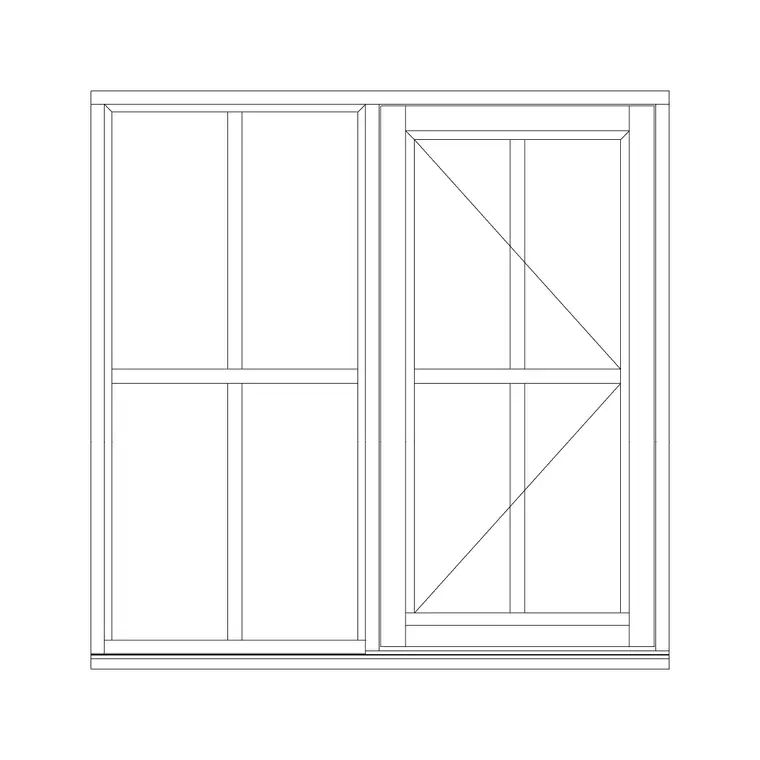
A patio sliding door block shows a wide frame divided into glazed panels, with at least one panel sliding past a fixed panel in a track. The plan view draws the frame, the track, the sliding and fixed panels and the slide direction — like a large sliding window, but spanning a doorway opening. The elevation draws the full-height glazing, the meeting stile where the panels overlap, and the proportion of the door against the wall.
Unlike a hinged door, there is no swing arc, because the panels slide rather than swing. That makes the patio door ideal where a swinging leaf would foul furniture inside or a rail outside — the whole point of a slider onto a balcony is that nothing projects into the limited outdoor space when it opens.
Plan and elevation: a matched pair
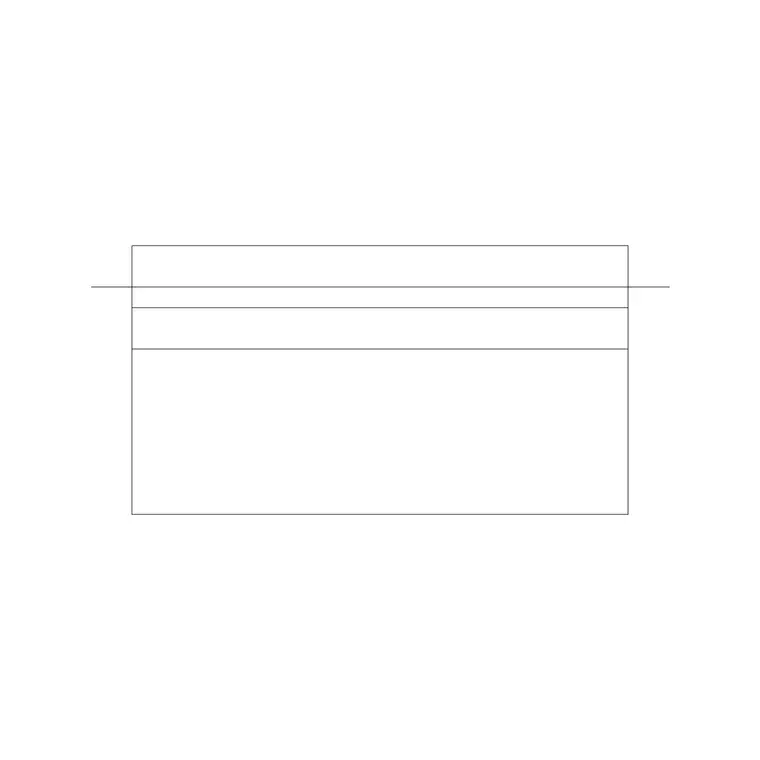
This block comes as a matched plan and elevation, and using both is the point. The plan sets the door into the floor plan: it shows the structural opening, the frame, the track, which panels slide and which are fixed, and the slide direction. It is the view that tells you how wide the clear walk-through actually is once one panel parks behind the other.
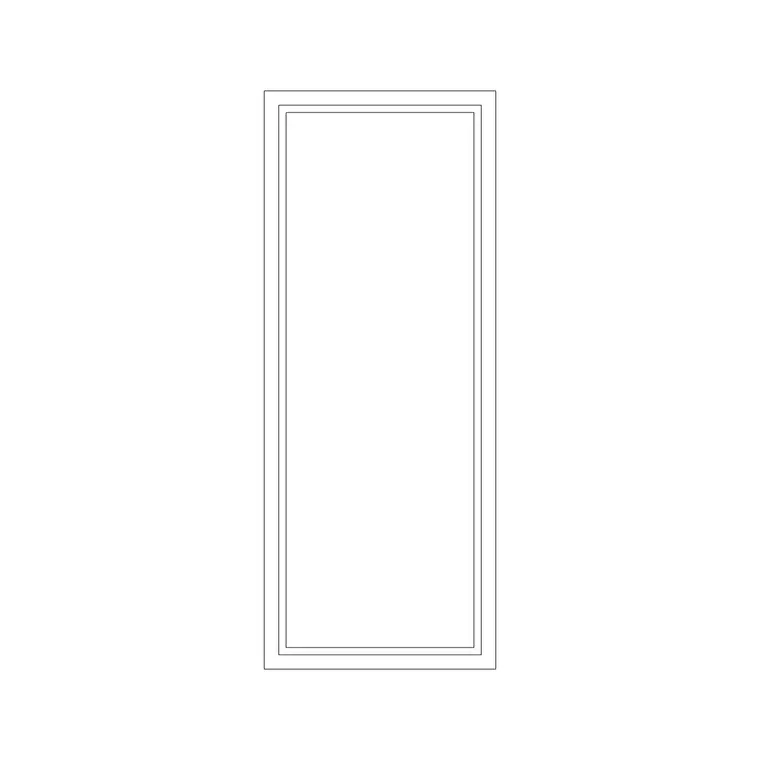
The elevation shows the door as the full-height glazed wall it is, with the panel divisions and the head and threshold. Aligning the elevation directly under the plan so the panel lines correspond is good practice — it keeps the two views honest about how many panels there are and where the meeting stiles fall. Insert each view onto the glazing/door layer and key the whole door into the schedule.
Typical patio door dimensions
Patio doors are large by definition. As planning figures, overall widths commonly run 1800–3600 mm for two- to four-panel sets, with three- and four-panel sliders covering the wider openings; heights are usually full door height, around 2100 mm, sometimes taller for a glazed wall up to a high head. Each sliding panel is sized so it stays manageable on its rollers — very wide panels get heavy.
Remember the sliding-door opening rule, just like a sliding window: a two-panel slider opens roughly half its width, because one panel parks behind the fixed one. If the design needs a wide clear threshold, choose a multi-panel configuration and check the clear opening in the plan rather than assuming the whole width opens.
Inserting and setting out the door
The blocks are full size in millimetres; insert at scale 1 in a millimetre drawing, 0.001 in a metre drawing, or set INSUNITS to millimetres so AutoCAD rescales on insertion. Place the plan block in the structural opening at the threshold, aligning the frame to the wall finish, then drop the elevation block on the elevation sheet and align its panel lines to the plan.
Set which panel slides and which is fixed, and the slide direction, using the plan. Keep the door on a glazing or door layer so you can freeze it for a structural plan. Because the threshold detail matters — patio doors need a low, weathertight, often level-access sill — insert or draw the threshold section beneath the elevation so the head and sill heights coordinate.
Where patio doors are used
Patio doors belong wherever an interior opens generously to the outside: living and dining rooms onto terraces and gardens, bedrooms and studios onto balconies, kitchens onto courtyards, and hospitality spaces onto outdoor seating. They are central to indoor-outdoor living and to maximising daylight and view in residential design, which is why almost every contemporary house plan has at least one.
Architects use the block to set out the opening and draw the glazed wall; interior designers use it to plan the relationship between inside furniture and the outdoor space; installers read the panel configuration and slide direction. Pair the patio door with the sliding-window and fixed-glass blocks to draw a continuous glazed elevation where a run of doors and windows works as one composition.
Threshold, level access and the sliding rule
Two things separate a well-drawn patio door from a careless one. The first is the threshold: because a patio door is a walk-through, the sill wants to be low and ideally level-access, with a weathertight upstand and drainage that keeps water out without creating a trip. Drawing the threshold section, rather than leaving the door as a flat elevation, is what turns the block into a buildable detail — it shows the head, the track, the sill upstand and the floor finishes either side meeting at the line.
The second is the sliding rule already noted: only the sliding panels open, so a two-panel door gives roughly half its width as clear opening. On the plan, draw the panels in their open position as well as closed if the clear walk-through is critical, so anyone reading the drawing sees the real threshold width. Get those two things right and the patio door reads as the considered indoor-outdoor connection it is meant to be, not just a big rectangle of glass on the elevation.
Free download
Browse the full library — DWG & DXF, no signup.
Questions
Frequently asked
Is a patio door a window or a door?+
Both, really. A patio door is a large sliding glazed door — a full-height sliding window you walk through. It is glazed and slides like a sliding window but functions as a door onto a terrace or balcony, which is why it sits among the window blocks here.
Why does the patio door come as separate plan and elevation files?+
The plan sets the door into the floor plan with its track, sliding and fixed panels and slide direction; the elevation shows the full-height glazing and panel divisions. Using the matched pair and aligning them keeps the two views consistent about panel positions.
How much of a patio door actually opens?+
On a two-panel slider, about half the width, because one panel parks behind the fixed panel. Multi-panel configurations open more. Check the clear opening in the plan rather than assuming the whole width opens when ventilation or access width matters.
What sizes do patio doors come in?+
As planning ranges, overall widths run roughly 1800–3600 mm for two- to four-panel sets, at full door height around 2100 mm or taller for a glazed wall. Each sliding panel is sized to stay manageable on its rollers; confirm against the chosen system.
Related downloads
Blocks for this guide
Related categories
Related guides
Block landing
Free Casement Window CAD Blocks — DWG Download
Free casement (openable) window CAD blocks in DWG — side-hung sashes in plan, elevation and section for AutoCAD. No signup, free for commercial use.
Block landing
Free Single-Shutter Window CAD Blocks — DWG
Free single-shutter window CAD blocks in DWG — one-panel openable sashes in elevation and plan for AutoCAD. Left/right-hung, no signup, commercial OK.
Block landing
Free Double-Shutter Window CAD Blocks — DWG
Free double-shutter window CAD blocks in DWG — two-leaf openable windows with glass, in elevation and plan for AutoCAD. No signup, commercial-use OK.