Room guide · mudroom cad blocks
Free mudroom CAD blocks for AutoCAD
By Sumana Kumar · Published 12 Feb 2023 · Updated 22 May 2026
A mudroom — a boot room in British usage — is the buffer between outdoors and the clean interior of a home. It is where coats, boots, bags, sports kit and the daily debris of a family stop before the rest of the house, so its whole purpose is to catch and contain mess at a single threshold. It is a small room with an outsized effect on how tidy a home feels, and it works almost entirely through clever storage and a clear flow from the door.
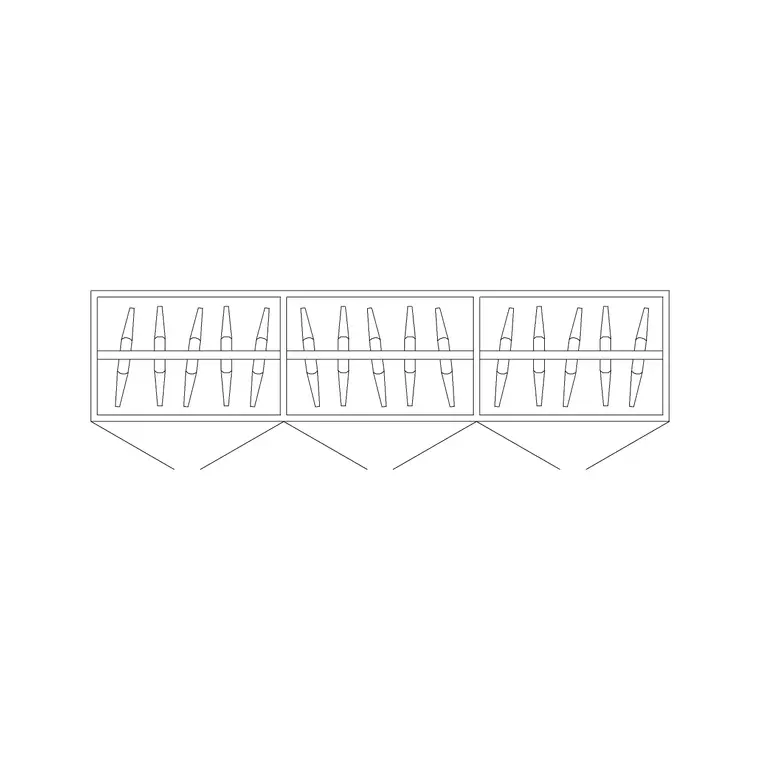
This page collects free mudroom CAD blocks in DWG and DXF — benches, cubbies, hooks, storage units and seating — drawn to true millimetre scale and ready to insert into AutoCAD 2004 or later. Every block is free for personal and commercial use with no signup, no watermark and no attribution required, whether you are planning a generous family boot room or a slim mudroom corridor off a side door.
Because a mudroom is all about the choreography of coming and going, a scaled plan is where you test the most important move: can a person step in, sit to remove muddy boots, hang a coat and reach a cubby, all without blocking the door for the next person coming in behind them.
What a mudroom is for
A mudroom exists to break the journey from outside to inside. The ideal sequence is: open the door, step onto a hard, wipeable floor, sit on a bench to pull off boots, drop those boots into a tray or low cubby, hang the coat and bag above, and walk on into the house in clean feet. Done well, all the mud, wet and clutter stays in this one room.
It is usually a per-person system — a bench seat, a hook or two and a cubby for each member of the household — which is why mudrooms scale with family size. The room can be tiny, but the sequence still has to fit, and the bench, the hook height and the cubby depth all have to suit the people using them. That is exactly what the scaled blocks below let you lay out and check.
The sit-down sequence: bench, hooks and cubbies
The heart of a mudroom is the bench-hook-cubby stack along one wall. The bench gives you somewhere to sit to deal with footwear — non-negotiable, because balancing on one leg to remove a muddy boot is how mud ends up everywhere. Above the bench run the hooks for coats and bags, and below or beside it sit the cubbies and boot trays.
Draw this as a coordinated wall: bench at seat height, hooks above head-clear when seated, and open boot storage below. The genius of the arrangement is that one person's whole kit lives in a single vertical slice of wall, so a family of four needs four such slices side by side.
Where space allows, a tall locker or cupboard at the end of the run hides bulkier or seasonal gear. Keep the run continuous and the floor in front of it clear, because that floor is where people stand and bend to deal with boots.
Furniture and storage blocks for a mudroom
A mudroom uses simple, robust pieces. Place them as a coordinated wall plus a clear standing zone.
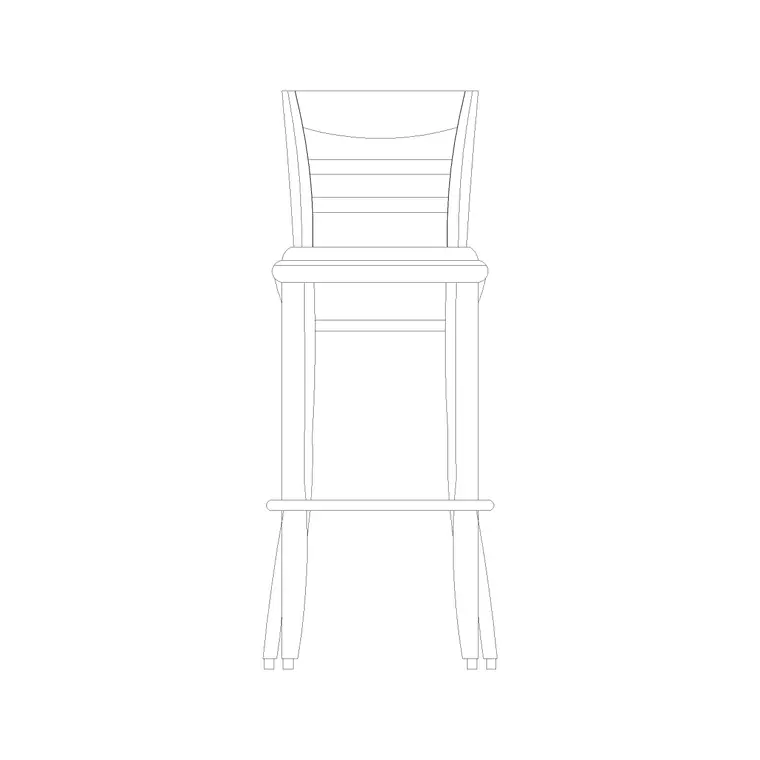
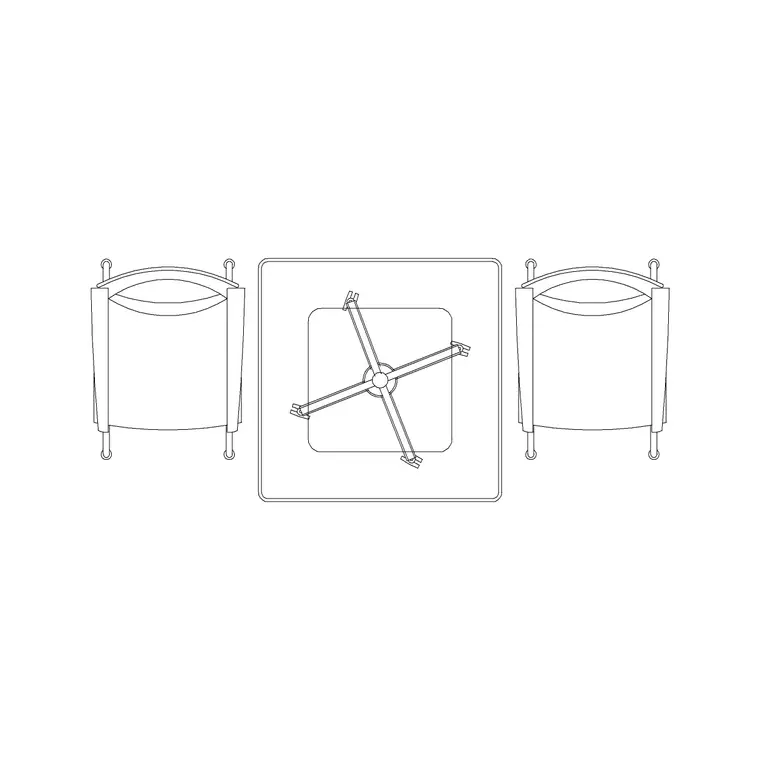
- Bench seating: the sit-down point for footwear; the single most important block. - Cubbies and lockers: a wardrobe-depth cupboard or open cubbies give each person a home for boots, bags and kit. - A drop-zone surface: a small shelf or counter for keys, post and the things that otherwise migrate into the kitchen. - A stool: an extra perch for a second person putting shoes on at a busy door. - Lighting: a bright ceiling light so dark winter mornings still show which boots are whose. - A clock: a quick glance on the way out keeps a busy household on time.
All of these are free blocks below, so a complete mudroom wall comes together in a handful of inserts.
Dimensions and clearances for coming and going
Use these as ranges. A bench seat sits at roughly 400 to 450 mm high and 350 to 450 mm deep — low and shallow enough to perch and reach your feet. Coat hooks for adults work around 1500 to 1700 mm off the floor, with a lower row near 1000 to 1200 mm for children. Cubbies and boot trays want enough depth to take a pair of boots, around 300 to 400 mm.
The critical clearance is the standing and bending zone in front of the bench: leave at least 750 to 900 mm of clear floor so a seated person's knees and a bending person have room, and so the inward door swing does not catch them. If the mudroom is also a through-route, protect a 900 mm walking strip past the bench zone. A boot tray or mat just inside the door, drawn on the plan, marks where wet footwear lands before anyone reaches the bench.
Drawing the mudroom plan
Work in millimetres, insert at scale 1, and layer the bench/joinery, storage and lighting separately. Start with the external door and its swing, because everything keys off where people enter; an inward swing must clear the bench-front floor.
Run the bench-hook-cubby wall along the longest clear wall, ideally where a seated person faces into the room rather than at a blank wall. Mark the standing zone in front of it as protected floor. Place the boot tray just inside the door and the drop-zone shelf near the route into the house. Add a tall locker at the end of the run if space allows, and a stool for a second user. Finish with a bright ceiling light and, if the mudroom doubles as a route, confirm the 900 mm walking strip survives with the door open and someone seated on the bench.
Common mudroom mistakes
The first mistake is no bench. A mudroom without somewhere to sit forces everyone to hop around removing boots, which defeats the whole tidy-threshold purpose; the bench is the one thing the room cannot do without.
The second is hanging hooks where the door swing or a head clash makes them unusable — an inward door that sweeps the coat hooks, or hooks so close above the bench that a seated person bangs their head. Coordinate the door swing, the hook height and the seated head zone on the plan.
The third is a soft, hard-to-clean floor; while flooring is not a block, mark the mudroom as a wipeable, hard-floor zone so it can actually do its job. The fourth is making it a one-person room in a four-person household — too few hooks and cubbies and the overflow simply migrates into the hall, undoing the point of the room.
Free download
Browse the full library — DWG & DXF, no signup.
Questions
Frequently asked
What is the most important element in a mudroom layout?+
The bench. A mudroom without somewhere to sit forces people to balance on one leg to remove muddy boots, which spreads the mess it is meant to contain. Place the bench first, then build the hooks above and cubbies below it as a coordinated wall.
How high should mudroom coat hooks be?+
Adult hooks work at roughly 1500 to 1700 mm off the floor, with a lower row at about 1000 to 1200 mm for children. Coordinate the hook height with the bench and the door swing on the plan so a seated person does not clash with hooks above.
How much clear floor does a mudroom bench need in front?+
Leave at least 750 to 900 mm of clear floor in front of the bench so a seated person's knees and a bending person have room, and so an inward door swing does not catch them. If the room is also a through-route, protect a 900 mm walking strip too.
Are these mudroom CAD blocks free for commercial work?+
Yes. All bench, storage, locker and seating blocks are free in DWG and DXF for personal and commercial use, with no signup, no watermark and no attribution required.
Related downloads
Blocks for this guide
Related categories
Related guides
Room guide
Free Reception Lobby CAD Blocks — DWG Download
Download free reception lobby CAD blocks in DWG and DXF — reception desk, waiting sofas, planters and lighting in plan. AutoCAD 2004+, no signup.
Room guide
Free Conference Room CAD Blocks — DWG Download
Download free conference room CAD blocks in DWG and DXF — large conference tables, chairs, screens and lighting for layouts. AutoCAD 2004+, no signup.
Room guide
Free Meeting Room CAD Blocks — DWG Download
Download free meeting room CAD blocks in DWG and DXF — small meeting tables, chairs, screen and planter for compact layouts. AutoCAD 2004+, no signup.