Room guide · kids bathroom cad blocks
Free kids bathroom CAD blocks for AutoCAD
By Sumana Kumar · Published 7 Mar 2026 · Updated 9 Apr 2026
A kids bathroom is a family bathroom designed around children: shared by siblings, used at the same hectic moments of the day, and planned for safety, supervision and the chaos of small people getting ready together. The fixtures are the same as any bathroom, but the priorities shift — a bath rather than only a shower for bathing young children, ideally twin basins so two kids brush at once, clear floor for an adult to help, and nothing sharp or hard to reach.
This page gathers the free CAD blocks for a children's bathroom in AutoCAD — baths, double and single vanities, WCs and the basin elevations, plus lighting. All drawn to true millimetre dimensions in DWG and DXF, free for personal and commercial use, no signup or watermark.
The design isn't about miniature fixtures — children grow, and the room has to suit them at five and fifteen. It is about layout: a bath for bathing, basins that two can share, and the clear floor a parent needs to kneel beside the tub. Scaled blocks let you plan all of that to real dimensions.
Designing for children, not miniatures
The mistake to avoid up front is fitting a kids bathroom with tiny, child-scaled fixtures. Children grow fast, and a bathroom kitted out for a five-year-old is wrong for a teenager within a few years. A good kids bathroom uses standard fixtures arranged for the realities of childhood: a bath that an adult can lean over and bathe a toddler in, basins at a normal height that a step stool brings within reach, and a WC the whole family can use.
What changes is the layout, not the equipment. The room needs clear floor for a parent to kneel beside the bath, supervise at the basin and dry a child off. It benefits from a bath rather than a shower-only scheme, because bathing small children is far easier in a tub. And it does well with two basins, so the morning rush does not become a queue. The blocks here are standard fixtures chosen and arranged for that family use.
Twin basins and the morning rush
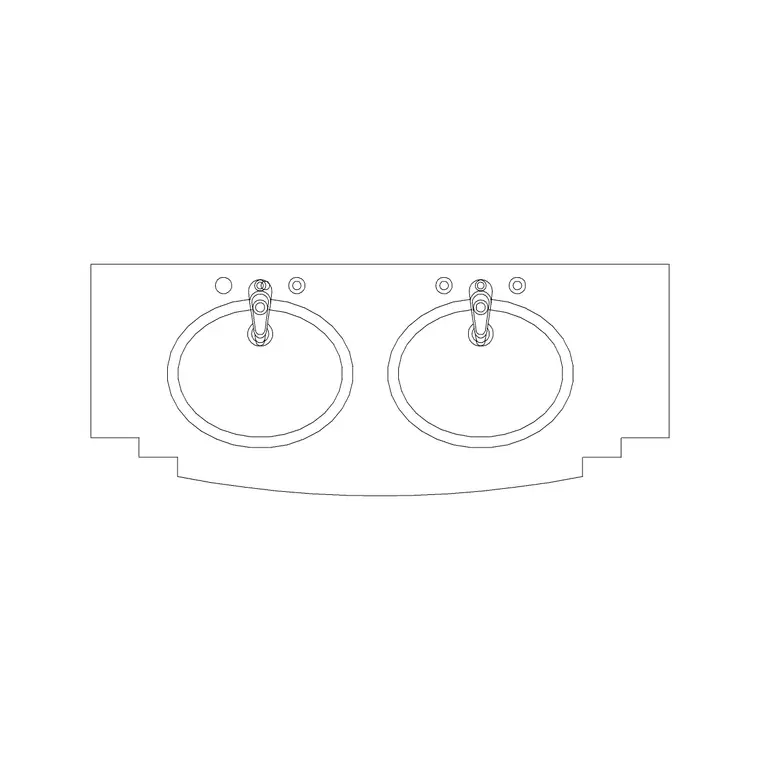
The single best move in a shared children's bathroom is a double basin. Two siblings brushing teeth at once, side by side, removes the daily bottleneck and the squabble over the sink. A double-basin vanity is the natural block: two bowls in one run, with a worktop and drawers between and below for the clutter children generate — cups, brushes, bath toys.
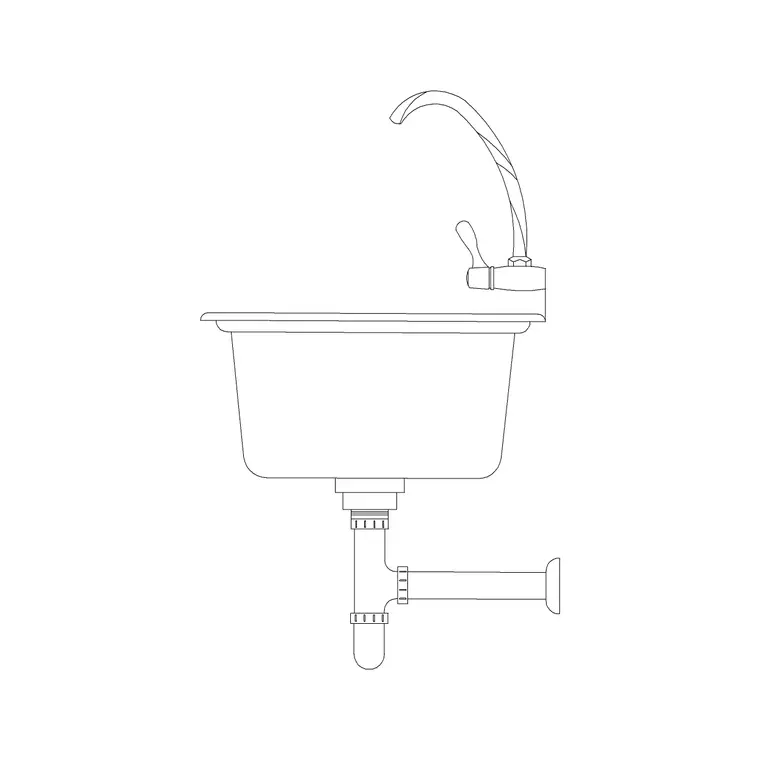
Where the room is too narrow for a double vanity, a single wide vanity still beats a bare basin, giving a surface and storage. Pair either with a sink elevation block to draw the mirror wall — and remember the mirror wants to be tall enough, or low enough, to work for a short child and a tall parent both. Keep the vanity run on the wall with the easiest plumbing and leave clear floor in front so two children plus a hovering adult are not jammed together.
The bath, the WC and safe clear floor
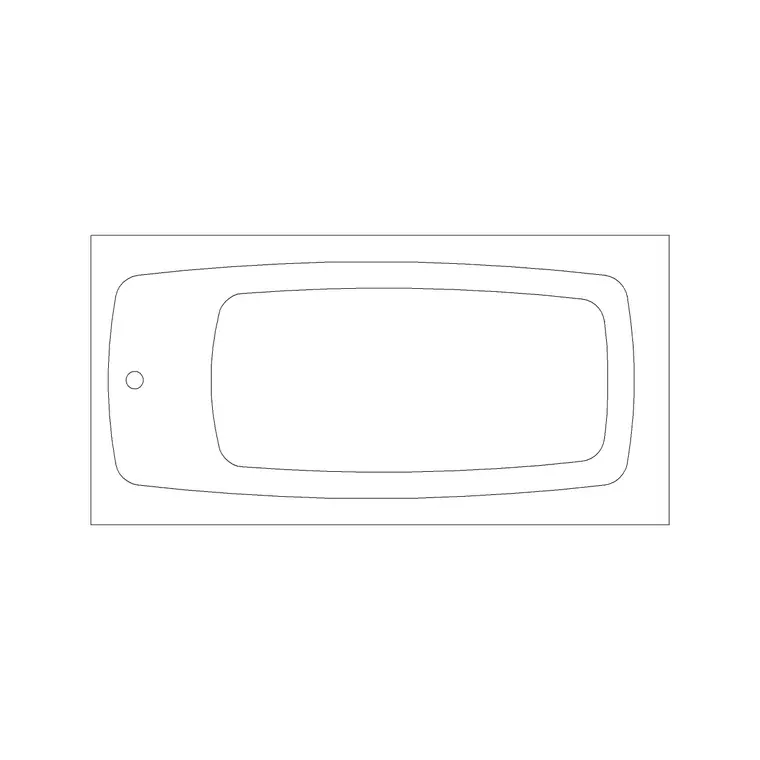
Specify a bath in a kids bathroom wherever you can. A standard rectangular bath against the long wall is ideal: an adult kneels alongside to bathe a young child, and the same tub serves older kids who prefer a soak or a shower over it. Reserve clear floor down the open side of the bath — that strip is where a parent kneels, so it is working space, not spare.
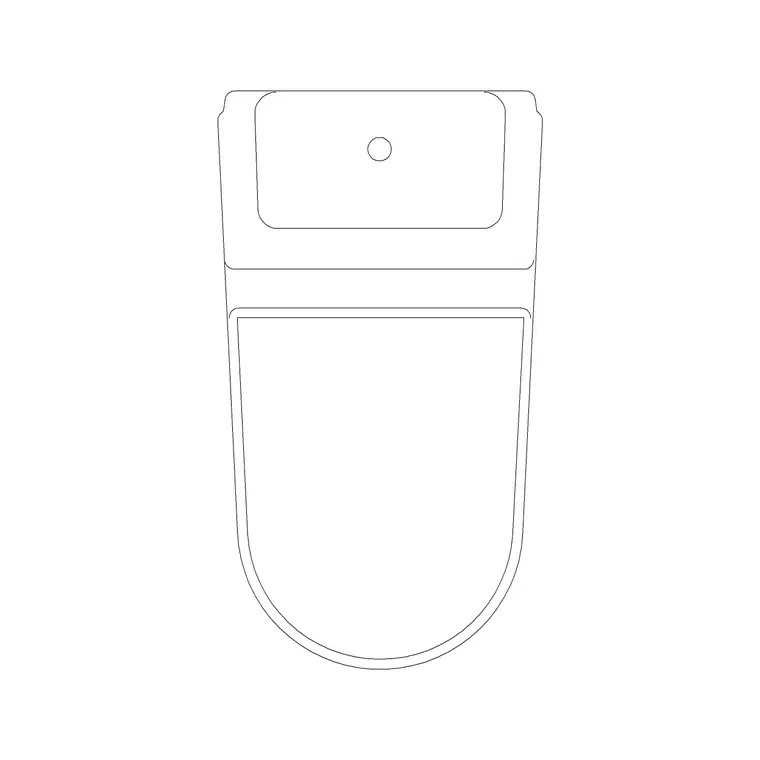
The WC is standard, placed clear of the door and ideally not the first thing seen on entry. The detail that matters most across the whole room is clear floor: children need room to move, an adult needs room to help, and wet floors plus rushing kids mean you do not want fixtures crammed so tight that there is nowhere safe to stand. Finish with good, even lighting — a ceiling lamp for general light and a wall lamp at the mirror — so a parent can actually see to wash a wriggling child.
Dimensions and clearances for a kids bathroom
Use these as planning ranges and confirm against your fittings. Standard bath: around 1700 mm by 700–800 mm. Double vanity: 1200–1500 mm to carry two bowls comfortably. WC: 600–700 mm projection. Single vanity: 600 mm and up.
For clearances, be more generous than a single-adult bathroom, because two children plus a parent share the space. Keep around 700 mm or more of clear floor down the open side of the bath for kneeling and helping, a standing zone per basin at the vanity, and 600 mm minimum in front of the WC. The door must clear all fixtures. A comfortable shared kids bathroom usually wants something around 2.2 by 2.5 m or more — enough that the morning crowd does not feel like a scrum, with the scaled blocks proving the clear floor is really there.
Assembling the kids bathroom in AutoCAD
Place the bath first, against the longest wall, and reserve the kneeling strip alongside it as solid floor. Run the double vanity along another wall with two basins arrayed and clear standing zones in front. Set the WC clear of the door and out of the immediate entry sightline. Draw the door swing and confirm it crosses no fixture and does not pinch the route between bath, basins and WC.
Insert blocks at scale 1 in a millimetre drawing (0.001 in metres, or set INSUNITS to millimetres). Layer the bath, vanity, WC, mirror and lighting separately so the plumbing plan, the elevation and the lighting plan all come from one file. As a final pass, imagine two kids and a parent in the room at once and check the clear floor genuinely supports that — the scaled blocks make the difference between a plan that looks fine and one that works at 7am.
Common kids bathroom mistakes
First, child-sized fixtures. They date almost immediately as children grow; use standard fixtures and a step stool instead, and the room serves the child from toddler to teenager.
Second, a single basin in a shared room. Two children getting ready at one sink is the morning bottleneck a double vanity is made to solve — it is the upgrade a family notices daily.
Third, no clear floor by the bath. Cramming fixtures to the edges leaves nowhere for a parent to kneel and bathe a young child, which is a core function of the room; reserve that strip as working space. Finally, poor lighting. Bathing a wriggling child in dim, uneven light is genuinely hard and less safe — put a ceiling lamp and a mirror lamp on the plan, and watch the units when you insert the bath block, since a tub that lands out of scale is an INSUNITS mismatch rather than a wrong block.
Free download
Browse the full library — DWG & DXF, no signup.
Questions
Frequently asked
Should a kids bathroom use child-sized fixtures?+
Generally no. Children grow quickly, and a bathroom fitted out for a small child is wrong within a few years. Use standard fixtures arranged for family use — a bath for bathing, twin basins for sharing, clear floor for a parent to help — and a step stool for reach while children are short.
Why put two basins in a kids bathroom?+
A double vanity lets two siblings brush their teeth at the same time, which removes the daily morning bottleneck and the queue for the sink. It also adds worktop and storage for the cups, brushes and bath toys children accumulate. Use a single wide vanity if the room is too narrow for two bowls.
Is a bath or a shower better for a children's bathroom?+
A bath is usually better, because bathing young children is far easier in a tub than a shower, and the same bath serves older kids for soaking or showering over it. Reserve clear floor down the open side of the bath as kneeling space for the supervising adult.
How much space does a shared kids bathroom need?+
A comfortable bathroom shared by children, with a bath, twin basins and a WC, usually wants around 2.2 by 2.5 m or more so two kids and a parent are not crammed together. Drop the scaled blocks in and confirm the clear floor by the bath and basins genuinely survives.
Related downloads
Blocks for this guide
Related categories
Related guides
Room guide
Free Bathroom CAD Blocks — Design a Bathroom
Design a full bathroom in AutoCAD with free CAD blocks — WC, basin, bath and shower drawn to scale in plan and elevation. DWG & DXF, no signup.
Room guide
Master Bathroom CAD Blocks — DWG Layouts
Design a master bathroom in AutoCAD with free CAD blocks — double vanity, freestanding bath, walk-in shower and WC drawn to scale. DWG & DXF, no signup.
Room guide
Powder Room CAD Blocks — Half-Bath DWG
Design a powder room or half-bath in AutoCAD with free CAD blocks — compact WC, small basin and vanity drawn to scale. DWG & DXF, no signup, commercial-use OK.