Room guide · home library cad blocks
Free home library CAD blocks for AutoCAD
By Saumyajit Maity · Published 25 Jul 2022 · Updated 13 Feb 2026
A home library is a room organised around a wall — or several walls — of books, with a comfortable place to sit and read at its centre. Unlike a study, which is built around a working desk, a library is built around the shelving itself: how high it runs, how it turns corners, how a person reaches the top shelf, and how a reading chair sits within all of it. Get the shelving geometry right and the room almost designs itself.
This page collects free home library CAD blocks in DWG and DXF — bookcases, reading chairs, side tables, ladders and lamps — drawn to true millimetre scale and ready to insert into AutoCAD 2004 or later. Every block is free for personal and commercial use, with no signup, no watermark and no attribution required, so a homeowner planning a reading room and a designer specifying a client's library can work from the same kit.
Because a library lives or dies on its shelving, a scaled plan and elevation are essential. You need to see the shelf runs in both views to check reach heights, ladder clearance and how the reading nook sits against a wall of books without feeling boxed in.
What a home library is for
A home library is a reading room with serious storage. Its job is to hold a collection and make it pleasant and easy to browse, then give the reader somewhere to settle. That means two things have to work together: the shelving, which is architectural and wall-mounted, and the seating, which is soft and central.
Libraries range from a single feature wall in a living room to a dedicated room lined on three sides. The bigger the collection, the more the room becomes about circulation in front of the shelves and reach up them. A scaled drawing is the only honest way to check that someone can pull a book from the top shelf without a ladder hitting the reading chair, which is the kind of clash that only shows up when the geometry is real.
Shelving the walls: runs, corners and reach
Shelving is the structure of a library, so draw it first. Bookcases are typically 250 to 350 mm deep — deep enough for most books, shallow enough not to eat the room. Run them floor-to-ceiling on the feature walls, but be deliberate about how high the practical reach goes: shelves above about 1800 to 2000 mm need a ladder or step, so reserve those for display and lesser-used volumes.
Corners are where shelving plans go wrong. Two perpendicular runs meeting at an internal corner will overlap unless one stops short or you use a corner unit, or you will end up with a dead, unreachable pocket. Draw both runs to their real depth and resolve the corner on the plan.
If the collection is large enough to need a rolling ladder, draw its rail along the shelf run and check the ladder's swing-out clearance against the reading chair and any side table — a library ladder needs a clear strip in front of the shelves to be any use.
Furniture and fixtures for a reading room
Once the shelving is set, the reading zone is what makes the room a library rather than a store. Place a comfortable chair within the warm pool of a lamp, with a small surface for a cup and the book being read.
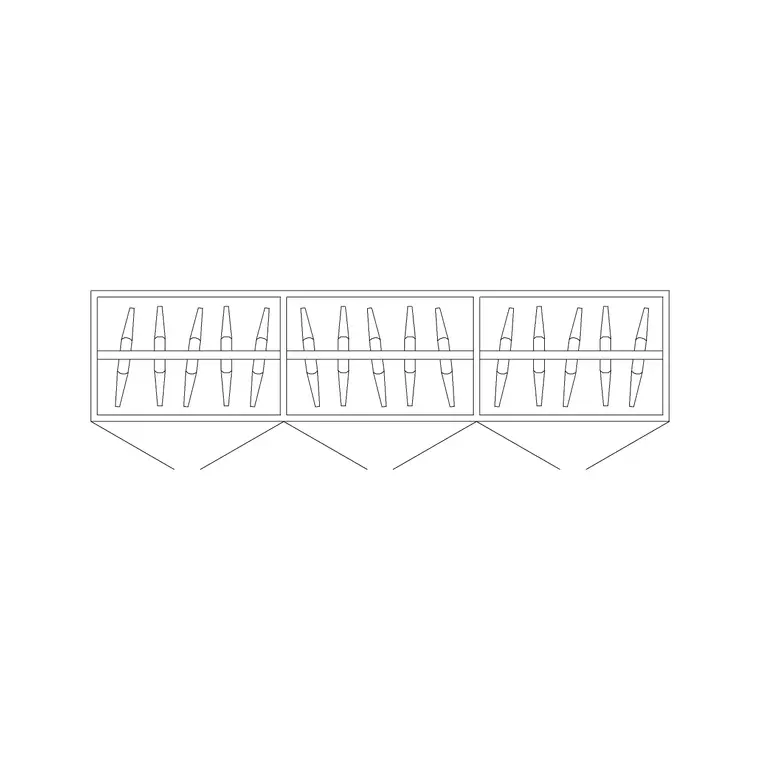
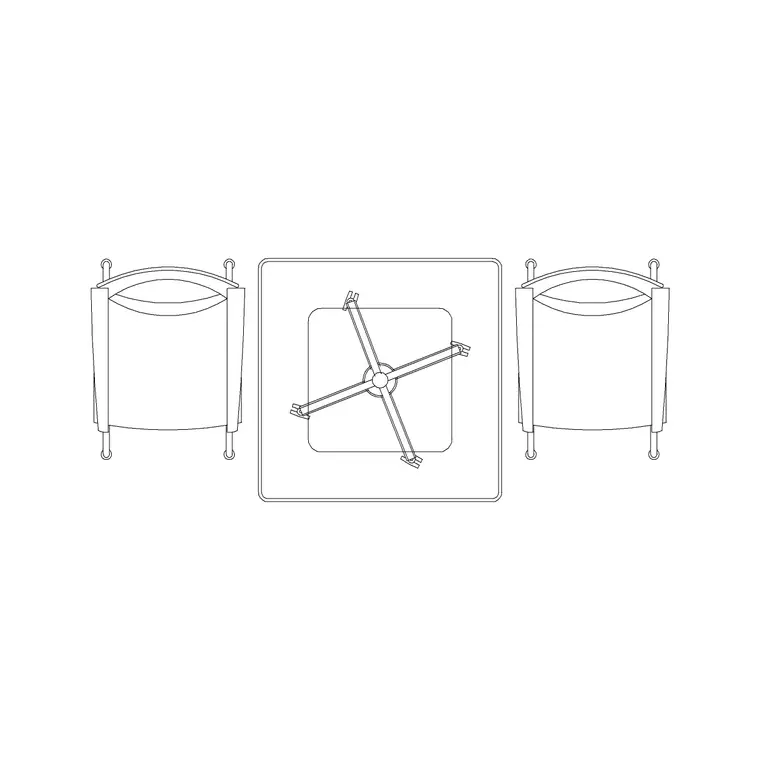
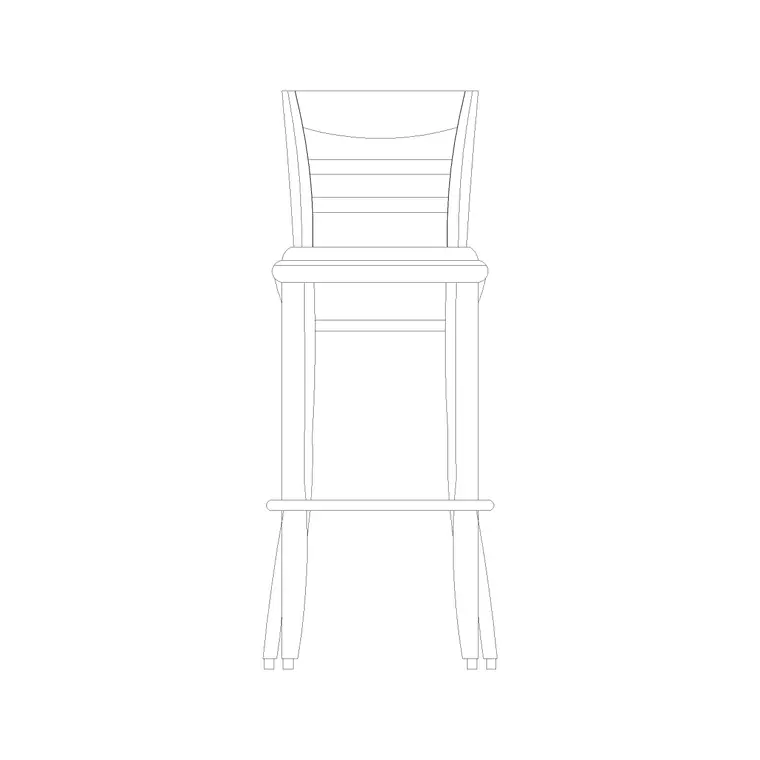
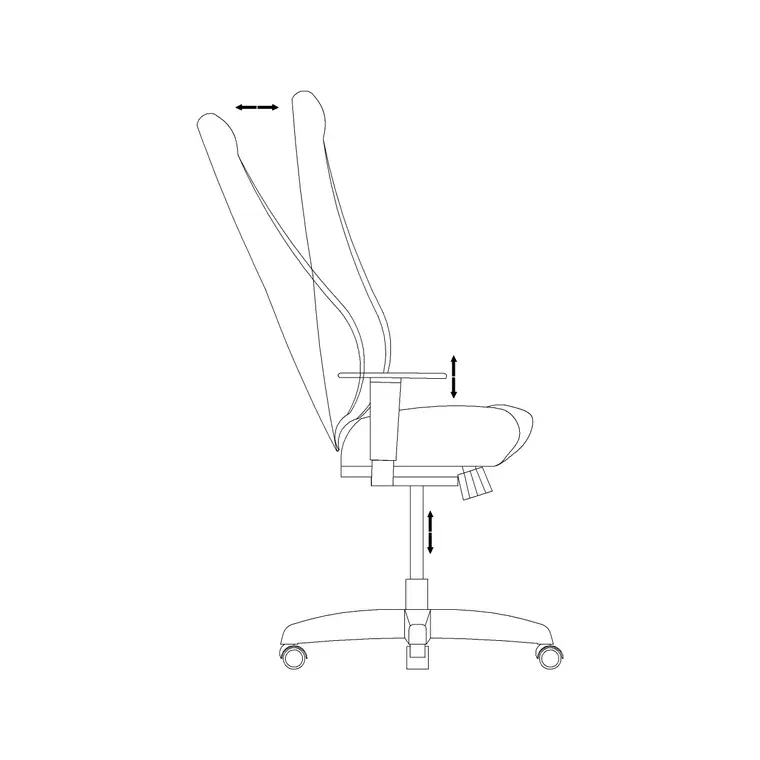
- Bookcases / shelving runs: the architecture of the room; drawn to true depth on the walls. - Reading chair: an armchair or a generous task chair, set well clear of the shelf-access strip. - Side table or center table: holds a lamp, a drink and a book within reach of the chair. - A bar stool or step: handy for reaching mid-height shelves where a full ladder is overkill. - Wall and ceiling lamps: a reading lamp at the chair plus even ambient light so spines are legible across the room. - A wall clock: a quiet, traditional touch that also grounds an elevation drawing.
All of these are available as free blocks below, so the reading zone drops in once the shelving grid is fixed.
Dimensions and access clearances
Use these as starting ranges. Bookcase depth 250 to 350 mm; shelf spacing 250 to 350 mm for typical hardbacks, more for oversized art books. Practical reach without a step runs to about 1800 to 2000 mm; above that, plan a ladder or step.
Leave a clear browsing strip of at least 750 to 900 mm in front of any shelf run so a person can stand, tilt their head back and pull a book; if a ladder runs there, widen it so the ladder and a passing person can coexist. A reading chair plus its footprint and a side table wants a pocket of roughly 1200 to 1500 mm clear of the shelf strip. When two shelf walls face each other across a room, keep at least 1000 to 1200 mm of aisle between their browsing strips.
Drawing the library plan and elevation
A library is one of the few home rooms where you should draw both plan and elevation early, because the shelving has to be checked in both. Work in millimetres, insert blocks at scale 1, and set layers for shelving, furniture and lighting separately so you can present a clean shelving elevation without the chair on top of it.
In plan, lay the shelf runs along the walls first, resolve the corners, and mark the browsing strip in front of each run. Drop the reading chair and side table into their pocket, clear of every shelf strip. Add the ladder rail if the collection needs one and swing-test its clearance.
Then build an elevation of at least the main shelf wall: set the shelf spacings, mark the practical-reach line, and show the ladder. The elevation is what catches the shelf that is technically there but no one can actually reach — a problem invisible in plan alone.
Common home-library mistakes
The first mistake is shelving above the reach line with no plan to get up there. A wall of books to the ceiling looks wonderful and is useless above 2 metres if there is no ladder or step in the design; decide the access before you draw the top shelves.
The second is a reading chair jammed into the shelf-access strip, so every time someone browses they bump the reader. Keep the reading pocket clear of every browsing strip on the plan.
The third is even, cold lighting with no reading lamp — a library needs a warm pool at the chair, not just a uniform wash. The fourth is forgetting that books are heavy: while you are not engineering the shelves in these blocks, do leave realistic shelf depths and spacings so the layout you draw is one that could actually be built and loaded.
Free download
Browse the full library — DWG & DXF, no signup.
Questions
Frequently asked
How deep should bookcases be in a home library plan?+
Most bookcases are 250 to 350 mm deep — enough for typical hardbacks while keeping the shelving from eating the room. Use deeper shelving only for oversized art or atlas books, and draw the true depth so corner clashes and browsing strips are accurate.
How high can shelves go before I need a ladder?+
Practical reach without a step runs to about 1800 to 2000 mm. Anything above that should be served by a library ladder or step, drawn with its swing-out clearance checked against the reading chair and side table.
How much clear space do I leave in front of bookshelves?+
Allow at least 750 to 900 mm of browsing strip in front of any shelf run so a person can stand and pull a book; widen it where a ladder runs. Keep the reading-chair pocket clear of these strips.
Are these home library CAD blocks free for commercial use?+
Yes. All bookcase, chair, table and lamp blocks here are free in DWG and DXF for personal and commercial work, with no signup, no watermark and no attribution required.
Related downloads
Blocks for this guide
Related categories
Related guides
Room guide
Free Reception Lobby CAD Blocks — DWG Download
Download free reception lobby CAD blocks in DWG and DXF — reception desk, waiting sofas, planters and lighting in plan. AutoCAD 2004+, no signup.
Room guide
Free Conference Room CAD Blocks — DWG Download
Download free conference room CAD blocks in DWG and DXF — large conference tables, chairs, screens and lighting for layouts. AutoCAD 2004+, no signup.
Room guide
Free Meeting Room CAD Blocks — DWG Download
Download free meeting room CAD blocks in DWG and DXF — small meeting tables, chairs, screen and planter for compact layouts. AutoCAD 2004+, no signup.