Block landing · glass dining table cad block
Free glass dining table CAD blocks in DWG and DXF
By Sumana Kumar · Published 10 Feb 2026 · Updated 7 Mar 2026
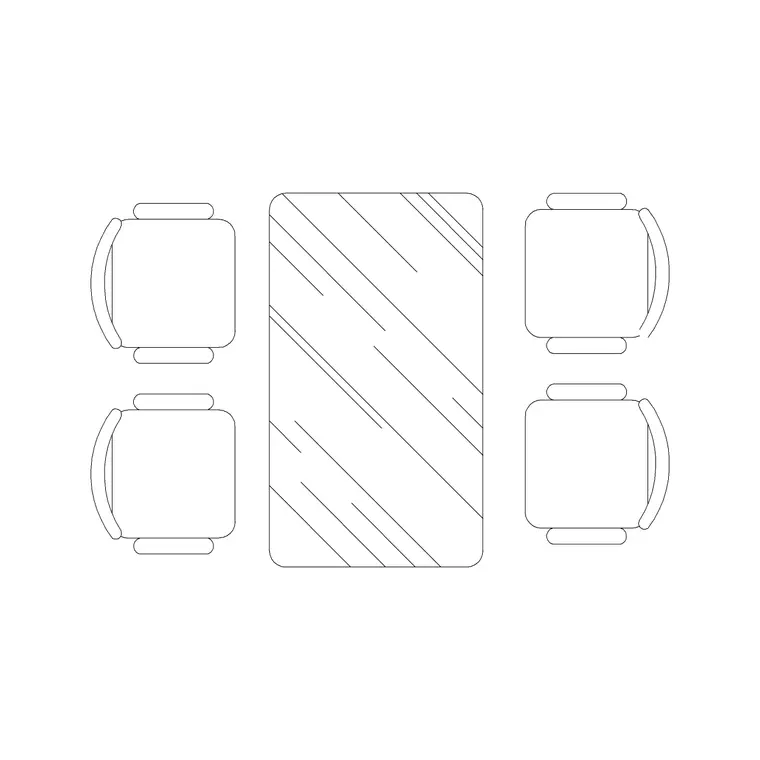
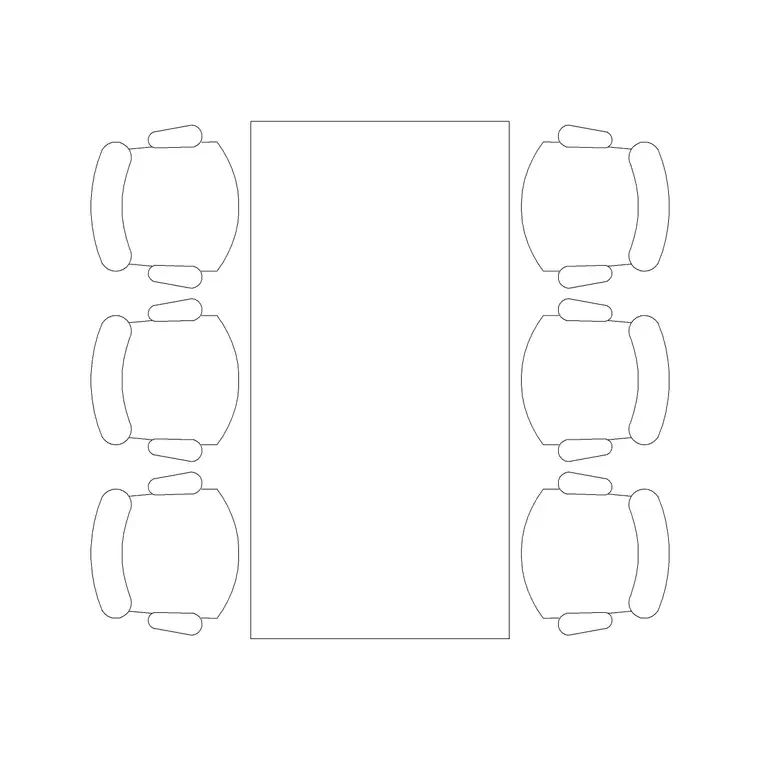
A glass-top dining table is a styling choice as much as a functional one, and that shapes how you draw it. The transparent top makes a small dining area feel more open, lets the floor and rug read through it, and pairs with slim metal or sculptural bases that a solid-top table can't carry. This page collects free glass dining table CAD blocks in DWG and DXF — modern four and six-seater glass-top tables with their chairs — at true millimetre dimensions, ready for AutoCAD 2004 or later. Every file is free for personal and commercial use, with no signup and no watermark.
Use these blocks in contemporary interiors where the dining area needs to feel light: apartments, open-plan living spaces, showrooms and hospitality lounges. The block carries the same scaled footprint as any dining table, but it's worth knowing the design conventions that make a glass table read correctly on a drawing.
What makes a glass dining table block different
Functionally a glass dining table occupies the same footprint as a solid one — the tabletop, the chairs and the seated zone are what matter for layout. What changes is how you draw and present it. On a plan the glass top is usually shown as a lighter outline, sometimes dashed or with a thin lineweight, to signal transparency, and you can let the rug or floor pattern read through it rather than hiding under a solid hatch.
The base is the other distinguishing feature. Glass tables ride on slim trestle legs, a central pedestal, or a sculptural metal frame, so the block's plan often shows a smaller floor-contact footprint than the glass top above it. That can matter for clearances under the table and for where a chair can tuck, so the block keeps the top outline and the base contact on separate layers.
Glass dining table sizes to design around
Glass tables follow the same dimensional ranges as other dining tables. A four-seater is commonly 1000–1400 mm long by 800–900 mm wide; a six-seater runs 1500–1800 mm by 900–1000 mm. Round glass tables seat four at about 1000–1200 mm diameter. Standard height stays near 750 mm, chairs around 450 mm to the seat.
Glass tops are typically 10–12 mm thick, which is worth showing in elevation because that slim edge is part of the look. In plan, the chairs need the same 600 mm setting depth and 900–1100 mm clear ring for pulling out and passing behind as any dining set. The transparency doesn't change the floor area the set needs — it only changes how open the room feels.
Drawing transparency convincingly
The whole point of specifying glass is the visual lightness, so represent that on the drawing rather than treating the top as a solid box. On a furnished plan, draw the glass outline on a thin lineweight or a dedicated 'glass' layer, and let the rug, the floor finish and even the table base read through it. That single move communicates 'glass' to anyone reading the plan far better than a note.
In elevations and interior visuals, the slim profile and the visible base are what sell it. Show the thin glass edge, the metal or pedestal base behind it, and the chairs seen through the top where the view allows. Because the block keeps the glass, the base and the chairs on separate layers, you can tune each one's lineweight to get that layered, see-through quality.
Inserting and styling the block
These blocks are drawn full size in millimetres. Insert at scale 1 in a millimetre drawing, 0.001 in a metre template, or set INSUNITS to millimetres and let AutoCAD rescale on insertion. Run INSERT or drag the DWG in, pick the centre of the top as the insertion point, and rotate to the room's axis.
Because a glass table is so often paired with a statement rug or a feature floor, place the table block over the rug block rather than under it, and confirm the rug shows through. If you're producing a presentation set, consider a separate 'glass' layer colour so the transparency reads in print as well as on screen. As a single block reference the whole set copies and edits together.
Where glass dining tables suit the scheme
Glass dining tables earn their place in contemporary and compact interiors. In a small apartment, the transparent top keeps sightlines open so the dining area doesn't feel boxed in. In an open-plan living-dining space, glass lets a feature floor or rug carry through visually rather than being interrupted by a heavy tabletop. In showrooms and hospitality lounges, the modern, light look is often the brief.
They pair naturally with slim, modern chairs and a defining rug, so reach for the rug and chair blocks in the furniture category alongside them. The same scaled set works from a concept plan through to the styled interior elevation, so you keep one consistent dining footprint across the whole drawing package.
Coordinating glass with the floor and rug
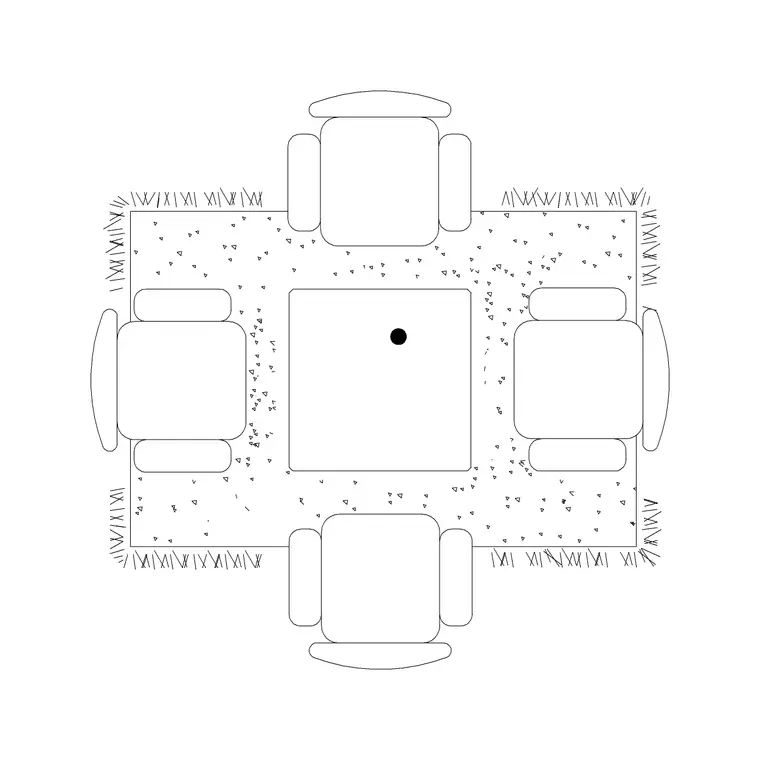
Because you can see straight through a glass top, the floor underneath it becomes part of the composition — which is both an opportunity and a coordination job. A bold rug centred under a glass table reads as the anchor of the whole dining zone, and the table sits within it as a frame. Drawing both as scaled blocks lets you centre the table on the rug precisely and check that the rug extends far enough for the pulled-out chairs to stay on it.
This is also where the base footprint matters. A pedestal or trestle base sits within the rug's field, so confirm its floor contact lands cleanly on the rug and clears the chair positions. Producing the glass table, the rug and the chairs from one consistent library means the see-through effect is coordinated by construction — the layers line up, the rug reads through, and the interior elevation matches the plan rather than drifting from it.
Free download
Browse the full library — DWG & DXF, no signup.
Questions
Frequently asked
How should I draw a glass table top on a plan?+
Use a thin lineweight or a dedicated glass layer and let the rug and floor finish read through the top rather than hiding them under a solid hatch. That conveys transparency far better than a note, and the blocks keep the glass on its own layer for exactly this.
Are glass dining tables a different size from solid ones?+
No. They follow the same dimensional ranges — a four-seater around 1000–1400 mm long, a six-seater 1500–1800 mm — so the footprint and clearances are the same. Only the appearance and the base style differ.
Are the glass dining table blocks free to use commercially?+
Yes. Every block downloads free in DWG (and DXF where available) with no signup, no watermark and no attribution requirement, cleared for commercial project use.
Should the table go above or below the rug in the drawing?+
Place the table block above the rug block so the rug shows through the glass, then confirm the rug extends far enough for the pulled-out chairs. Both are drawn to scale, so they coordinate cleanly.
Related downloads
Blocks for this guide
Related categories
Related guides
Block landing
Free Office Chair CAD Blocks — DWG Download
Download free office chair CAD blocks in DWG and DXF — task chairs, swivel chairs and executive seats drawn in plan and elevation, AutoCAD 2004+, no signup.
Block landing
Free Bar Table CAD Blocks — DWG Download
Download free bar table CAD blocks in DWG and DXF — round, square and rectangular high bar tables in plan and elevation for AutoCAD. No signup, commercial-use OK.
Block landing
Free Restaurant Table CAD Blocks — DWG Download
Download free restaurant table CAD blocks in DWG and DXF — 2, 4 and 6 cover tables with chairs drawn in plan and elevation for AutoCAD. No signup, commercial-use OK.