Block landing · garden swing cad block
Free garden swing CAD blocks for AutoCAD
By Saumyajit Maity · Published 9 Sep 2024 · Updated 10 Feb 2026
A garden swing is one of those furniture pieces that makes a landscape drawing feel inhabited — drop one onto a lawn or a deck and the space reads as somewhere people relax. This page collects free garden swing CAD blocks in DWG and DXF — freestanding A-frame swing seats, two- and three-seater bench swings, and hanging swing chairs — drawn at true millimetre dimensions and ready to insert into AutoCAD 2004 or later. Everything is free for personal and commercial work, with no signup and no watermark.
Use these blocks to furnish garden designs, courtyards, terraces and play areas, and to show scale and use in presentation drawings. A swing is more than a static block, though: it needs swing clearance, so the plan and elevation both matter when you are checking that the seat has room to move without hitting a wall, a planter or a path.
What a garden swing block contains
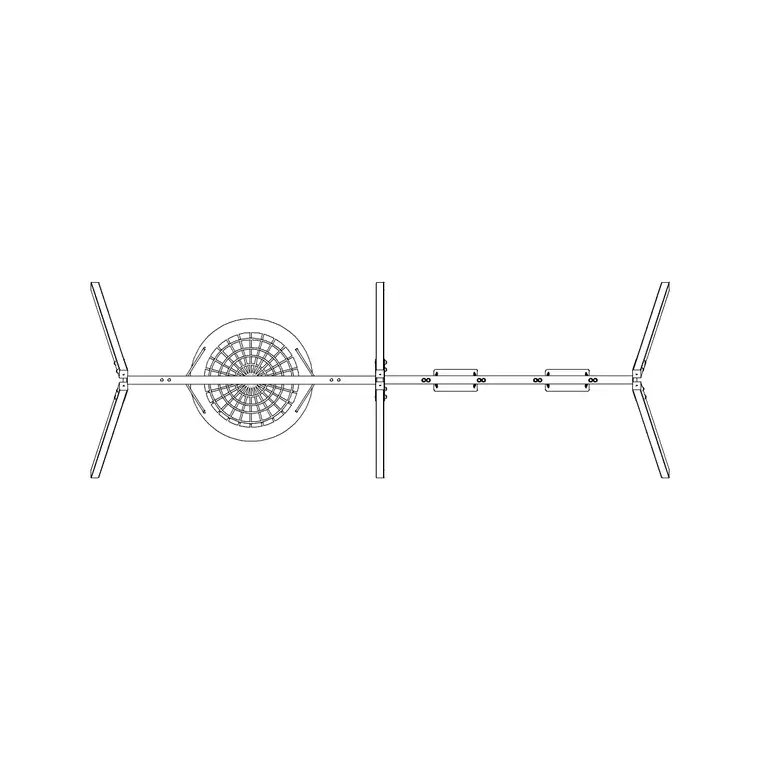
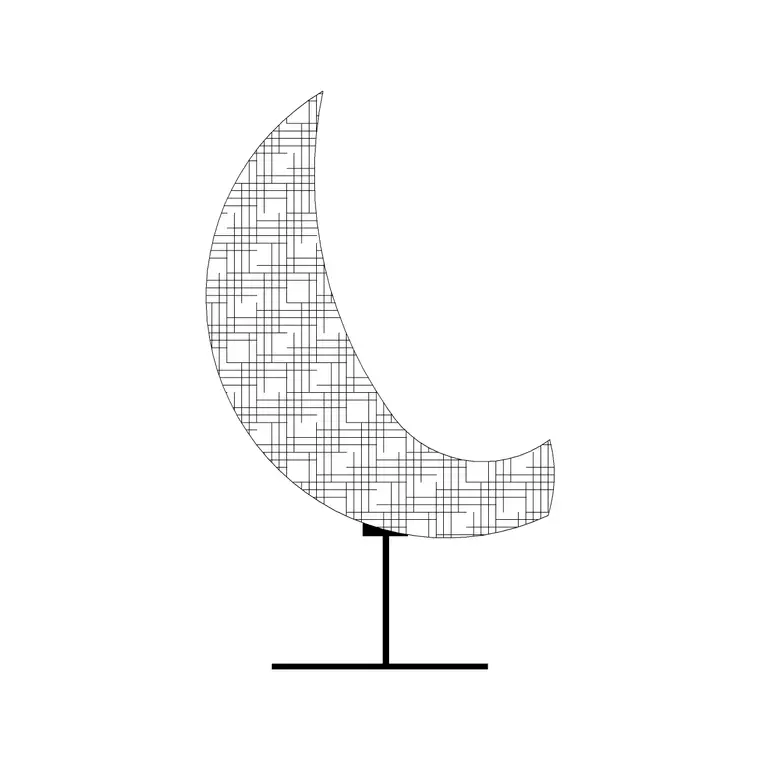
A garden swing block comes in two broad families, and a good library covers both. The freestanding A-frame swing draws the two angled leg frames, the top beam, the hangers and the bench seat, with the frame footprint shown in plan and the full structure in elevation. The hanging swing chair draws the suspended seat — often an egg or basket shape — with its hanging point, for use under a pergola, a tree or a frame.
Each swing is editable geometry on sensible layers, so you can recolour the frame, simplify the seat, or freeze the canopy if the swing has one. The plan view carries the frame footprint, which is what governs where the swing can sit; the elevation carries the seat height and the overall frame height, which is what tells you whether it fits under a pergola or a low canopy. Because the swing is a single block reference, you can mirror it, rotate it to face a view, and copy it across a scheme.
Plan for footprint, elevation for clearance
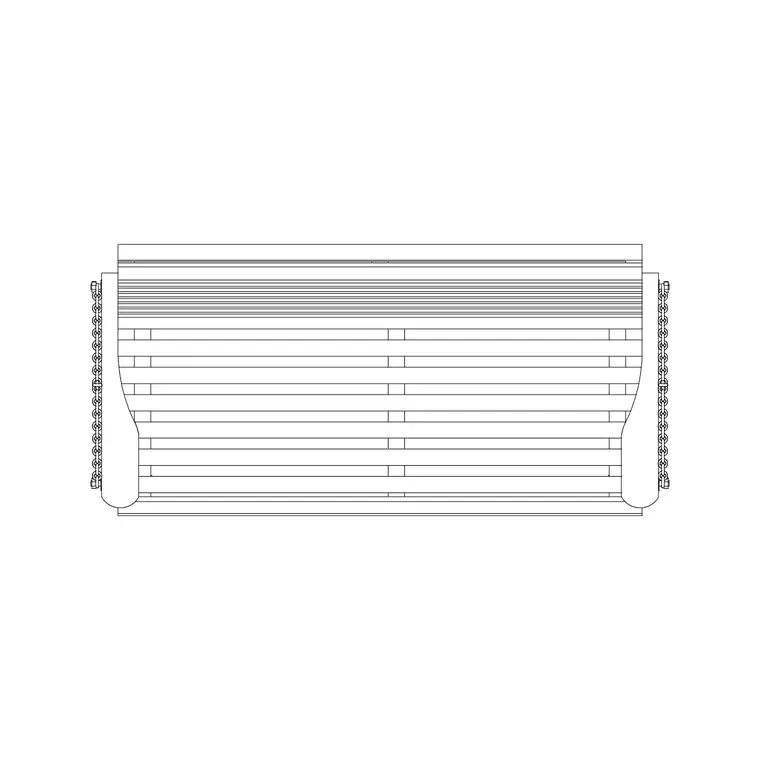
For a garden layout you work in plan: the swing seen from above, positioned on the lawn, deck or terrace with its frame footprint set against the surrounding paths and planting. The plan block is what you place to claim the space the swing occupies and to check it sits clear of circulation. An A-frame swing has a wider footprint than its seat because the legs splay out, so the plan footprint is the honest measure of the space it needs.
The elevation matters because a swing moves. Drawing it face-on shows the seat height, the frame height and — importantly — the arc the seat swings through, which is the clearance you must keep free in front of and behind the swing. For a hanging swing chair, the elevation shows the hanging height and the gap below the seat. Many blocks here ship both views, so one download lets you both place the swing and check it has room to move.
Typical garden swing sizes to design around
Use these ranges as a starting point. A two-seater bench swing seat is commonly around 1.1–1.3 m wide; a three-seater runs 1.6–1.8 m. The A-frame footprint is wider than the seat because of the splayed legs — often 1.8–2.2 m across the base and a similar depth — so allow for that envelope in plan. Overall frame height for a freestanding swing is typically around 1.9–2.2 m.
A hanging swing chair seat is usually 0.8–1.0 m across, hung so the seat sits at a comfortable 400–500 mm above the ground. These are typical figures, not fixed specifications — the product and the brief drive the real numbers. The blocks are drawn full size so you can scale the seat or stretch the frame to match the swing you are specifying, and check the swing arc against the real space.
How to insert and place the swing
These swing blocks are drawn in millimetres. Insert at scale 1 in a millimetre drawing, 0.001 in a metre template, or set INSUNITS to millimetres so AutoCAD rescales on insertion. Run INSERT or drag the DWG onto the drawing, pick the insertion point at the centre of the frame footprint, and rotate the swing to face the view or the garden it overlooks.
Once placed, check the swing arc: keep clear space in front of and behind the seat equal to roughly the swing reach, so the seat doesn't strike a wall, a planter or a path edge. For a hanging chair, place it under the pergola or frame it hangs from and confirm the head height and the seat clearance. Keep the swing on a furniture or external-works layer so you can freeze it for a clean hard-landscape plan and thaw it for the furnished view.
Where garden swing blocks are used
Garden swing blocks appear in residential garden designs, courtyards and terraces, roof gardens, hospitality outdoor areas, and play and amenity spaces. Landscape and garden designers use them to furnish relaxation zones and to show how an outdoor space will be used; architects add them to terrace and balcony layouts to demonstrate amenity; presentation drawings use them to give scale and life to a scheme.
Pair the swing with the outdoor seating, table and planting categories to build a complete garden setting — a swing seat, a paved terrace, planted beds and a table for company. Because a swing signals leisure, it is a useful block for communicating the character of an outdoor space in a concept or a client presentation.
Giving the swing room to move
The one thing that separates a swing from any other piece of garden furniture is movement, and the block is what lets you design for it. A static chair only needs its footprint and an access space; a swing needs an arc of clear air in front of and behind the seat, plus head height if it hangs under a structure. Place the swing block, then draw a light clearance zone around the seat path so you can confirm nothing intrudes on the arc — a low wall, a tall planter, the edge of a step.
Orientation is the other design decision the block helps you make. A swing usually faces a view, a focal point or the rest of the garden, so rotate the block to that aspect and check the outlook is clear. For a hanging chair under a pergola or a tree, confirm the fixing point and the head clearance work with the structure above. Keeping the swing as scaled geometry means these checks are a glance at the drawing rather than a surprise on site, and the same block carries from a concept layout through to the furnished presentation plan.
Free download
Browse the full library — DWG & DXF, no signup.
Questions
Frequently asked
Do the garden swing blocks include the swing clearance?+
The blocks are drawn full size in plan and elevation so you can draw the clearance arc the seat needs around them. Allow clear space in front of and behind the seat roughly equal to the swing reach, plus head height for a hanging chair.
Are the garden swing CAD blocks free for commercial use?+
Yes. Every swing block downloads free in DWG and, where available, DXF, with no signup, no watermark and no attribution requirement, and they are cleared for commercial project use.
Do the files include A-frame swings and hanging chairs?+
The set covers both families — freestanding A-frame bench swings and hanging swing chairs — so you can furnish a lawn, a deck or a pergola. The views and type are listed on each block's download page.
What scale are the garden swing blocks drawn at?+
Full size in millimetres. Insert at scale 1 in a millimetre drawing, or set INSUNITS to millimetres so AutoCAD rescales automatically if your template uses different units. You can scale the seat or stretch the frame to match a specific product.
Related downloads
Blocks for this guide
Related categories
Related guides
Block landing
Free Garden Fence CAD Blocks — DWG & DXF
Download free garden fence CAD blocks in DWG and DXF — timber, panel and contemporary boundary fences drawn in plan and elevation, AutoCAD 2004+, no signup.
Block landing
Free Wrought-Iron Gate CAD Blocks — DWG
Download free wrought-iron and metal gate CAD blocks in DWG and DXF — ornamental garden gates in elevation and plan with swing arcs. No signup.
Block landing
Free Main Entrance Gate CAD Blocks — DWG
Download free main entrance gate CAD blocks in DWG and DXF — driveway, sliding and double-swing gates drawn in elevation and plan with swing arcs. No signup.