Curated pack · garden cad blocks
Free garden CAD block pack for AutoCAD
By Saumyajit Maity · Published 13 Oct 2024 · Updated 5 Jun 2026
A back-garden plan is one of the friendliest drawings to put together once the right blocks are on hand. Unlike a civic landscape, a domestic garden is built around how a family actually uses the space — somewhere to sit, somewhere to cook, somewhere for the children to play, and planting to screen and soften the boundaries. This free garden CAD block pack gathers exactly that kit: trees and shrubs, a perimeter fence, a swing, a barbecue and paving textures, all in DWG and DXF, drawn to scale and ready to insert into AutoCAD 2004 or later. Everything is free for personal and commercial work, with no signup and no watermark.
Use the pack to lay out rear and front gardens, courtyards, roof terraces and the green space around a house extension. Because the blocks are correctly scaled, you can test the things that make or break a small garden — whether the patio takes a table and chairs, whether a path is wide enough to wheel a bin down, whether the planting screens a neighbour's window.
Gardens reward thinking about zones rather than objects, and a scaled block pack lets you sketch those zones quickly: a paved terrace by the house, a lawn beyond, a planting bed against the boundary, a play corner in the sun. Drop the blocks into each zone and the plan tells you immediately whether the garden is generous or tight.
What's in the garden pack
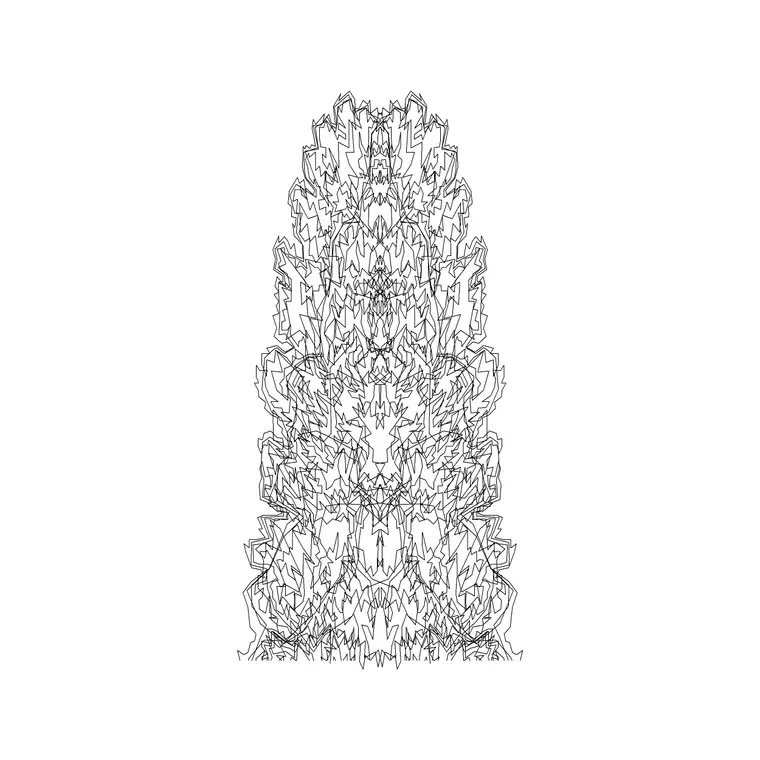
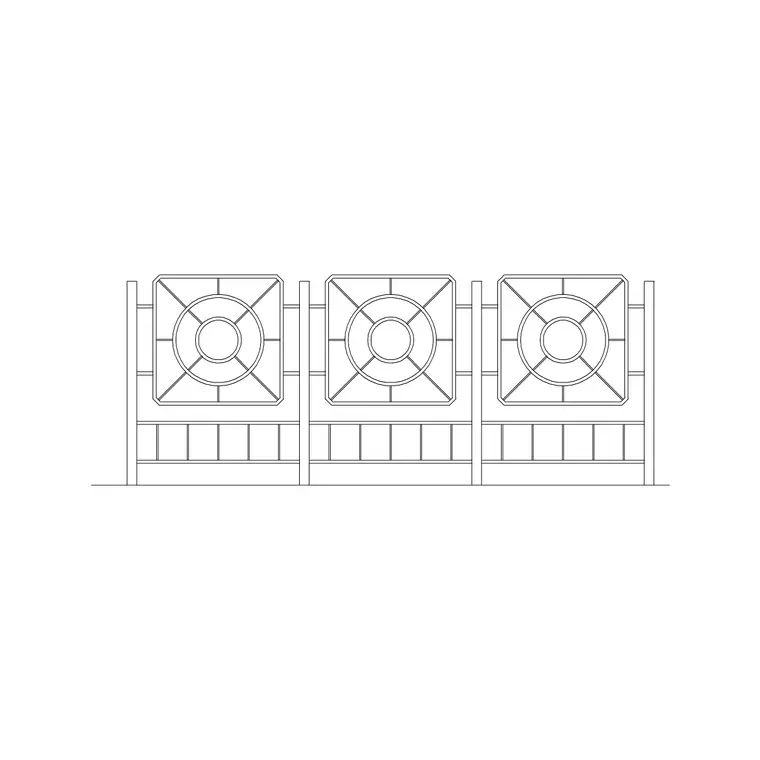
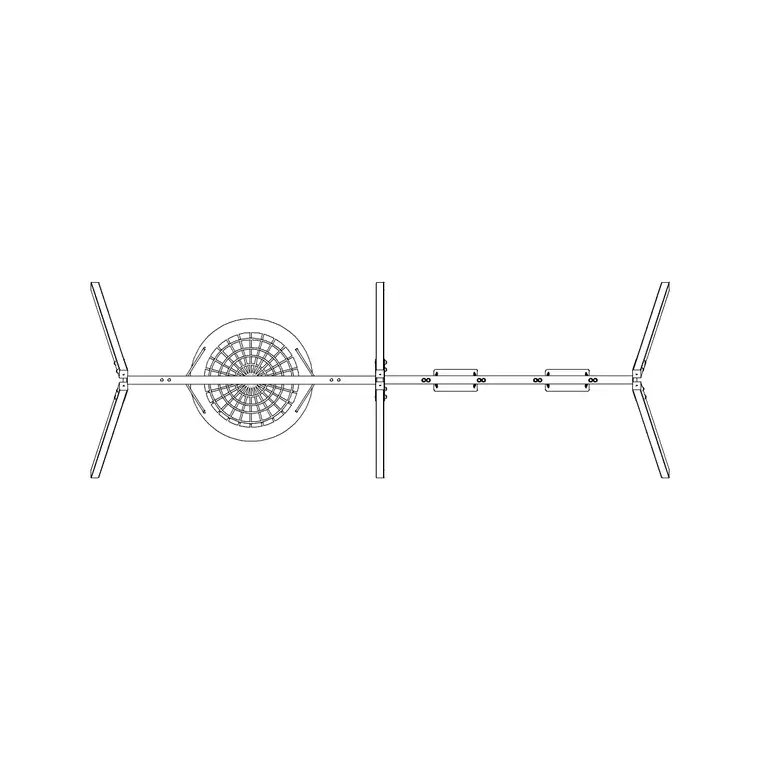
The pack covers the everyday furniture of a domestic garden. Planting: a tree in elevation and a clump of shrubs to structure the beds and screen the boundary. Boundary: a contemporary fence run for the perimeter. Use and play: a swing for a children's corner and a small barbecue grill for the cooking and entertaining zone. Surfaces: paving textures for the terrace, paths and stepping stones.
This is the kit for a believable residential scheme rather than an exhaustive plant library. When you need a wider planting palette or a specific species, the trees-and-plants category carries the full range; for more boundary types and outdoor structures, the outdoor category extends the set.
Laying out a garden by zones
Most gardens read best as a sequence of zones, and the blocks make those zones easy to test. Start at the house: lay a paving texture for the terrace directly outside the back doors, sized to take a table and chairs — allow roughly 3 × 3 m for a four-seat dining set with room to pull chairs out. Run a path from the terrace down the garden using a narrower paving strip.
Place the barbecue near the terrace but clear of the doors and any overhanging planting. Put the swing in a sunny corner with a clear safety zone around it. Then build the boundary with the fence and soften it with shrubs and a tree positioned to screen the worst overlooking window or frame the best view. Stand a scale figure on the terrace to confirm the spaces feel right.
Sizing a domestic garden
Keep these everyday figures close. Terrace for dining: about 3.0 × 3.0 m for four people, 3.5 × 3.5 m for six. Main path: 900 mm minimum for comfortable single-file, 1200 mm to pass a wheelbarrow or walk two abreast. Fence height: domestic boundaries usually 1.5–1.8 m, with some permitted-development limits to check locally. Swing safety zone: keep a clear area of around 2 m in front of and behind the seat. Barbecue: site it at least a metre clear of the fence and any planting.
Trees in a small garden need honest scaling above all else — a tree drawn at a generous 8 m canopy can swallow a typical 10 m-deep garden, so scale to the species' realistic spread and check it against the boundary and the house.
Planting to screen and soften
In a small garden, planting does two jobs: it screens what you do not want to see and it softens the hard edges of fences and paving. Use the tree block to break the line of a boundary or to interrupt a neighbour's sightline into the garden — place it where its mature canopy will do the screening, not where the sapling sits today. Use the shrub clumps along the base of the fence and at the corners of the terrace to take the hardness off the boundary and the paving.
Keep all the planting on a dedicated layer (L-PLANT is the usual convention) so you can present a 'now' version with small canopies and a 'mature' version with the trees scaled up to their design-year spread. That pair of views is a persuasive way to show a client that the garden will fill in over time.
Who uses the garden pack
Garden and landscape designers use it to turn a site visit into a believable concept plan the same day. Architects use it to show the garden side of a house extension or new-build in context. Homeowners planning their own garden use it to test ideas to scale before committing. Students use it for residential studio projects where scaled, licence-clear blocks matter.
Pair the garden pack with the paving category for more surface options, trees-and-plants for a fuller planting palette, and outdoor for additional structures like pergolas, gates and seating.
From concept sketch to a buildable plan
A garden plan usually starts loose and tightens up. In the concept stage the blocks let you try several arrangements quickly — terrace near the house versus down the garden, lawn central versus to one side, play corner in sun versus shade — without redrawing the furniture each time. Because each block is a single reference, you copy, rotate and nudge the whole arrangement until it works.
When the layout is agreed, the same blocks carry into the construction information. Snap dimensions from the house to the edge of the terrace, set out the path centreline, fix the fence line and gate position, and tag the planting so it can be scheduled. Splitting paving, planting, boundary and furniture onto their own layers means you can issue a clean setting-out plan to the landscaper and a dressed presentation plan to the client from the very same drawing — which is the quiet advantage of building a garden out of scaled blocks rather than freehand lines.
Free download
Browse the full library — DWG & DXF, no signup.
Questions
Frequently asked
What's included in the garden pack?+
A residential garden kit: a tree and shrubs for planting, a boundary fence, a swing for a play corner, a small barbecue grill, and paving textures for the terrace and paths. Each block links to its full category for more options.
Are the garden blocks free to use commercially?+
Yes. Every block downloads free in DWG and, where available, DXF, with no signup, no watermark and no attribution requirement, and all are cleared for commercial project use.
How big should I draw the patio for a table and chairs?+
Allow about 3.0 × 3.0 m for a four-seat dining set with room to pull the chairs out, and 3.5 × 3.5 m for six. The paving blocks are scaled, so array the texture to that area and check it against the house and lawn.
How do I show how the garden will look once the planting matures?+
Keep planting on its own layer and present two versions: a 'now' view with small canopies and a 'mature' view with the trees scaled up to their design-year spread. Scaling a block is non-destructive, so you can switch between the two freely.
Related downloads
Blocks for this guide

Related categories
Related guides
Curated pack
Free Landscape & Tree DWG Pack — Plan & Elevation
A free landscape and tree DWG pack — trees, palms, shrubs and potted plants in plan and elevation for AutoCAD site plans. DWG and DXF, no signup, commercial-use OK.
Curated pack
Free Landscape CAD Block Pack — DWG & DXF
A free landscape CAD block pack in DWG and DXF — trees, shrubs, fences, paving, lighting and figures for AutoCAD landscape plans. No signup, commercial-use OK.
Curated pack
Free Paving & Hardscape CAD Block Pack — DWG
A free paving and hardscape CAD block pack in DWG and DXF — paving patterns and textures for paths, terraces and driveways. No signup, commercial OK.