Block landing · french door cad block
Free French door CAD blocks for AutoCAD
By Saumyajit Maity · Published 22 Oct 2022 · Updated 20 Jan 2026
French doors are a glazed double door: a pair of leaves, mostly glass, that open from the centre and let a room spill out to a garden, terrace or balcony. They combine the wide opening of a double door with the light and view of a window, which makes them both an architectural and a planning element on the drawing. This page collects free French door CAD blocks in DWG and DXF, drawn full size in plan and elevation for AutoCAD 2004 or later, free for personal and commercial use.
Like any double door, a French door block has to get the pair of swing arcs right — two leaves sweep a generous zone of floor. But because the leaves are glazed, the elevation matters just as much, since French doors are a designed feature of a rear or side elevation where their glazing pattern and proportion are on show.
What a French door block shows
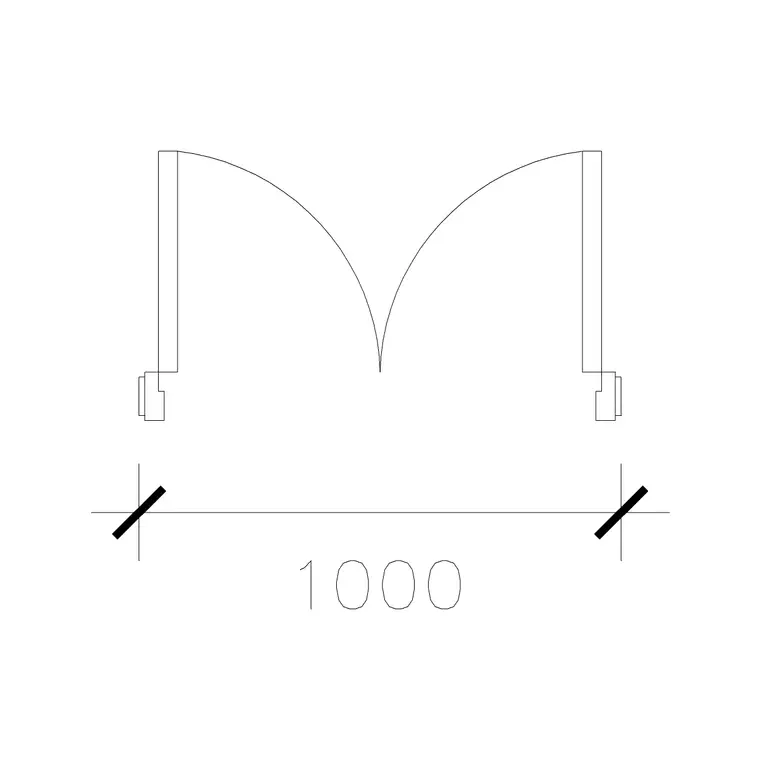
In plan, a French door reads as a double door: two leaves opening from a central meeting stile, each drawn with its swing arc, so you can see the combined swept zone against the room. The leaves are mirror images and the block keeps them aligned and handed. The key plan check is the same as for any double door — does the swing clear the furniture and the room edges — but French doors often open outwards to a terrace, so the swing reaches into the external space instead.
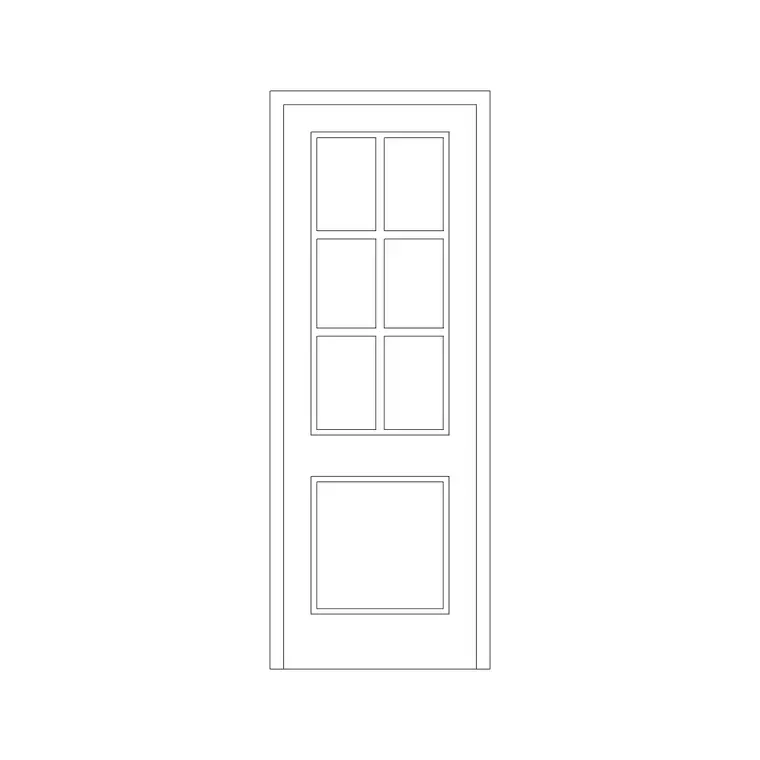
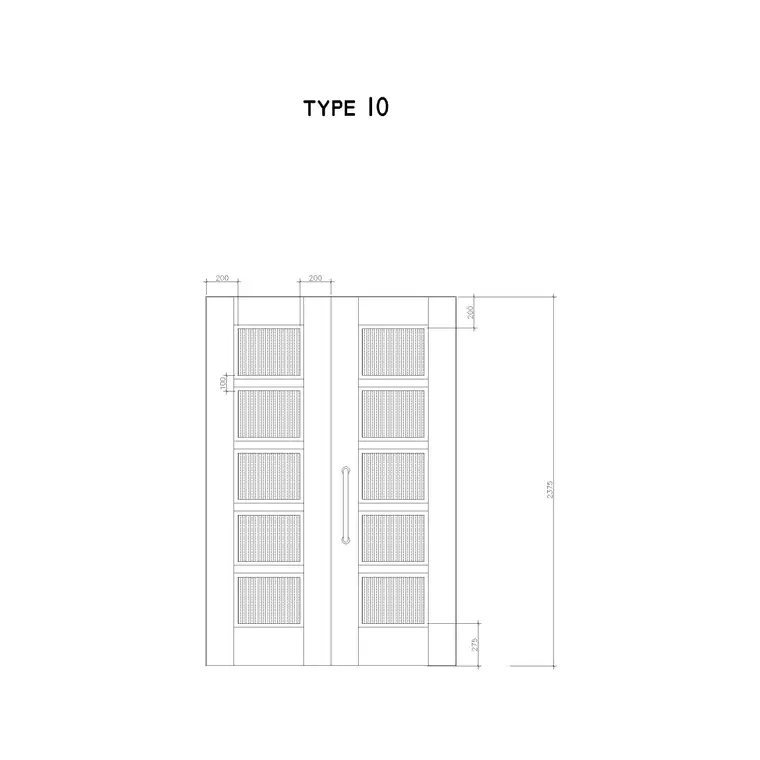
In elevation, a French door is mostly glass: each leaf is a glazed panel, often divided by glazing bars into smaller panes (the traditional pattern) or left as a single large pane (the contemporary look), set in a frame with a central meeting stile. There may be a fixed top light above and side lights flanking the doors. The blocks here pair the plan double-door symbol with the glazed elevation, on separate layers, so one DWG serves both the layout and the elevation set.
Glazing patterns and side lights
The glazing is what gives a French door its character, and the block draws it to scale so the elevation reads correctly. A traditional French door divides each leaf into a grid of small panes with glazing bars — often a column of rectangular panes or a classic multi-pane arrangement — which suits period and cottage styles. A contemporary French door uses a single large pane per leaf for maximum view and light, suiting modern schemes.
French doors are frequently flanked by fixed glazed side lights and topped by a transom light, which widen the whole glazed opening into a near-continuous wall of glass while only the central leaves actually open. Drawing the side lights and top light in the block lets you compose the full glazed bay and read which parts open and which are fixed. Matching the glazing pattern to the building's windows is a common detail, and having the door and window blocks on the same scale makes that coordination straightforward.
Typical French door dimensions
French doors use leaf widths in the door range but tend toward the wider end for a generous opening — leaves of roughly 600–900 mm each, giving an opening of about 1200–1800 mm for a pair, with larger sets going wider. Leaf height is commonly around 2000–2100 mm, taller than a standard internal door because the extra height suits the glazed, garden-facing role. With side lights, the overall glazed bay can span 2400 mm and well beyond.
The leaves are typically thicker than an internal door because they are external and glazed — around 44–70 mm for a double-glazed leaf. Allowing for the frame, the meeting stile and any side lights, the structural opening is the sum of the glazed elements plus the frame. Because the blocks are drawn full size, you place the pair (with side lights if used) and read the real opening and the combined outward swing against the terrace or garden.
Inserting French doors and setting the swing
Insert these blocks at scale 1 in a millimetre drawing, or set INSUNITS to Millimeters so AutoCAD rescales automatically. Like a double door, the natural insertion point is the centre of the opening at the meeting stile, so the two leaves sit evenly in the wall gap. Use ROTATE to set the swing direction — French doors most often open outwards to a terrace, but inward-opening versions exist — and MIRROR if you need to flip an asymmetric arrangement.
Check the swing carefully: outward-opening leaves sweep the external paving, so confirm they clear steps, planters, furniture and the edge of a balcony; inward-opening leaves eat the room. Keep the French door as one block reference so it schedules as a single glazed-door type, and where the same French door repeats — identical units in a terrace, say — array it and update all instances with one BEDIT change to the glazing or proportion.
Where French doors are used
French doors belong wherever a room opens to the outside with light and a view: living rooms and dining rooms onto a rear garden or terrace, bedrooms onto a balcony, garden rooms and conservatories, and the rear or side elevations of houses generally. They are a staple of residential design and a frequent feature of extensions and refurbishments that aim to connect inside and out.
Architects and interior designers use these blocks to draw garden-facing openings where both the plan swing and the glazed elevation matter; they coordinate the glazing pattern with the windows so the elevation reads as a designed whole. Pair the French door blocks with the glass door, double door and door-with-glass blocks in the doors category, and with the window blocks across the catalogue, to compose a complete glazed elevation on one consistent scale.
French doors as part of the elevation
What separates French doors from an ordinary double door is that they are a window as much as a door, so they have to be designed on the elevation alongside the glazing of the whole facade. The glazing pattern, the proportion of the leaves, the presence of side lights and a top light, and the alignment with adjacent windows all decide whether the rear elevation reads as a coherent composition or a set of mismatched holes. Drawing the French door as a scaled, glazed block — not a plain double-door symbol — is what lets you judge that on the elevation.
On the plan, the outward swing is the practical constraint: French doors that open onto a terrace need that paved zone kept clear of furniture and planting, and the scaled swing arcs show exactly how much. Keep the doors on their own layer so you can freeze the swings for a clean elevation and thaw them to prove clearance, tag each set for scheduling, and WBLOCK a recurring French-door-plus-side-lights bay so every instance across the elevation is composed identically.
Free download
Browse the full library — DWG & DXF, no signup.
Questions
Frequently asked
What is a French door in CAD terms?+
A French door is a glazed double door — a pair of mostly-glass leaves opening from a central meeting stile. The block shows the two leaves with their swing arcs in plan and the glazed panels (often with glazing bars and side lights) in elevation.
Do French doors open inwards or outwards?+
Most commonly outwards onto a terrace or garden, though inward-opening versions exist. The blocks let you set the direction with ROTATE, and you should check the outward swing against steps, planters and furniture on the paving outside.
Can the French door blocks include side lights?+
Yes. French doors are often flanked by fixed glazed side lights and topped by a transom light to widen the glazed bay while only the central leaves open. Drawing these in the block lets you compose and read the full glazed opening.
Are the French door blocks free for commercial use?+
Yes. Every French door block downloads free in DWG and DXF with no signup, no watermark and no attribution requirement, and they are cleared for commercial project use.
Related downloads
Blocks for this guide
Related categories
Related guides
Block landing
Free Wooden Door CAD Blocks — DWG Download
Download free wooden door CAD blocks in DWG and DXF — solid timber doors drawn in plan, elevation and section for AutoCAD 2004+. No signup, commercial use OK.
Block landing
Free Laminated Flush Door CAD Blocks — DWG
Download free laminated flush door CAD blocks in DWG and DXF — flat-faced flush doors with frame in plan and elevation for AutoCAD. No signup, commercial OK.
Block landing
Free Panel Door CAD Blocks — DWG Download
Download free panel door CAD blocks in DWG and DXF — two, four and six panel doors drawn in elevation and plan for AutoCAD. No signup, commercial use OK.