Room guide · formal sitting room cad blocks
Free formal sitting room CAD blocks for AutoCAD
By Sumana Kumar · Published 12 Feb 2026 · Updated 13 May 2026
A formal sitting room — the parlour, the front room, the 'good' room — is designed for conversation, receiving guests and a deliberate sense of composure. There is no television to organise around and usually no daily clutter; the room is arranged for symmetry, balance and a clear focal point, often a fireplace or a tall window. Laying one out in AutoCAD rewards a careful, axial approach, and this page gathers the free formal sitting room CAD blocks in DWG and DXF that suit it: matched sofa pairs and accent chairs in plan, a centred occasional table, a statement chandelier, framed art and a clock for the elevations. All free for personal and commercial work, no signup, no watermark, ready for AutoCAD 2004 or later.
The defining quality of a formal sitting room is symmetry. Where a family room points everything at a screen and tolerates a loose arrangement, a formal sitting room is composed around an axis: two sofas facing each other across a table, or a sofa flanked by a matched pair of chairs, with the fireplace or window centred on the line. Getting that balance right on the drawing is what makes the room read as deliberate rather than accidental.
Use these blocks to lay out formal sitting rooms, parlours, hotel and club lounges, and the reception rooms of larger homes. Because the furniture is drawn to true scale and the arrangement is symmetrical, the same blocks carry cleanly from the plan into a balanced, presentable interior elevation.
The character of a formal room
A formal sitting room has a distinct brief: it exists to be looked at and to host conversation, not to absorb everyday life. That single fact drives every layout decision. There is no media wall to aim at, so the room organises itself around a fireplace, a bay window, or a large piece of art — something with enough presence to anchor an axis.
The seating then mirrors across that axis. The classic arrangement is two sofas facing each other over a central table, or a single sofa with a matched pair of chairs opposite, so the eye reads balance the moment it enters. Circulation runs around the seating, never through it, because a formal room's composition should not be interrupted by a through-route. When you understand the room as a composed, symmetrical set-piece, the blocks fall into place naturally.
Blocks for a symmetrical scheme
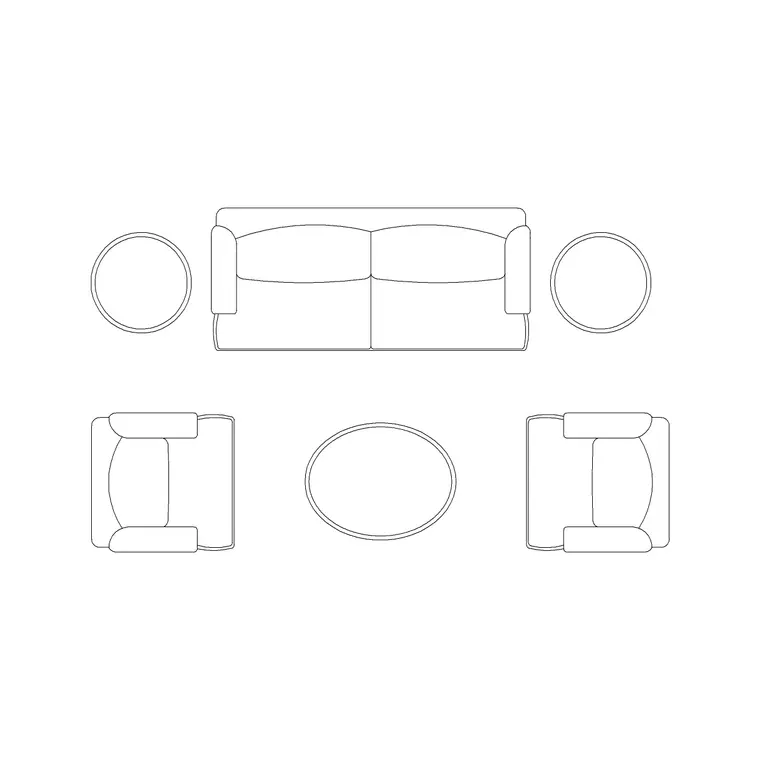
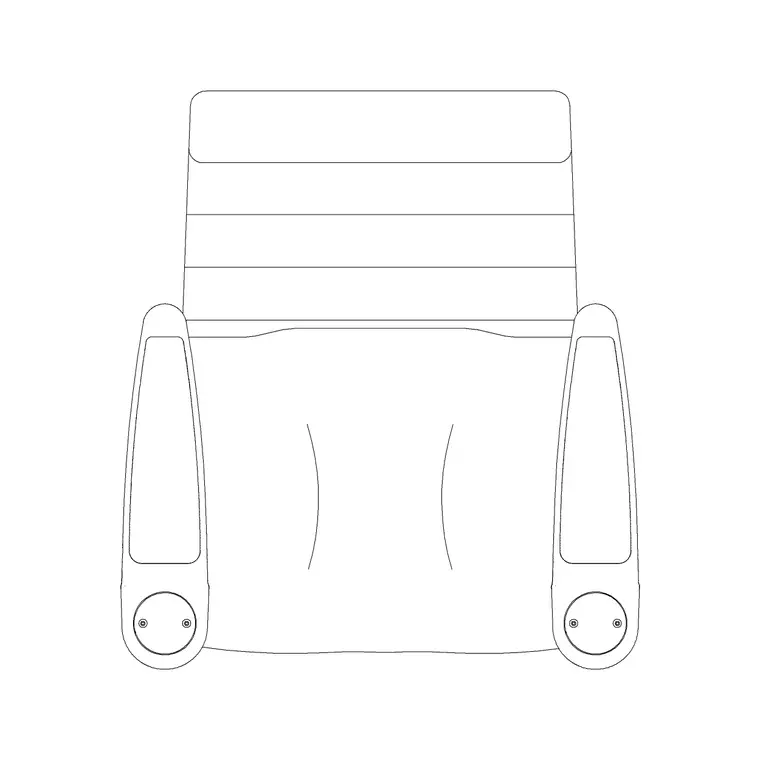
Symmetry is easiest to achieve when you can place matching blocks. Choose a pair of identical Sofa Set Plan blocks to face each other across the room, or one sofa with two Audi Chair Plan accent chairs opposite for the classic sofa-and-pair arrangement. Because each is a single block reference, mirroring one across the central axis guarantees the balance is exact.
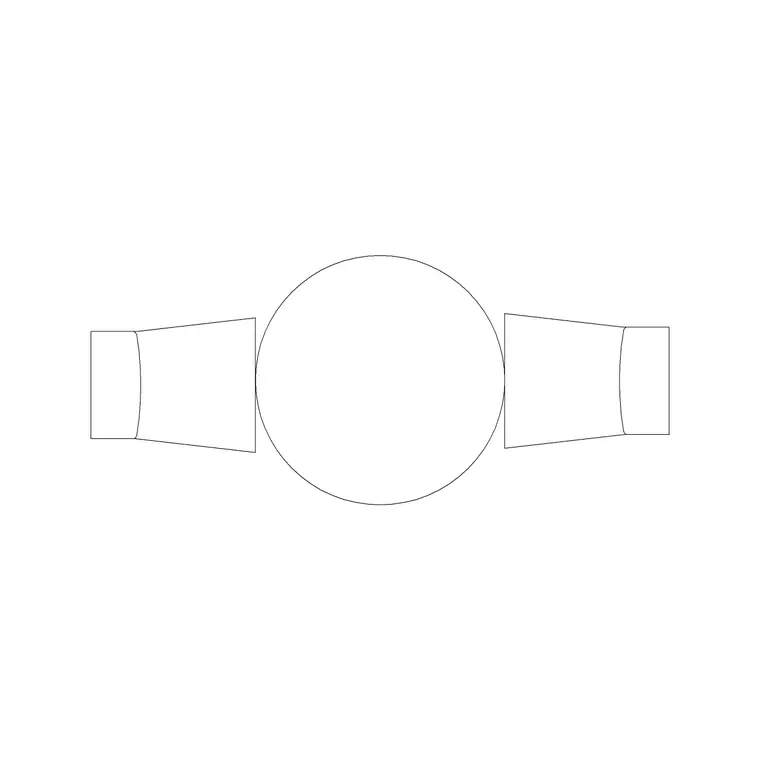
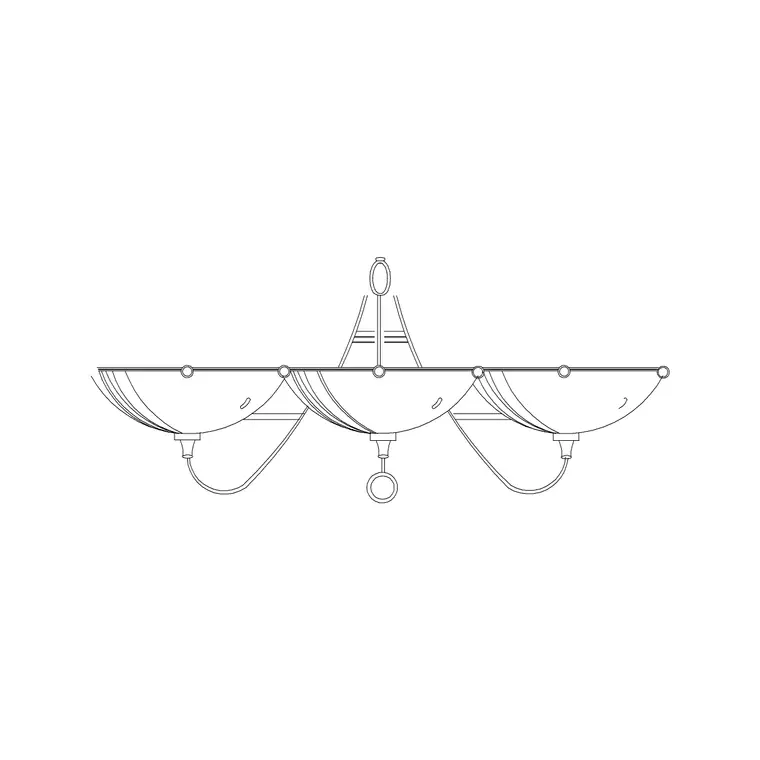
Centre the seating on a single occasional table — the 1000mm Dia Table 2P round table sits well on an axis because it has no front or back to align. Overhead, a formal room earns a statement light: the Suspended Chandelier Type A or the round chandelier hung dead-centre on the axis. For the elevations, dress the focal wall with an Art Frame or Artistic Frame, hang a Grandfather Clock or Round Clock, drape a Curtain Elevation at the window, and place a Medium Potted Plant to soften a corner without breaking the symmetry.
Proportions and clearances for a composed room
Formal sitting rooms tend to be generously proportioned — often 4.0 x 5.0 m up to 5.5 x 7.0 m — because the symmetrical arrangement needs breathing space to read. Two facing sofas should sit roughly 1800–2400 mm apart across the central table, close enough to talk across yet far enough to feel composed.
Keep the table centred with about 400–500 mm from each sofa front, and allow a clear walking route of at least 900 mm around the outside of the seating group so guests can move without cutting the axis. The chandelier hangs centred on the table, typically with its lowest point about 2000–2200 mm above the floor in a standard ceiling so it clears the room without dominating it. Treat these as planning ranges — place the scaled blocks and adjust to the real ceiling height and room shape.
Building the layout on an axis
Draw the room, then draw the central axis first — the line from the fireplace or window through the middle of the room. Everything that follows references that line. Place the first sofa, then mirror it across the axis to create the facing pair (or place a sofa on the axis and mirror a single chair to make the flanking pair).
Drop the round table on the axis at the centre of the group, and hang the chandelier directly above it, also on the axis. Check the balance by eye: the two halves of the room should be near-mirror images. Run the circulation around the seating to the doorways. Keep furniture, lighting and decorative elements on separate layers so the symmetry can be verified on a clean furniture layer alone. Mirroring blocks rather than copying-and-rotating them is the trick that keeps a formal room genuinely balanced rather than approximately so.
Carrying symmetry into the elevation
A formal sitting room is judged on its focal wall, so the elevation matters as much as the plan. Build it around the same axis: the fireplace or window centred, a piece of art or a mirror hung symmetrically above, a matched pair of wall lamps or a single centred chandelier, and the clock placed to balance the composition.
The accessory blocks here are made for this. Centre an Art Frame or Artistic Frame on the focal wall, flank it with Wall Lamp blocks, hang the Grandfather Clock where it balances the room, and draw the Curtain Elevation symmetrically at the window. Because the elevation is built off the same axial plan, the centre line in plan and the centre line in elevation agree, and the room reads as a single composed whole across both drawings.
Where formal layouts go wrong
The cardinal sin in a formal sitting room is broken symmetry — a sofa and chairs that almost match the axis but not quite, so the room feels subtly off without the viewer knowing why. Mirroring blocks across a drawn axis, rather than eyeballing the placement, is the reliable cure.
A second error is letting the circulation cut through the composition: a doorway positioned so the natural path crosses between the facing sofas destroys the set-piece. Route the traffic around the group. A third is over-decorating asymmetrically in the elevation — a single lamp on one side, art off-centre — which undoes the balance the plan worked to create. And a fourth is scaling the chandelier wrong: too small and the centred axis loses its anchor, too large and it overwhelms the room. Because every block is drawn full size, you can test the chandelier's footprint against the table and the room before committing it to the drawing.
Free download
Browse the full library — DWG & DXF, no signup.
Questions
Frequently asked
How do I make a formal sitting room layout symmetrical in AutoCAD?+
Draw a central axis from the fireplace or window first, place one sofa or chair, then use the MIRROR command across that axis to create its match. Centre the table and chandelier on the same axis so the two halves of the room mirror each other.
What is a formal sitting room compared to a living room?+
A formal sitting room (parlour or front room) is arranged for conversation and receiving guests, with no television and a symmetrical, axial composition around a fireplace or window. A living room is more general-purpose and often organises around a media wall.
Are these formal sitting room blocks free to use commercially?+
Yes. Every block downloads free in DWG and, where available, DXF, with no signup, no watermark and no attribution requirement, cleared for commercial project use.
Which chandelier block suits a formal room?+
The Suspended Chandelier Type A and the round chandelier block both work as a centred statement light. Hang it on the room's axis above the central table, drawn in elevation for presentation views.
How far apart should two facing sofas be?+
As a planning range, place facing sofas roughly 1800–2400 mm apart across the central table — close enough to converse comfortably, far enough to feel composed. Place the scaled blocks and measure against your room outline.
Related downloads
Blocks for this guide
Related categories
Related guides
Room guide
Master Bedroom CAD Blocks & Layout — DWG
Free master bedroom CAD blocks in DWG — king and double beds, side tables, wardrobes, seating and lighting to lay out a master suite in AutoCAD.
Room guide
Kids Bedroom CAD Blocks & Plan — DWG
Free kids bedroom CAD blocks in DWG — single beds, wardrobes, desks and play space to plan a child's room in AutoCAD with real clearances.
Room guide
Guest Bedroom CAD Blocks & Layout — DWG
Free guest bedroom CAD blocks in DWG — double and single beds, compact wardrobes and seating to plan a flexible spare room in AutoCAD.