Room guide · family room cad blocks
Free family room CAD blocks for AutoCAD
By Sumana Kumar · Published 6 Feb 2024 · Updated 18 Feb 2026
A family room is the casual, everyday cousin of the formal living room — the space where the household actually lives. It absorbs the television, the games, the kids' floor play and the after-dinner sprawl, so its layout favours durability and comfort over showpiece arrangement. Designing one in AutoCAD means planning for soft, generous seating, clear floor space, and easy circulation that survives daily traffic, which is why this page collects free family room CAD blocks in DWG and DXF: large sofa sets and recliners in plan, low occasional tables, ambient lighting, and plants. All insert into AutoCAD 2004 or later, free for personal and commercial use, no signup, no watermark.
Where a formal living room is composed for show, a family room is composed for use. The seating tends to be deeper and more relaxed, often a sectional or two sofas plus a recliner, all aimed at a media wall. There is usually open floor in front of the seating — for children, for a dog, for the coffee table to be pushed aside — so the layout leaves more breathing room than a tight formal arrangement.
Use these blocks to lay out family rooms, dens, media rooms and combined living-play spaces. Because the furniture is drawn to true scale, you can test how the seating, the open floor and the through-route share the room before you commit the layout to the drawing set.
Family room versus living room: a different brief
It is worth being clear how a family room differs from the formal living room next to it on the plan, because the two rooms are laid out to different rules. A formal living room is arranged for conversation and appearance; a family room is arranged for relaxed, often screen-facing use, with more tolerance for clutter and movement.
That changes the geometry. Family room seating usually points one way — at the television or media wall — rather than wrapping into a tight conversation circle. The seating is deeper and longer, so a recliner or a sectional fits the brief better than a pair of formal two-seaters. And the open floor in front of the seating is a feature, not wasted space: it is where children play and where people pass through. When you lay the room out, protect that open zone rather than filling it.
Choosing the seating blocks
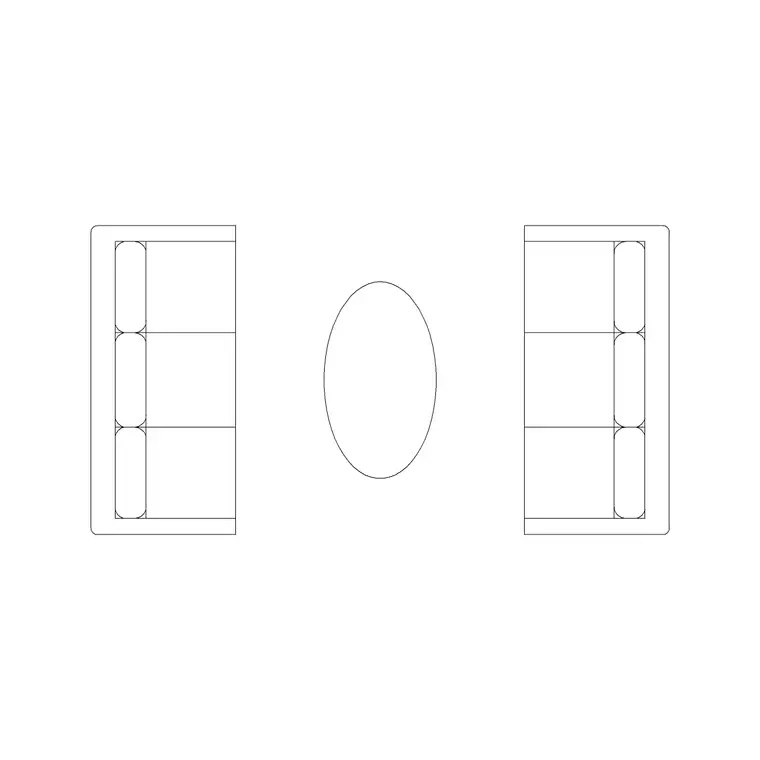
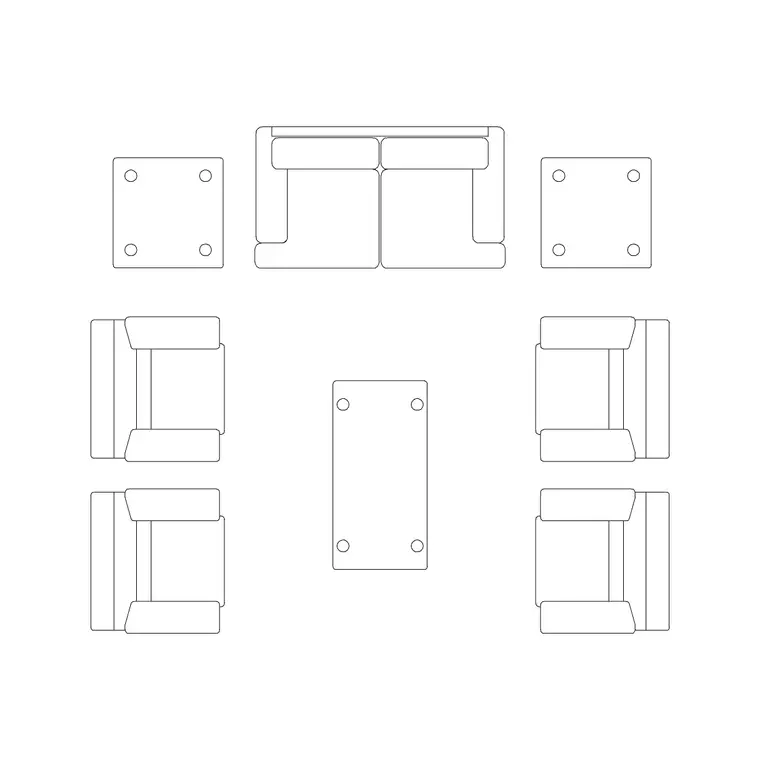
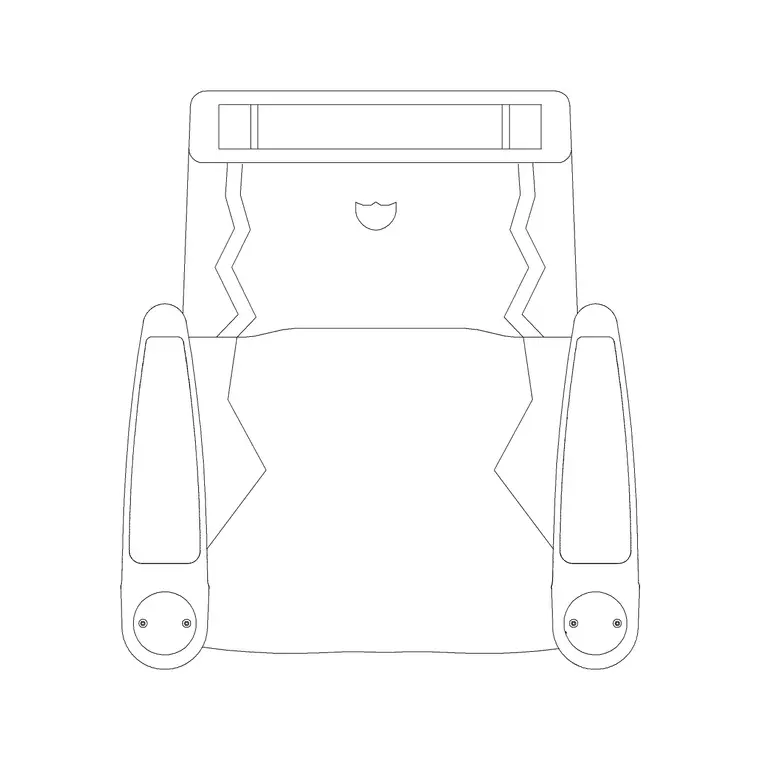
Start with a large, relaxed seating group. The Sofa Set Plan blocks here include longer and L-shaped arrangements that read as the deep, casual sofas a family room wants — pick one of the bigger groupings rather than a compact formal set. Add an Audi Rec Chair Plan as the recliner that almost every family room ends up with, angled toward the screen.
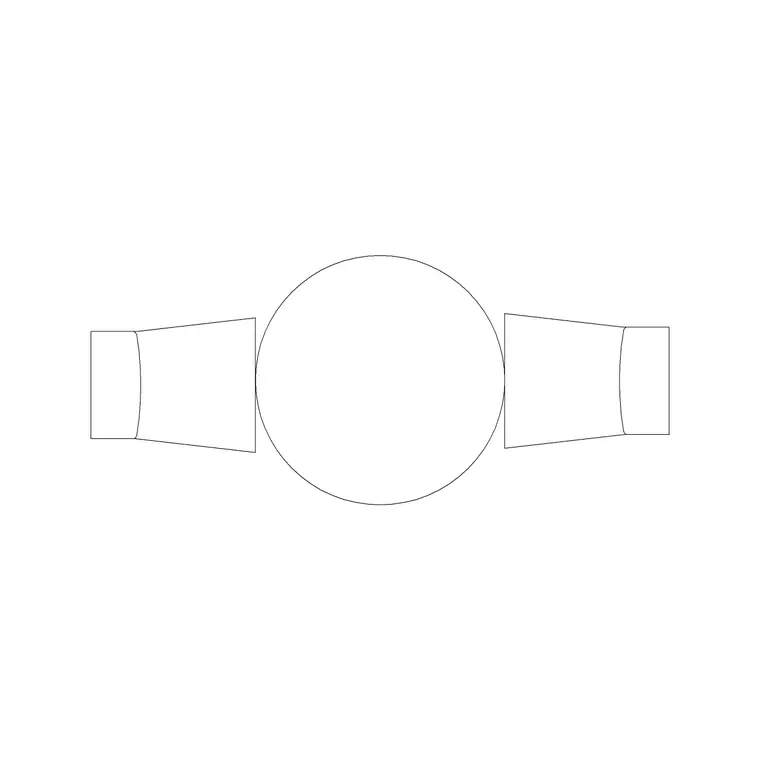
For surfaces, keep the tables low and easy to move around: the 1000mm Dia Table 2P works as a round coffee table that is safe for a room with children (no sharp corners), and the 800mm Table With Sofa gives you a side table within reach of the main seat. Then add the softening layer — a Ceiling Lamp for general light, a Wall Lamp for evening ambience, and an Indoor Large Plant With Ms Legs or a Medium Potted Plant in a corner the traffic does not reach.
Dimensions and clearances for relaxed use
Use these as ranges to design around. A family room is typically 4.0 x 4.5 m at the smaller end and 5.0 x 6.5 m or more when it doubles as a media or play space. A sectional or large sofa runs 2400–3200 mm along its longest face and 950–1050 mm deep — deeper than a formal sofa because comfort wins here.
Leave more open floor than you would in a formal room: aim for at least 1000–1200 mm of clear space in front of the main seating before the coffee table, so there is room to stretch out or for children to play, and 900 mm minimum on the through-route. For screen viewing, allow 2400–3500 mm between the seating and a large wall-mounted television. These are planning targets, not fixed specs — drop the scaled blocks in and adjust to the real room.
Laying out a screen-facing family room
Begin with the media wall, because in a family room it usually dictates everything else. Draw the television position, then place the main sofa or sectional facing it at a comfortable viewing distance. If you are using a sectional, let its long arm run along the wall that suits the circulation, with the return facing the screen.
Add the recliner at an angle off to one side so it shares the screen without breaking the main sofa line. Keep the coffee table central but light, and protect the open floor in front. Run the circulation path along the back or side of the seating, never between the sofa and the screen. Layer the lighting and plants last, on their own layers, so you can lift them off for a clean plan. Because each piece is a single block reference, swapping a two-sofa scheme for a sectional is a matter of deleting and re-inserting, not redrawing.
Designing for durability and traffic
A family room is a high-traffic room, and the layout should reflect that even on paper. Keep the main walking route clear and direct — from the door to the rest of the house — so it does not erode the seating zone over time. Position the plants where furniture protects them from the traffic line rather than out in the open where they will be knocked.
If the room opens to a kitchen or dining area, treat the boundary between them as a circulation spine and keep the seating pulled back from it. Built-in or wall-mounted storage along the media wall keeps the floor clear, so in elevation, draw the media unit and let the floor read as open. The lighting layer matters more here than in a formal room: a Ceiling Lamp for everyday brightness plus a softer Wall Lamp for evening film-watching gives the room two distinct moods from one drawing.
Mistakes that make a family room feel cramped
The most common error is treating a family room like a formal living room — wrapping the seating into a tight conversation circle when the household actually wants to face a screen and have open floor. The result feels formal and unused. Aim the seating, free up the floor.
A second mistake is over-furnishing: every surface filled, no clear space to move, which reads as cluttered the moment the room is in real use. Less furniture, drawn at honest scale, almost always serves a family room better. A third is putting the coffee table too close to a deep sofa, so the gap to stand up is tight — give a deeper family sofa a little more clearance to its table than you would a formal one. Because the blocks here are full size, you can place them, measure the real gaps, and fix the spacing before it ever reaches the final layout.
Free download
Browse the full library — DWG & DXF, no signup.
Questions
Frequently asked
What is the difference between a family room and a living room block layout?+
A living room is composed for conversation and appearance with seating wrapped around a focal point; a family room is composed for relaxed, screen-facing use with deeper seating and more open floor. The blocks are similar, but the family room layout leaves more clearance and points the seating at the media wall.
Can I build a sectional sofa from these blocks?+
Yes. Several of the Sofa Set Plan blocks are L-shaped and longer arrangements that read as a sectional. Pick the larger groupings and rotate them to suit the room, or combine sofa blocks along a corner.
Are the family room blocks free to download?+
Yes, every block downloads free in DWG and, where available, DXF, with no signup, no watermark and no attribution, cleared for commercial use.
How much open floor should I leave in front of the seating?+
As a planning target, leave at least 1000–1200 mm of clear floor in front of the main seating before the coffee table, more if the room doubles as a play or media space. Drop the scaled blocks in and measure against your room outline.
Do the table blocks have rounded corners for child-safe layouts?+
The 1000mm Dia Table 2P is a round table, which suits a family room with children since it has no sharp corners. Round and rectangular options are both available so you can match the layout to the household.
Related downloads
Blocks for this guide
Related categories
Related guides
Room guide
Free Restaurant Layout CAD Blocks — DWG Download
Free restaurant CAD blocks in DWG — dining tables, chairs, bar stools, planters and chandeliers for AutoCAD seating plans. No signup, commercial OK.
Room guide
Free Coffee Shop CAD Blocks — DWG Download
Free coffee shop CAD blocks in DWG — counter stools, small tables, planters and pendants for barista-bar floor plans. No signup, commercial OK.
Room guide
Free Bar Lounge CAD Blocks — DWG Download
Free bar lounge CAD blocks in DWG — bar stools, lounge sofas, low tables, planters and chandeliers for cocktail bar plans. No signup, commercial OK.