Room guide · entryway cad blocks
Free entryway and foyer CAD blocks for AutoCAD
By Sumana Kumar · Published 11 May 2025 · Updated 1 Mar 2026
The entryway, or foyer, is the first room of a home and the hinge of its circulation. It is the space just inside the front door that greets arrivals, distributes them to the rooms beyond and the stairs above, and handles the quick choreography of taking off a coat, dropping keys and stepping inside. It is rarely large, but because every journey through the house begins and ends here, the way it handles the door, the traffic and a few key surfaces shapes the whole feel of the home.
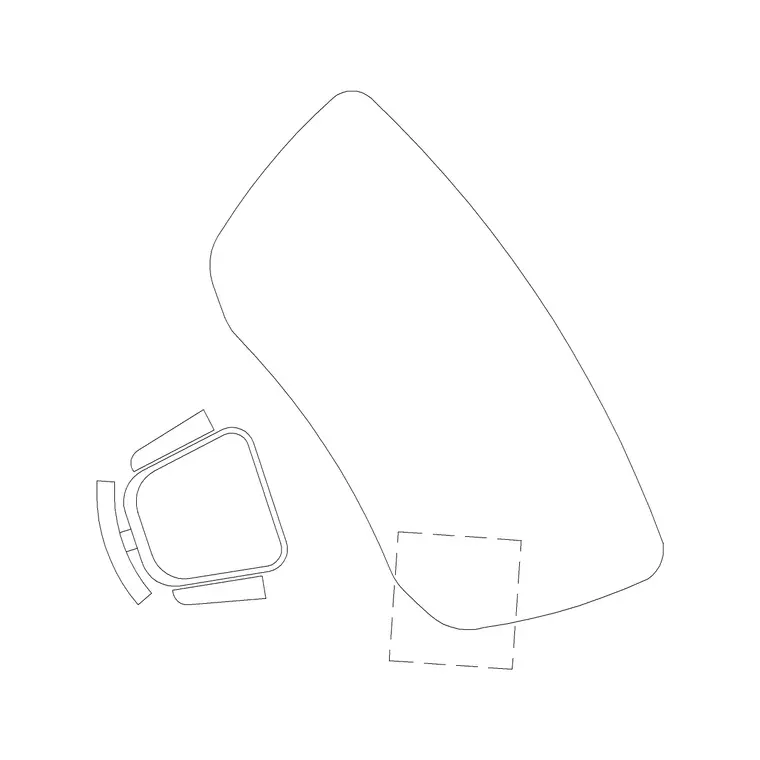
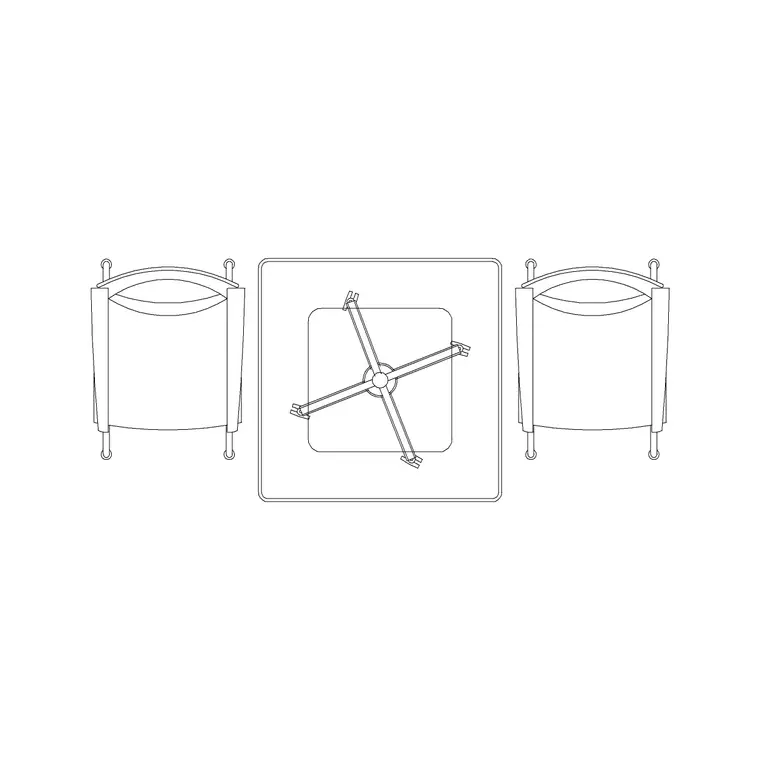
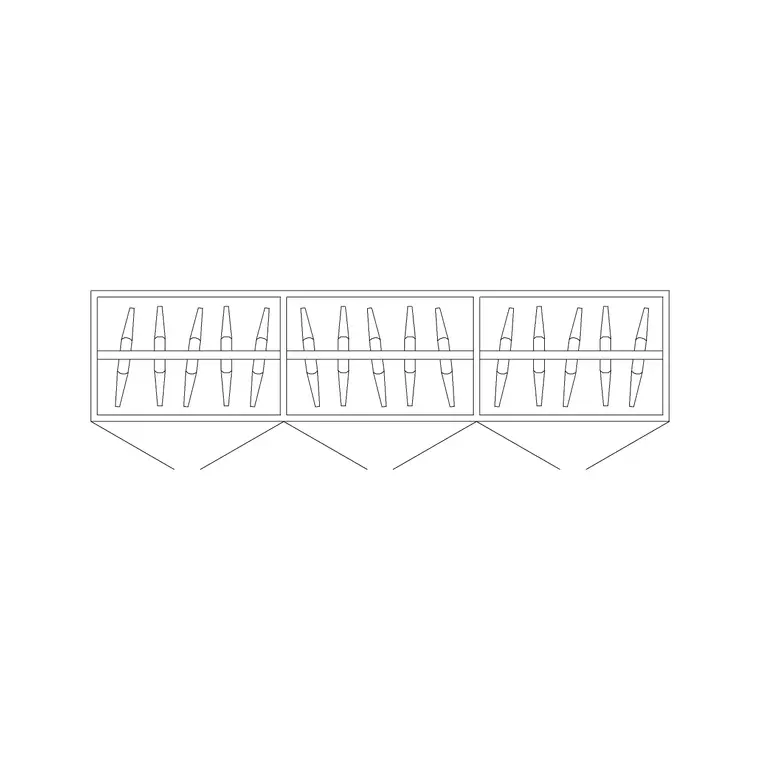
This page collects free entryway and foyer CAD blocks in DWG and DXF — console tables, benches and seating, mirrors, and lighting — drawn to true millimetre scale and ready to insert into AutoCAD 2004 or later. Every block is free for personal and commercial use with no signup, no watermark and no attribution required, whether you are planning a grand double-height foyer or a compact entrance hall in an apartment.
Because the foyer is first and foremost a circulation space, a scaled plan is where you protect its most important quality: a clear, generous path from the front door to the rest of the home, with the door swinging freely and the furniture supporting the arrival without ever blocking it.
The foyer as a circulation hub
An entryway is defined by movement. People arrive, pause, and disperse — to the living room, the kitchen, up the stairs, down a hall. Unlike a destination room, the foyer's success is measured by how freely traffic flows through it, especially when more than one person arrives at once. The layout must keep a clear path from the front door to every onward route.
This is why the foyer is planned around clearances rather than furniture. The front door swing, the width of the onward paths, and the space for two people to pass while one is taking off a coat all come first; the console, the mirror and the bench fit into what remains. A scaled plan makes this discipline easy: draw the door swing and the through-routes as protected zones, and only then place the furniture into the leftover space along the walls.
The door, the threshold and the sightline
Start with the front door. Draw its swing as an arc and keep the whole arc clear — a console or bench inside the swing makes the door impossible to open fully and is the most common foyer error. The threshold just inside the door is the landing zone where wet shoes and bags first touch down, so keep it hard-floored and uncluttered.
Beyond the door, the sightline matters. What a visitor sees first on entering sets the tone of the home, so a foyer often places a feature on the wall opposite the door — a mirror, a piece of art, a console with a lamp. A mirror in particular does double duty: it bounces light into what is often a windowless space and gives a last-glance check on the way out.
Mark the through-routes from the door to each onward room and the stairs, and keep those paths clear. The foyer should read, in plan, as a hub with clear spokes, not a furnished room that traffic has to weave through.
Furniture and fixtures for an entrance hall
A foyer needs only a few well-chosen pieces, placed against the walls so the centre stays clear.
- A console or entry table: a slim surface against a wall for keys, post and a lamp; the foyer's signature piece. - A bench or seat: somewhere to perch while changing shoes, kept clear of the door swing and through-routes. - A mirror: on the wall facing the door to bounce light and serve the last-glance check. - Storage: a slim cupboard or wardrobe-depth unit for coats and shoes where the hall is generous enough. - Lighting: a welcoming overhead light plus a lamp or wall lights to lift a typically windowless space. - A wall clock: a glance on the way out keeps the household on time.
These console, seat, lighting and clock blocks are free below; the art of the foyer is choosing few and placing them against the walls.
Dimensions and clearances for the entry
Use these as ranges. A console or entry table is typically slim — 300 to 400 mm deep — so it does not narrow the path; widths vary to suit the wall. A bench sits at roughly 400 to 450 mm high. The front door swing needs its full arc clear, around 900 mm of radius for a standard door.
The defining clearance is the circulation: keep a clear path of at least 900 to 1200 mm from the door to the onward routes, wider in a busy household where people pass while one is at the console or bench. Where the foyer meets the staircase, protect both the stair's bottom landing and the path to it. Leave enough clear floor just inside the door for two people and a couple of bags. A mirror on the opposite wall wants to be at a height that reflects a standing adult. These are guides; the household's traffic and the door size set the real figures.
Drawing the foyer plan
Work in millimetres, insert at scale 1, and use layers for furniture, storage and lighting. Begin with the front door and arc its full swing as a protected zone — nothing parks inside it. Then mark the through-routes from the door to each onward room and to the staircase, drawing them as clear strips of at least 900 to 1200 mm.
Only now place furniture, against the walls and clear of the swing and the routes: the console on the wall the eye meets, a bench where it does not pinch a path, a mirror facing the door. Add a slim coat store if the hall is generous. Place a welcoming ceiling light plus a console lamp or wall lights, and mark a socket at the console for the lamp and for charging. Finally, re-walk every through-route on the plan with the door open and a person at the console — the foyer passes if traffic still flows freely.
Common entryway mistakes
The first and most common mistake is furniture inside the door swing — a console or bench placed where the opening door hits it, so the door never opens fully. Always arc the swing and keep it clear.
The second is choking the circulation. A foyer crammed with a console, a bench, a coat stand and a plant leaves no clear path, and the hub becomes a bottleneck where arrivals queue. Protect the through-routes first and add furniture only into the space that remains.
The third is leaving the space dim and flat — foyers are often windowless, and a single weak light makes the first impression of the home a gloomy one; layer in a mirror and good lighting on the plan. The fourth is ignoring the staircase relationship where the foyer feeds the stairs: crowd the stair's bottom landing and you create congestion exactly where people change direction. Drawing the foyer as a hub with clear spokes prevents all of these.
Free download
Browse the full library — DWG & DXF, no signup.
Questions
Frequently asked
What furniture goes in an entryway or foyer?+
A slim console or entry table for keys and a lamp, a bench or seat for changing shoes, a mirror on the wall facing the door, and lighting to lift the space — plus a coat store if the hall is generous. Place them all against the walls so the central path stays clear.
How wide should the path through a foyer be?+
Keep a clear circulation path of at least 900 to 1200 mm from the front door to the onward rooms and the staircase, wider in a busy household where people pass while one is at the console or bench. Draw these through-routes as protected strips before placing furniture.
Why must I keep the door swing clear in a foyer plan?+
A console or bench placed inside the front-door swing stops the door opening fully — the most common foyer mistake. Always draw the door's full swing arc (around 900 mm radius for a standard door) as a protected zone and keep all furniture out of it.
Are these entryway and foyer CAD blocks free to download?+
Yes. All console, seating, mirror and lighting blocks are free in DWG and DXF for personal and commercial use, with no signup, no watermark and no attribution required.
Related downloads
Blocks for this guide

Related categories
Related guides
Room guide
Free Reception Lobby CAD Blocks — DWG Download
Download free reception lobby CAD blocks in DWG and DXF — reception desk, waiting sofas, planters and lighting in plan. AutoCAD 2004+, no signup.
Room guide
Free Conference Room CAD Blocks — DWG Download
Download free conference room CAD blocks in DWG and DXF — large conference tables, chairs, screens and lighting for layouts. AutoCAD 2004+, no signup.
Room guide
Free Meeting Room CAD Blocks — DWG Download
Download free meeting room CAD blocks in DWG and DXF — small meeting tables, chairs, screen and planter for compact layouts. AutoCAD 2004+, no signup.