Room guide · ensuite shower room cad blocks
Free ensuite shower room CAD blocks for AutoCAD
By Saumyajit Maity · Published 3 Feb 2022 · Updated 11 Feb 2026
An ensuite shower room is a compact, shower-only bathroom that opens directly off a bedroom. It trades the bath for a walk-in shower to save floor area, fitting three fixtures — shower, WC and basin — into a space carved out of the bedroom or a former cupboard. The whole point of an ensuite is convenience and privacy: your own washroom a step from the bed, which means it almost always has to work in the tightest plausible footprint.
This page collects the free CAD blocks that make a shower-room ensuite work in AutoCAD — shower trays and enclosures, compact WCs, slim basins and the section-with-shower elevation, plus the sink elevations and lighting. Drawn to true millimetre dimensions in DWG and DXF, free for personal and commercial use, no signup or watermark.
Because an ensuite is usually small and often internal, the layout lives or dies on the shower position, the door swing and the drainage. Scaled blocks let you prove all three before you steal the space from the bedroom.
Why ensuites are shower rooms
An ensuite is built by borrowing area from a bedroom, so floor space is the scarce resource and the bath is the first thing to go. A walk-in shower does the same daily job in roughly half the footprint, which is why the great majority of ensuites are shower rooms: shower, WC and basin, no tub. The result is the most space-efficient full washroom you can draw.
That efficiency comes with constraints. The shower is the largest fixed object and usually drives the whole layout. The room is frequently internal, so it needs mechanical extract and artificial light rather than a window. And the connection to the bedroom means the door, the threshold and any glazing have to read cleanly from the sleeping space. The blocks here let you resolve the shower position first and build the WC and basin around it.
Planning around the shower
In an ensuite the shower comes first, not last. Place the shower enclosure in the corner or end that gives it a square-ish tray and a sensible entry, then arrange the WC and basin in the remaining L of floor. A common pattern puts the shower at the far end, the WC beside it on the plumbing wall, and a slim basin by the door — so you enter, the basin is to hand, and the wet zone is contained at the back.
The shower entry is the circulation crux. A pivot or hinged door needs swing clearance that does not foul the basin or the WC; a sliding or walk-in opening avoids that but needs its own clear approach. Draw the tray plus the door or entry zone as one object and test it against the rest of the room. Keep the wet zone — the tray and its splash radius — clearly separated from the WC and basin so the dry fixtures stay dry.
Blocks for a shower-room ensuite
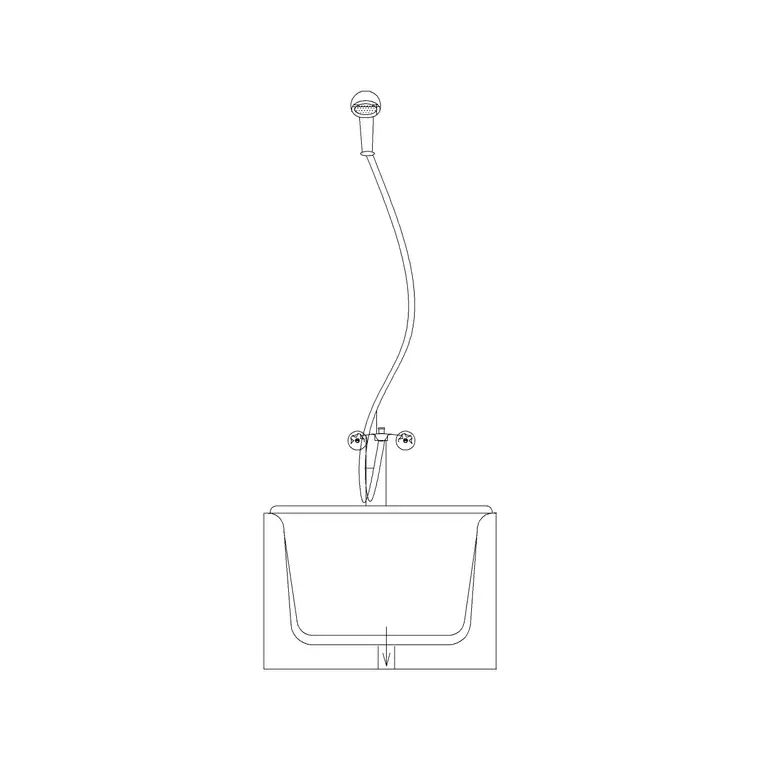
The shower tray and enclosure is the lead block; size the tray to the room and confirm the enclosure entry clears everything. The bath-front-section-with-shower block is useful when you draw the elevation of the shower wall, showing the riser and screen in section.
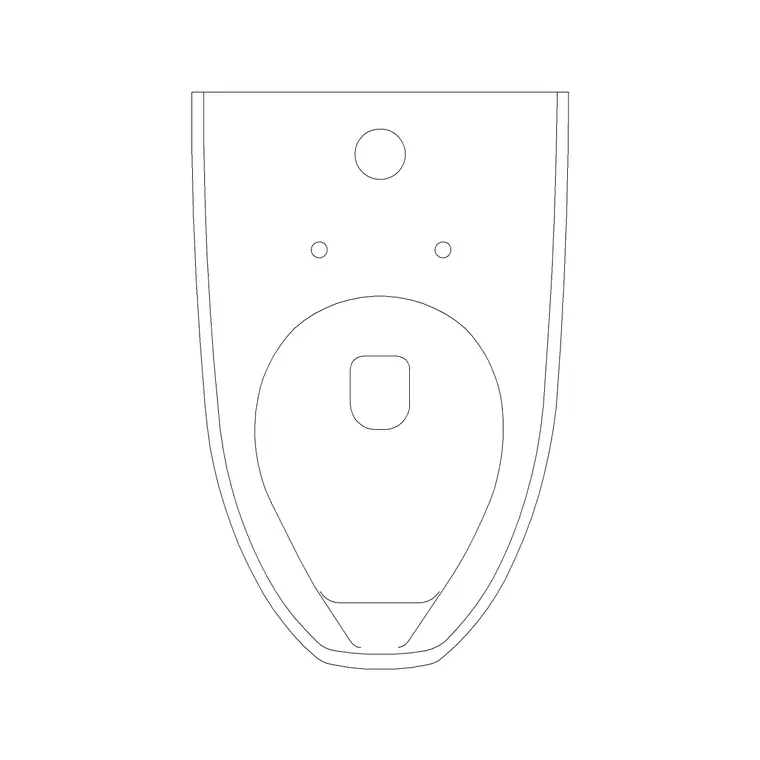
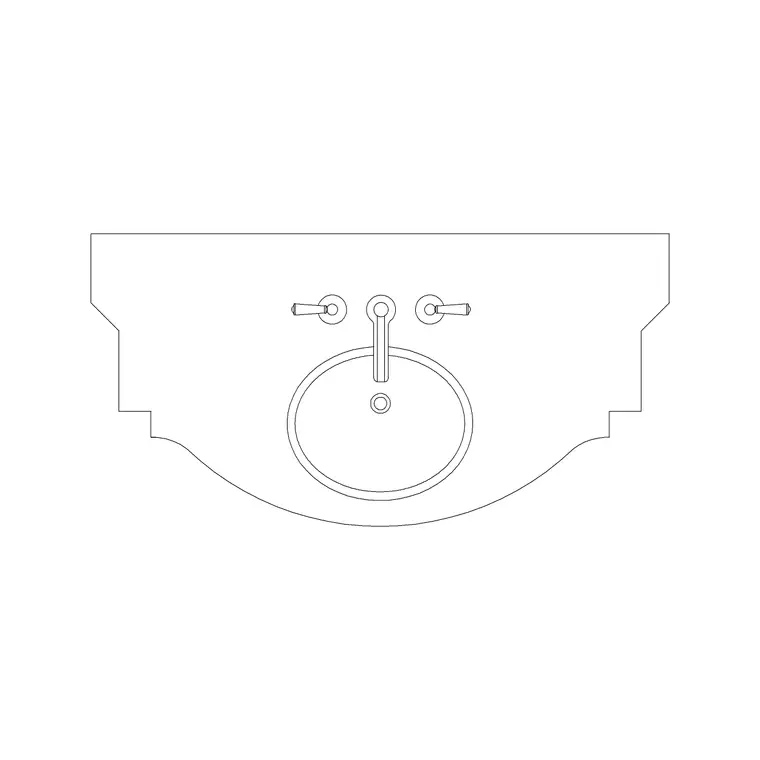
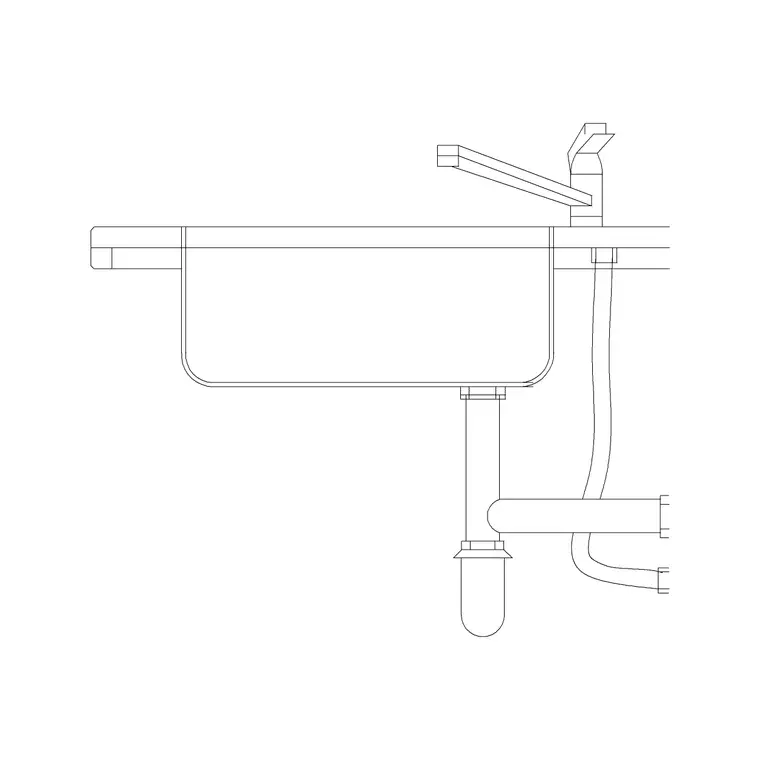
For the WC, a compact toilet commode keeps the projection tight on a wall that has little to spare. For the basin, go slim — a small wall-hung bowl or a narrow single-basin vanity — and pair it with a 350 mm or 450 mm sink elevation for the wall drawing. Storage is minimal by necessity, so the vanity, if it fits, earns its place by holding the essentials.
Because ensuites are so often windowless, the lighting blocks are functional kit, not decoration: a wall lamp at the mirror for the face, a ceiling lamp for general light, ideally rated for the damp environment. Place them on the plan as deliberately as the fixtures.
Ensuite dimensions and clearances
Treat these as planning ranges and confirm against your fittings. A shower-room ensuite can work from roughly 1.4 by 2.0 m, with 1.5 by 2.1 m far more comfortable. Shower tray: commonly 800 by 800 mm, up to 900 by 900 mm or 1000 by 800 mm. Compact WC: around 600 mm projection. Slim basin: from about 350–500 mm wide.
For clearances, give the shower a clear entry zone in front of the door or opening, keep around 600 mm of clear floor at the basin and WC (these can share floor in such a small room), and never let the room door or the shower door swing across a fixture. The tight numbers are why the door strategy matters so much — an inward-swinging room door is often the single hardest thing to fit, so a sliding or outward door earns its keep.
Drawing the ensuite in AutoCAD
Resolve the shower first. Place the tray block in its corner, draw the enclosure and its entry zone, and only then fit the WC and basin into the floor that remains. Mark the plumbing wall and keep the shower and WC against it to keep drainage short — an ensuite carved from a bedroom often has an awkward route to the soil stack, so the shorter the run, the better.
Insert all blocks at scale 1 in a millimetre drawing (0.001 in metres, or set INSUNITS to millimetres). Even in a small room, layer the tray, enclosure, WC, basin and lighting separately so the wet-zone tanking plan, the elevation and the lighting plan all come from one file. Add the room door swing and the shower door arc last and confirm they clear everything and each other. Finally, note the extract fan position on the plan — an internal ensuite is unusable without it, and it is easy to forget at layout stage.
Common ensuite shower room mistakes
The first mistake is squeezing in a bath. An ensuite is a shower room precisely because a bath does not earn its footprint here; force one in and the WC and basin end up unusable. Commit to the shower and design around it.
Second, a shower door that fouls the room. A pivot shower door swinging into the basin or the WC zone is a classic ensuite failure — draw both arcs and switch to a sliding or walk-in entry if they clash.
Third, forgetting the ventilation and the light. An internal ensuite needs mechanical extract and artificial lighting from the start; leaving them off the layout produces a damp, dark box. Put the fan and the lamps on the drawing. Finally, an oversized tray that leaves no clear floor: the shower should be generous, but not so large that there is nowhere to dry off — balance the tray against the standing zone, and let the scaled blocks show you where the line is.
Free download
Browse the full library — DWG & DXF, no signup.
Questions
Frequently asked
What is the difference between an ensuite and a shower room?+
An ensuite is any bathroom that opens directly off a bedroom; a shower room is a bathroom with a shower instead of a bath. Most ensuites are shower rooms because the shower saves the floor area an ensuite, carved from a bedroom, can rarely spare.
How small can an ensuite shower room be?+
A shower, WC and basin can fit from roughly 1.4 by 2.0 m, though about 1.5 by 2.1 m is far more comfortable. The hardest constraint is usually the door — drop the scaled blocks and both door arcs onto the plan to confirm nothing fouls before fixing the size.
Does an ensuite need a window?+
Not necessarily — many ensuites are internal. But an internal ensuite must have mechanical extract ventilation and artificial lighting designed in from the start. Mark the fan and the lamp blocks on the plan, as the room is unusable without them.
Which shower door type is best for a tight ensuite?+
A sliding or walk-in opening avoids the swing clearance a pivot or hinged door needs, which is often the difference between a workable and an unworkable ensuite. Whatever you choose, draw the door arc or entry zone with the WC and basin in place and confirm it clears them.
Related downloads
Blocks for this guide
Related categories
Related guides
Room guide
Free Bathroom CAD Blocks — Design a Bathroom
Design a full bathroom in AutoCAD with free CAD blocks — WC, basin, bath and shower drawn to scale in plan and elevation. DWG & DXF, no signup.
Room guide
Master Bathroom CAD Blocks — DWG Layouts
Design a master bathroom in AutoCAD with free CAD blocks — double vanity, freestanding bath, walk-in shower and WC drawn to scale. DWG & DXF, no signup.
Room guide
Powder Room CAD Blocks — Half-Bath DWG
Design a powder room or half-bath in AutoCAD with free CAD blocks — compact WC, small basin and vanity drawn to scale. DWG & DXF, no signup, commercial-use OK.