Block landing · decorative bowl cad block
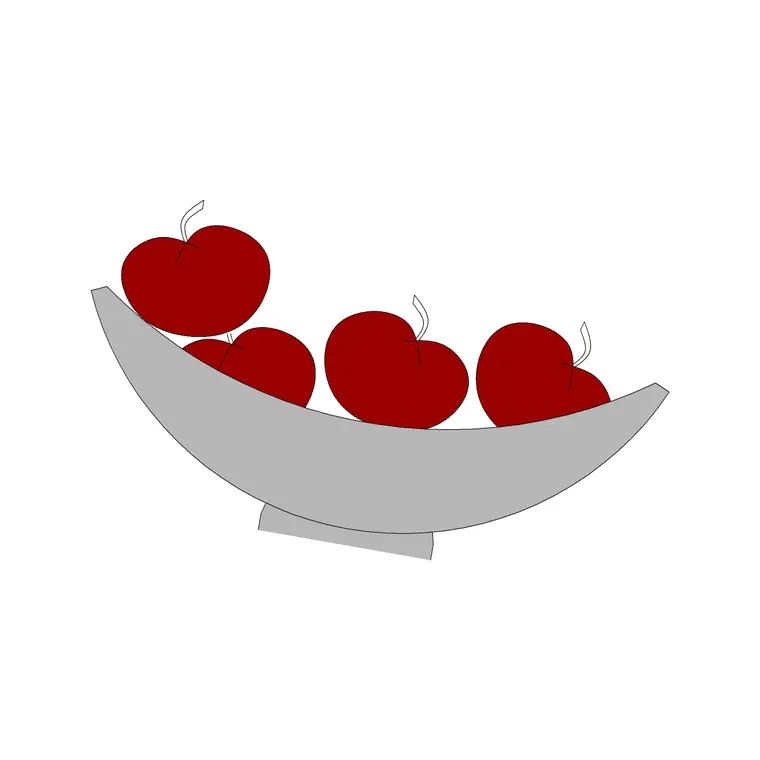
Free decorative bowl and fruit plate CAD blocks
By Saumyajit Maity · Published 24 Aug 2024 · Updated 3 Mar 2026
A decorative bowl or fruit plate is the classic centrepiece that dresses a dining table, a kitchen island or a console, and a ready-drawn block saves you sketching the curve and the fruit each time. This page collects free decorative bowl and fruit plate CAD blocks in DWG — centrepiece bowls and fruit plates drawn in plan and elevation — ready to insert into AutoCAD 2004 or later, free for personal and commercial use with no signup or watermark.
A bowl on a table is the small flourish that finishes a presentation drawing. On a plan it marks the centre of a dining table or the working surface of an island as a deliberate, dressed point; in elevation it sits as a soft, rounded object among harder furniture lines, often raised on a stack of books or a tray. Drawn to scale, these blocks let you place a believable centrepiece quickly and keep it in proportion with the table or surface it dresses.
What a decorative bowl block contains
Decorative bowl blocks come in two views, because a bowl is dressed and read differently in plan and elevation. In plan it is a set of concentric circles — the rim, the inner wall, and often a suggestion of fruit or contents — that marks the centrepiece spot on a table or island from above. In elevation it is the recognisable rounded profile, sometimes footed or pedestalled, with fruit mounding above the rim.
The fruit plate is the flatter cousin: a shallow dish that holds fruit in a single layer rather than a deep mound, reading as lower and more spread out. A good block keeps the contents loose and varied rather than a tidy pyramid, because a real bowl of fruit is irregular. Keeping bowls on a dressing layer lets you add them to a presentation drawing and strip them out for a plain layout from one file.
Bowl, fruit plate and footed centrepiece
There are a few centrepiece gestures these blocks cover. A simple round bowl sits directly on the surface and holds fruit or sits empty as a sculptural object. A footed or pedestalled bowl lifts the contents on a stem, reading as more formal and traditional — the classic comport or tazza. A flat fruit plate or shallow dish spreads the fruit out low, suiting a more contemporary, minimal table.
The choice signals the style of the scheme, just as the crockery and the trim do: a footed silver-style comport reads as formal and period, a plain matte bowl as modern. Because the elevation blocks show the profile, you can pick the centrepiece that matches the room and place it on the table or island in the presentation elevation.
Typical bowl sizes to design around
Centrepiece bowls cluster around useful sizes. A dining-table fruit bowl is roughly 250–350 mm across and 100–180 mm tall; a larger statement centrepiece can reach 400 mm or more. A flat fruit plate is wider and lower, perhaps 300–400 mm across and only 30–60 mm deep. A footed comport adds height on its stem, often standing 200–300 mm tall overall.
Those figures help you keep the centrepiece in proportion: a bowl that is too small disappears on a large table, and one too large crowds the place settings and blocks the sight line across the table — a real consideration on a dining drawing. Because the bowl blocks are drawn to scale, you can place one at the table centre and check it leaves room for the covers and does not dominate the setting.
How to insert and place the bowl
The bowl blocks are drawn full size in millimetres. Insert at scale 1 in a millimetre drawing, 0.001 in a metre template, or set INSUNITS to millimetres so AutoCAD rescales on insertion. Use INSERT or drag the DWG in, and place the plan bowl at the centre of the table or island, or sit the elevation bowl on the surface line, snapping its base to the surface so it does not float.
For a dressed dining presentation, place the plan bowl at the table centre and the place-setting and tableware blocks at each cover, so the whole table reads as set. In elevation, a bowl often sits on a stack of books or a tray for height — place the books block first, then sit the bowl on top. Keep bowls on a dressing layer so the presentation and the plain layout both come from one drawing.
Where decorative bowl blocks are used
Bowl and fruit-plate blocks dress dining tables, kitchen islands, consoles and coffee tables in interior presentation drawings, and appear on sideboard and shelf vignettes as a soft centrepiece. They feature in residential dining-room schemes, hospitality and restaurant presentation plans, and kitchen presentation elevations where the island needs dressing.
Pair the bowls with the tableware, books and storage basket blocks to dress tables, consoles and shelves consistently across a presentation set. A bowl on a stack of books on a console is a classic styled vignette these blocks build directly. Because the blocks are free and licence-clear, they suit a quick concept drawing as readily as a polished interior presentation board, and the same bowl carries from an early mood plan into a coordinated presentation elevation.
Centrepieces and the sight line across a table
There is one practical consideration with a table centrepiece that the small blocks quietly help you check: the sight line. A bowl or arrangement that is too tall blocks the view across a dining table and makes conversation awkward, which is why a low fruit bowl or a flat fruit plate is the safe choice for a table people actually eat at, and a tall footed comport or floral arrangement is better suited to a sideboard or a console where nobody is sitting opposite it.
Because the elevation blocks are drawn at believable heights, you can sit the centrepiece on the table in section or elevation and see immediately whether it clears the sight line or blocks it. It is a small check, but it is the kind of thing that separates a styled drawing that would actually work from one that only looks good on paper. Keeping the bowls on the dressing layer alongside the books and tableware means the whole soft-styling set toggles together — on for the client presentation, off for the construction layout — so the centrepiece never strays into a drawing where it does not belong.
Free download
Browse the full library — DWG & DXF, no signup.
Questions
Frequently asked
What decorative bowl blocks are available?+
Round centrepiece bowls, footed comports and flat fruit plates, drawn in both plan and elevation. The plan view marks the centrepiece on a table or island from above; the elevation shows the profile with fruit for presentation drawings.
Are the bowl and fruit plate CAD blocks free for commercial use?+
Yes. Every bowl and fruit-plate block downloads free in DWG with no signup, no watermark and no attribution requirement, and is cleared for commercial project use including interior presentation drawings.
What size is a typical fruit bowl block?+
A dining-table fruit bowl is roughly 250–350 mm across and 100–180 mm tall, while a flat fruit plate is wider and lower at around 300–400 mm across. The blocks are drawn to scale so you can keep the centrepiece in proportion with the table.
Should the centrepiece be in plan or elevation?+
Use the plan block to dress a table or island in a layout, and the elevation block to show the centrepiece in a presentation elevation. For a table people eat at, choose a low bowl or fruit plate so it does not block the sight line across the table.
Related downloads
Blocks for this guide



Related categories
Related guides
Block landing
Free Classical Column CAD Blocks — DWG Download
Download free classical column CAD blocks in DWG — shaft, capital and base drawn in elevation and plan for AutoCAD. No signup, free for commercial use.
Block landing
Free Greek & Ionic Column CAD Blocks — DWG
Free Greek and Ionic column CAD blocks in DWG — fluted shafts and volute capitals drawn in elevation for AutoCAD. No signup, free for commercial use.
Block landing
Free Decorative Arch CAD Blocks — DWG Download
Download free decorative arch CAD blocks in DWG — round, segmental and classical archways drawn in elevation for AutoCAD. No signup, free for commercial use.