Room guide · nursery room cad blocks
Free daycare nursery room CAD blocks for AutoCAD
By Sumana Kumar · Published 13 Sep 2024 · Updated 21 May 2026
A daycare nursery room is designed around small bodies and constant supervision. Everything is lower, softer and rounder than an adult room, and the single most important design rule is that an adult standing anywhere can see every child everywhere. Sightlines, soft activity zones, a wet area and a clear path to the exit shape the plan far more than any piece of furniture. Scaling the room to children — and checking it with child figures, not adults — is what keeps the design honest.
This page collects free daycare and nursery CAD blocks in DWG and DXF — low child tables, stools, soft seating, a carer's table and child and adult human figures — drawn to scale for AutoCAD 2004 or later. All free for personal and commercial work, no signup, no watermark.
Use the blocks to lay out a nursery activity room, a preschool classroom, a creche or a childcare playroom. Because the furniture and figures are scaled, you can test the activity zones, the supervision sightlines, the circulation around play and the child-to-adult clearances that this room lives by.
A room scaled to children
A nursery room serves young children and the carers who watch them, and the two have very different dimensions. The furniture is sized for children — low tables, small stools, soft seating near the floor — while the circulation and supervision are sized for adults moving among them. Designing it means holding both scales in mind at once, which is exactly why child figures matter: a layout that looks roomy with adult figures may be cramped, or the furniture wrong-sized, for the actual occupants.
The room is also a soft room. Hard edges, trip hazards and blind corners are the enemies. Activity is grouped into zones — messy play, quiet play, story circle, construction — each with its own character, and the floor between them stays open so children can move and carers can cross quickly. Lay the exit, the wet area and the carer's base first; they're the fixed points everything else arranges around.
Zoning: activity areas and the supervision rule
Divide the room into low-walled or rug-defined zones rather than enclosed rooms, because nothing should block the carer's view. A messy/wet zone (painting, water, snacks) sits near the sink and a wipeable floor. A quiet zone (books, soft cushions) sits in a calm corner. A story or circle zone needs clear floor for a group to gather. A construction/active zone needs robust floor space.
The governing constraint is the supervision sightline: from the carer's normal positions, no zone should be hidden. Avoid tall shelving or partitions that create a nook an adult can't see into. Place the carer's table or base where its sightlines sweep the whole room, then arrange the zones so each stays visible. Drop an adult figure at the carer's base and check the view reaches every child-figure across the floor.
The blocks that furnish a nursery room
Nursery furniture is small, low and repeated.
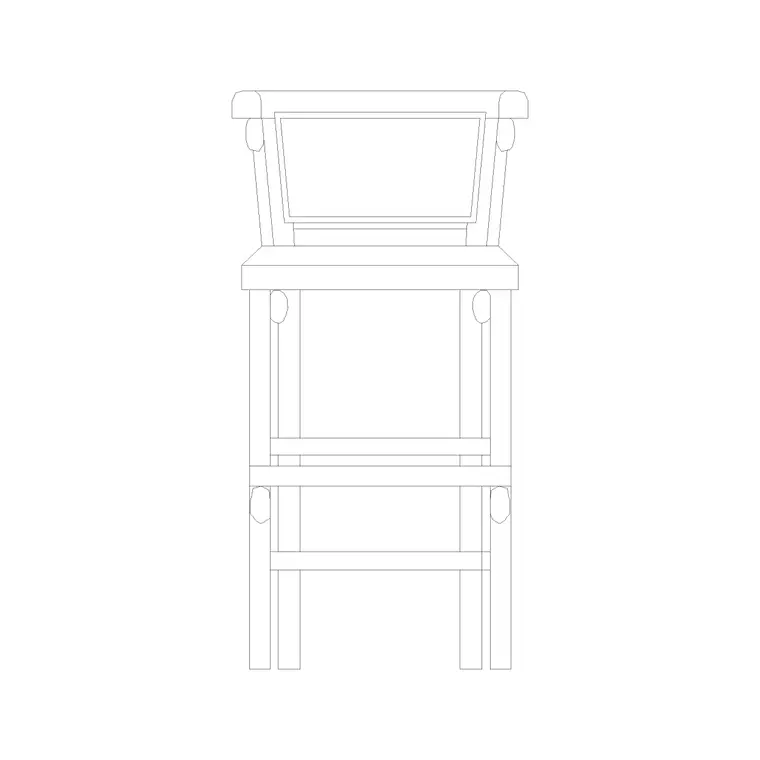
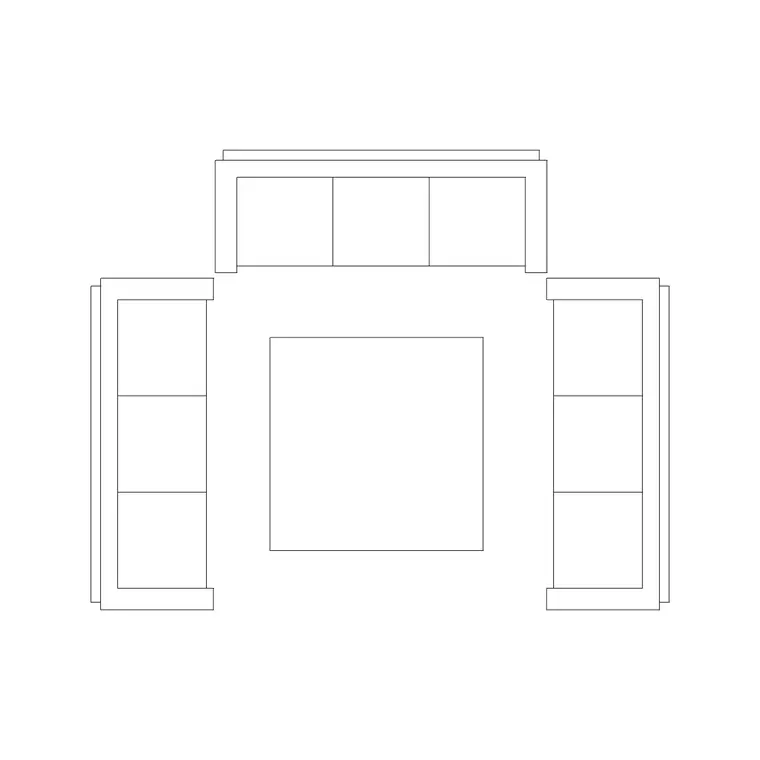
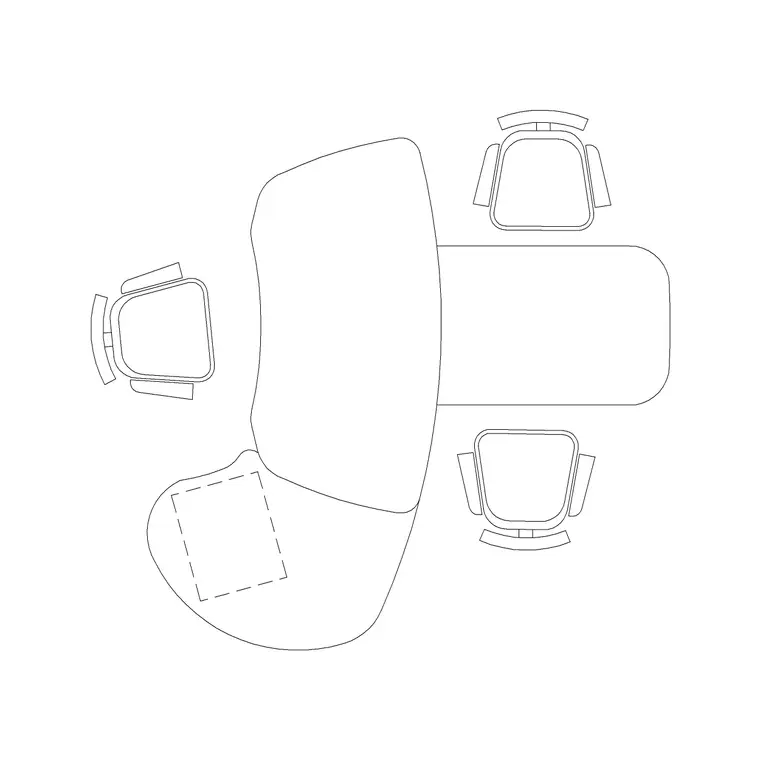
- Child tables — low activity tables for craft, snack and group play; a small 4-person table block stands in well, sized down to child height. - Stools and child chairs — the restaurant baby stool block suits toddler seating; small chairs ring the activity tables. - Soft seating — a low sofa block for the book corner reading nook. - Carer's table — a small office table as the carer's base and admin point. - Human figures — child figures to populate the zones at true scale, plus adult figures to set supervision sightlines and circulation.
Keep tables, stools, soft seating, the carer's base, child figures and adult figures on separate layers so you can issue a furniture plan, a supervision-sightline diagram and an occupancy check from one drawing.
Dimensions, clearances and safety
Use these as design ranges for young children. Child activity table: low, around 400–550 mm high, sized for small reach. Child stool/chair seat height: roughly 200–320 mm, much lower than adult seating. Story-circle clear floor: enough for the group to sit in a ring with the carer.
Circulation between zones needs to be generous and clear — open enough for an adult to cross quickly to a child and for the group to move to the exit together. Keep a clear, unobstructed path from every zone to the exit. Around the wet/messy area keep wipeable clearance, and avoid placing furniture where it creates a blind nook or a trip line. Populate the room with child figures so the scale reads true, then place adult figures to confirm clearances are right for the carers too. These are design ranges, not a substitute for childcare regulations.
Building the nursery plan from blocks
Draw the shell and mark the exit, the sink/wet area and the door swings. Place the carer's base where its sightlines cover the room. Lay out the zones as rugs or low boundaries: messy near the sink, quiet in a calm corner, story-circle on clear floor, active play on robust floor. Insert child tables with stools and the book-corner soft seating into their zones.
Populate each zone with child figures so you can see the real density, then place an adult figure at the carer's base and check sightlines reach every zone. Confirm a clear path from each zone to the exit. With furniture, soft seating, child figures, adult figures and the carer's base on separate layers, you can produce the furniture plan, the supervision diagram and the egress check from the same drawing.
Common nursery room mistakes
The first and worst is a blind corner — tall shelving or a partition that hides a zone from the carer. In a supervision room, nothing should block the sightline; keep boundaries low. The second is adult-scale furniture: dropping in standard tables and chairs makes the room look fine in CAD but leaves children unable to reach or sit properly. Use child-scaled furniture and child figures. The third is a cluttered floor with no clear path to the exit, which fails both daily flow and emergency egress.
Other traps: the messy zone placed away from the sink so paint and water travel across the room, sharp corners and trip lines in the play path, and a carer's base tucked where it can't watch the door and the zones at once. Populating with child figures and checking the adult's view from the base catches these before the room is fitted out.
Free download
Browse the full library — DWG & DXF, no signup.
Questions
Frequently asked
Why use child figures instead of adult figures in a nursery plan?+
Because the room is occupied by small children, not adults. Child figures show the true scale and density of each activity zone and confirm the low tables and stools are sized correctly. Add adult figures only to set the carers' circulation and supervision sightlines.
How do I keep supervision sightlines clear in a daycare room?+
Use low, rug-defined or low-walled zones instead of enclosed rooms or tall shelving, so nothing creates a nook the carer can't see into. Place the carer's base where its sightlines sweep the whole floor, then drop an adult figure there and confirm the view reaches every zone.
What height should nursery tables and stools be?+
As a design range, child activity tables sit around 400–550 mm high and child stools or chairs around 200–320 mm — much lower than adult furniture. The restaurant baby stool block suits toddler seating. Always treat these as guidance and check against the relevant childcare standards.
How should activity zones be arranged in a nursery?+
Group the room into zones by character — messy/wet near the sink, a quiet book corner, a story-circle on clear floor, and an active play area — separated by rugs or low boundaries rather than walls, with open circulation between them and a clear path from every zone to the exit.
Related downloads
Blocks for this guide

Related categories
Related guides
Room guide
Free Classroom CAD Blocks — DWG Download
Free classroom CAD blocks in DWG and DXF — student desks, chairs, teacher tables and figures to lay out a teaching room in AutoCAD. No signup.
Room guide
Free School Library CAD Blocks — DWG Download
Free school library CAD blocks in DWG and DXF — reading tables, chairs, a circulation desk and figures to plan a library in AutoCAD. No signup.
Room guide
Free Bank Branch CAD Blocks — DWG Download
Free bank branch CAD blocks in DWG and DXF — teller counters, advisory desks, seating and figures to plan a branch interior in AutoCAD. No signup.