Curated pack · courtyard cad blocks
Free courtyard CAD block pack for AutoCAD
By Saumyajit Maity · Published 3 Apr 2026 · Updated 28 Apr 2026
A courtyard is the most intimate of outdoor spaces — an enclosed room without a roof, framed by buildings or walls, where every element is seen close-up and the proportions have to be exactly right. It rewards a different kind of attention from an open landscape: fewer, better-placed pieces, a considered paving pattern, planting that often lives in pots because there is no open ground. This free courtyard CAD block pack gives you that refined kit — paving textures, a feature tree, potted and bedded planting, a boundary fence or screen, and scale figures — in DWG and DXF, drawn to scale and ready to insert into AutoCAD 2004 or later. Everything is free for personal and commercial work, with no signup and no watermark.
Use the pack to lay out internal courtyards, light wells and atria, walled town gardens, restaurant and hotel courtyards, and the enclosed external rooms of a building. Because the blocks are scaled, you can judge the proportions that a small enclosed space lives by — whether the paving pattern suits the size of the floor, whether a single tree is the right scale for the walls around it, whether there is room to sit and move.
In a courtyard, restraint usually wins. The space is small enough that a few well-chosen, well-scaled elements read as composed, while too many become clutter. Working from scaled blocks helps you judge that balance, placing each piece against the real dimensions of the enclosure.
What's in the courtyard pack
The pack assembles the elements of an enclosed external room. Floor: paving textures for the courtyard surface, where the pattern matters more than in a large space because it is seen whole. Planting: a feature tree as a centrepiece or corner anchor, plus shrubs and potted planting for the beds and the hard floor where there is no open ground. Enclosure: a fence or screen for the boundary where the courtyard is not fully walled by building. Scale and use: figures to set the furniture and the proportions against real people.
For more potted planting, screens and small-space furniture, the outdoor category extends the set, and trees-and-plants supplies the feature tree and the planting palette a courtyard wants.
Getting the paving pattern right
In a courtyard the floor is the dominant surface — you see the whole of it at once, framed by the walls — so the paving pattern carries real weight. A large-format, calm grid can make a small courtyard feel larger and more composed; a busy small-unit pattern can make it feel cluttered. A directional bond can lead the eye to a doorway or a feature; a centred pattern with a feature in the middle reads as formal and still.
Use the paving textures to test the pattern against the actual size of the floor, because a pattern that looks right on a large terrace can overwhelm a courtyard a fraction of the size. Set the pattern out from a meaningful edge — a main door or the dominant wall — so the full, clean units sit where the eye lands and any cuts fall at the inconspicuous edges. Keep the paving on its own layer so you can try alternatives without disturbing the planting.
Planting in pots and beds
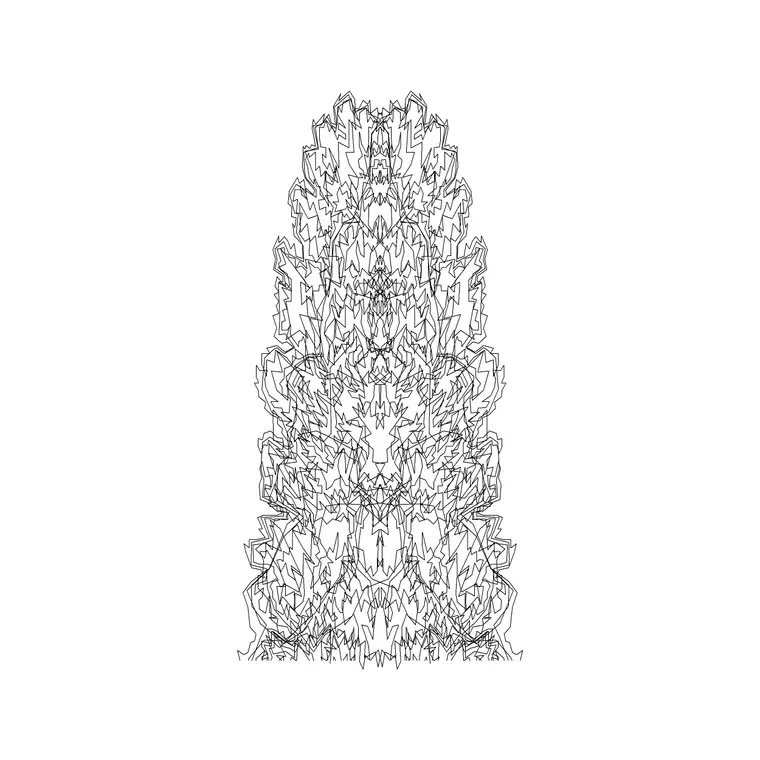
Courtyards often have little or no open ground, so much of the planting lives in pots, raised beds and built-in planters — which is exactly why a courtyard pack leans on potted blocks. Use a feature tree, in the ground if there is soil or in a large planter if not, as the green centrepiece that gives the enclosed space life and scale against the walls. Group the potted plants and shrubs at the corners, along the base of a blank wall, or to frame a doorway, rather than scattering them evenly.
Scale the feature tree honestly against the walls: a courtyard tree that is too small looks lost and one that is too big feels oppressive in the enclosure, so size it so its canopy sits comfortably within the framing walls. Keep planting on its own layer so you can present the courtyard with the planting at its mature size and judge whether it fills the space as intended.
Enclosure, screening and privacy
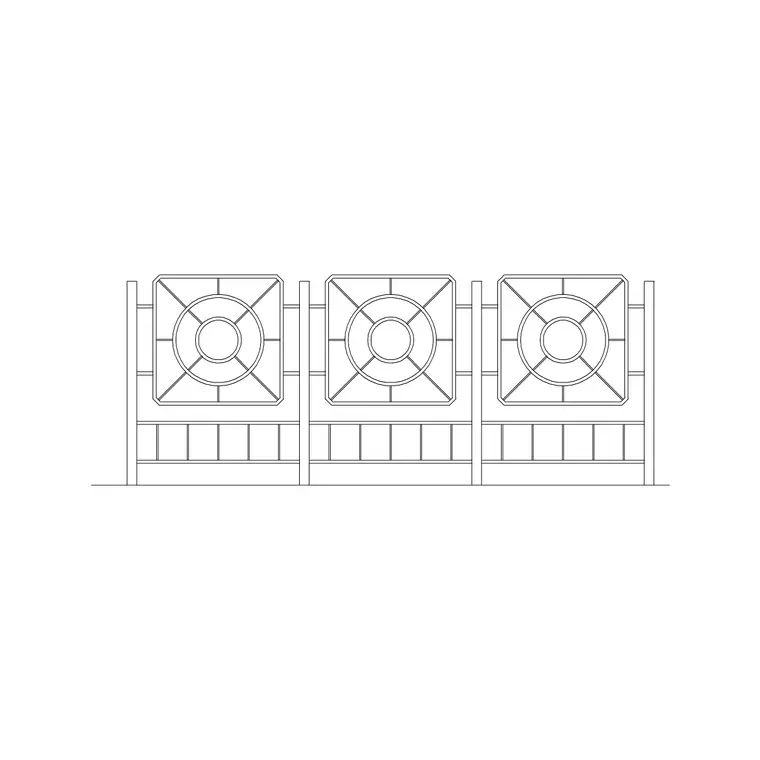
Part of what defines a courtyard is its enclosure, and where the building does not fully wall it, a fence or screen completes the room. Use the fence block for the boundary, and treat it as part of the composition rather than just a barrier — in a small enclosed space the boundary is always in view, so its line and rhythm matter. A screen can also subdivide a larger courtyard into a more intimate seating nook and a circulation route.
Privacy and overlooking are often the reason a courtyard exists — an enclosed, private outdoor room within a building. Use the planting and screens to manage sightlines from overlooking windows above, and keep the boundary and screening on their own layer so you can study the enclosure as a complete loop and check that the private heart of the courtyard is genuinely sheltered from view.
Who uses the courtyard pack
Architects use it for internal courtyards, light wells and atria within buildings. Interior and landscape designers use it for walled town gardens, roof courtyards and the enclosed external rooms of houses and hotels. Hospitality designers use it for restaurant and café courtyards where the layout has to seat people comfortably in a small space. Students use it for studio projects where scaled, licence-clear blocks matter in a tightly-composed space.
Pair the courtyard pack with the outdoor category for more planters, screens and small-space furniture, paving for additional floor patterns, and trees-and-plants for the feature tree and potted planting that bring an enclosed space to life.
Composing the enclosed room
A courtyard is best designed as a composition rather than a layout, because everything is seen together within the frame of the walls. Place the feature first — the tree, a water feature, a sculptural planter — as the thing the eye lands on, then arrange the floor pattern, the seating and the secondary planting around it so the whole reads as deliberate. Use the scale figures to check that there is room to sit, to move between the seating and the doors, and to enjoy the space without it feeling crammed.
Because the courtyard is small and seen whole, the discipline of scaled, layered blocks pays off in proportion rather than coordination. You can try the feature tree at two sizes, the paving at two patterns, the seating in two arrangements, all to true scale, and judge which composition sits best within the enclosure. The plan that results works as both the technical setting-out for the paving and planting and the considered presentation of an outdoor room — which is exactly what a courtyard, more than any other external space, needs the drawing to deliver.
Free download
Browse the full library — DWG & DXF, no signup.
Questions
Frequently asked
What's in the courtyard pack?+
Paving textures for the courtyard floor, a feature tree and potted planting for an enclosed space with little open ground, a fence or screen for the boundary, shrubs, and scale figures. The outdoor and trees-and-plants categories add more planters and planting.
Are the courtyard blocks free for commercial use?+
Yes. Every block downloads free in DWG and, where available, DXF, with no signup, no watermark and no attribution requirement, and all are cleared for commercial project use.
How do I choose a paving pattern for a small courtyard?+
Because you see the whole floor at once, a calm large-format grid usually suits a small courtyard better than a busy small-unit pattern. Test the pattern against the real floor size, and set it out from a main door or dominant wall so full units land where the eye falls.
How do I plant a courtyard with no open ground?+
Use pots, raised beds and built-in planters, and place a feature tree — in the ground if there is soil, or a large planter if not — as the green centrepiece. Scale the tree so its canopy sits comfortably within the framing walls, neither lost nor oppressive.
Related downloads
Blocks for this guide


Related categories
Related guides
Curated pack
Free Landscape & Tree DWG Pack — Plan & Elevation
A free landscape and tree DWG pack — trees, palms, shrubs and potted plants in plan and elevation for AutoCAD site plans. DWG and DXF, no signup, commercial-use OK.
Curated pack
Free Landscape CAD Block Pack — DWG & DXF
A free landscape CAD block pack in DWG and DXF — trees, shrubs, fences, paving, lighting and figures for AutoCAD landscape plans. No signup, commercial-use OK.
Curated pack
Free Garden CAD Block Pack — DWG Download
A free garden CAD block pack in DWG and DXF — trees, shrubs, fences, a swing, a BBQ and paving for residential garden plans. No signup, commercial OK.