Block landing · range hood cad block
Free cooking range hood CAD blocks and details
By Sumana Kumar · Published 19 Mar 2026 · Updated 28 Apr 2026
The range hood is the one kitchen block that is really about a gap — the distance it must keep above the hob — and that single clearance is the reason it deserves a proper detail rather than a rough rectangle. A cooking range hood (cooker hood, extractor) sits above the hob to pull away steam, grease and cooking smells, and where it lands governs the wall-cabinet run, the splashback height and the ducting route. This page collects free range hood CAD blocks and details in DWG and DXF — wall-mounted chimney hoods, island and ceiling extractors, integrated and visor hoods, and downdraft units — drawn full size for AutoCAD 2004 or later, free for personal and commercial use with no signup or watermark.
A hood is read mainly in elevation and section, because its job is vertical: the clearance above the hob, the height of the canopy, and the duct that rises behind or above it. Drawing it to scale lets you break the wall-cabinet line correctly, keep the legal-ish minimum gap to the cooktop, and route the extraction before any of it becomes a site clash.
What a range hood block and detail show
A range hood is the extraction unit fixed above the hob — a canopy or box that captures the rising plume and either ducts it outside or recirculates it through filters. In a CAD block it is drawn as the canopy in elevation, centred over the hob, with the chimney or duct riser above it, and in section showing the depth of the canopy, the filter line and the duct path. A detailed hood block also marks the critical clearance dimension from the cooktop to the underside of the canopy.
The set covers the hood types you actually specify: a wall-mounted chimney hood (the classic canopy-and-flue), a slimline visor or integrated hood tucked under a wall cabinet, an island hood suspended from the ceiling over a cooking island, a ceiling-recessed extractor, and a downdraft unit that rises from the worktop behind the hob. Each is a single block you centre on the hob, and because it is a block reference you can swap a chimney hood for an island hood when the cooking position moves.
Elevation and section carry the hood; plan just locates it
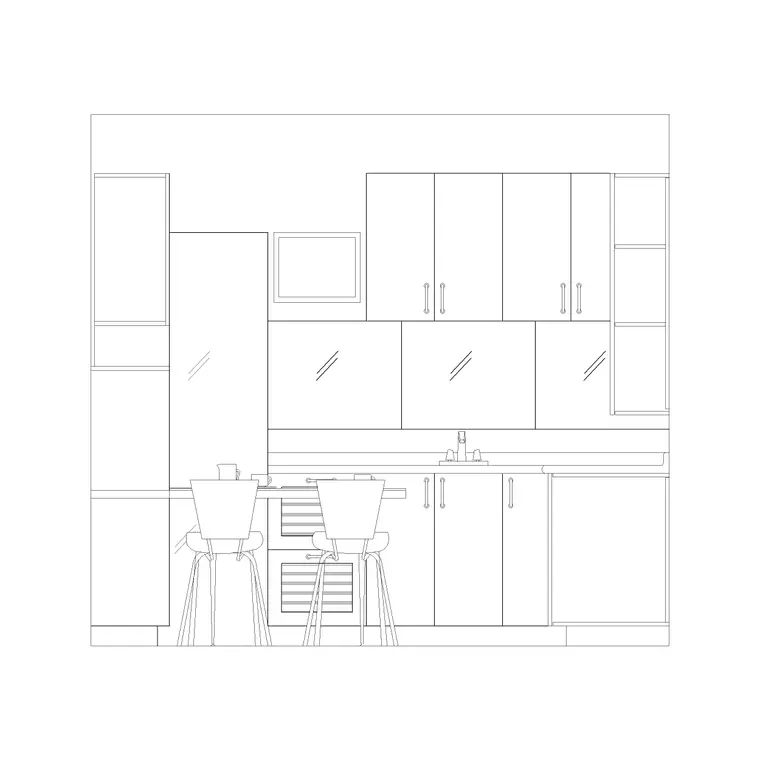
The elevation is the lead view because a hood is defined by height. It shows the canopy centred over the hob, the chimney or flue rising to the ceiling, and the all-important gap down to the cooktop. On a kitchen elevation the hood is what breaks the lined-through band of wall cabinets, so drawing it here lets you set out that break correctly and keep the bridging unit above it clear of the canopy.
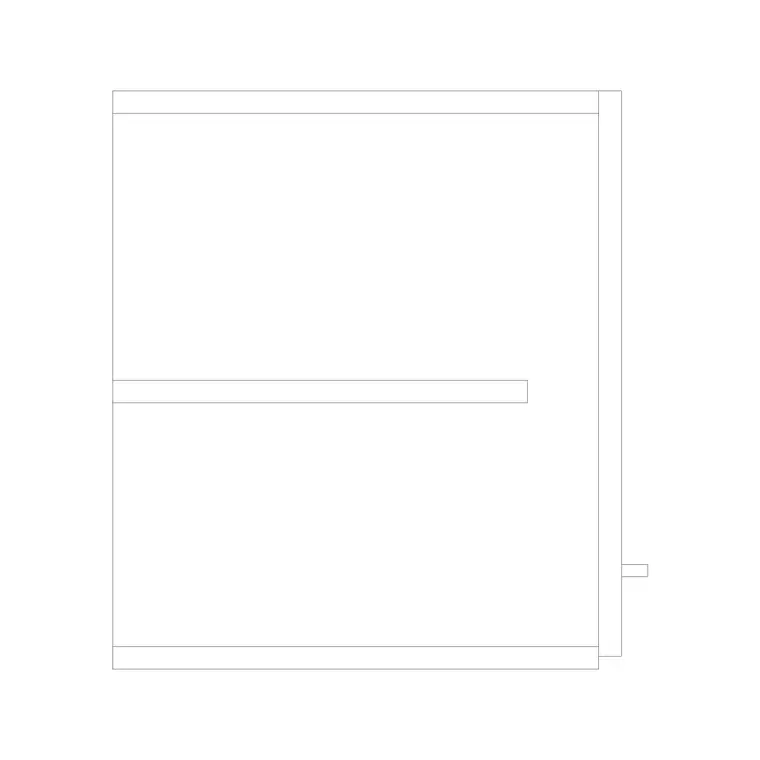
The section is the coordination view. It shows the canopy depth, the filter and the duct route — up through a ceiling void, back through the wall, or down through the floor for a downdraft — which is the detail that decides whether the extraction can actually be installed. The plan view is a simple footprint marking the hood's position centred over the hob; it carries little detail because the hood lives above the worktop. Keep elevation, section and the footprint plan on separate layers so the joinery elevation, the services section and the layout plan each pull only what they need.
Hood clearances and sizes to design around
The defining figure for a hood is the gap above the hob, and it is one you should always confirm against the manufacturer because it affects safety and warranty. As a design-stage guide, a canopy hood typically sits around 650–750 mm above an electric or induction hob, and often a little higher above gas; treat that as a range to check, not a fixed value. Hood width should at least match the hob, so commonly 600, 700, 900 or 1100 mm, with island hoods often wider to suit a central cooktop.
Canopy depth is usually around 450–600 mm so it covers the cooking zone, and the duct is commonly 100–150 mm round or a rectangular equivalent. For a wall hood the flue runs to the ceiling, around 600–900 mm of chimney above the canopy depending on ceiling height. As with every figure here, these are design-stage ranges that make the elevation and the duct route read correctly — the cooktop-to-canopy gap in particular must be verified against the specific hood and hob.
Placing the hood and breaking the wall units
Work on the elevation. Draw the hob centreline first, then insert the hood block centred on it; in a millimetre drawing place at scale 1, or set INSUNITS to millimetres so AutoCAD rescales on insertion. Snap the underside of the canopy to your clearance offset above the cooktop and run the flue up to the ceiling. Because the hood breaks the wall-cabinet line, leave the deliberate gap in the run for it and check that any bridging unit above clears the canopy and the flue.
Then move to the section and route the duct: a wall hood ducts back through the external wall or up through the flue, an island hood and a ceiling unit duct up through the ceiling void, and a downdraft ducts down through the floor — each needs the route drawn and coordinated with the structure. For an island hood, confirm the suspended canopy's height and the ceiling fixing in the elevation, and centre it precisely over the cooking island in plan. Because the hood is a block, you can swap types if the cooking position or the extraction route changes.
Where range hood details are used
Hood details belong to every kitchen drawing that shows the cooking zone: residential kitchens, apartments, and the back-of-house in cafés and small commercial kitchens (where the extraction requirement is heavier and the canopy larger). The island and ceiling extractor details are essential for open-plan kitchens where the hob sits on an island with no wall behind it.
Kitchen and interior designers use the hood on the client elevation, where the canopy and flue are a visible design element. Mechanical and services designers use the section to coordinate the ductwork and the make-up air. Architects use the elevation and section to confirm the cooktop clearance, the ceiling void for the duct, and the break in the wall units. Pair the hood with the hob, the base and wall cabinets and the worktop to complete the cooking-zone elevation, and keep it on the appliance or services layer so it coordinates with the ducting.
Ducting and the clearance, the two things the detail must resolve
A range hood that is drawn as a plain box hides the two decisions that actually matter, which is why a proper detail pays off. The first is the cooktop clearance: too low and there is a heat and head-knock problem (and a manufacturer warranty issue), too high and the hood loses capture efficiency, so the gap has to be drawn deliberately and confirmed against the specific hood and hob. The detail block carries that dimension so it is set out rather than assumed.
The second is the duct route, which is where hoods most often clash on site. A ducted hood needs a continuous run to outside with as few bends as possible, so the section has to show where the duct goes — through the wall, up the flue, across the ceiling void, or down through the floor for a downdraft — and confirm the void or chase exists. A recirculating hood avoids the duct but needs charcoal filters and a return path, which the detail can note. Keep the hood, the wall units and the ductwork on separate layers so the joinery and the services drawings read independently, and WBLOCK a resolved hood-and-duct detail so the next cooking zone reuses a coordinated solution.
Free download
Browse the full library — DWG & DXF, no signup.
Questions
Frequently asked
How far above the hob should a range hood be drawn?+
As a design-stage guide a canopy hood sits roughly 650–750 mm above an electric or induction hob, and often a little higher above gas. Always confirm the exact clearance against the specific hood and hob, since it affects safety and warranty; the detail block carries the dimension so it is set out explicitly.
Which views do the range hood blocks include?+
Mainly elevation and section, because a hood is defined by its height and its duct route, with a simple footprint plan to locate it over the hob. The blocks keep the views on separate layers so the joinery elevation and the services section read independently.
Do the blocks cover island and downdraft extractors?+
Yes. The set covers wall-mounted chimney hoods, slimline and integrated hoods, ceiling-suspended island hoods, ceiling-recessed extractors and downdraft units that rise from the worktop, each with the duct route shown in section.
Are the range hood blocks free for commercial projects?+
Yes. Every range hood block downloads free in DWG and, where available, DXF, with no signup, no watermark and no attribution requirement, and they are cleared for commercial use.
Related downloads
Blocks for this guide
Related categories
Related guides
Block landing
Free Bathroom Fixtures CAD Blocks — DWG Download
Download free bathroom fixtures CAD blocks in DWG and DXF — toilets, wash basins, bathtubs, showers and vanities drawn in plan and elevation. No signup, commercial OK.
Block landing
Free Gas Stove / Cooktop CAD Blocks — DWG
Free gas stove and cooktop CAD blocks in DWG and DXF — drawn in plan and elevation at true kitchen-module sizes for AutoCAD 2004+. No signup, commercial-use OK.
Block landing
Single Burner Hob CAD Block — Free DWG
Free single burner hob CAD blocks in DWG and DXF for compact kitchens and studios — plan and elevation, true sizing for AutoCAD 2004+. No signup, commercial OK.