Curated pack · child safe furniture cad blocks
Free child-safe furniture CAD block pack for AutoCAD
By Sumana Kumar · Published 12 Mar 2025 · Updated 25 Apr 2026
Designing for children means smaller, lower furniture, rounded layouts and circulation planned around how kids actually move, and that starts with blocks drawn to child scale rather than adult scale. This free child-safe furniture CAD block pack collects the pieces you need for nurseries, classrooms and family homes — low child tables and stacking chairs, cots and toddler beds, changing units, low open storage and cubbies, soft-play and reading-corner blocks, and child figures for scale — in DWG and DXF at true millimetre dimensions, ready for AutoCAD 2004 or later. All free for personal and commercial use, no signup, no watermark, no attribution.
Use the pack for nurseries and creches, kindergartens and primary classrooms, paediatric clinics, children's libraries and family rooms. Because the blocks are scaled to children, dropping them in shows immediately whether a table is the right height for the age group and whether the floor stays open enough for supervised play and easy sightlines.
Child environments have their own planning logic: low furniture so children can reach and use it independently, open sightlines so adults can supervise, and rounded, snag-free arrangements. Scaled child-scale blocks let you plan all three on the drawing instead of discovering the mismatch after install.
What's in the child-safe pack
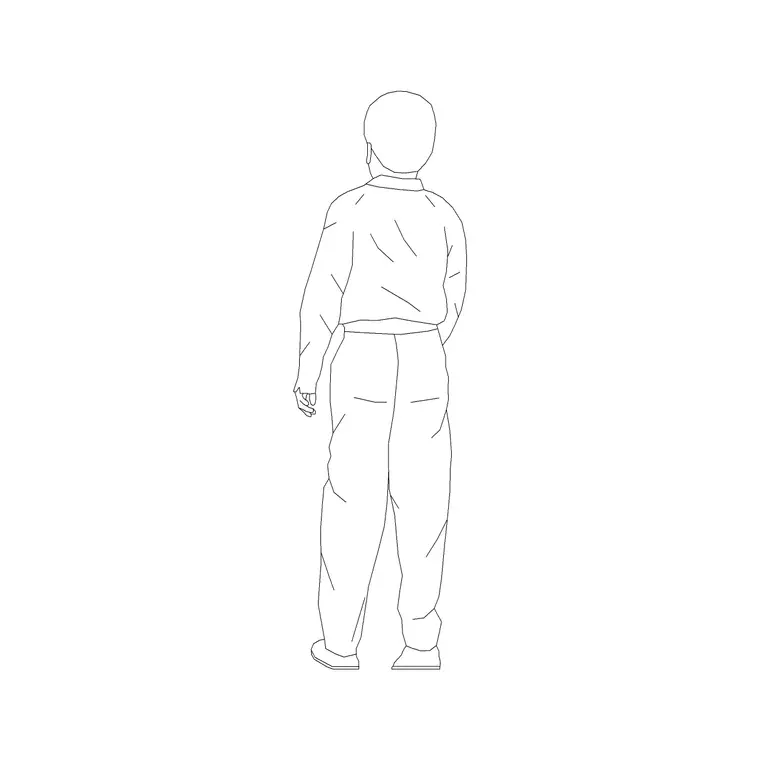
The set covers furniture sized for children. Seating and tables: low round and rectangular activity tables, stacking child chairs and floor benches sized by rough age band. Sleep and care: cots, toddler beds and a changing unit with storage. Storage: low open shelving, cubby and locker units and toy storage drawn at child-reachable heights. Play: a reading-corner nook, a soft-play mat zone and a low play kitchen. People: child figures in plan and elevation to set the scale.
The defining trait is lowness and openness — everything is drawn at child height with low or open backs so adults can see over it. Tables ship with their matching chairs so you can place a complete activity setting and check the leg and knee room for small bodies.
Typical child furniture sizes to design around
Use these envelopes as a guide, remembering they vary a lot by age band. Toddler activity tables commonly sit around 400–460 mm high, rising to roughly 500–580 mm for older primary children, against adult dining height of 720–760 mm. Child chair seat heights run roughly 260–350 mm depending on age. Cots are commonly around 1200–1400 mm long; toddler beds around 1400–1600 mm. Low storage is typically kept under about 1200 mm so children can reach it and adults can see over it.
These are age-dependent ranges, not fixed specs — match the height to the actual age group you are designing for. For circulation, give supervised play room: keep generous clear floor between furniture clusters so adults have clear sightlines and children have space to move safely between activities.
How to lay out a child space from the set
Plan for supervision first. Keep storage and dividers low so an adult standing anywhere in the room can see across the whole space — that single rule shapes most of the layout. Place activity tables in the centre with stacking chairs, leave open floor for a soft-play or circle-time zone, and tuck the reading nook into a calm corner away from the busy play area.
Use low open shelving to define zones without blocking sightlines, and position cubbies near the entrance so children can store coats and bags independently. Drop child figures at the tables and in the play zone to confirm the furniture suits the age band and the floor isn't overcrowded. Keep toys, soft furnishings and decor on their own layer so you can present a clean furniture plan and a dressed one, and keep the supervision sightlines easy to read.
Plan and elevation views
In plan you arrange the low furniture and check the open floor and sightlines that supervision depends on. In elevation you confirm the critical heights — that storage and dividers stay low enough to see over, and that table and chair heights match the age group. Many blocks ship both views in one DWG, so a single download gives plan and elevation.
Elevation is unusually important in child spaces because the height is the safety logic: low furniture for reach and supervision. The elevation blocks carry child-appropriate heights so a section or wall elevation reflects the real low datum of the room.
Per-item notes
- Activity table: pick the height for the age band and insert it with its chairs to check small-body knee room. - Stacking chairs: low seat heights by age — keep them with their table so the set scales together. - Cot and toddler bed: place against a wall with clear access for an adult on at least one long side. - Low storage and cubbies: keep them under about 1200 mm so children reach them and adults see over. - Reading nook: tuck it into a quiet corner away from active play, with a clear sightline back to the supervisor. - Child figure: drop it at tables and in the play zone to confirm both scale and crowding.
Where the child-safe pack is used
Child-safe blocks suit any space designed around children: nurseries and creches, kindergartens and primary classrooms, paediatric and dental clinics, children's libraries and museums, family rooms and play cafés. Combine them with the people and furniture categories where you need adult figures for supervisor scale or additional storage.
Because they are free and licence-clear, they fit concept plans, mood boards, competition boards and student briefs where you need credible child-scaled furniture without licensing fuss. The same blocks run from an early concept to a coordinated FF&E drawing, so the low, supervised layout is drawn once and reused. Note that these blocks support good layout planning but do not replace the child-safety and furniture standards that apply to your project.
Free download
Browse the full library — DWG & DXF, no signup.
Questions
Frequently asked
What makes this furniture 'child-safe' in a CAD context?+
The blocks are drawn at child scale — low tables and chairs, low open storage and child figures — so the layout reflects how children actually reach and use furniture, and so supervisors keep clear sightlines over everything. They support safe layout planning, but they don't replace the furniture-safety standards that govern children's environments.
How low should children's tables and storage be?+
Heights vary by age band: toddler tables often sit around 400–460 mm, rising toward 500–580 mm for older primary children, and storage is usually kept under about 1200 mm so children can reach it and adults can see over it. Match the height to the specific age group you are designing for.
Are these child furniture blocks free for commercial use?+
Yes. Every block is free in DWG and, where available, DXF, with no signup, watermark or attribution, and is cleared for commercial use in nurseries, schools, clinics and family-focused spaces.
Do these files open in older AutoCAD and free viewers?+
Yes. The DWG files target AutoCAD 2004 and later and open in current AutoCAD, AutoCAD LT, BricsCAD, DraftSight and free DWG viewers such as Autodesk's online viewer.
Related downloads
Blocks for this guide
Related categories
Related guides
Curated pack
Free Wheelchair-Accessible CAD Block Pack — DWG
Free wheelchair-accessible CAD block pack in DWG and DXF — wheelchair figures, turning circles, accessible WCs and clearances in plan for AutoCAD layouts.
Curated pack
Free Elderly-Care Furniture CAD Block Pack — DWG
Free elderly-care furniture CAD block pack in DWG and DXF — high-seat chairs, care beds, grab rails, walking-aid clearances and accessible WCs for AutoCAD.
Curated pack
Free CAD Blocks for Rendering Pack — DWG & DXF
Free CAD blocks for rendering — scale people, trees, furniture and paving in DWG/DXF to populate plans before you take them into a render engine. No signup.