Room guide · cafe cad blocks
Free cafe CAD blocks for AutoCAD seating plans
By Saumyajit Maity · Published 6 Jul 2023 · Updated 12 Mar 2026
A cafe is a different animal from a restaurant even though they share furniture. The covers turn over fast, the tables are small, and a chunk of the floor is given over to a counter where people queue, order and collect rather than being served at the table. The plan has to make a tight space feel relaxed while quietly handling a queue that can spill out at peak, and it has to do it on a footprint that is usually small and often an awkward shape — a corner unit, a narrow shopfront, a converted retail bay.
This page is for designing exactly that: a counter-service cafe with loose seating. The free CAD blocks below are the compact kit a cafe actually uses — two-seat round and square tables, a four-top for the friends-and-laptops crowd, dining chairs, bar stools for the window ledge and the counter, and planters to soften the room. All DWG, drawn to scale, free for commercial use, no signup.
The defining move in a cafe plan is separating the queue from the seating. If the order line crosses the path people take to their tables, both jam at the worst possible moment. Lay the counter and the queue zone first, give the queue somewhere to stand that does not block the door or the seats, and only then array the small tables into the rest of the floor.
What a cafe floor has to juggle
A cafe runs two flows that must not tangle. The order flow brings a customer in the door, into the queue, to the counter to order and pay, and on to a collection point. The seating flow takes a seated guest from the counter to a table and back to the door on the way out. Where those two cross, you get the classic cafe pinch — a queue snaking across the path to the window seats.
Design the order flow as a clear lane along one edge: door, queue, till, collection, with a defined place for ten or so people to stand. Then array the seating into the remaining floor. The counter is the heart of the plan; everything else is arranged around keeping it accessible without it choking the room.
Cafe seating blocks and where they go
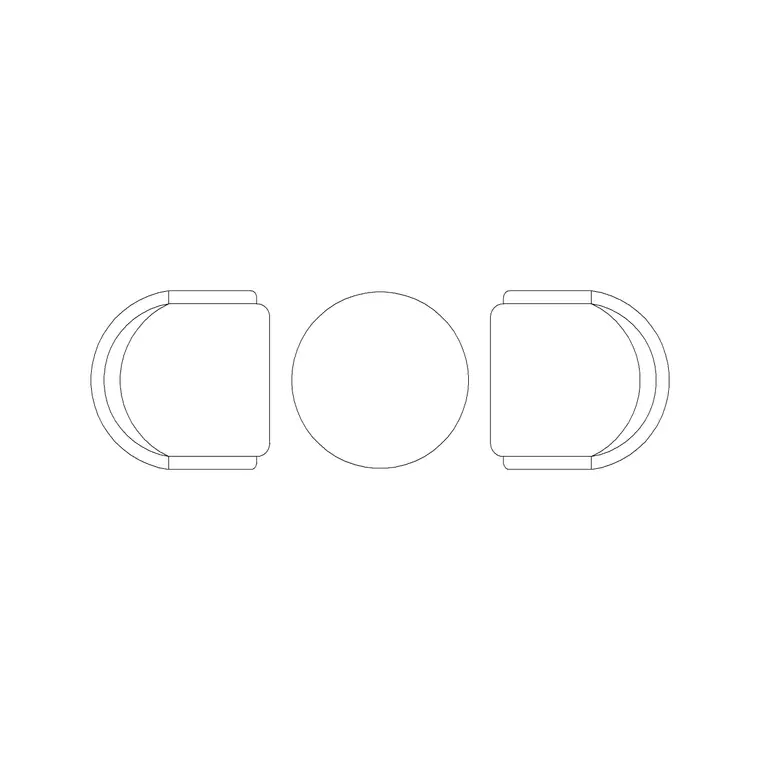
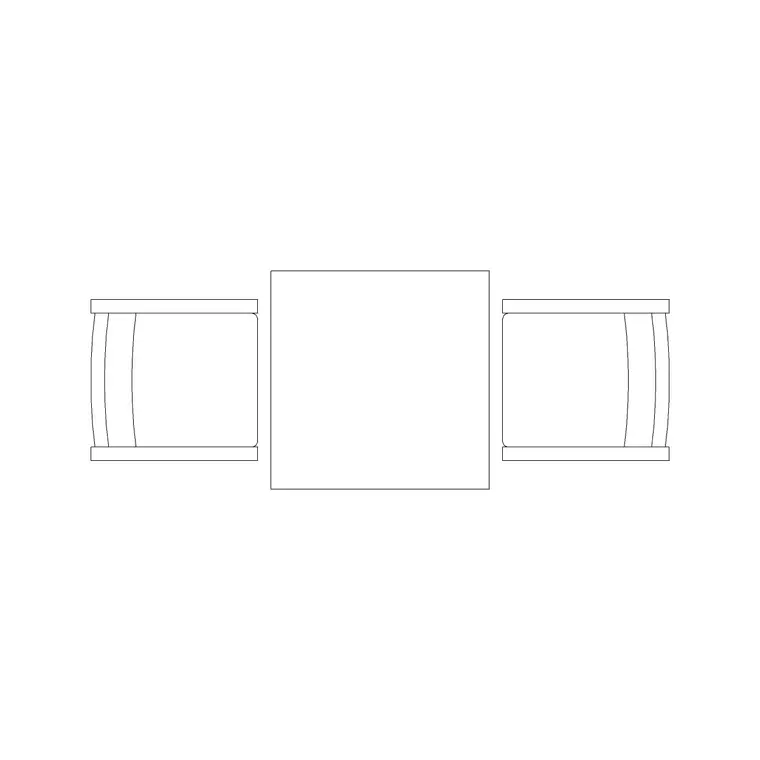
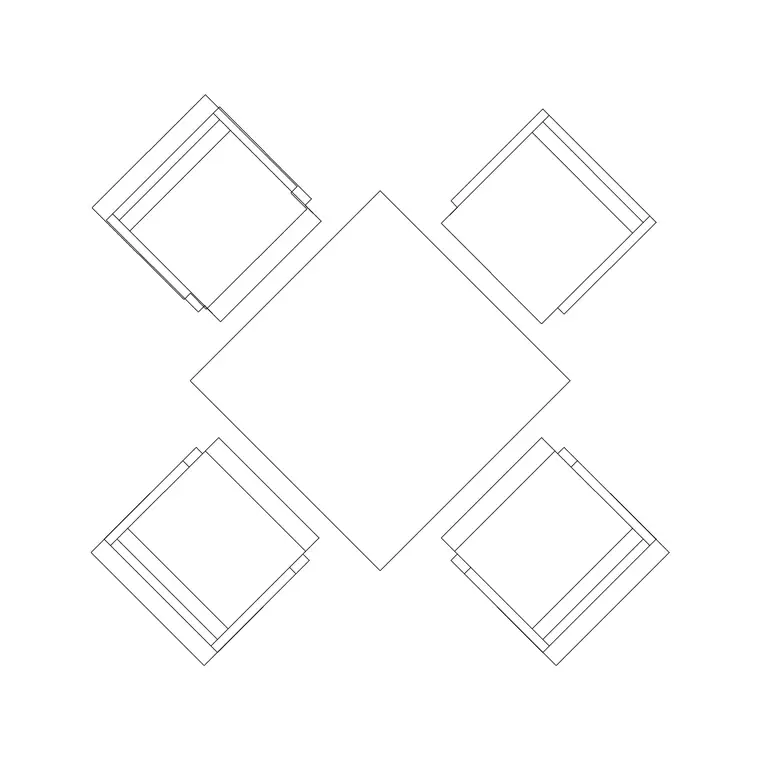
Cafe tables are small and many. The 600mm dia and 800mm dia round two-seaters and the 800mm square two-seater are the workhorses — they tuck into corners, line a wall, and pair up when a group arrives. The 1000mm four-seater handles the laptop-and-friends table and the occasional group. Ring them with the Audi chair plan block for a clean dining-chair footprint.
The window ledge and the counter are prime cafe real estate: the wooden bar stool and the round-back stool sit there, facing the street, turning dead wall into covers. A medium potted plant breaks up the room and screens the queue from the nearest seated guests. Every block is scaled, so you can pack the small tables in and still measure that someone can squeeze past with a tray.
Cafe dimensions and clearances
Cafes run tighter than restaurants but the human dimensions do not shrink. Two-top tables are about 600–800mm across; a four-top around 1000mm long. Allow roughly 600mm of table edge per person and 450mm behind a chair to stand, though cafes often accept the lower end because dwell time is short.
The queue is the figure people forget to draw: give it a lane about 900–1000mm wide and length for the people you expect at peak — ten people at 500mm each is five metres of queue, which on a small floor means the line bends or spills. Window-ledge bar stools want about 550–600mm of ledge each and a ledge depth around 300–400mm. Keep a clear 900mm route from the door to the counter and at least one accessible table reachable without weaving through tight gaps.
Building the cafe plan from blocks
Drop the counter first and mark the till and collection points. Draw the queue lane as a polyline from the door to the till and check it does not cross the route to the seats; if it does, flip the counter or the door swing.
Now array the small tables. Insert a two-top, add two chairs, make it a block, and array it along the walls and into the centre, leaving a walkable 700–900mm between table edges. Line the window with the bar stools at 550–600mm centres. Tuck a planter where the queue passes the nearest table. Put counter, tables, chairs, stools and planting on their own layers so you can count covers per layer and issue a clean seating plan with the queue zone shown.
Make small tables flexible
A cafe lives on its ability to recombine. Two 800mm square two-tops butt into a four; three make a six for a meeting. Draw the tables as separate blocks rather than fixed clusters so you can show both the everyday scatter and the pushed-together arrangement on the same plan.
The window ledge is your flex valve at peak: it adds covers without adding floor, because the stools sit against a wall that would otherwise be dead. When you tally the cover count, log the ledge stools and the moveable two-tops separately so the client sees the baseline covers and the peak covers as two honest numbers.
Common cafe-plan mistakes
- Letting the queue cross the path to the seating, so the line blocks seated guests at every rush. - Drawing tables so tight that a tray cannot pass, then quietly removing chairs on site to fix it. - Forgetting the collection point, so people who have ordered mill in the queue lane waiting for drinks. - Window stools with no ledge depth drawn, so the elevation has nowhere to rest a cup. - No accessible table reachable without squeezing through 500mm gaps.
Lay the counter and queue first, array the scaled tables second, and these resolve on the drawing rather than on opening day.
Free download
Browse the full library — DWG & DXF, no signup.
Questions
Frequently asked
How small can a cafe table be?+
A two-seat cafe table can be as small as 600mm across because dwell time is short and people accept a closer setting than in a restaurant. Allow about 600mm of edge per person where you can, and use 800mm two-tops where the floor permits a more comfortable setting.
How do I plan the cafe queue?+
Draw it as a lane about 900–1000mm wide running from the door to the till, with length for your peak crowd — ten people at 500mm each is five metres. Keep that lane off the route people take to the seating so the queue and the seated guests never block each other.
Can I use these cafe blocks commercially?+
Yes. All blocks download as DWG, free for personal and commercial use, no signup and no watermark, ready to drop into a paid cafe fit-out drawing.
Where do window bar stools belong in a cafe?+
Along the shopfront ledge facing the street, where they turn otherwise-dead wall into covers. Allow about 550–600mm of ledge per stool and a ledge depth of 300–400mm so the elevation has room for a cup and a phone.
How do I show flexible cafe seating in AutoCAD?+
Draw each small table as its own block rather than a fixed cluster. Then you can array the everyday scatter and also show two-tops pushed into fours or sixes for groups, all on the same plan, and count the moveable covers as a separate tally.
Related downloads
Blocks for this guide

Related categories
Related guides
Room guide
Free Restaurant Layout CAD Blocks — DWG Download
Free restaurant CAD blocks in DWG — dining tables, chairs, bar stools, planters and chandeliers for AutoCAD seating plans. No signup, commercial OK.
Room guide
Free Coffee Shop CAD Blocks — DWG Download
Free coffee shop CAD blocks in DWG — counter stools, small tables, planters and pendants for barista-bar floor plans. No signup, commercial OK.
Room guide
Free Bar Lounge CAD Blocks — DWG Download
Free bar lounge CAD blocks in DWG — bar stools, lounge sofas, low tables, planters and chandeliers for cocktail bar plans. No signup, commercial OK.