Curated pack · cad blocks for sections
Free CAD blocks for section drawings in DWG and DXF
By Sumana Kumar · Published 26 Jun 2026 · Updated 28 Jun 2026
A section cuts straight through a building to show how it is put together — floor to floor heights, ceiling voids, the relationship between rooms stacked above one another. A bare section is all structure and no life, which makes it hard for a client to read; the blocks in this pack add the human and furnished layer that makes a section legible. Scale figures show how people occupy each storey, furniture beyond the cut line tells you what each room is for, and trees alongside the building set it in its landscape. Every block is drawn to real millimetre dimensions, downloads in DWG (DXF where available), and is free for commercial work with no watermark.
In a section, entourage does something a plan can't: it proves the heights work. A figure standing in a room confirms the ceiling height feels generous rather than oppressive; a person on a stair shows the flight is comfortable to climb; a sofa in a lounge beyond the cut confirms the room reads at the right scale. These checks turn a section from an abstract diagram into a drawing that explains the building.
Because sections combine cut elements with everything seen beyond the cut, the blocks here are drawn in elevation and side view — the projection you see when you look into a sectioned building — so they sit correctly in the drawing the moment you place them.
What's in the section pack
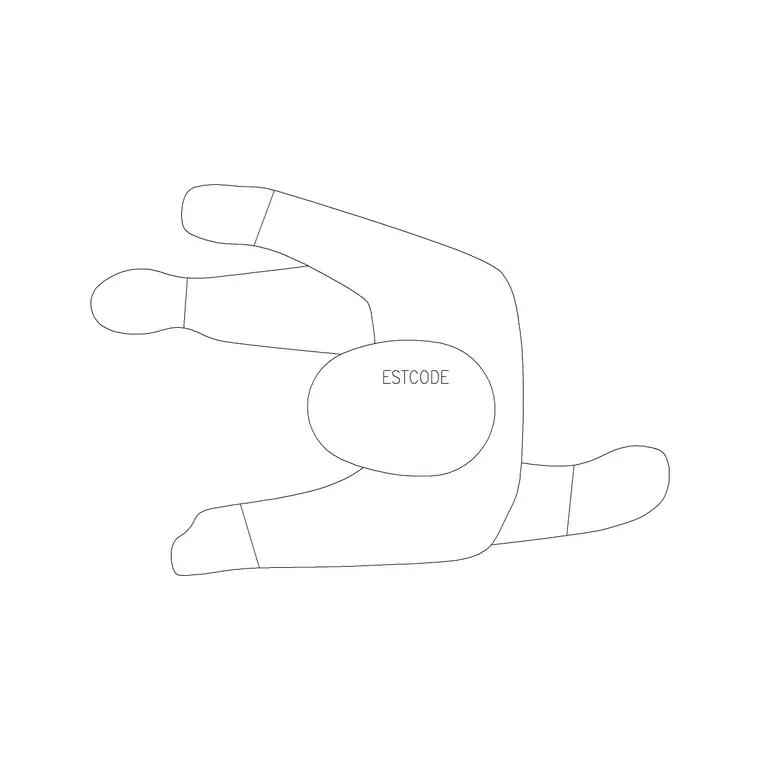
The set provides the entourage you place beyond the cut line and alongside the building. Scale human figures in side view occupy each storey, sit on furniture, and stand on stairs to prove the vertical dimensions work. Furniture seen in elevation — a sofa, a bed, a desk run — dresses the rooms visible past the cut so a section reads as occupied space rather than empty volumes. Trees and planting outside the building set it into its ground and landscape.
Each block reads correctly when you look into a sectioned building, which is essentially an interior elevation. Keep them on their own layers so you can show a clean structural section or a fully dressed presentation section from the same drawing.
Proving floor-to-floor heights with figures
The most valuable thing a figure does in a section is calibrate height. A standing adult reads at roughly 1700–1850 mm; place one in a room and you can immediately judge whether the ceiling sits at a comfortable height above. Typical residential floor-to-floor heights land somewhere in the 2700–3300 mm range depending on construction, and a figure makes that abstract number a felt thing — a 2400 mm ceiling looks tight against a person, a 3000 mm one feels generous.
Use figures on stairs and at thresholds too. A person mid-flight shows whether the headroom over the stair is adequate, which is one of the checks a section exists to make.
Furnishing the rooms beyond the cut
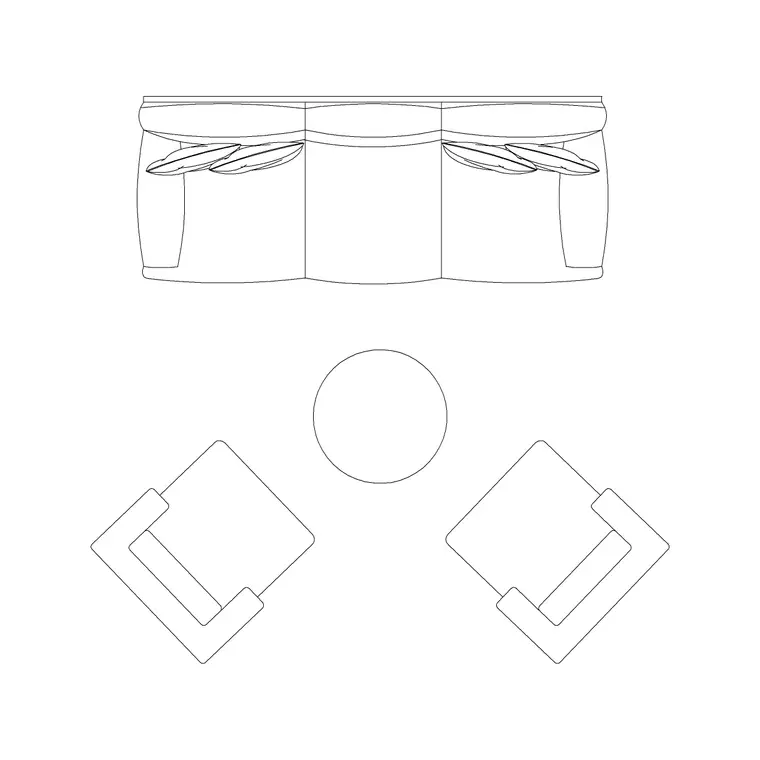
Everything past the cut plane is drawn as an interior elevation, so furniture seen face-on belongs there. A sofa against the back wall of a lounge, a bed in a bedroom, a desk in a study — each piece tells the reader what the room is for and confirms it is sized correctly. Keep the furniture on its own layer so you can strip it for a technical issue and restore it for a presentation.
Don't over-furnish a section. A couple of well-placed pieces per visible room communicate the function; cramming every object in clutters the structural story the section is really there to tell.
Setting the building in its landscape
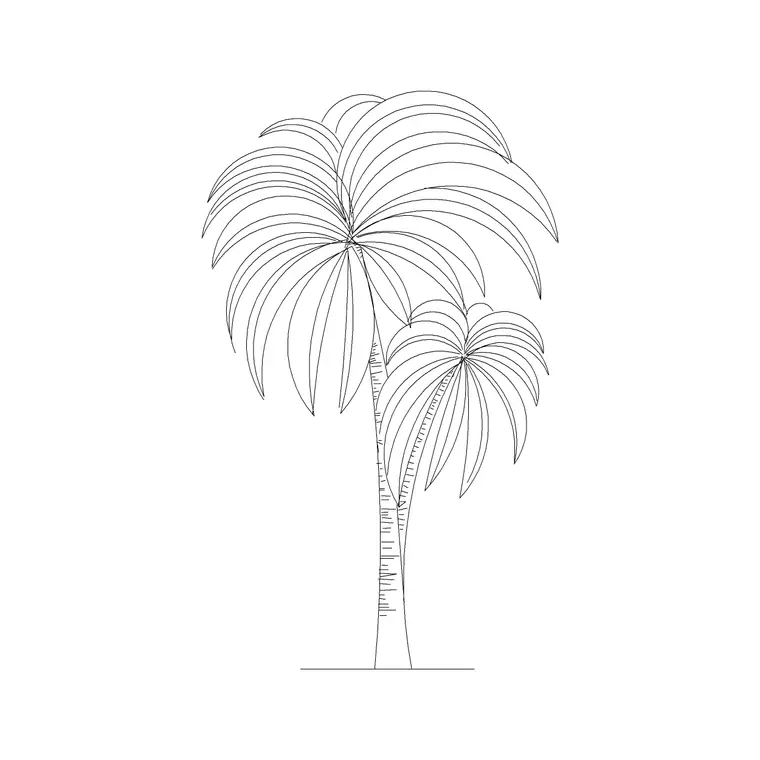
A section that stops at the external wall floats. Add trees and planting outside the building in elevation, and draw the ground line — including any change of level, retaining or paved surface — so the building sits in real earth. This matters most for sections through sloping sites, basements and split levels, where the relationship between the building and the ground is the whole point of the drawing.
Keep external entourage lighter than the cut structure so the section poché (the solid cut through walls and slabs) stays the strongest element on the sheet. The landscape supports the section; it shouldn't compete with it.
Per-item notes for sections
- Scale figures (side view): the key tool for proving floor-to-floor heights, stair headroom and door thresholds. A standing adult reads at roughly 1700–1850 mm. - Sofa and furniture (elevation): dress the rooms visible past the cut so they read as occupied; keep to a couple of pieces per room and put them on a furniture layer. - Trees and palms (elevation): place outside the building to set it in its landscape; lighten them so they don't compete with the cut structure. - Paving and ground surface: draw the external ground line and any level change so the section sits in real earth rather than floating off the page.
Who uses dressed sections
Architects and technicians draw dressed sections for planning, building-control and client work; engineers use them to show structure in context; students rely on them for studio sections that have to read as inhabited space. A free, licence-clear section library suits all of them, and the same blocks carry from an early design section through to a coordinated drawing.
Pair the pack with elevation and plan blocks so a whole drawing set shares the same entourage. Because every block is free for commercial use, dressed sections for paid submissions carry no licensing question.
Free download
Browse the full library — DWG & DXF, no signup.
Questions
Frequently asked
Why put scale figures in a section?+
To prove the heights work. A standing figure reads at roughly 1700–1850 mm, so placing one in a room shows at a glance whether the ceiling height feels comfortable and whether stairs have adequate headroom — checks a section exists to make.
Are these blocks drawn for the section view?+
Yes. Everything beyond the cut in a section reads as an interior elevation, so the furniture, figures and trees here are drawn in elevation and side view — the projection you see when you look into a sectioned building.
How much furniture should a section show?+
Just enough to tell the reader what each visible room is for — a sofa in a lounge, a bed in a bedroom. Over-furnishing clutters the structural story that the section poché is really there to communicate.
Are the section blocks free for commercial submissions?+
Yes. Every block downloads free in DWG, DXF where available, with no signup or attribution, so dressed sections for planning, building-control and client work are all fine.
Related downloads
Blocks for this guide

Related categories
Related guides
Curated pack
Free CAD Blocks for Rendering Pack — DWG & DXF
Free CAD blocks for rendering — scale people, trees, furniture and paving in DWG/DXF to populate plans before you take them into a render engine. No signup.
Curated pack
Free CAD Blocks for Floor Plans Pack — DWG
Free CAD blocks for floor plans — plan-view furniture, scale figures and paving in DWG/DXF to furnish any AutoCAD layout fast. No signup, commercial use OK.
Curated pack
Free CAD Blocks for Elevation Drawings Pack — DWG
Free CAD blocks for elevation drawings — trees, scale figures and entourage in DWG/DXF to dress facades and street elevations in AutoCAD. No signup.