Curated pack · cad blocks for elevations
Free CAD blocks for elevation drawings in DWG and DXF
By Saumyajit Maity · Published 21 Oct 2022 · Updated 28 Apr 2026
An elevation is the face-on view of a building, and a bare elevation — walls, windows, a roofline — looks lifeless until you dress it. This pack gathers the side-view blocks that bring an elevation to life: trees and palms drawn in elevation to break the skyline and soften the facade, scale human figures to set the storey height and give the drawing a sense of size, and the ground-level surfaces that anchor the building to its setting. Every block is drawn to real millimetre dimensions, downloads in DWG (DXF where available), and is free for commercial work with no watermark.
Elevation entourage does two jobs at once. It makes the drawing read — a viewer instantly understands the scale of a four-storey facade when a person stands at its base — and it communicates context, telling whoever reads the drawing that this is a leafy residential street rather than a bare elevation floating in space. Get the entourage right and a technical elevation becomes a drawing a client can actually picture.
The trick with elevation blocks is correct height. A tree, a figure or a planter has to sit at a believable height against the building, or the whole drawing loses credibility. These blocks are drawn to real heights so they slot against your facade and read true the moment they land.
What's in the elevation pack
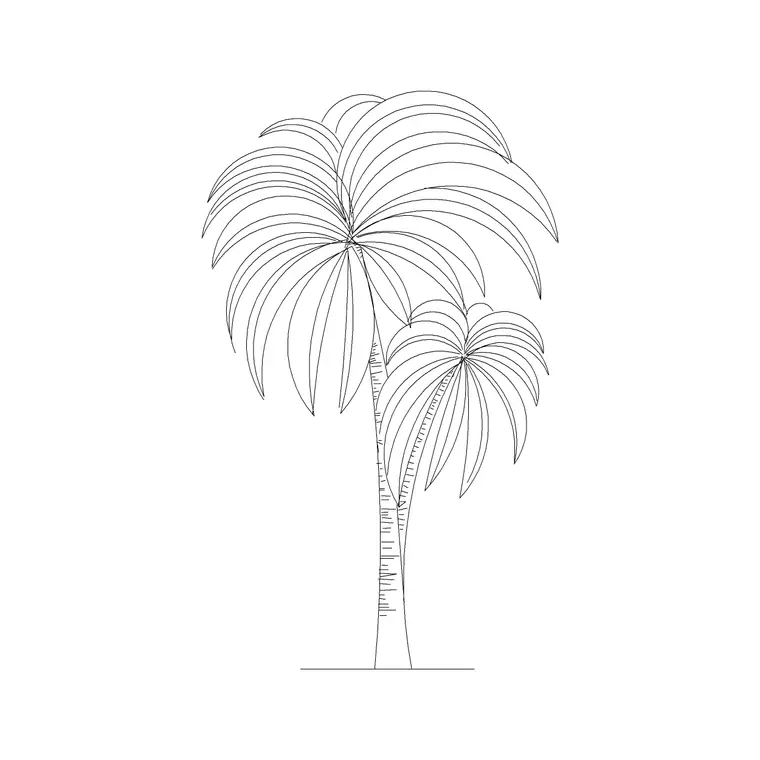
The set focuses on the blocks that dress a face-on view. Trees and palms in elevation are the workhorses — they break a flat facade, fill the foreground and middle ground, and set a sense of place. Scale human figures in elevation establish the storey height and give the eye something to measure the building against. Where the elevation meets the ground, paving and surface treatments draw the base line that stops the building floating.
Each block is a clean side-view drawing, not a plan rotated onto its edge, so it reads correctly in an orthographic elevation at typical scales of 1:50 and 1:100. You can recolour or freeze the entourage independently of the architecture.
Setting heights against the facade
Heights are everything in an elevation. A standing adult figure reads at roughly 1700–1850 mm tall, so dropping one at the base of your elevation immediately calibrates the storey heights — if your ground floor looks three figures tall, something is wrong. Trees vary enormously, from a small ornamental of a few metres to a mature shade tree well over the eaves, so pick and scale the tree to the height you want it to read at against the building.
Place the entourage on the correct ground line. A figure or a tree floating above or sunk below the pavement is the fastest way to make an otherwise careful elevation look amateur. Snap the base of each block to the established ground level.
Foreground, middle ground and skyline
Compose the elevation in depth even though it is a flat drawing. Put one or two larger trees in the foreground to frame the view and give a sense of layering. Use middle-ground planting to soften the facade itself without hiding the architecture you are trying to show. Let a few trees break the roofline so the skyline isn't a hard horizontal edge.
Figures belong at the base, at the entrance and along any street-level activity. A couple of people near the door tells the reader where the life of the building is, and sets the human scale exactly where it matters most.
Layers and lineweights for elevations
Keep entourage on its own layers — trees on a planting layer, figures on a people layer — separate from the building linework. This lets you produce a clean technical elevation by freezing the entourage when a building-control reviewer wants to see only the construction, and a presentation elevation by thawing it for the client.
Give entourage a lighter lineweight or a softer colour than the building so it dresses the drawing without competing with the architecture. The building should always read as the subject; the trees and figures are the supporting cast.
Per-item notes for elevations
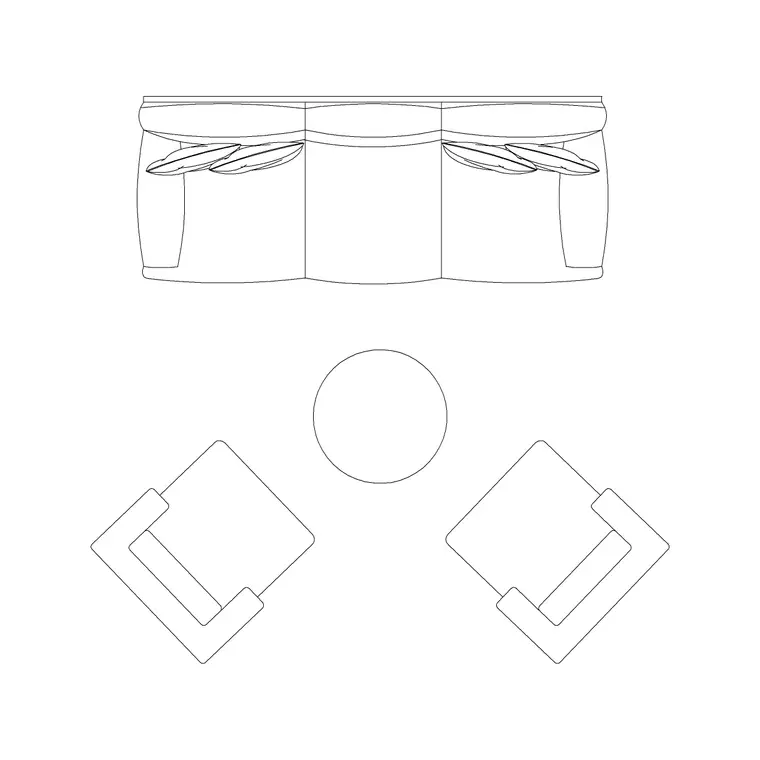
- Palm and tree (elevation): the primary dressing for any facade. Mix two or three sizes and break the skyline with at least one; keep them on a planting layer. - Scale figures (elevation): place at the base and entrance to set storey height and human scale. A standing adult reads at roughly 1700–1850 mm; calibrate the building against it. - Paving and ground surface: draw the ground line and any forecourt or path so the building meets the earth rather than floating. - Sofa and interior furniture (where windows reveal interiors): a furniture footprint glimpsed through a large window adds life to an elevation, though it sits behind the facade plane.
Who uses elevation entourage
Architects and technicians use dressed elevations for planning submissions and client presentations; landscape architects use them for street and section elevations; students rely on them for studio crits and portfolio sheets. A free, licence-clear elevation library suits all of them because the same blocks carry from an early design elevation through to a final presentation sheet.
Pair the pack with section blocks for cut-through drawings and with plan blocks for the matching layouts. Because every block is free for commercial use, dressed elevations for paid planning and presentation work carry no licensing question.
Free download
Browse the full library — DWG & DXF, no signup.
Questions
Frequently asked
Are these blocks drawn as proper elevations?+
Yes. The trees, palms and figures here are drawn in true side-view elevation, not plans tipped onto their edge, so they read correctly in an orthographic elevation at 1:50 and 1:100.
How do I get the entourage at the right height?+
Use a scale figure as your ruler — a standing adult reads at roughly 1700–1850 mm — and snap the base of every block to the established ground line so nothing floats above or sinks below the pavement.
How many trees should an elevation have?+
Enough to break the facade and skyline without hiding the architecture. Mix two or three sizes, put a larger one in the foreground to frame the view, and let at least one break the roofline so the skyline isn't a hard edge.
Are the elevation blocks free for planning submissions?+
Yes. Every block is free for commercial use with no attribution, so dressed elevations for planning applications, client presentations and competition sheets are all fine.
Related downloads
Blocks for this guide

Related categories
Related guides
Curated pack
Free CAD Blocks for Rendering Pack — DWG & DXF
Free CAD blocks for rendering — scale people, trees, furniture and paving in DWG/DXF to populate plans before you take them into a render engine. No signup.
Curated pack
Free CAD Blocks for Floor Plans Pack — DWG
Free CAD blocks for floor plans — plan-view furniture, scale figures and paving in DWG/DXF to furnish any AutoCAD layout fast. No signup, commercial use OK.
Curated pack
Free CAD Blocks for Section Drawings Pack — DWG
Free CAD blocks for section drawings — scale figures, furniture and trees in DWG/DXF to populate building sections in AutoCAD. No signup, commercial OK.