Block landing · bidet cad block
Free bidet CAD blocks for AutoCAD
By Sumana Kumar · Published 2 Jun 2025 · Updated 22 Apr 2026
A bidet is the companion fixture to the WC, used for personal washing, and it is set out as a near-twin to the toilet pan it sits beside. Where a bidet is specified — common in much of Europe, the Mediterranean, the Middle East and South America, and in higher-end bathrooms elsewhere — it needs its own clear space and its own water and waste, so it gets its own block. This page collects free bidet CAD blocks in DWG and DXF — floor-standing and wall-hung types — drawn to true size and ready for AutoCAD 2004 or later, free for personal and commercial work with no signup and no watermark.
The bidet's footprint and clearances are close to a WC's, which makes it easy to lay out alongside one, but its plumbing is different — it takes hot and cold like a basin rather than just a cold feed and a soil connection. Drawing it from a correctly-sized block keeps both the spacing and the services right from the first placement.
What a bidet block shows
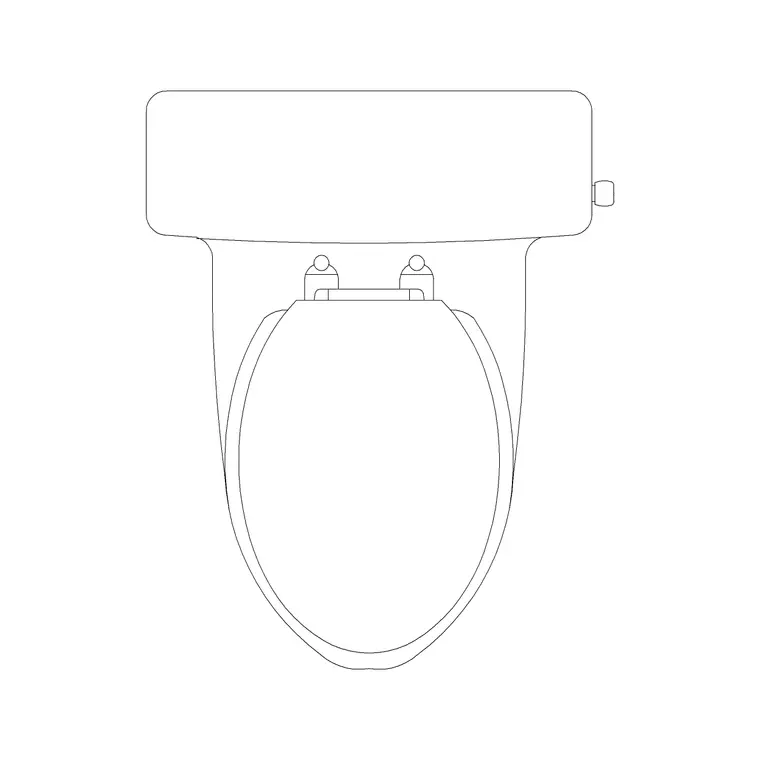
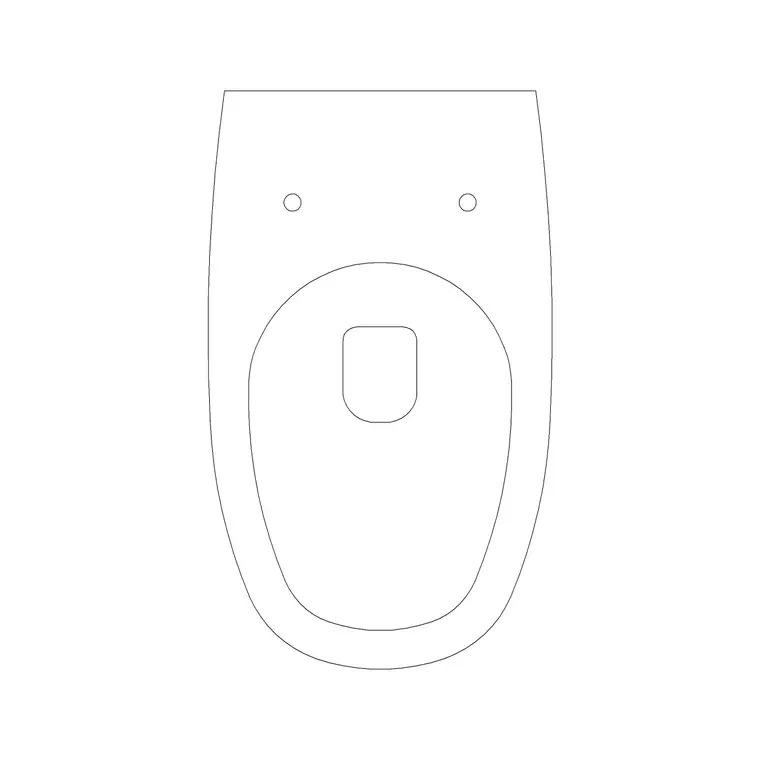
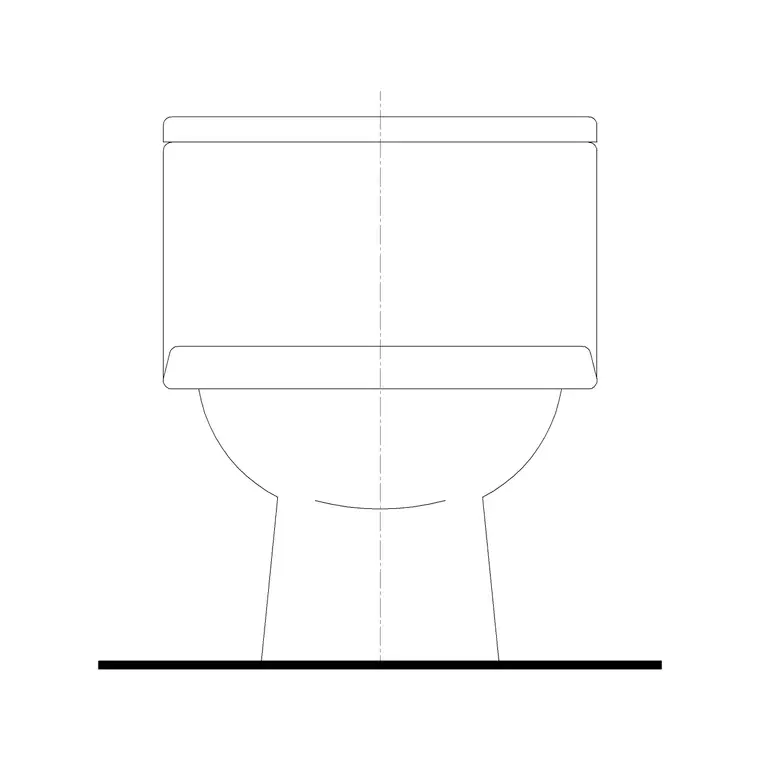
A bidet looks much like a low WC pan without a cistern: a ceramic bowl at seat height with a tap or spray fitting and a waste. The block shows the bowl outline, the tap position and a centreline in plan, and the bowl at seat height in elevation. Floor-standing bidets sit on the floor like a close-coupled pan; wall-hung bidets bolt to a concealed frame and float clear of the floor, matching a wall-hung WC.
Because a bidet is almost always placed beside the WC, the block is drawn to pair with the toilet pan — similar width and projection — so the two read as a matched set on the plan and the elevation.
Plan view for the pairing, elevation for the fitting
For the layout you use the plan: the bidet seen from above, set immediately beside the WC against the same wall, sharing the drainage zone. The plan is what you use to space the bidet from the WC and the side wall so both have comfortable clearance.
For tiling and sanitary elevations you switch to the elevation, where the bidet bowl and its tap or spray are drawn face-on at seat height — around 400 mm to the rim. A wall-hung bidet's elevation also shows the flush-frame wall behind. Many downloads ship the plan and elevation together, and pair naturally with the matching WC block so you can draw the WC-and-bidet set in one go.
Typical bidet dimensions
Design around these figures. Bowl width: 350–400 mm, close to a WC pan. Projection from the wall: 540–600 mm floor-standing, shorter for a wall-hung bidet on a concealed frame. Rim/seat height: around 400 mm. Spacing from the WC centreline to the bidet centreline: comfortably 350–400 mm between centres so a user can move from one to the other.
In front of the bidet, leave the same 600 mm of clear activity space as a WC. A wall-hung bidet needs the same 150–200 mm of concealed-frame wall depth as a wall-hung WC, so if you pair the two as wall-hung fixtures, the duct runs continuously behind both.
Inserting and placing the bidet block
The blocks are drawn full size in millimetres — insert at scale 1 in a millimetre drawing, or set INSUNITS to millimetres for automatic rescaling. Use INSERT, snap the insertion point to the bidet centreline at the wall face, and rotate to match the WC it sits beside.
Place the bidet immediately next to the WC, set the centre-to-centre spacing so both have room, and dimension each centreline from the side wall. Because the bidet takes hot and cold as well as a waste, mark those connections for the plumber. Keep the bidet on a sanitaryware layer so it freezes off a structural plan and thaws back for the furnished and tiling drawings, alongside the WC.
Where bidets are specified
Bidets are standard in domestic bathrooms across Italy, Spain, Portugal, France, much of the Mediterranean, the Middle East and South America, and are increasingly specified in luxury and hotel bathrooms worldwide. They are placed beside the WC as a matched pair, so wherever a scheme calls for one you will draw a WC and a bidet together.
Use the bidet block on layouts for these markets and on higher-end bathrooms elsewhere, and choose the floor-standing or wall-hung type to match the WC alongside it for a consistent look. Pair the bidet with the WC, basin and bathroom-faucet blocks to complete the sanitary layer, and select a matching wall-hung set where the design wants a continuous concealed-cistern wall.
Coordinating the bidet with the WC and services
Because a bidet almost always pairs with a WC, the two fixtures should be coordinated as a unit, and the block makes that straightforward. Set them side by side against the drainage wall with a comfortable centre-to-centre spacing, and match their type — both floor-standing, or both wall-hung on a shared concealed-frame wall — so they read as a matched set rather than a mismatched pair.
The services are where the bidet differs from the WC, so the block helps you get them right. A bidet needs hot and cold supplies like a basin, plus its own waste, where a WC needs only a cold feed and a large soil connection. Mark all three connections on the plan within the same drainage zone as the WC, so the plumber can run them together and the finished pair sits exactly as drawn.
Free download
Browse the full library — DWG & DXF, no signup.
Questions
Frequently asked
What is a bidet and how is it set out?+
A bidet is a low ceramic bowl at seat height used for personal washing, placed immediately beside the WC. It is set out as a near-twin to the toilet pan, sharing the drainage wall, with a comfortable centre-to-centre spacing between the two.
How much space goes between a WC and a bidet?+
Allow comfortably 350–400 mm between the WC and bidet centrelines so a user can move from one to the other, and leave the usual 600 mm of clear activity space in front of each.
Do bidets come in wall-hung versions?+
Yes. Floor-standing bidets sit on the floor like a close-coupled pan, while wall-hung bidets bolt to a concealed frame and float clear of the floor, matching a wall-hung WC and needing the same 150–200 mm of concealed-frame wall depth.
Are the bidet blocks free for commercial work?+
Yes. They download free in DWG and, where available, DXF, with no signup, no watermark and no attribution requirement, and they are cleared for commercial project use.
Related downloads
Blocks for this guide
Related categories
Related guides
Block landing
Free Bathroom Fixtures CAD Blocks — DWG Download
Download free bathroom fixtures CAD blocks in DWG and DXF — toilets, wash basins, bathtubs, showers and vanities drawn in plan and elevation. No signup, commercial OK.
Block landing
Free Sanitary Fixtures CAD Blocks — DWG Download
Download free sanitary fixtures CAD blocks in DWG and DXF — WCs, wash basins, urinals and sinks in plan and section for AutoCAD sanitary plans.
Block landing
Free Toilet / WC CAD Blocks — DWG Download
Download free toilet / WC CAD blocks in DWG and DXF — close-coupled, back-to-wall and commode pans in plan and elevation for AutoCAD. No signup, commercial OK.